



Flowers in Madrid: from San Isidro carnations to a bouquet at the door
On 15 May, San Isidro, chulapas pin white headscarves with carnations, and it is said a red carnation marks a married woman, a white one single, red and white together an engagement. Flowers in Madrid carry that kind of local meaning, so choosing a bouquet here starts less with the flower itself than with the date, the address and the weather waiting outside.
Flower delivery in Madrid: the centre, inner districts and Barajas
Madrid splits into pricing zones rather than one flat rate. Flower delivery in Madrid is free in the city centre between 7am and 11pm, and a same-day flowers Madrid order, one the florist already has in stock, can leave soon after confirmation. Inner districts such as Arganzuela cost less than the centre; further out, in areas like Barajas near the airport, the fare is higher, and the bouquet card shows the delivery time. Each fee covers a single address, is added to the order total, and never goes into the courier's hand. Between 11pm and 7am a courier can still be arranged, but the price is quoted separately, and anywhere outside the listed zones is priced before payment rather than after. Before you buy flowers in Madrid, current prices are shown directly against each bouquet type, from mono bouquets and roses to boxes, mixed bouquets, peonies and designer bouquets. Most orders leave the workshop and reach their recipient the same day they are placed, and the order form itself stays open around the clock. The delivery zones and rates page lists every district by name.
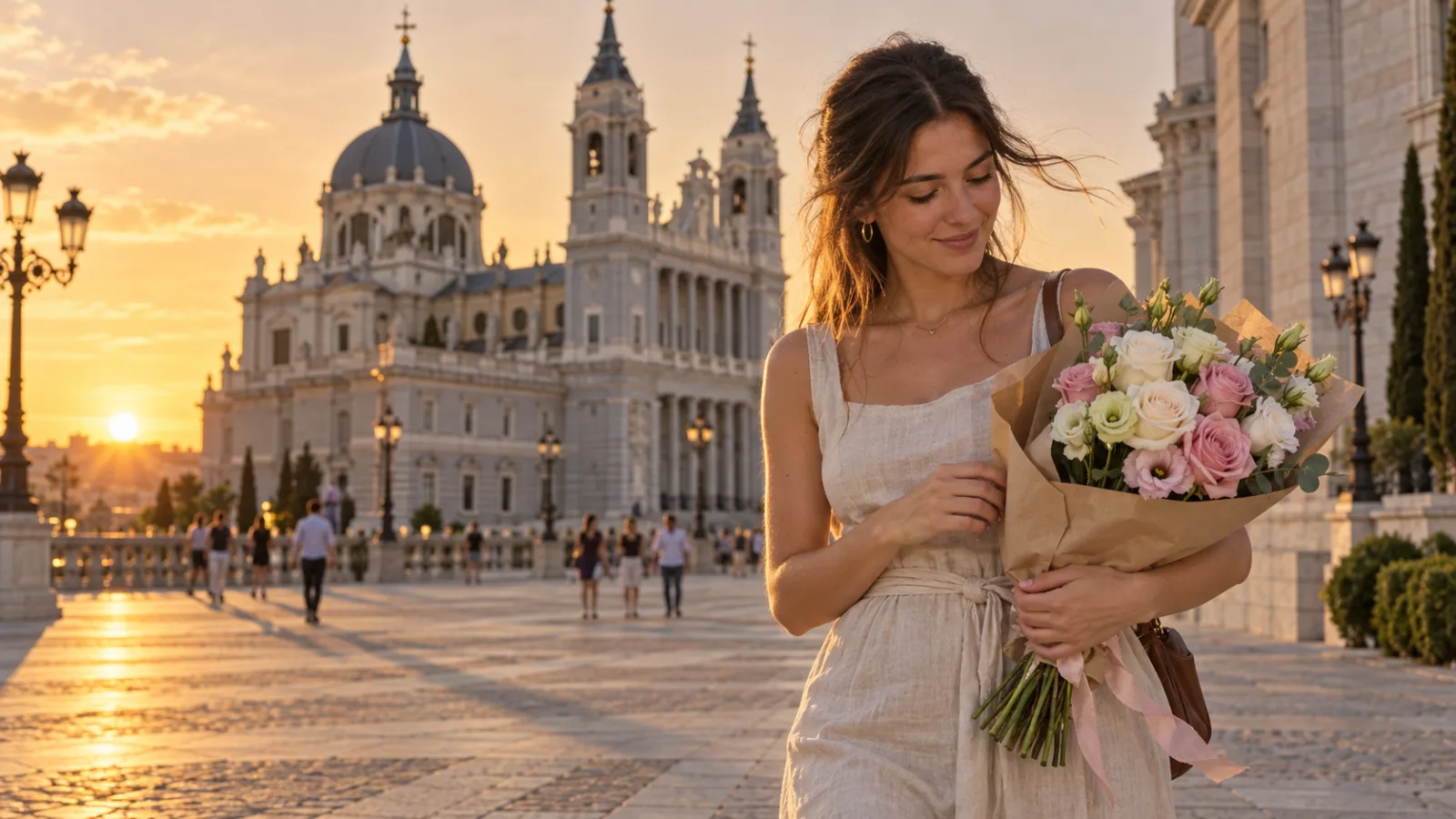
An office on Paseo de la Castellana, in AZCA or among the Cuatro Torres, needs the company name and floor as well as the address. Where a lobby has a pass barrier, the box waits at reception and the sender is told who signed for it. A hotel guest is best reached through the surname used at check-in and a room number if it is known, and whether the box goes up or stays downstairs is the hotel's decision, not the florist's. A hospital ward is worth checking beforehand, since not every department in Madrid allows live flowers on the floor; where the ward says no, the nurses' station or the day of discharge becomes the handover point instead. At Barajas a courier waits at the exit with a sign showing the recipient's name. None of this changes when you send flowers to Madrid from abroad: the storefront prices in euros and no account or registration is needed. A phone number does the work of an address when none is given, and the card can carry a name or stay unsigned. A photo of the finished bouquet goes out before the courier leaves.
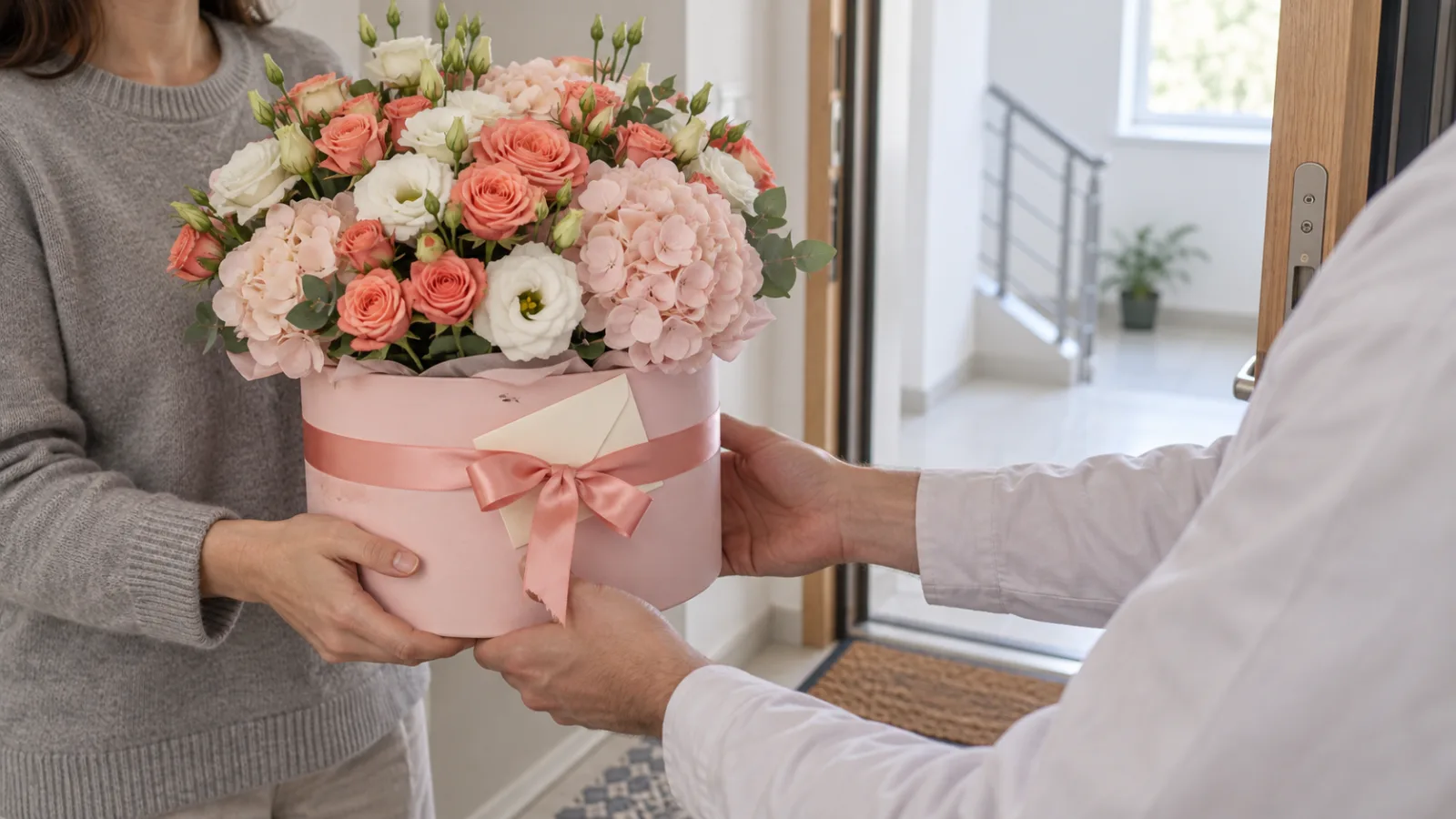
The carnation belongs to Madrid rather than to a flower shop: it is the bloom pinned to a chulapa's headscarf, not something sold by the stem here. Even so, Spain's carnation trade has grown fast, with imports reaching 27.3 million € in 2025, up 23% on the year before, inside a cut-flower import market worth 184 million € in total. The Netherlands supplies most of that traffic, sending flowers and plants worth around 165 million €, with Colombia and Ecuador among the other main suppliers behind it. Many wholesale stems pass through Mercamadrid, a 2.22-square-kilometre wholesale market in Villa de Vallecas beside the M-40, where the Mercado de Floristas trading hall works as the region's main distribution point for cut flowers before they ever reach a florist's counter.
Reyes, 19 March and Almudena: the dates Madrid buys flowers for
The Spanish gift-giving year opens on 6 January, Reyes Magos, still the biggest winter date for presents including flowers. Día del Padre falls on 19 March, an ordinary working day rather than a holiday, and Día de la Madre lands on the first Sunday of May, a date that shifts each year. San Isidro on 15 May pulls carnations into every corner of the city, and Almudena on 9 November honours Madrid's patron saint. Chrysanthemums are best offered with some care around 1 November, when the flower is closely tied to remembrance rather than celebration. The poinsettia, or flor de Pascua, appears from late October through Christmas, and Spanish growers raised more than ten million of them in 2025 alone. Valentine's Day, 8 March and Día de la Madre are peak dates: order volumes multiply and delivery windows widen. A courier arriving to the minute is not something anyone can promise that week, so it helps to order a few days ahead.
Dry July heat and frosty January nights: a bouquet's year
Retiro park records July afternoons around 32.8°C with humidity as low as 39%, dry heat that pulls water out of cut stems fast. A bouquet delivered in a box, kept damp through its floral foam and set down in a cool room afterwards, lasts noticeably longer than one left on a sunny sill. That is exactly what flowers in boxes are built for. January runs closer to 10°C by day and 3°C by night, and Madrid sees around thirteen nights a year at freezing or below, cold enough that a bouquet left on a balcony overnight is as risky as one left in July sun. Between these extremes, April and May, then September and October, are the calmest stretches of the year for cut flowers arriving in the city.