



Flowers in Paris: the road through Rungis and how to choose a bouquet
About 80% of the cut flowers sold in France are imported, and 82% of that import passes through the Netherlands as a trading hub, more often a stop on the route than the country where the stems actually grew. Flowers in Paris travel this same road through Rungis, and the route shapes both how fresh a bouquet arrives and what it costs this month.
Where the flowers in Paris bouquets come from
The Netherlands' share of that trade has slipped in recent years, from 87% in 2019 down to 82% now, while Italy and Kenya have each picked up around 4%. Paris florists do their own buying at the flower pavilion of Rungis, the wholesale market south of the city.
Fresh stems travel at around two degrees Celsius, and every hour they spend warm after that shortens how long they will last once they reach a vase. Paris has also sold flowers within the city itself for a very long time: the Marché aux Fleurs Reine-Elizabeth-II on the Île de la Cité, in the 4th arrondissement, still operates under a decree signed by Napoleon I and opens daily from 8am to 7:30pm.
At JFLOO the flowers for an order are bought once payment has cleared, rather than pulled from stock sitting in a cooler. That keeps the gap between the wholesale market and the customer's door as short as the order itself.
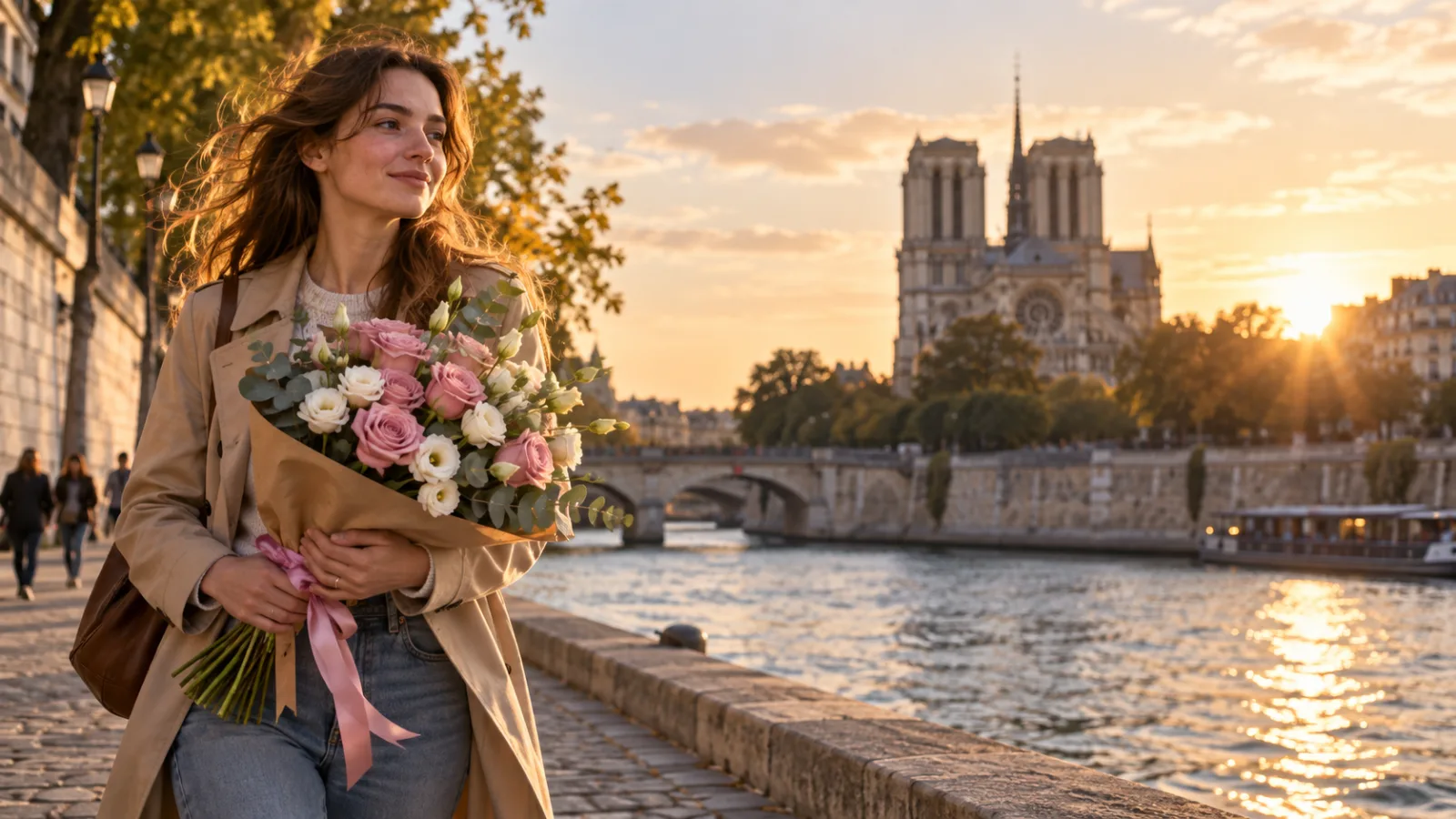
Roses are sold every month of the year, and the Paris catalogue lists both Ecuadorian and French stems among the roses. Ecuadorian roses are grown at altitude for a long, straight stem and a large head. A French rose is the same flower with its outer petals turned back by hand, a florist's technique called reflexing rather than a separate variety of rose.
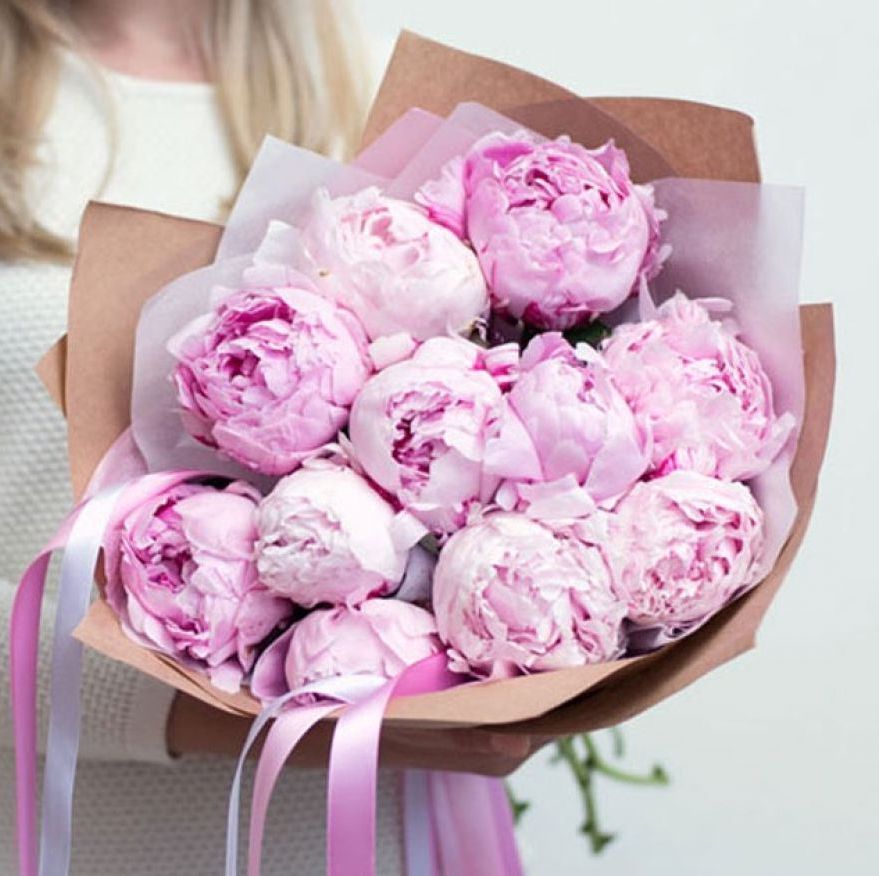
French peonies are cut from late April to June, and buying outside that window usually means a stem that has travelled much further and costs more for it. Lilies, gerberas and lisianthus, by contrast, sit in the catalogue all year round, which is why a mono bouquet, built around a single kind of flower, is a safe choice whenever the date matters more than the exact variety on the day.
The French calendar has a rhythm of its own. 14 February is an ordinary working day and the rose is still the flower of choice. Fête des grands-mères falls on the first Sunday of March. 1 May belongs to muguet, lily of the valley sold on street corners across the city, though it does not appear in JFLOO's own range. Fête des mères falls on the last Sunday of May, the exact date shifting each year, and 1 November is Toussaint, when cemeteries across France fill with flowers.
French flower etiquette: odd numbers and no chrysanthemums
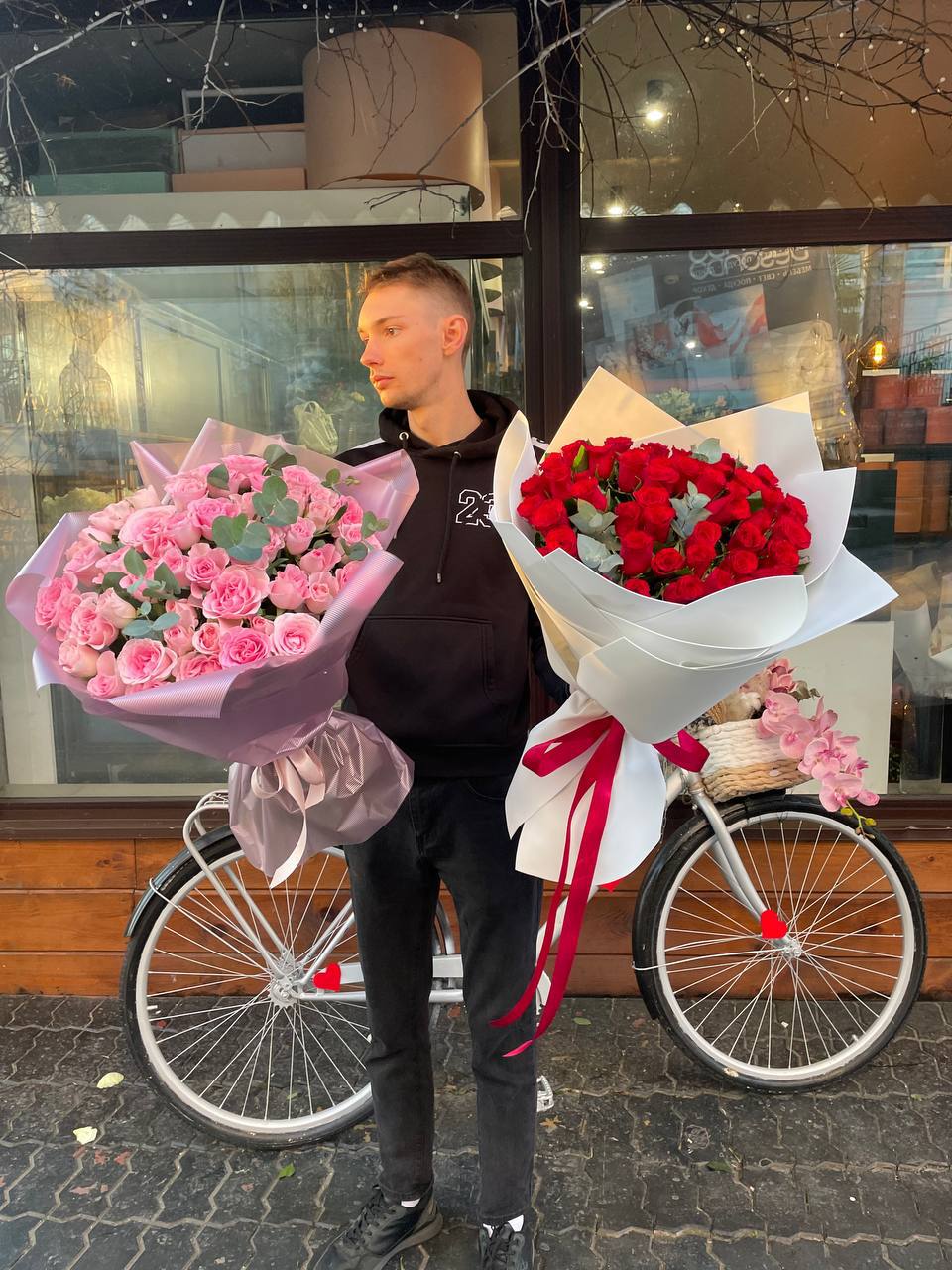
A French bouquet is traditionally built from an odd number of stems, which is why the roses section lists bunches of 11 and 19 rather than round numbers. The custom is said to go back to a distinction flower shops wanted to draw between themselves and market stallholders, who sold their flowers in even-numbered bunches.
Toussaint is the clearest exception to buying flowers for pleasure: 64% of the purchases made that week are chrysanthemums, a flower tied in France to mourning and cemeteries rather than to gifts. It is worth knowing before sending chrysanthemums for any other reason.
8 March in France is Journée internationale des droits des femmes, women's rights day, and it is not treated as an occasion for flowers the way it is in some other countries. A bouquet arriving that day reads as a personal gesture rather than a marked date on the French calendar.
Bouquet, box or basket for a Paris flat, office or hospital
A hand-tied bouquet wrapped in paper suits a face-to-face handover, when someone is there to take it and put it straight into water. A box or a basket, its stems set in soaked floral foam, suits anywhere a vase cannot be counted on: a hotel room, an office desk, a hospital corridor.
For a hotel, the courier needs the guest's surname and, where possible, the room number; the hotel itself decides whether the flowers go up or wait at reception. For an office, it is the company name and the floor, with the arrangement handed to reception wherever a pass is needed to go further. For a hospital under AP-HP, fresh flowers are banned in intensive care, in transplant units and on wards for very young children, so it is worth checking with a JFLOO manager before booking a hospital delivery.
Where the audience is a whole room rather than one recipient, an armful works without any container at all: armfuls are simply gathered stems, ready to be set straight into whatever vase is on site. The same logic that rules flowers out of an ICU makes a flower basket the steadier choice for a nurses' station or a shared office space.
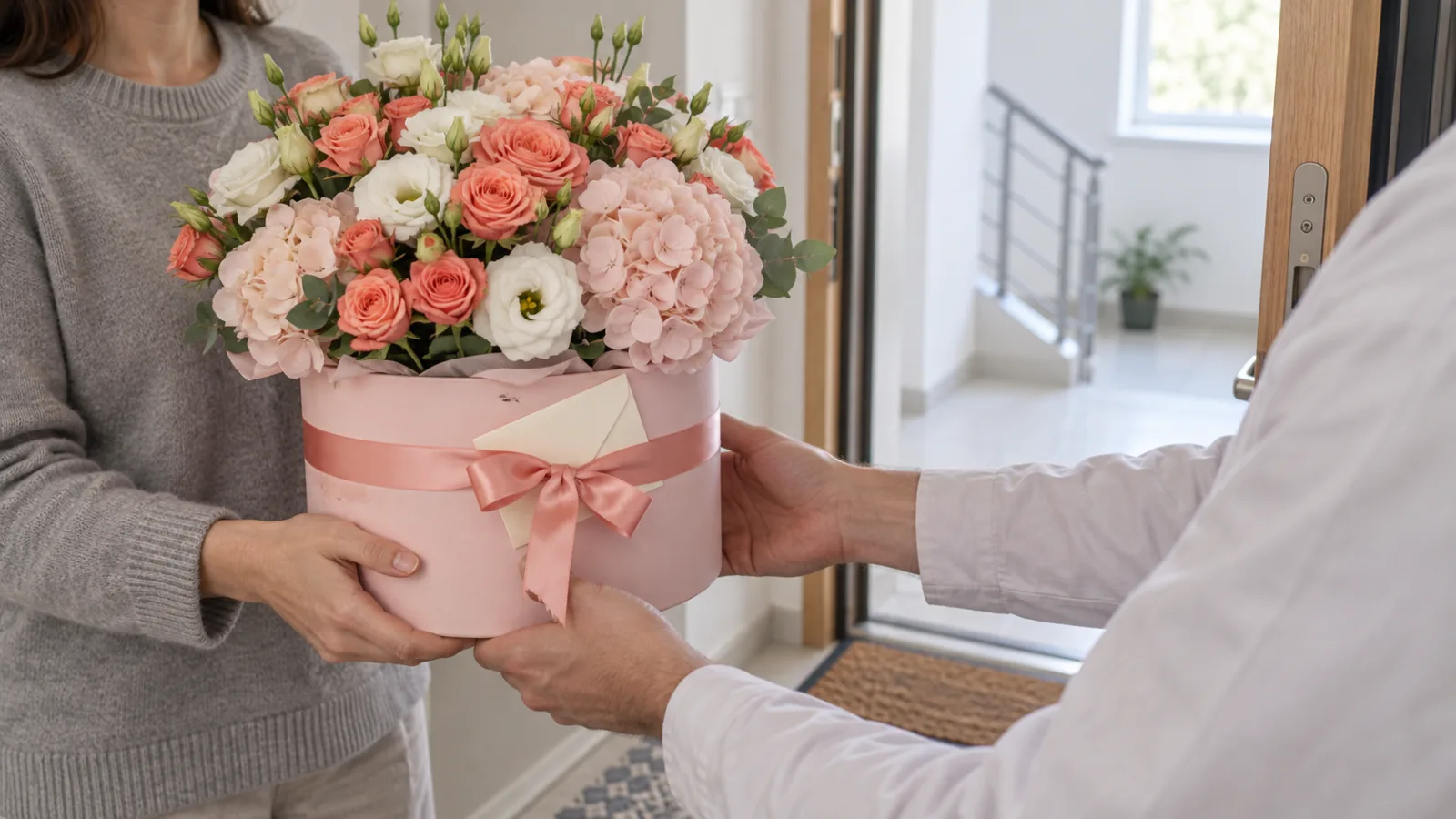
The Paris catalogue splits into several named sections, each suited to a different kind of order:
- Roses and Mono Bouquets are the two largest sections of the catalogue.
- Flowers in Boxes and Mixed Bouquets are arrangements built for an address without a vase.
- Peonies and Armfuls are seasonal and loose-stem options.
- Designer Bouquets and Designer Giants are arrangements built by a florist rather than picked from a fixed range.
What moves the price within any of those sections is the variety, the season and the format. A French peony in June costs less than the same flower flown in from further afield out of season, and a box or basket carries the cost of the foam and container on top of the stems. The currency switcher on the site shows a rough conversion for reference only; what is actually charged is the euro total in the cart.
Flower delivery in Paris: zones, timing and the photo
Delivery in the centre of Paris is free, between 7am and 11pm. Beyond that:
- 9th to 12th arrondissements — delivery costs extra, and the bouquet card shows the exact price and timing.
- Neuilly-sur-Seine, which borders the 17th arrondissement — delivery there costs extra too, and takes longer than in the centre.
- Overnight deliveries, outside the 7am–11pm window, are arranged separately rather than priced up front.
Express delivery only works if the florist already has that bouquet in stock; anything made to order takes longer, and the bouquet card shows the delivery time either way. La Défense and both Paris airports, Charles de Gaulle and Orly, are delivered on request rather than against a fixed time. A photo of the finished bouquet is taken before the courier sets off, and the recipient is not called ahead of arrival. If nobody answers the door, the courier waits up to fifteen minutes and calls the recipient; if there is still no reply, a JFLOO manager contacts the sender, who can agree to a rescheduled delivery or have the bouquet left with someone else.
Sending flowers to Paris from abroad, and keeping them fresh
Payment is taken by Visa or Mastercard, and no account is needed: the recipient's phone number is enough to place an order from anywhere. The date, address, format and card message can all be changed up to six hours before delivery, which covers most last-minute changes of plan.
Mother's Day is not fixed across borders. Mothering Sunday in the UK falls within Lent, well before the French date. The US marks the second Sunday of May, as do Belgium and Switzerland, while France keeps the last Sunday of the month. Anyone sending flowers to Paris from one of those countries is usually working from the wrong date unless they check the French calendar first.
Paris heat is real too, if brief: the city has recorded highs of 42.6°C in July, and July days average around 25.7°C. A few habits keep a bouquet going through either extreme:
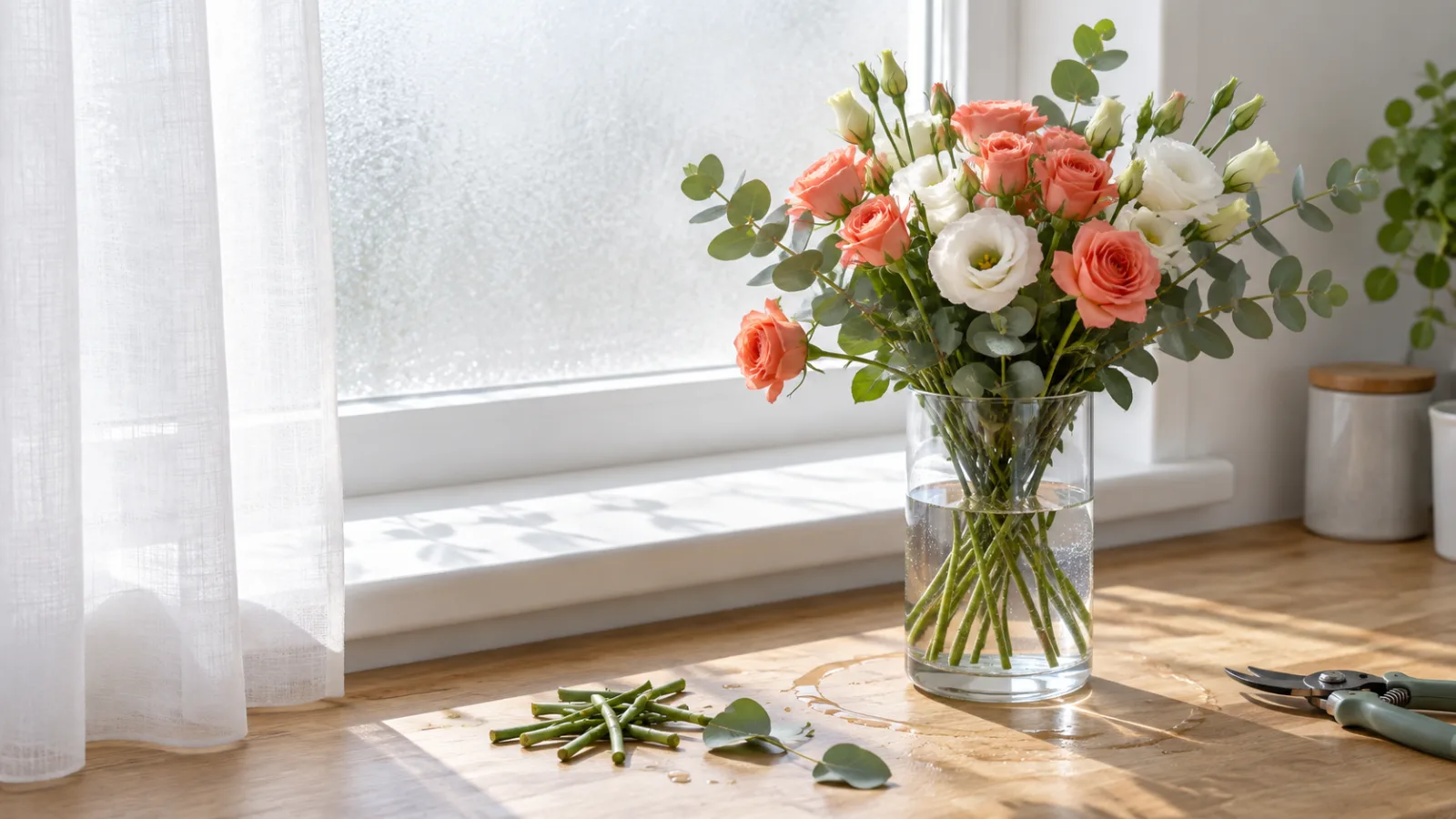
- Recut the stems at an angle and strip any leaves that would sit underwater.
- Change the water often enough that it stays clear, especially in summer.
- Keep the vase away from radiators, direct sun and a bowl of fruit, all of which shorten a bouquet's life.
- In winter, dry air from the heating is just as hard on cut flowers as summer heat is.
- A wilting hydrangea is the exception to watering from the stem: submerge the whole head in cool water for an hour rather than just topping up the vase.