


Forever roses in Tokyo and Japan's preserved-flower market since 2003
Japan held its first preserved-flower contest in 2003, and the market grew sharply after it; the country is now one of the world's largest consumers of preserved flowers. A real rose, cut at the moment it opens, lasts from a year to three indoors without a vase, which is why choosing forever roses in Tokyo comes down mainly to the case and the shade.
Japan's taste for preserved flowers, and what a Tokyo recipient gets
After the 2003 contest, the market grew sharply. Japan is one of the largest consumers of preserved flowers.
A forever rose starts as an ordinary flower, cut at its peak and treated so its sap is replaced with a glycerine-based solution. That solution keeps the petal soft and flexible, unlike dried flowers, which dry out and turn brittle; the two make rather different gifts for someone who would rather not deal with a vase.
Dye travels in the same solution, which is how the single bud under the dome comes not only in red, powder pink and white but also in violet and blue. The flower stays at whatever stage it was cut, bud or open bloom, and keeps that look for a year to three once it reaches the room it will stand in.
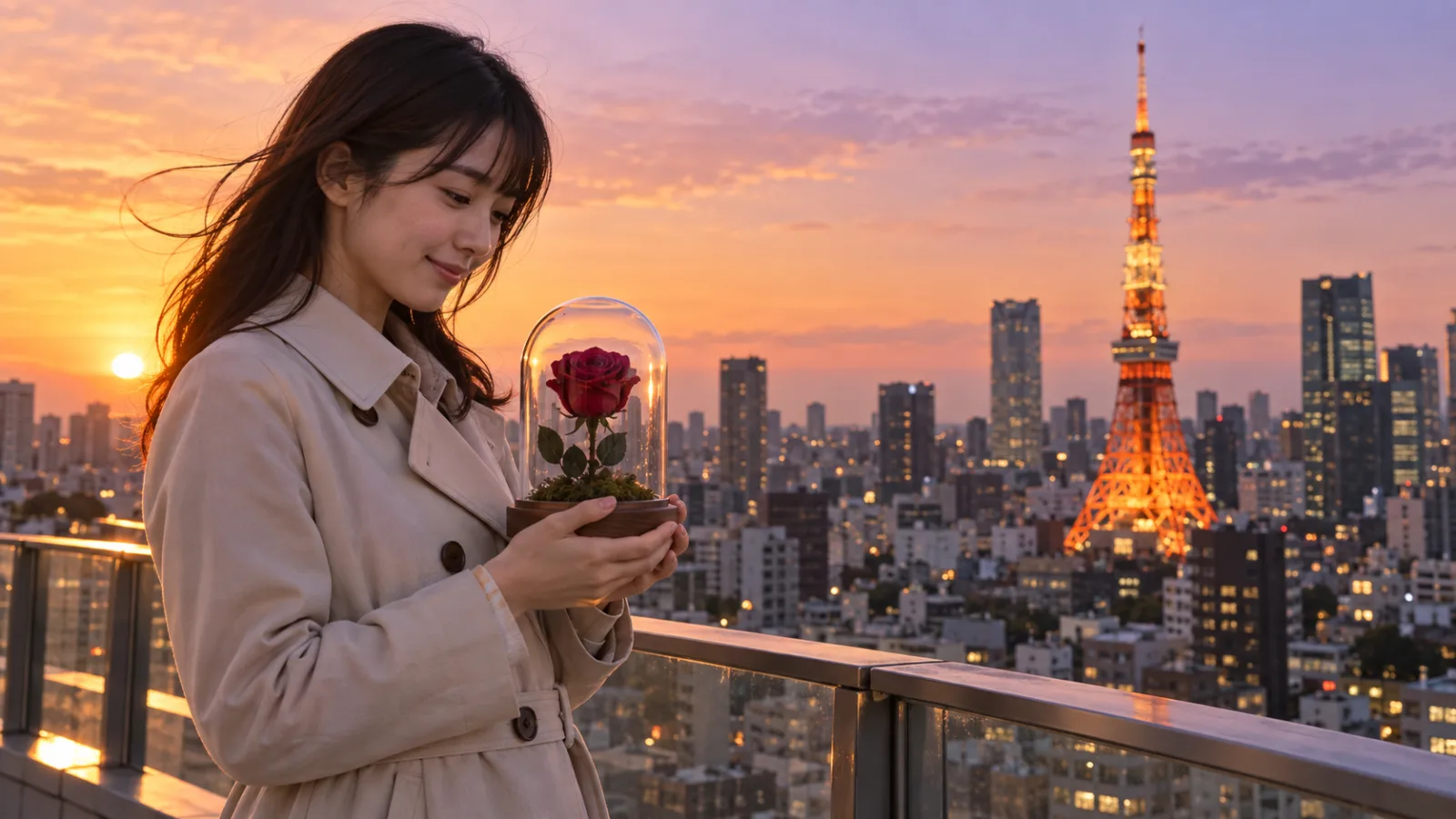
Forever roses delivery in Tokyo: glass, acrylic, velvet or a heart
Choosing forever roses in Tokyo starts with a case. The glass dome is the smallest and holds one bud or three. Clear acrylic cases step up to four, nine or twenty-five, the velvet hat box to nine or nineteen, and the heart-shaped box always holds thirteen red roses.
The velvet hat box takes its shape from the cardboard hat boxes of the nineteenth century: it is meant to be opened and admired, not stood in a vase.
Gift-giving in Tokyo steers around the numbers Japanese gifts avoid, four and nine, so a case holding one, three, thirteen, nineteen or twenty-five buds suits a local recipient better.
In central Tokyo delivery is free, and other zones carry a fixed charge shown before payment. The florist photographs the finished gift before the courier leaves, and delivery time appears on the product card; zones and charges are listed on the delivery zones page.
Out of the sun and away from steam: a spot at work or at home
A forever rose needs no water and no misting, so the case can stand wherever it looks good: a desk in Marunouchi, a shelf in Ginza or a sideboard in Roppongi, office and home alike.
It is an indoor piece only. Direct sun fades the dye, and heat or a steamy room shortens its life, so a hallway or a quiet corner suits it better than a sunny windowsill.
Dust is lifted off with a soft dry brush or a blast of compressed air; nothing wet ever touches the petals.
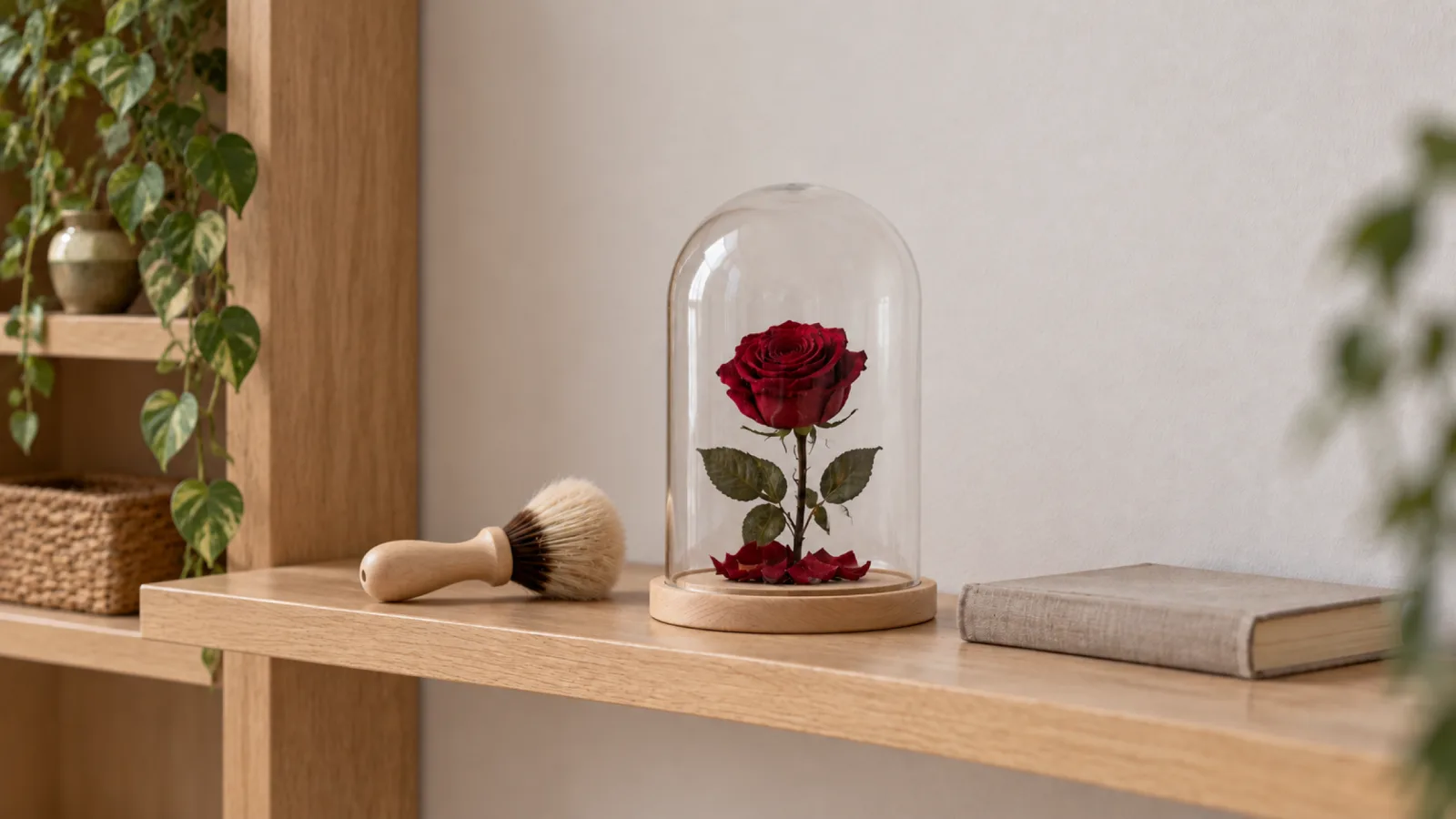
A single bud under a glass dome suits a first forever rose or a small desk. The velvet hat box carries more weight as a gift, with nine or nineteen buds inside, and the heart-shaped box, with its thirteen red roses, is built for a couple. Any of them sits as easily on an office floor as on a shelf at home.