



Flowers in Vancouver: local stems, imported roses and how to choose
United Flower Growers in Burnaby runs a Dutch-style clock auction on three or four clocks at once, and has done for more than fifty years. Some 90 to 95% of what sells there is grown in British Columbia, yet by value close to 80% of Canada's imported cut flowers come from Colombia and Ecuador, so flowers in Vancouver typically mix local stems with imported ones. Which mix ends up in a particular bouquet depends on the season and the date it needs to arrive.
Flower delivery in Vancouver: zones, timing and starting prices
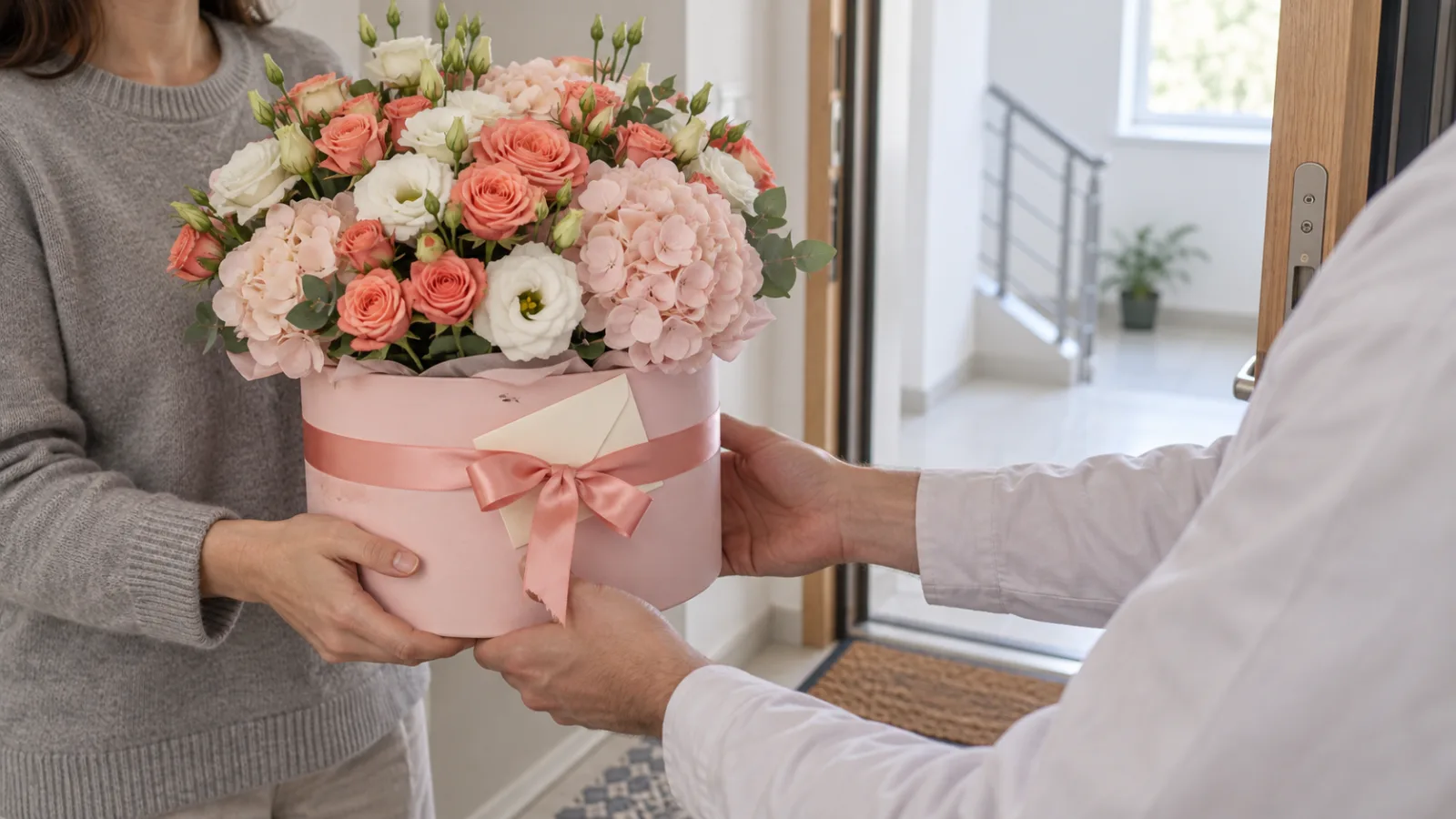
Every bouquet is put together on the day the order comes in, not pulled ready-made off a shelf. In the city centre, delivery is free, and the bouquet card shows the delivery time; an express order can go out the same day if the florist already has the bouquet in stock.
Move further out and the zone decides both the fee and the wait:
- Kitsilano, Mount Pleasant and Main Street, Fairview and South Granville, Commercial Drive and East Vancouver — a flat fee applies, confirmed in the cart
- North and West Vancouver, separate municipalities across the water on the north shore — a higher fee applies, confirmed in the cart
- suburbs beyond the listed zones — priced on request, confirmed before payment
Between 11pm and 7am, any address can still be reached by arrangement, at a price quoted separately rather than fixed in advance. Ordering for a chosen date and time slot works for every zone, and the rate is charged per address, once, no matter how many bouquets travel there together.
Prices for roses and mono bouquets, for boxes and for peonies, and for designer bouquets sit in the grid above, since the amounts change over time. Before the courier leaves, the florist photographs the finished bouquet, so the sender sees exactly what is being delivered. Full delivery zones and rates are listed on the delivery page.

Hotels belonging to almost every global chain sit in Downtown Vancouver, with Yaletown, Coal Harbour, Gastown and the West End close around it. For a hotel delivery, the order needs the guest's surname exactly as given at check-in and the room number if it is known; depending on the property, the bouquet either goes up to the room or is left at reception for the guest to collect. An office delivery works the same way, with the company name and floor instead of a room number.
Hospitals ask for more care. Many wards in Vancouver do not allow fresh flowers at all, so it is worth checking with the ward before ordering. Where flowers are refused, the courier hands them to the nurses' station instead, or the delivery waits for the day of discharge; at Vancouver General Hospital the same general practice applies, without a separate rule for each ward. A delivery to YVR, on Sea Island in Richmond, can be arranged on request, and the courier waits at the arrivals exit holding a sign with the recipient's name.
None of this depends on where the order is placed from. Orders are taken around the clock, no account or registration is needed, and the recipient's phone number is enough to get a bouquet moving even without a street address on file. Payment is by Visa or Mastercard, and a card issued abroad is simply converted at the sender's own bank rate, with nothing added on the Vancouver side.
The co-operative auction in Burnaby sits inside a wider growing region rather than on its own: the Fraser Valley around Abbotsford supplies cut flowers to Vancouver and much of western Canada. Greenhouses there raise orchids, and open fields grow daffodils, tulips, sunflowers and peonies through their respective seasons.
What the region cannot grow year-round still has to come from somewhere warmer. In 2022, Canada's cut-flower imports were worth roughly 156 million US dollars, and Colombia and Ecuador supplied most of that between them, at about 57% and 24% respectively. Ecuador's high-altitude farms are known for long, straight stems, and both Ecuadorian and French roses turn up in Vancouver's catalogues alongside British Columbia's own daffodils and tulips. That blend of local and flown-in stems shows up most clearly in mixed bouquets, where a florist can pair whatever is in season locally with a rose that had to travel much further.
Tulip fields, cherry blossom and summer peonies: the local calendar
Abbotsford's Lakeland Flowers grows more than seventy tulip varieties, and the fields are open from April into early or mid-May, which sets the rhythm for tulip season across the region. Vancouver's cherry blossom follows a similar window, usually running from late March into April, and the festival marking it moves a little each year.
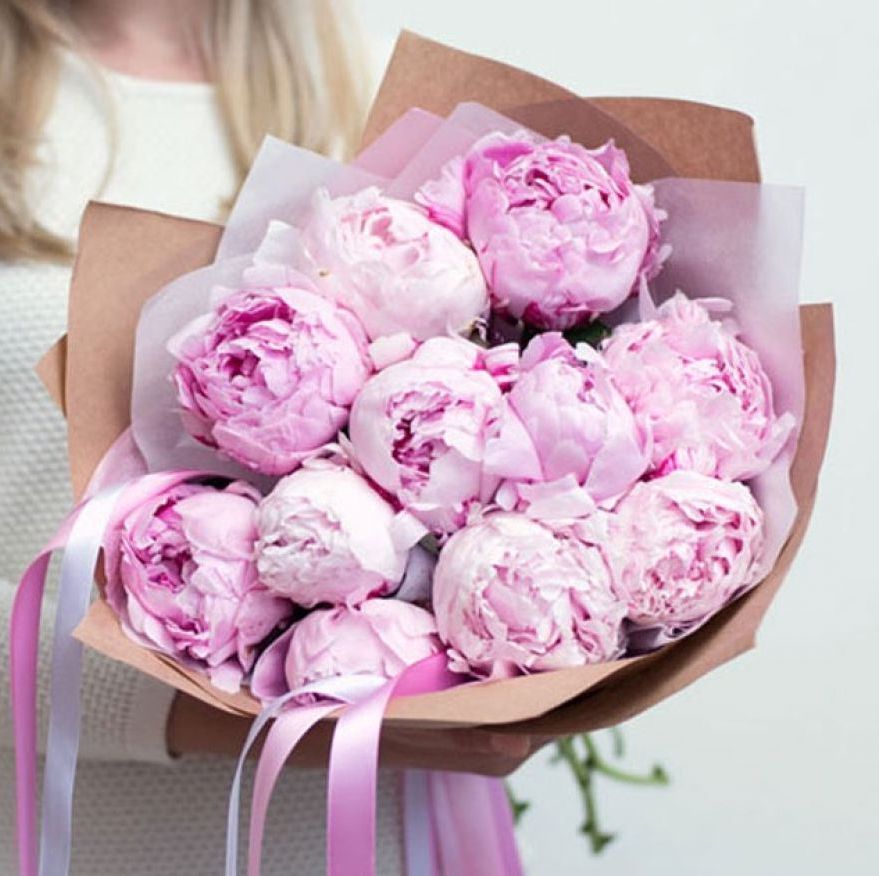
Peonies in the Pacific Northwest bloom in June and July, and that is the one stretch of the year when a Vancouver peony is genuinely local rather than flown in from further away. For the rest of the year, they arrive from elsewhere, the way most out-of-season flowers do. On Granville Island, the V&J Plant Shop has traded in the public market for more than forty years. Buyers who want a single variety on its own, rather than a mixed arrangement, tend to reach for mono bouquets built around whichever tulip or peony is in season.
Valentine's long weekend, Lunar New Year and Mother's Day
Valentine's Day sits in mid-February, and in some years it falls close to the Family Day long weekend, so the two celebrations run together. Lunar New Year is a moving date, usually landing in late January or February, and for the roughly 26% of Vancouver residents with Chinese heritage, recorded in the 2021 census, it carries its own etiquette. White chrysanthemums and white flowers generally are associated with mourning rather than celebration, the number four is avoided wherever possible, and a bouquet is handed over with both hands rather than one.
Mother's Day, always in May, is the single busiest day of the year for florists across Canada, and Vancouver is no exception. Late May brings UBC graduations, and school graduations continue through all of June, both good reasons to order flowers well ahead rather than the same morning. Thanksgiving, in October, tends to bring warmer, autumn-toned flowers into the mix.
Sympathy flowers usually go to the funeral home directly, while flowers meant as condolences for the family are sent to the home instead. On the busiest days of the year, delivery windows widen and couriers stop promising anything down to the minute, simply because so many addresses need reaching at once.
Rain from November to March: wrapping, doorsteps and dry flats
November is Vancouver's wettest month, and the rainy season broadly runs from November through to March. A flower basket or a box is easier to carry through that weather than an open, paper-wrapped bouquet, since the stems sit in soaked floral foam rather than open air and do not mind a few minutes outdoors. The courier hands the flowers to the recipient in person by default; a concierge or a neighbour only takes delivery if the sender has said that is acceptable.
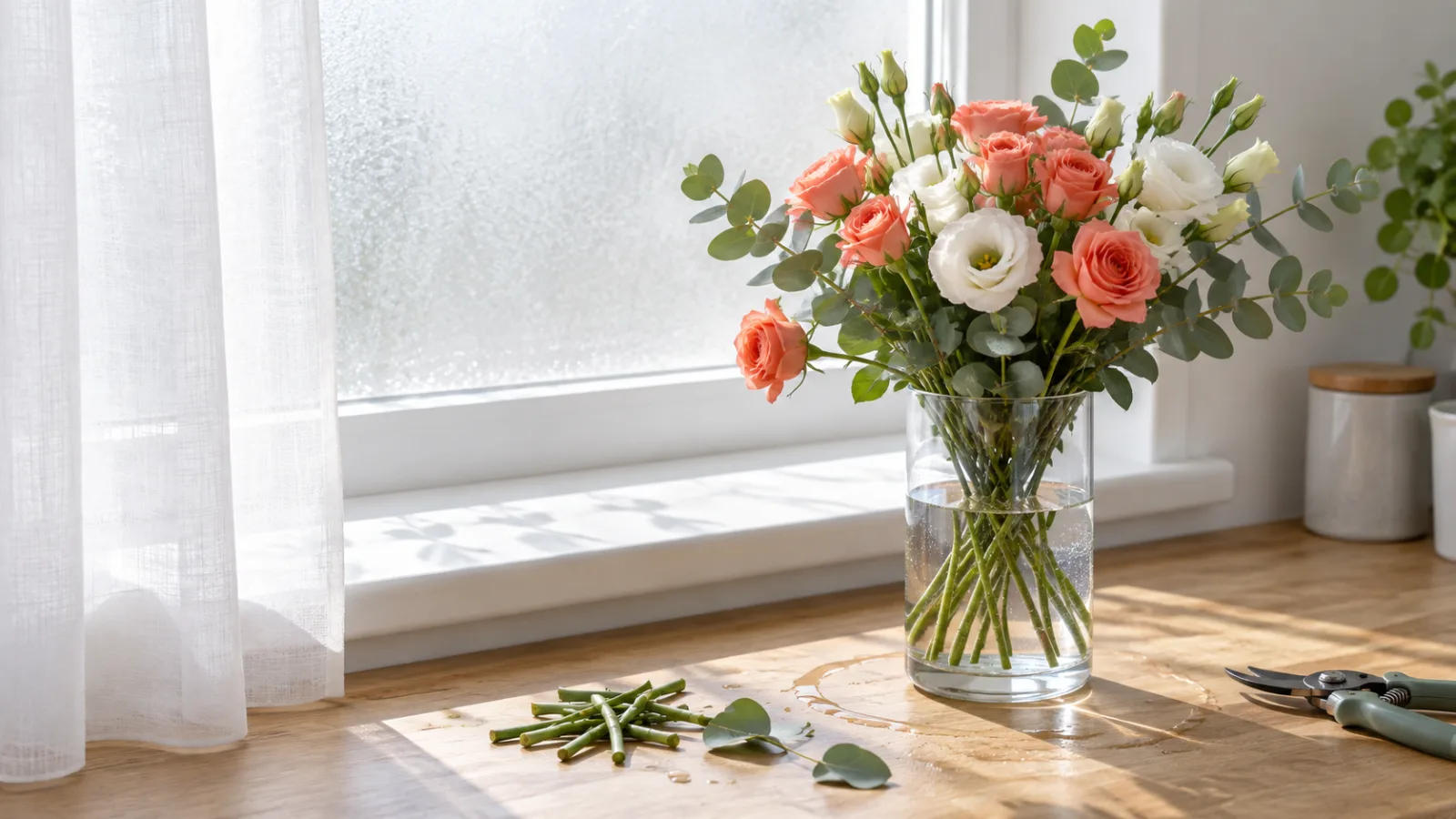
Indoors, the season brings a different problem. Heating dries the air inside a flat through the wet months, so a vase needs its water changed more often than the label on a card would suggest. Summers are milder here than the rain might imply, but in July and August a bouquet still should not sit on a sunny windowsill, where the heat through the glass does the same damage as anywhere else.