


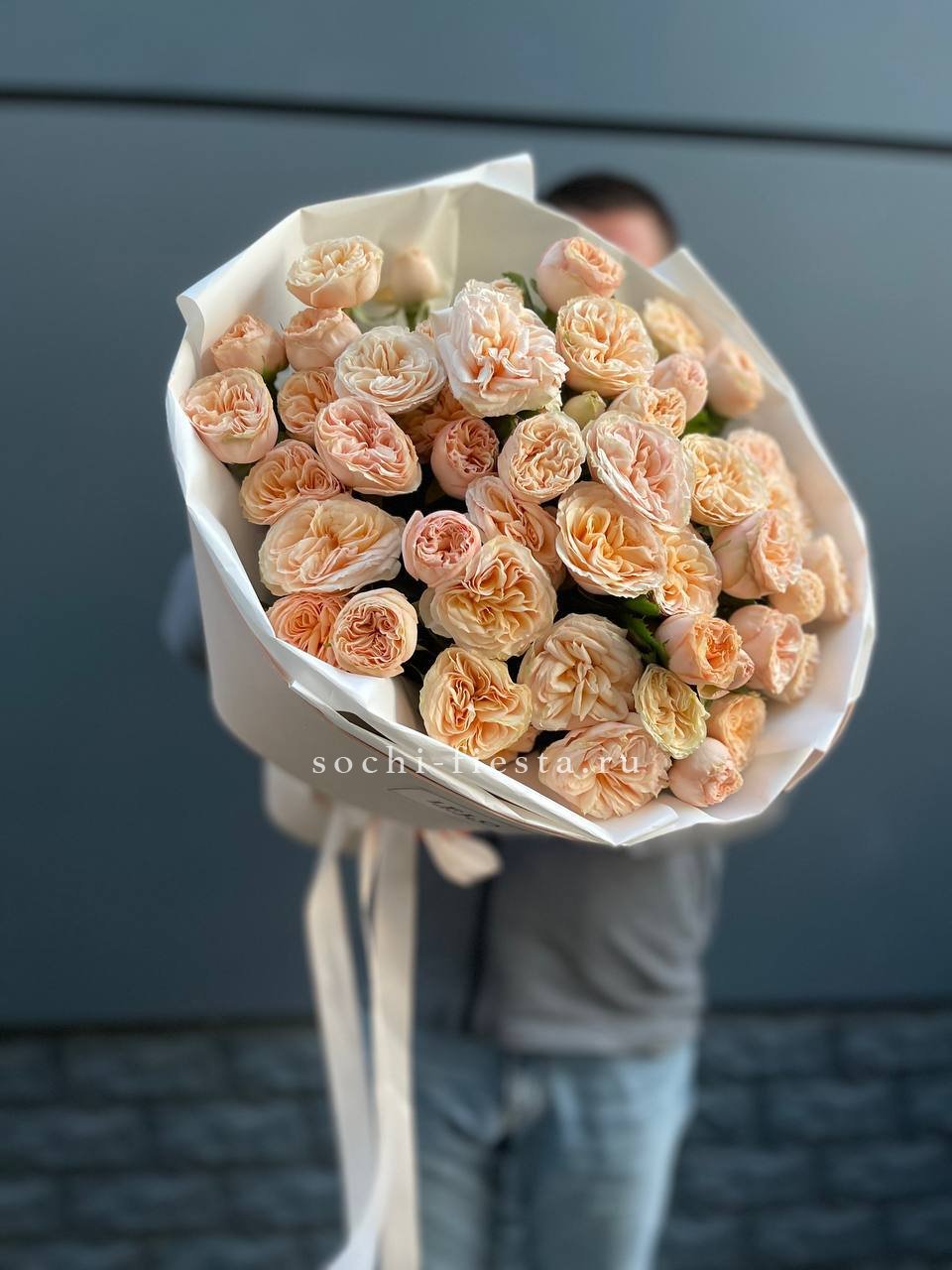


Spray roses in Zurich: a cluster on every stem, and how to choose one
Spray roses in Zurich carry a cluster of small heads on a single stem, unlike the classic single-bloom rose that florists treat as a mass flower for weight and focus. That difference means a modest bunch already looks full, and it is why the choice here starts with collection, shade and format rather than stem count alone.
What makes a spray rose different from a single-stem rose
Florists group flowers by the job they do in a bouquet. A rose usually counts as a mass flower, one bloom set at the top of its stem to give an arrangement weight and a visual centre. Baby's breath, statice and eucalyptus work as fillers instead, spreading between the mass flowers to close the gaps.
A spray rose does both jobs on one stem. Several small heads and buds branch off together, so the stem fills its own gaps rather than leaving room for a filler. That is why a handful of stems can already look like a full bunch, where the same number of single-stem roses would leave visible space between them.
The catalogue lists this branching stem under two names, spray roses and bush roses, and both mean the same cluster rather than a single bloom. For small-headed varieties a dense, solid-looking bunch tends to start around two dozen stems, though that number is a guide rather than a fixed rule.

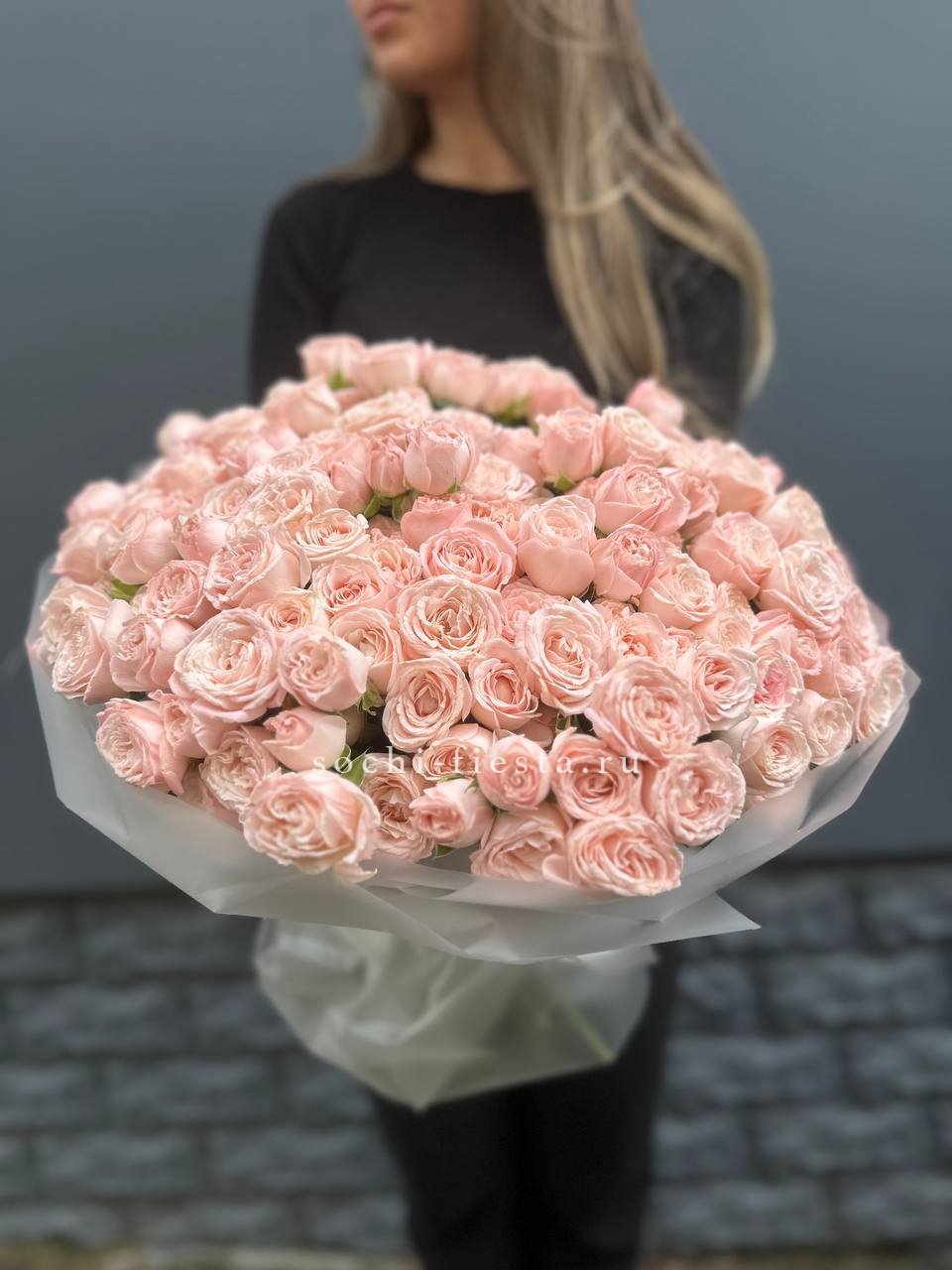
The section holds five collections, and each gives a different idea of what spray roses in Zurich can look like. Misty Bubbles is the largest, a good first look at the cluster shape. Bombastic garden roses and Juliette garden roses each carry the family name into their own collection, on the same branching stem.
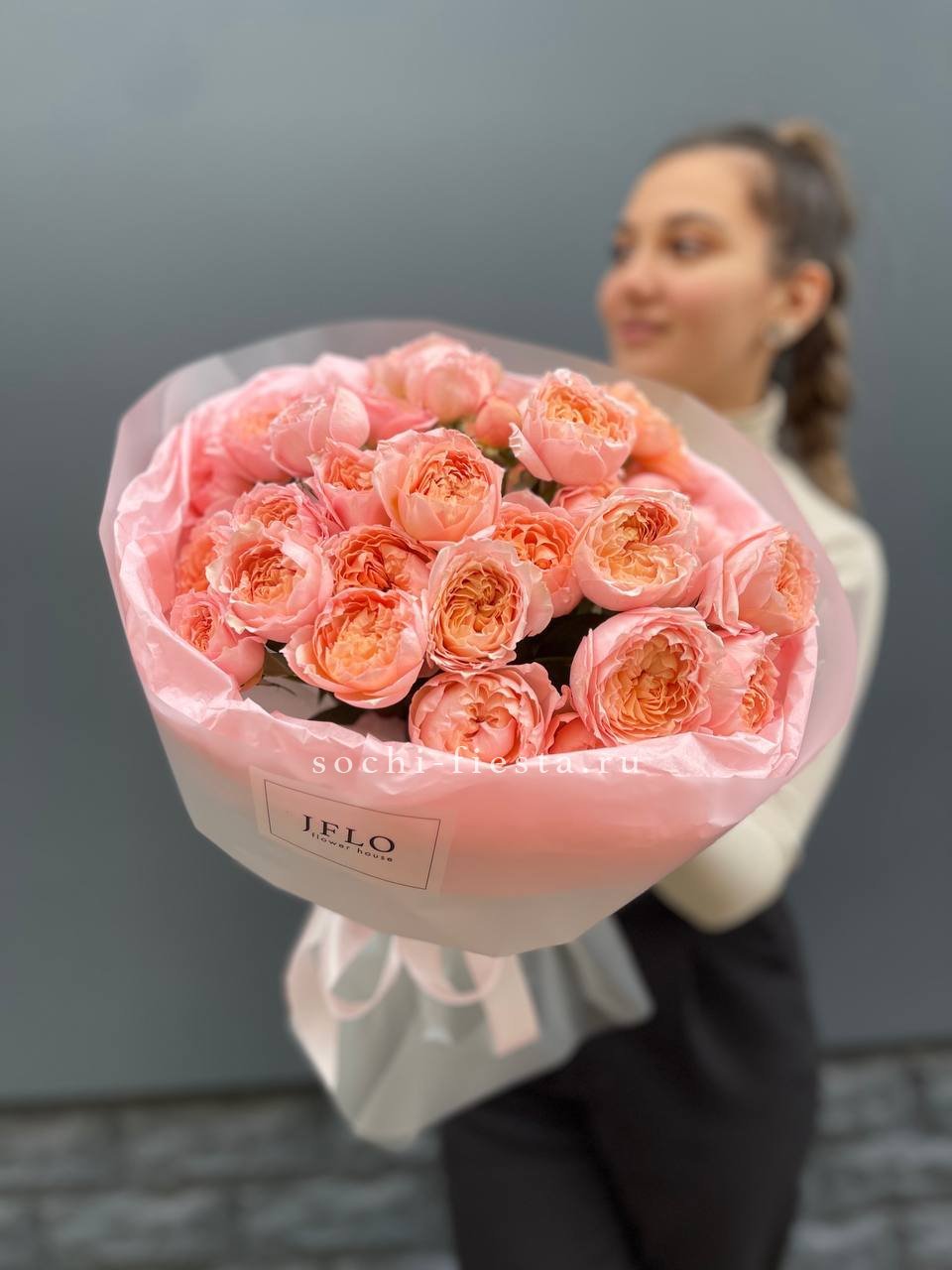
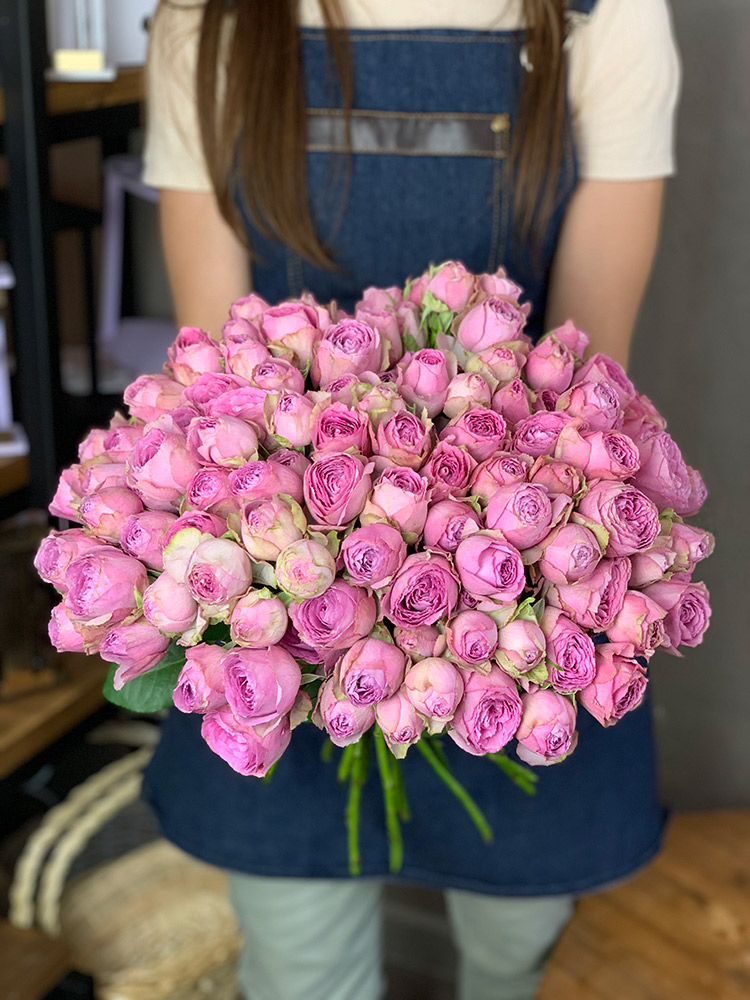
A different collection carries a different head shape or colour rather than a different flower. Peony-shaped garden roses build their heads from many short petals packed close together, a form bred most often into English roses in the style of David Austin. Lavender roses, sold by the stem stand apart by colour rather than shape, a cool purple that most bunches do not carry.
Colour narrows the choice fastest after that. A monochrome bunch stays inside shades of one colour, from pale blush to a deeper rose, and reads as calm. An analogous scheme pairs neighbouring colours, such as blush and lavender, for contrast without clashing. Chamomile is the filler that regularly joins a spray rose bunch, paired with Misty Bubbles for a looser look.
Bouquet, box or pot: which format suits the occasion
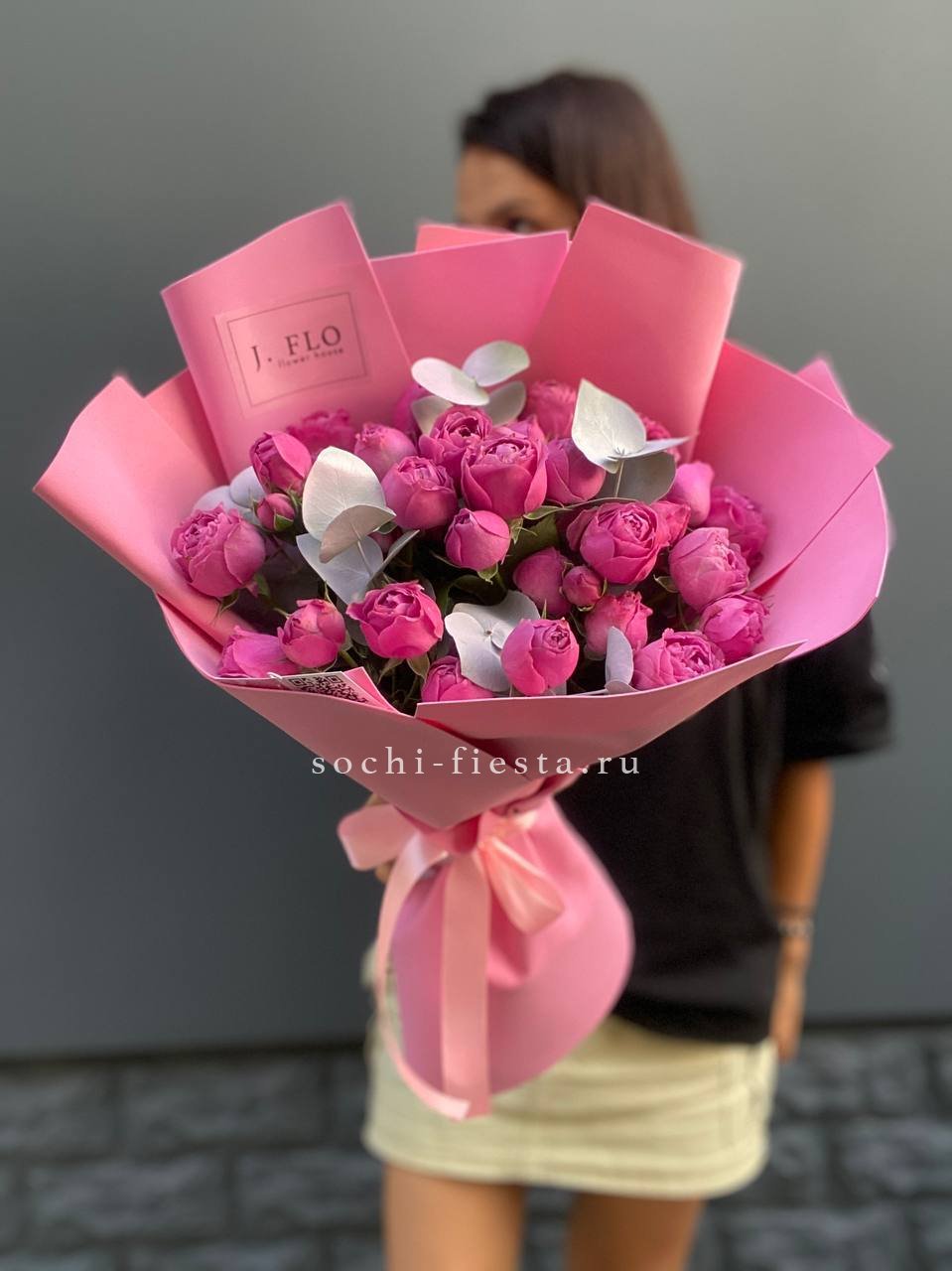
Format decides almost as much as colour. A hand-tied bouquet is sized by stem count, from eleven stems for a first gift up to fifty-one for a bigger gesture, with several sizes in between for a different table or a different budget.
A box changes how the roses sit rather than how many of them there are. The Misty Box and the Bombastic Box Premier hold their stems in wet floral foam, so the box stands without a vase. Kraft paper wrapping keeps the outside plain, letting the colour of the roses stand out on their own.
Two formats put the roses outside the usual bouquet altogether. Peony roses also come planted in a jute pot instead of cut and wrapped. Lavender roses are sold individually, so the buyer sets the count instead of choosing a preset size.

A rose in a vase lasts around a week, sometimes stretching to ten days with the right care, and nothing about the spray or bush form changes that range. A fresh angled cut when the bouquet arrives, repeated every few days, keeps the stem able to take up water.
Any leaf that would sit below the waterline should come off. Change the water every day or two, and keep the vase away from radiators, direct sun and a bowl of fruit. A box or a jute pot works differently: the foam inside is watered daily in a thin stream over its whole surface, and the box is never tilted.
Spray roses delivery in Zurich: made to order, photographed first
Delivery here starts after payment clears. The florist buys the stems for that order rather than pulling them from a standing stock, and puts the bouquet together to order rather than in advance. Before the courier leaves, the finished bunch is photographed and the photo goes to the sender, who can still ask for a change at that point.
If a particular shade is not in stock, the florist substitutes a close colour and price, and that substitution shows up on the same photo rather than arriving as a surprise. Most orders go out and are handed over on the day they are placed, though the exact timing for a given bouquet is shown on its own page rather than promised here. Delivery to the city centre in Zurich is free, and payment is taken by Visa or Mastercard on the order page.
A first look at the format starts with Misty Bubbles, where the cluster shape is easiest to see. For a fuller, more sculpted head, peony-shaped garden roses make the case for the collection on their own. Zones, timing and cost for a given address are on the delivery page.