



Flowers in London: where they land, what is in season and how to order delivery
In the month before Valentine's Day 2017 Heathrow handled around 570 tonnes of roses, three times the volume of an ordinary month, and more than half of the roses that pass through the airport come from Kenya. The figure explains a lot about flowers in London: about nine in ten cut flowers sold in Britain are imported. What a bouquet costs and how long it lasts depends on the route it took to the city. Before you choose flowers in London, it helps to know which route is which, what is in season this month and which format will survive a wait at a hotel reception.
Where the flowers sold in London come from
The Netherlands is the main supplier, and in an ordinary month it accounts for up to three quarters of Britain's cut-flower imports: Dutch greenhouses and the Aalsmeer auction are just across the Channel. The second route is by air. Almost all the cut roses imported into the country arrive by plane, more than a third of them through Heathrow, where Kenyan farms supply the largest share. Since the trade rules changed in 2021, a bigger share has flown directly from Kenya and Colombia.
Britain has one short route of its own. Cornish daffodils are cut from January to April, and around Mothering Sunday they are the freshest and most plentiful stems on any London stall. Everything else has travelled to get here.
The practical point: freshness depends less on the country of origin than on how many hours the stems spent warm on the way. In the aircraft and the warehouse they travel at about two degrees, and every hour on a warm loading bay is taken off the vase life. At JFLOO the flowers are bought for your order after you pay, and the florist sends a photo of the finished bouquet before the courier leaves.
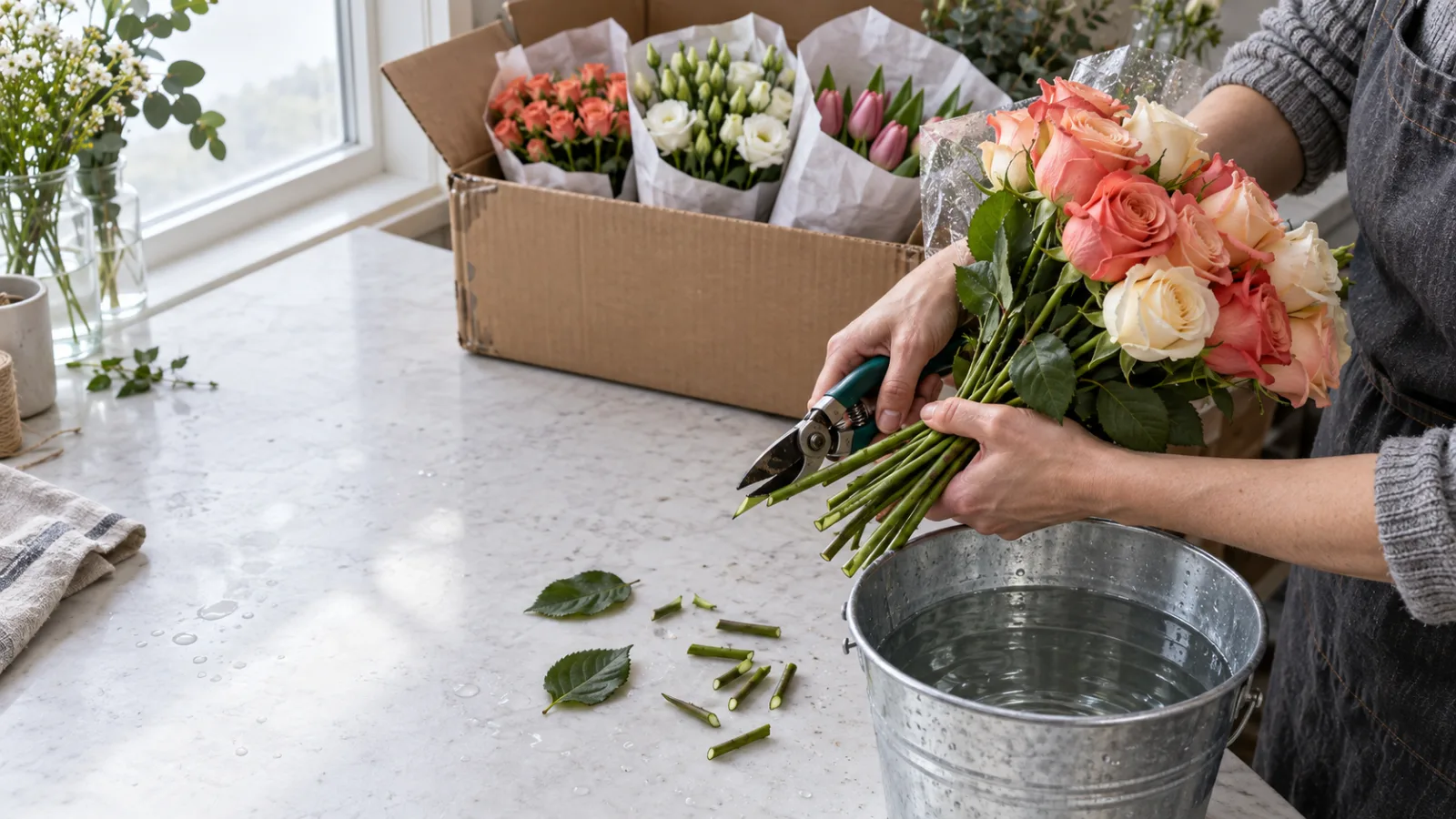
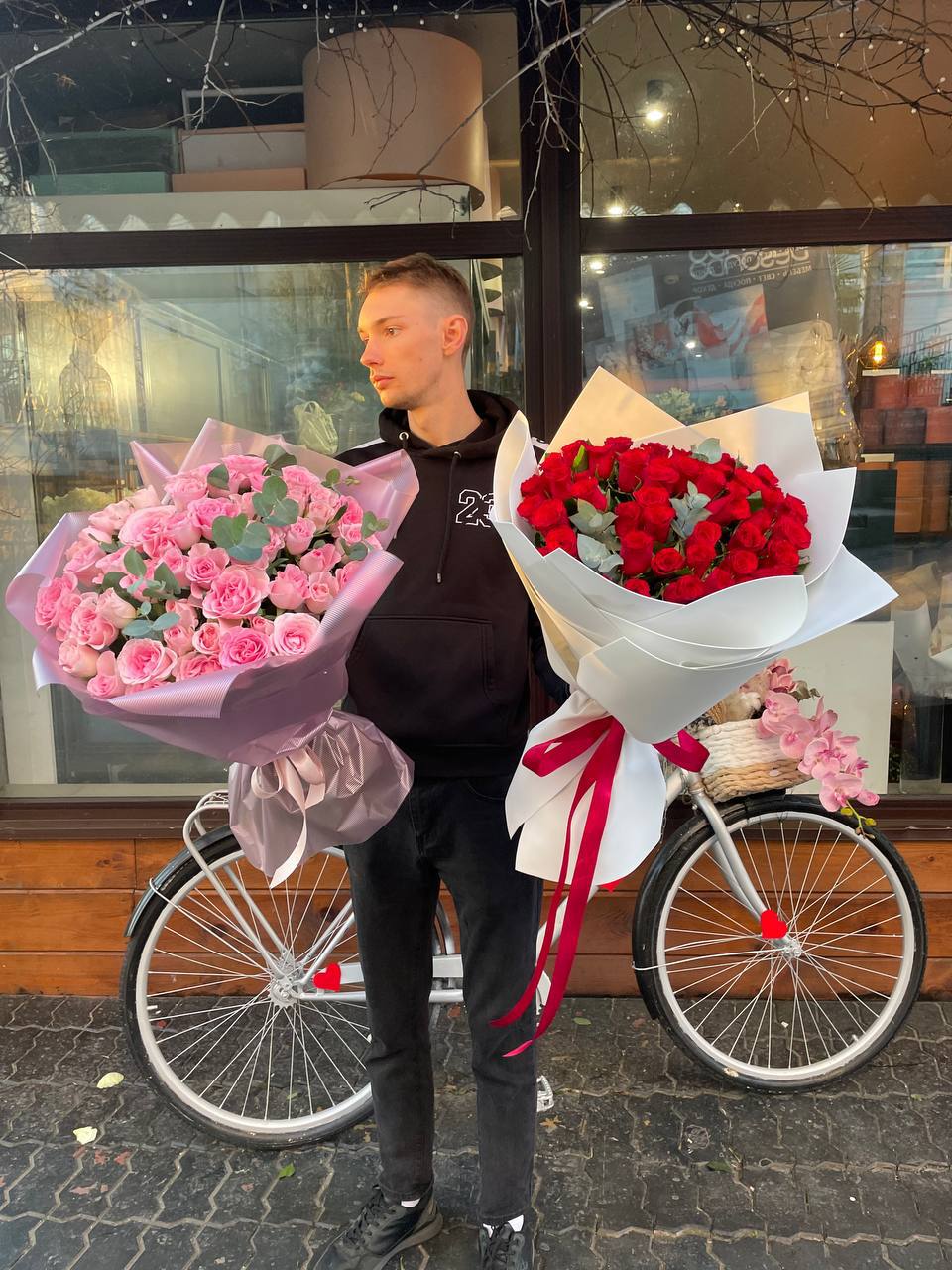
Roses carry the London catalogue: the roses section alone holds more than five hundred bouquets, sorted by colour, stem count, height and type. Spray roses carry several small heads on one stem, garden roses a dense cup of petals, French roses outer petals turned back by hand, Ecuadorian roses the biggest heads and longest stems. All are grown under glass year round, so a rose bouquet suits any date.
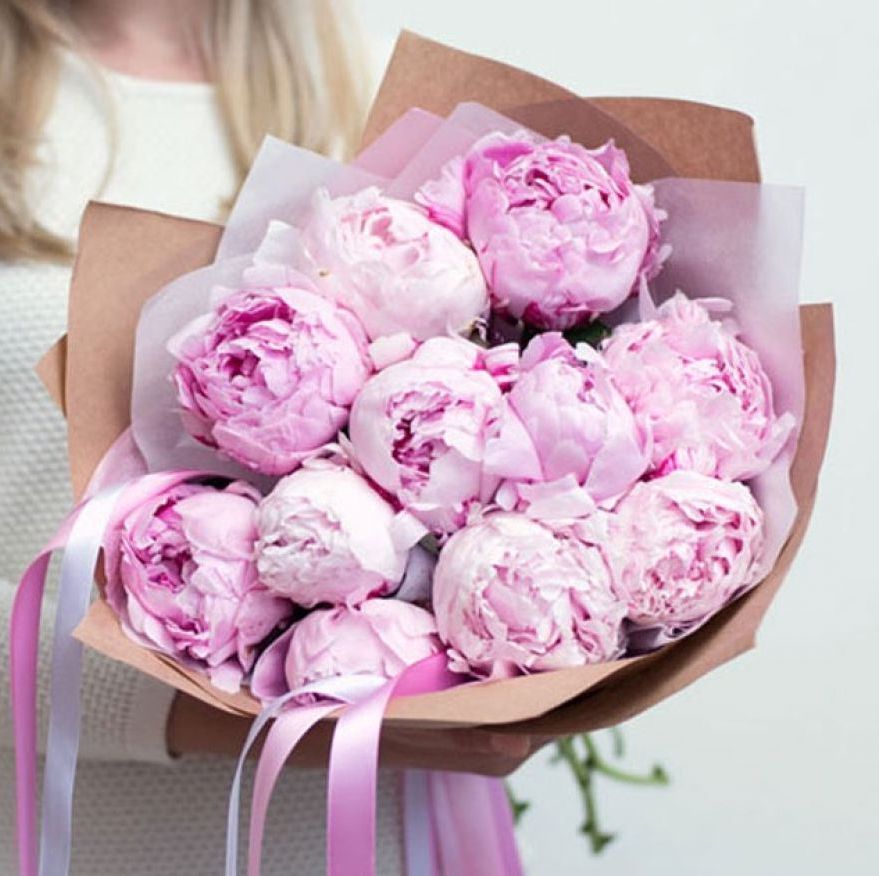
Peonies keep to a few weeks. In Europe the season runs from late April to the end of June, the same weeks as the Chelsea Flower Show, five days in May when London is talking about flowers anyway. That is when peonies are large and noticeably cheaper; in other months they are flown in from the southern hemisphere and cost more. Dutch greenhouse tulips are cut from December to May and Cornish daffodils from January to April, so both belong to winter and spring.
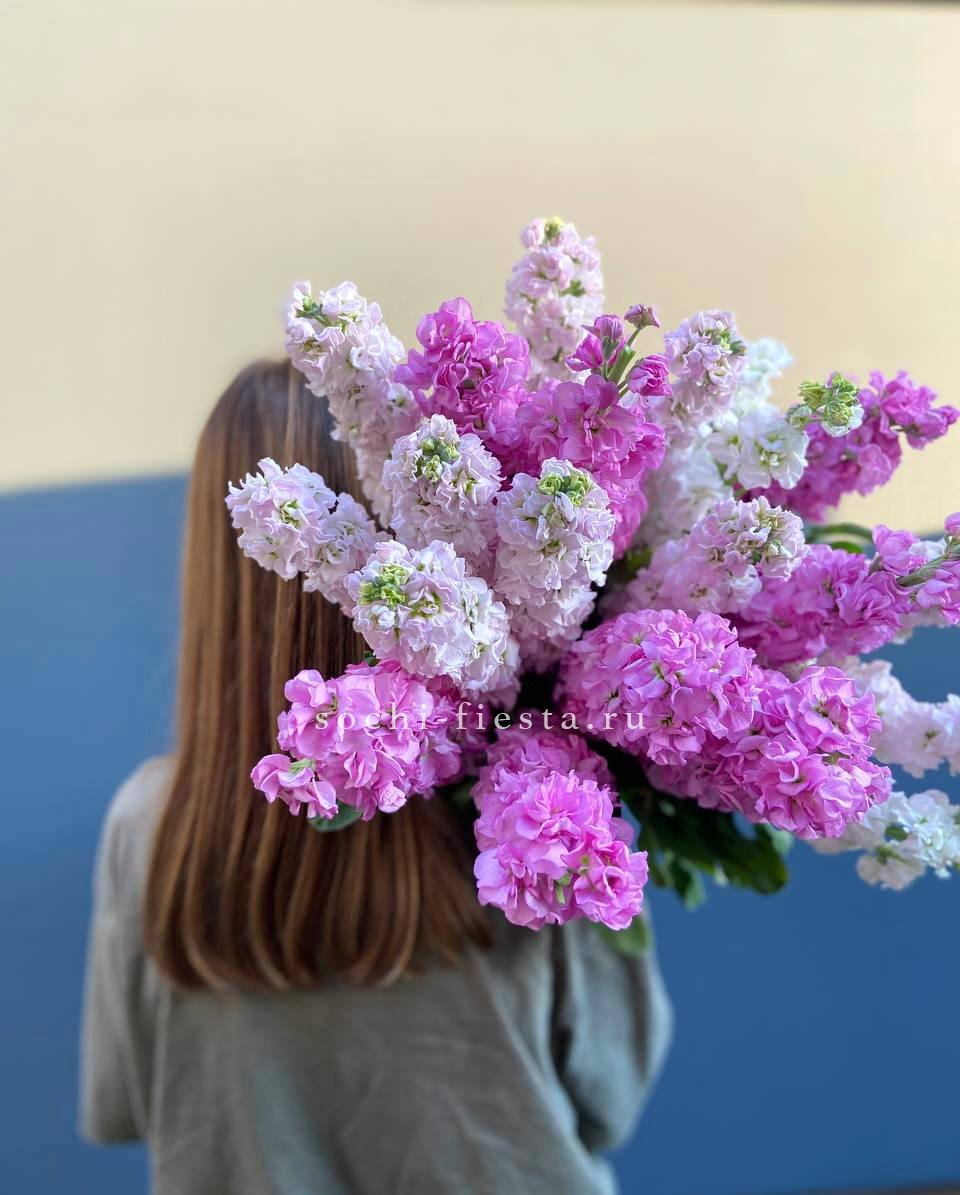
Chrysanthemums, alstroemeria, gerberas, lilies and lisianthus are on sale all year, which makes mono bouquets of a single flower the safest choice when the date matters more than the variety. If the mood matters more than the variety, designer bouquets bring several kinds together in one palette.
Hand-tied bouquet, hat box or basket: choosing by London address
A hand-tied bouquet in paper suits a handover in person with a vase waiting at home. A hotel room in Mayfair or Knightsbridge, a reception desk in the City or an office tower at Canary Wharf may have no vase at all, and the flowers can wait there for hours. For those addresses there are flowers in boxes and flower baskets: the stems stand in floral foam soaked with water, so the arrangement needs no vase and tolerates the wait.
Hotels differ: some let the courier go up to the room, others take the bouquet at reception, so give the surname under which the guest checked in and, if you know it, the room number. An office needs the company name and the floor; where there is access control, the bouquet goes through reception and you are told who took it. Hospitals are the hardest address: NHS hospitals do not allow fresh flowers in intensive care or high dependency units, because standing water in a vase breeds bacteria, and other wards set their own rules. The manager checks with the ward first and, if flowers are not accepted, arranges a handover at the nurses' station or on discharge. For a room full of people, armfuls can be seen from the far end of the hall.
What flowers cost in London
Prices are in pounds, and they rise with the format. Mono bouquets and roses sit at the lower end, flowers in boxes, mixed bouquets, peonies and armfuls cost more, designer bouquets more again, and designer giants top the range. The header switcher shows prices in dollars, euros or roubles for reference only: what is charged is the cart total, bouquet, extras and delivery included, and a card in another currency is converted by your bank at its own rate.
The number of stems is only part of the price. The catalogue sorts roses into 40, 50, 70 and 80 centimetre stems, and the longer the stem the more each flower costs, which is why an Ecuadorian rose is dearer than a Kenyan one of the same colour. Season is the second factor: a peony in May costs less than one in November, a daffodil in March less than at any other time, and before Valentine's Day and Mothering Sunday wholesale prices rise with demand. Format is the third: a box or basket adds the container and the foam, so it usually costs more than a paper-wrapped bouquet of the same stems. To buy flowers in London at a sensible price, go with the season and let the florist swap a scarce variety for a close one.
Flower delivery in London: zones, timing and the handover
Flower delivery in London is free in the centre, that is Westminster, the City, Kensington and Chelsea and the south of Camden, from 7 am to 11 pm. Most bouquets are delivered on the day they are ordered, and the bouquet card shows the exact delivery time for each one. Every other district has a flat rate that appears in the cart before you pay:
- Zone one — Islington, Hackney, Tower Hamlets, Southwark, Lambeth, Hammersmith and Fulham, Wandsworth, Newham
- Zone two — Greenwich, Ealing, Richmond upon Thames, Barnet
- Night hours — any zone by prior arrangement
A chosen date and time slot is available in every zone. Before Valentine's Day and Mothering Sunday the convenient slots go days ahead, so order early. The recipient is not called in advance unless you ask, the only exception being a building that cannot be entered without a call. If nobody is home, the courier waits up to fifteen minutes and calls the recipient; with your consent the bouquet can be left with the concierge. Zones and rates are on the delivery page.
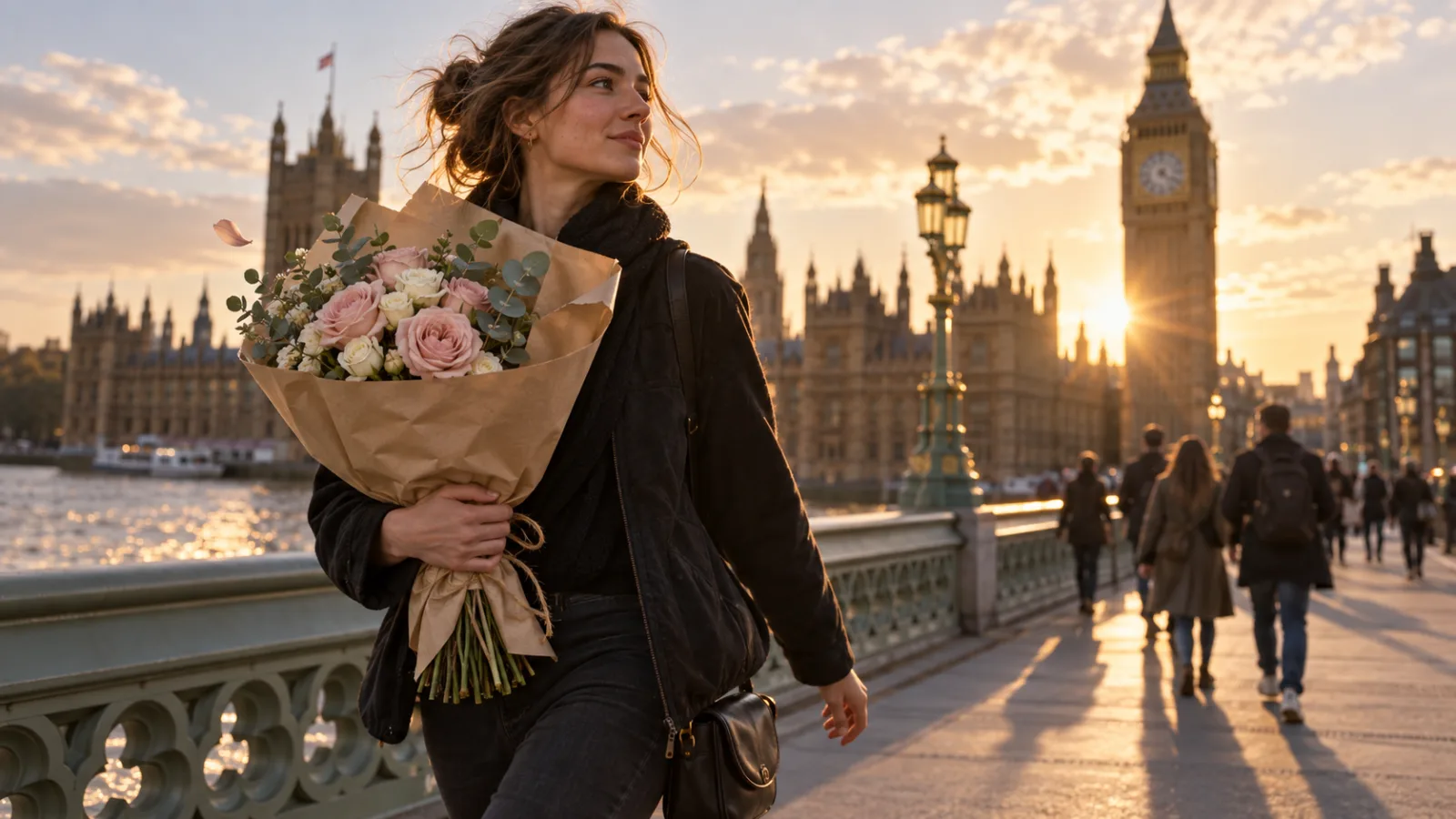
Many bouquets in London are ordered from another country: parents of students, friends of someone who has moved to England, companies with a partner in the City. No account is needed, only a name and a phone number, and that number receives the bouquet photo and the delivery report. If you do not know the exact address, the recipient's phone number is enough: the manager finds out discreetly where to deliver without revealing the sender or the occasion. The recipient learns who sent the flowers only if you sign the card.
You pay on a secure page with a Visa or Mastercard from any bank; the courier takes no money at the door. Orders are taken around the clock on the site, on Telegram and on WhatsApp. The order can be changed until the bouquet has left for the recipient and no later than six hours before delivery. If the address is outside the listed zones, the manager checks the route and confirms the price before you pay. At the airport the courier waits at the exit with the bouquet and a name card.
A bouquet in a London flat: radiators, rain and the odd heatwave
London's climate is kind to cut flowers: around eight degrees by day in January, around twenty-four in July, rain in small doses all year and snow only occasionally. The street does a bouquet little harm; the trouble starts indoors. From October to April it is the radiators, whose dry air draws water out of the petals faster than the stem can replace it. In summer it is the rare but sharp heatwave: the city has recorded temperatures above forty degrees for the first time on record. Get the flowers into water as soon as they arrive and keep to a few habits:
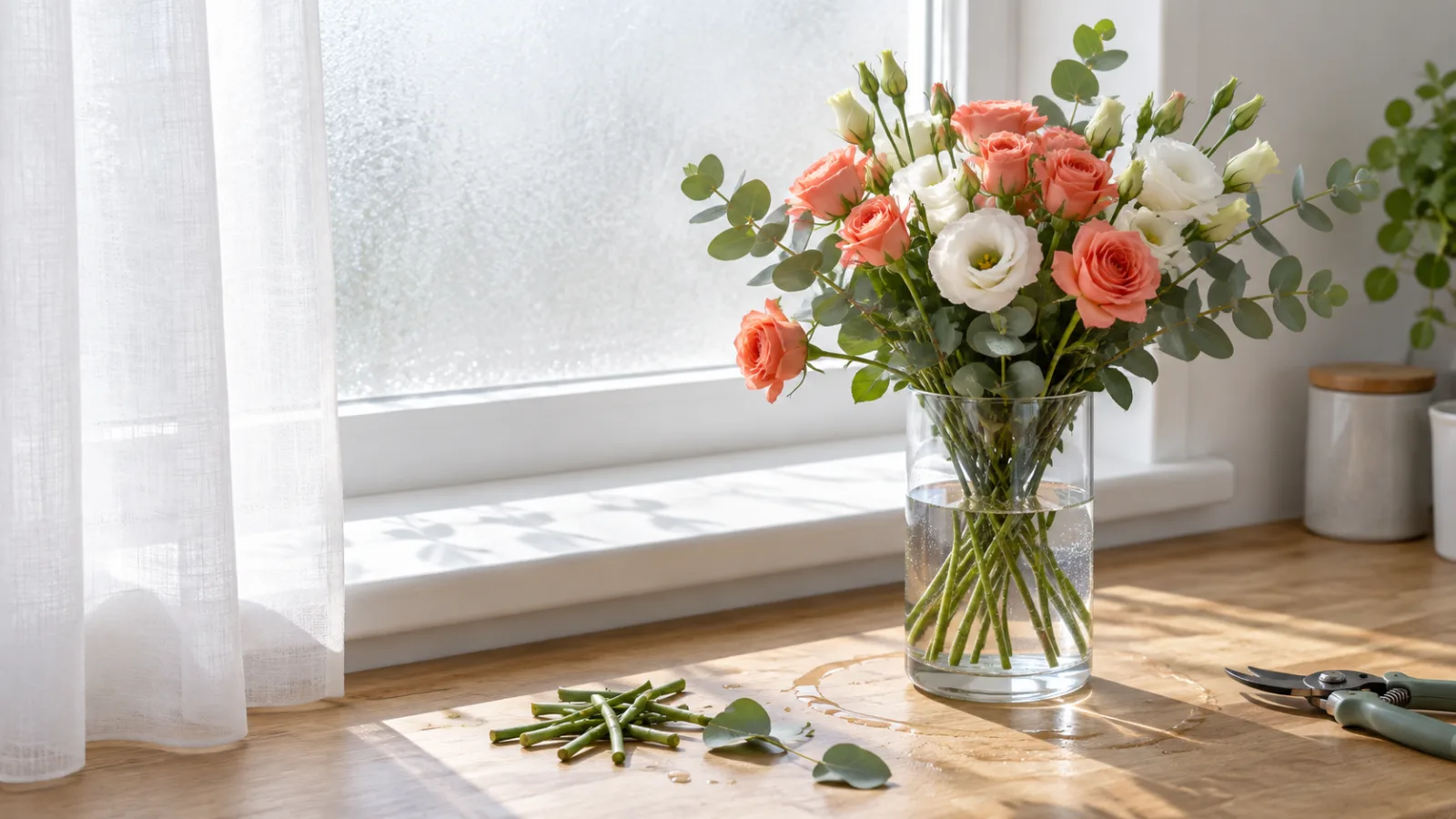
- recut the stems at an angle with a sharp knife or secateurs, taking off 1–2 cm, and strip any leaves that would sit below the waterline;
- keep the vase away from radiators, the fireplace and the fruit bowl, since ripe fruit gives off ethylene;
- change the water every day or two;
- water a boxed or basket arrangement into the foam across its whole surface and never tilt it;
- if a hydrangea droops, submerge the whole head in cool water for an hour or two;
- keep daffodils in their own water for the first day: their sap shortens the life of the other stems.
With that routine roses last about a week, and chrysanthemums, carnations and alstroemeria two to three.