


720x720_q85.jpg?v=1787378290)


Designer bouquets in London: the hedgerow habit and how to brief one
Designer bouquets in London have one reference point in a shop window. In 1929, Constance Spry filled the glass at Atkinsons on Old Bond Street with hedgerow plants and stopped passers-by in their tracks, drawing the attention of fashionable society. An authored arrangement here still leans on an unexpected stem and a clear brief to the florist, which leaves two things to decide: what to put it in, and how to describe it.
Hedgerow stems in a Bond Street window: London's designer habit
Crowds gathered outside the Atkinsons shop window, and fashionable society noticed it: flowers were not expected to look like a hedgerow. Spry later made a signature of setting kale beside roses and hothouse blooms, pairing an ordinary vegetable leaf with flowers bred under glass. That pairing still sets the tone for a London designer order: a florist here will take a branch, a stem of foliage or an odd leaf as readily as another rose, if the brief asks for it. Greenery earns its place by holding the shape together, carrying the eye from one flower to the next rather than filling the gaps between them. Asking for it by name, a trailing branch, a run of foliage, is often enough to steer a bouquet away from the obvious.
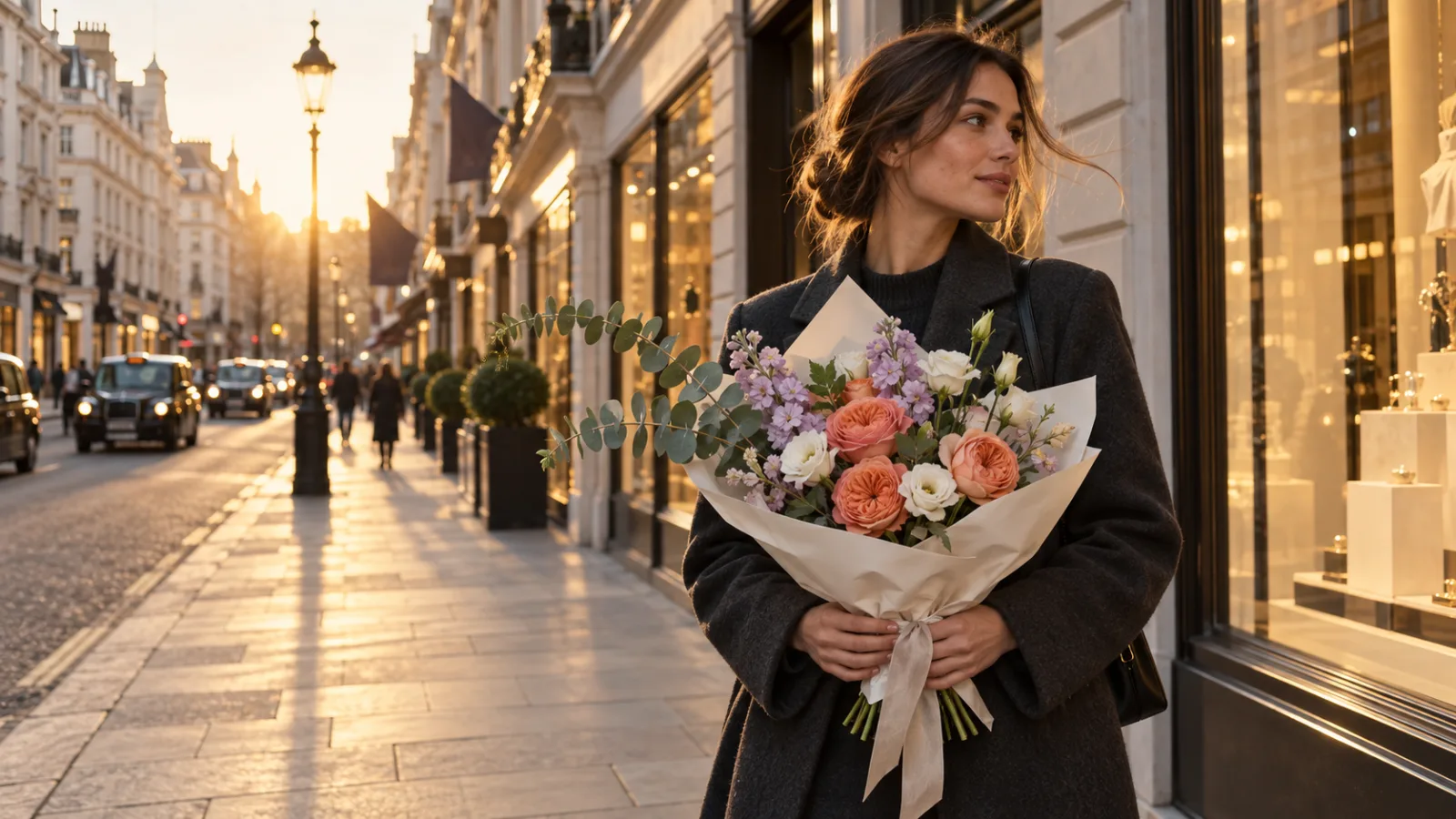
A proper spiral hand-tied bouquet is built by laying each stem at the same angle and crossing them all at one point, which locks the bunch so it stands upright once it is put down. It still needs a vase at the other end, because nothing holds the stems once the tie comes off. A box or a basket skips that step: the stems sit in florist's foam soaked with water and stand without any container of your own. The foam wants a thin stream of water over its whole exposed surface every day, never tipped to one side, or the centre dries out unevenly while the edges stay wet. A woven basket does not hold water on its own, so a liner goes in first, between the wicker and the foam. For a hotel room, an office desk or a hospital ward, hotels, offices and wards each work to their own rule, and it is worth asking about that before the courier sets off. Choosing between flowers in boxes and flower baskets usually comes down to whether the bouquet is walking somewhere or staying put.
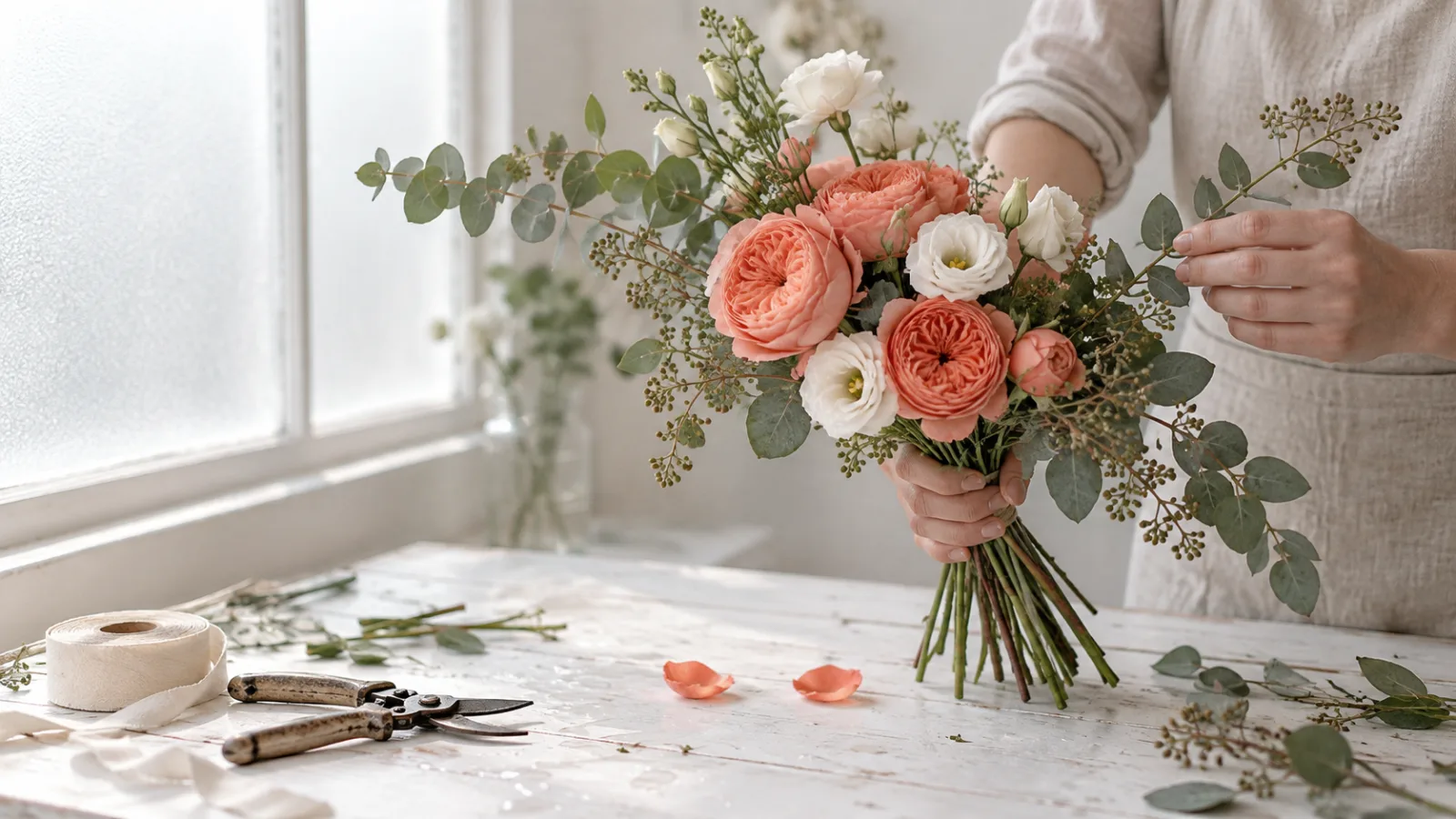
Briefing a florist starts with the occasion and a figure to spend, said in a chat message before any payment goes through, and the manager sends back a few options with photographs and prices to choose from. A photo of a bouquet you like works the same way: the florist can show similar work, priced, rather than guess at a description typed out in words. Palette is easiest named in one word: monochrome stays inside one colour, analogous moves between neighbours on the colour wheel, and complementary sets two opposing colours against each other. British growers cut peonies from late April into June, and that stretch is the window to ask for them in a designer mix. When something on the brief is out of season or out of stock, the florist swaps it for a flower close in shade and price, and the swap shows on the photo sent before the courier leaves, with time left to ask for a change. Each bouquet here is put together to order, most go out on the day they are placed, and the delivery timing is shown on the bouquet's own page; designer bouquet delivery in London runs from there.
For a bigger, more sculptural show, Designer Giants scale the same idea up; for an everyday gift on a calmer brief, mixed bouquets draw from the same palette menu without the branch. A box stays the steadier choice whenever the bouquet has to sit and wait before anyone can put it in water.