
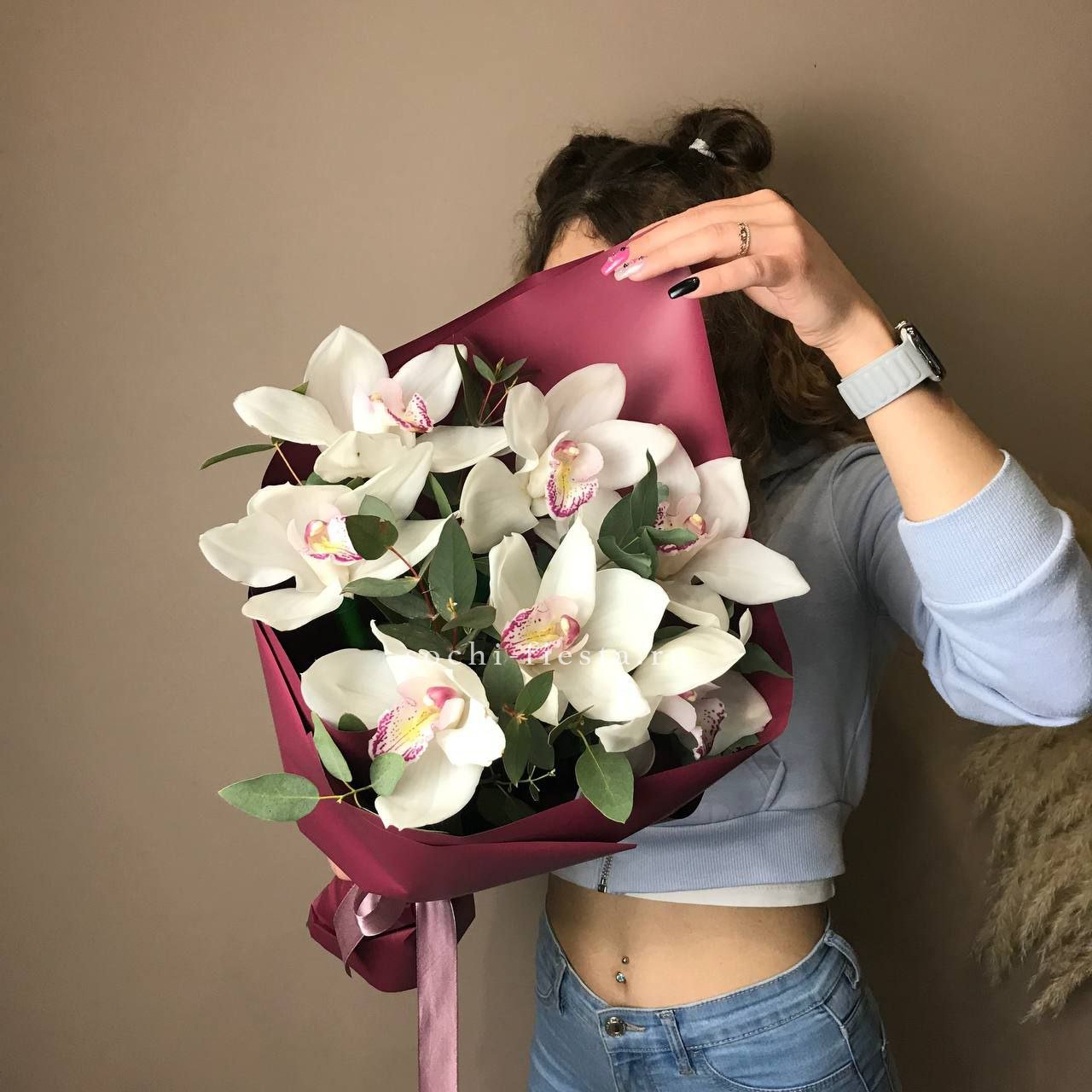


Plants in London: orchids and florariums for a winter indoors
January afternoons in London average about 8–9°C and nights closer to 2°C, so a plant bought as a gift spends its first months indoors, where central heating running from October to April sets its conditions rather than the weather outside. Choosing plants in London therefore starts with the room it will live in and the person who will water it, not just the moment it arrives.
An orchid, a cactus or a glass bowl: choosing the format
The plants on offer fall into four groups: flowering plants, mostly orchids; cacti; potted plants sorted by type; and florariums, the glazed bowls built around succulents. A flowering moth orchid keeps its blooms for two to three months, which is the plainest reason to choose a living plant over cut flowers for someone who will have it on the windowsill for a while.
Orchids come in several formats here: on their own in a box, paired with roses in a jute pot (Orchid and Roses in Jute Pot), set in a hat box with lisianthus, or boxed together with chocolate. "Potted" in a name means exactly what it says and nothing more: whether a particular orchid grows in its pot or stands as a cut stem is shown in the listing and in the photo taken before the courier leaves. A florist can be asked to pick a suitable plant instead, and a photo with the price comes back before payment.
Plant delivery in London works the same way as the rest of the catalogue: each order is put together to order, the florist photographs it before the courier sets off, and a message asking for a change can still be sent from that photo. Most orders are delivered the same day they are placed, and the delivery timing is shown in the listing; how delivery works sets out the rest.
A hotel room, an office desk, a hospital ward or a Mothering Sunday visit each call for their own format, covered in the guide to flowers in London.

In 1829 a London doctor and botanist, Nathaniel Ward, found a fern and a grass growing inside a sealed glass jar; the jar had stood closed for about four years while they grew. His glazed case for plants became the direct ancestor of the florarium.
A closed glass case suits plants that like damp air, while an open bowl suits plants from dry climates: succulents and cacti, watered with a mist spray rather than poured from a jug. Succulents store water in their fleshy leaves, which can be up to nine-tenths water by weight, so an open florarium needs only an occasional spray rather than regular watering.
The catalogue includes the Florarium "Icosahedron" with Stone Rose Succulent and the Cube Florarium with Haworthia Succulent. "Stone rose" is a trade name for a rosette-shaped succulent rather than a species.
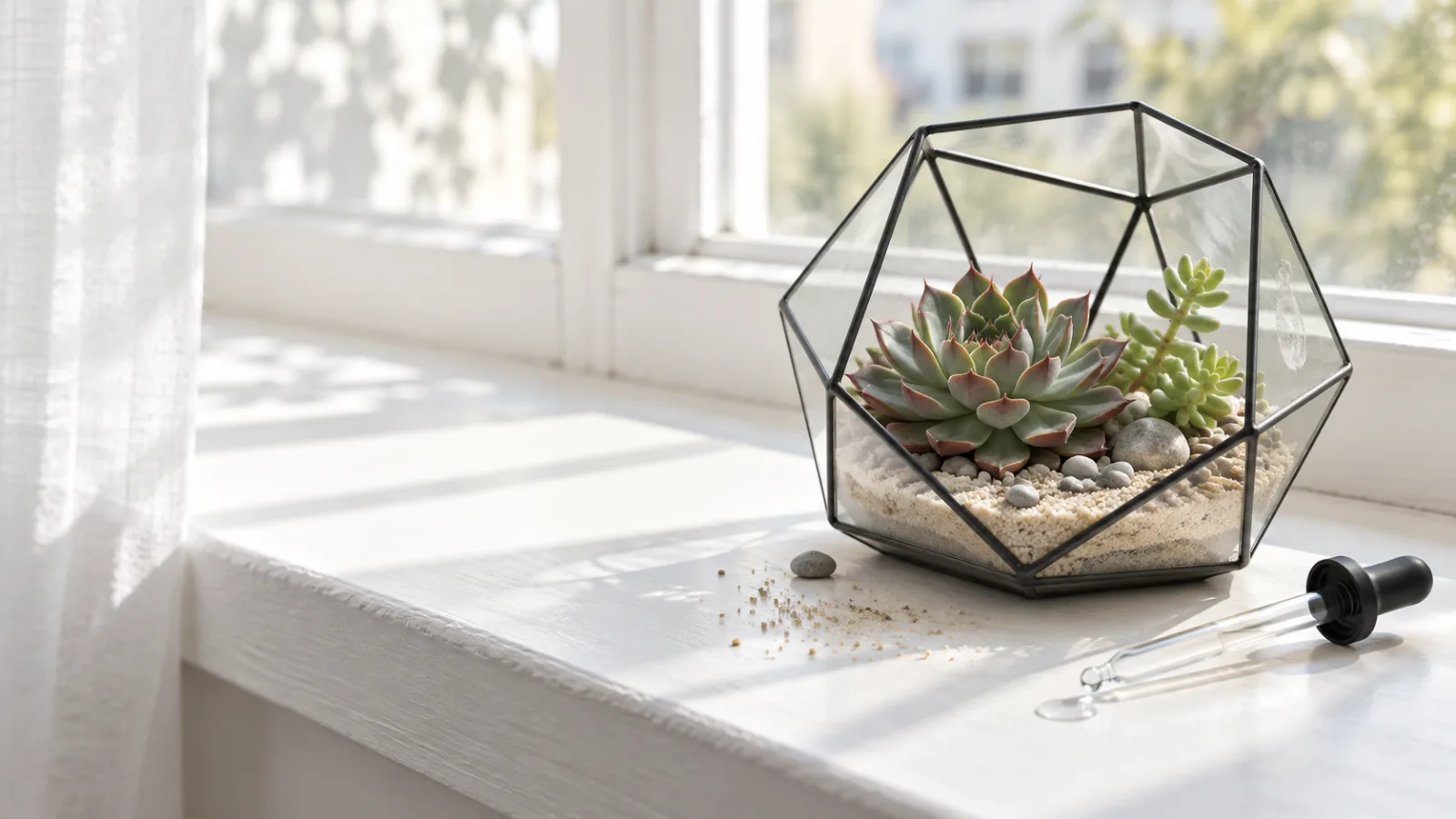
London's winter sets the terms for plants in London bought between October and April: January days average around 8–9°C, nights drop to about 2°C, and snow falls on about sixteen days a year. The RHS recommends keeping a phalaenopsis orchid at 16–19°C overnight, so through the coldest months it lives indoors and nowhere else.
From October to April the plant's main enemy is dry air from the central heating rather than the cold itself, which is why a pot does better off the radiator than on a windowsill above one. Summer days average around 24°C, and direct midday sun through a window can scorch an orchid's leaves, so a bright spot out of full sun suits it in both seasons.
The RHS advises watering roughly once a week during active growth and less often in winter, always letting any water left in the saucer drain away.
A first plant for someone in London comes down to the room it is going into and how much watering they are likely to manage: an orchid for a warm windowsill, a florarium for a shelf that gets no attention for weeks. The flowering plants include the orchid formats described above, floralariums and cacti cover the low-maintenance end, and potted plants by type sort the rest by kind.


