


Weddings & events in London: two bouquets, royal myrtle and lily baskets
After Princess Elizabeth's bridal bouquet went missing somewhere between the 1947 ceremony and the wedding breakfast, the Longman florists began making two identical bouquets for every royal wedding that followed, and weddings & events in London still often start from that same question. The London section holds a bridal bouquet, larger wedding bouquets and baskets for the reception, and the first decision is simply how many bouquets the day will need.
Delivery zones across the city are listed on the delivery zones page, and the same booking form works for an order placed from abroad or sent to a London hotel, as explained under sending flowers to a London hotel or from abroad.
Two bouquets, not one: a London habit since 1947
In 1947 the bride's bouquet went missing between the ceremony and the wedding breakfast. From then on the Longman florists made two identical bouquets for royal weddings. When Diana married at St Paul's in 1981, the court again asked for two matching bouquets rather than one.
The habit still suits an ordinary wedding day. Pairing the bridal bouquet with a second, larger bouquet gives a bride something to throw, or a fresh stand-in once the first has been carried for hours and handed round for photographs. Each bouquet is made to order, and the florist photographs both before the courier leaves, so you can check they match and ask for a small adjustment.
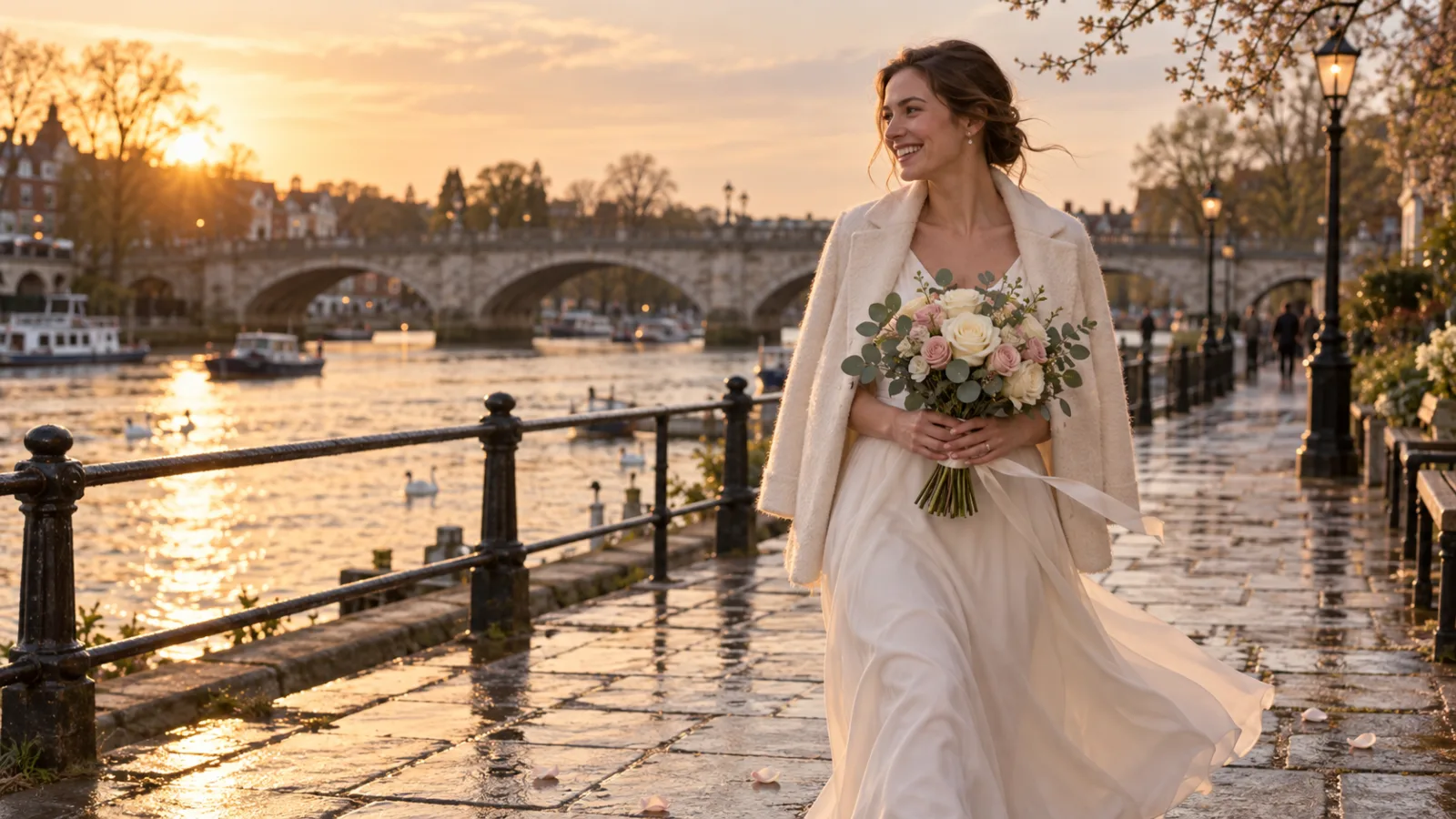
On 3 September 1845, in Gotha, Queen Victoria was given a small bouquet, and a sprig from it was rooted at Osborne House; the bushes it grew into have stood by the terrace there since 1852. Princess Victoria, the Queen's eldest daughter, was the first bride to carry a stem cut from that same myrtle, on 25 January 1858. Elizabeth II carried it in 1947, Diana in 1981, Kate in 2011 and Meghan in 2018. In the older German tradition, myrtle stood for the bride's innocence.
A florist in London can be asked to add a sprig of myrtle or another piece of greenery to any bouquet in the section. The florist sends a photo and the price before payment is taken, though whether myrtle itself is in stock on a given day is never promised in advance.
From a cascade at St Paul's to a posy: sizing the bridal bouquet
On 29 July 1981, at St Paul's Cathedral, Diana carried a cascade close to a metre long. It was built from gardenias, stephanotis, odontoglossum orchids, lily of the valley, Earl Mountbatten roses, freesia, veronica, ivy, tradescantia and myrtle. After that wedding, a long trailing shape became the look brides asked for through the rest of the 1980s.
Size is still the first decision to make. A small bouquet leaves a hand free for a ring or a glass at the reception, while a bigger arrangement belongs among larger wedding arrangements and suits a longer aisle or a wider photograph. Anyone set on a cascade can send the florist a photo to work from; they will show similar pieces already made, with prices, before anything is booked.
Lily baskets, pollen kept off ivory tablecloths
A basket of lilies needs no vase and sits straight onto a reception table or a sideboard. Lily pollen is the catch: once a flower opens, its anthers are removed, because fresh pollen on an ivory tablecloth or a sleeve leaves a stain that is hard to shift, and pollen already on fabric should be lifted with sticky tape rather than rubbed.
The delivery time is agreed with the venue's host and timed for a set moment, such as the wedding breakfast toast. Dates and slots are booked through delivery zones for any delivery zone, and the earlier the order goes in, the more slots stay open.
