


720x720_q85.jpg?v=1787132831)


720x720_q85.jpg?v=1787132831)
720x720_q85.jpg?v=1787132831)
720x720_q85.jpg?v=1787131347)

720x720_q85.jpg?v=1787131348)
720x720_q85.jpg?v=1787132831)


Peonies with delivery in Sao Paulo: varieties, imports, and working with the season
The peony is a flower that needs no explanation. A full, globe-shaped bud, dense layers of petals, a light honeyed scent — that's enough for the bouquet to speak without a label. São Paulo, the country's business capital with its pace and its distances, reads the gesture at once: people here choose the peony when the occasion matters, not just to tick a box.
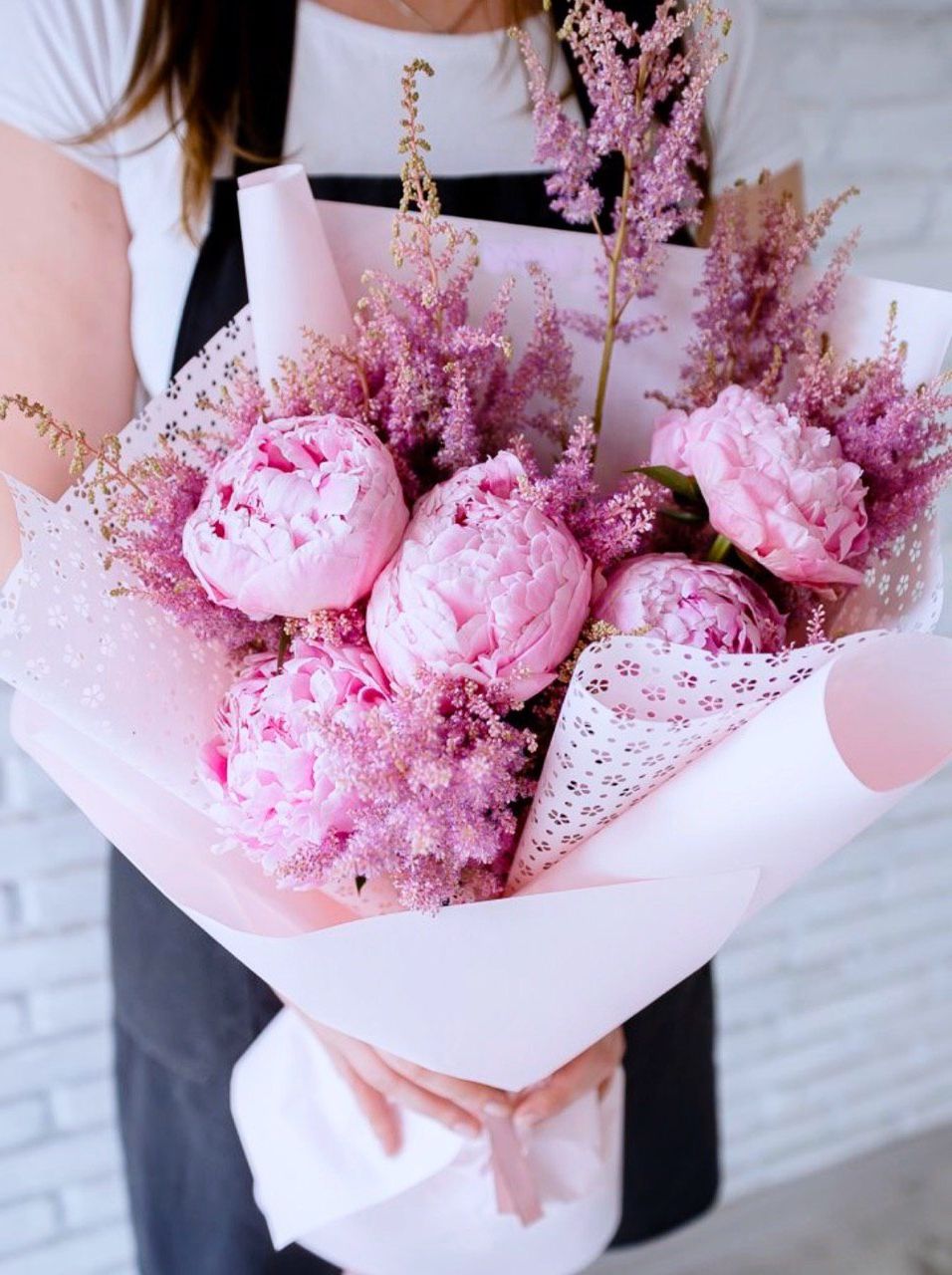
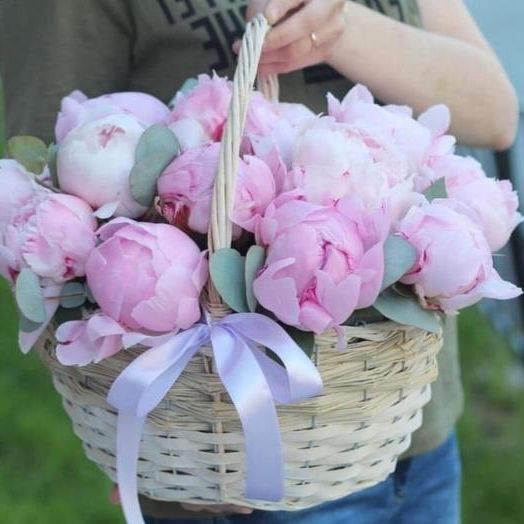
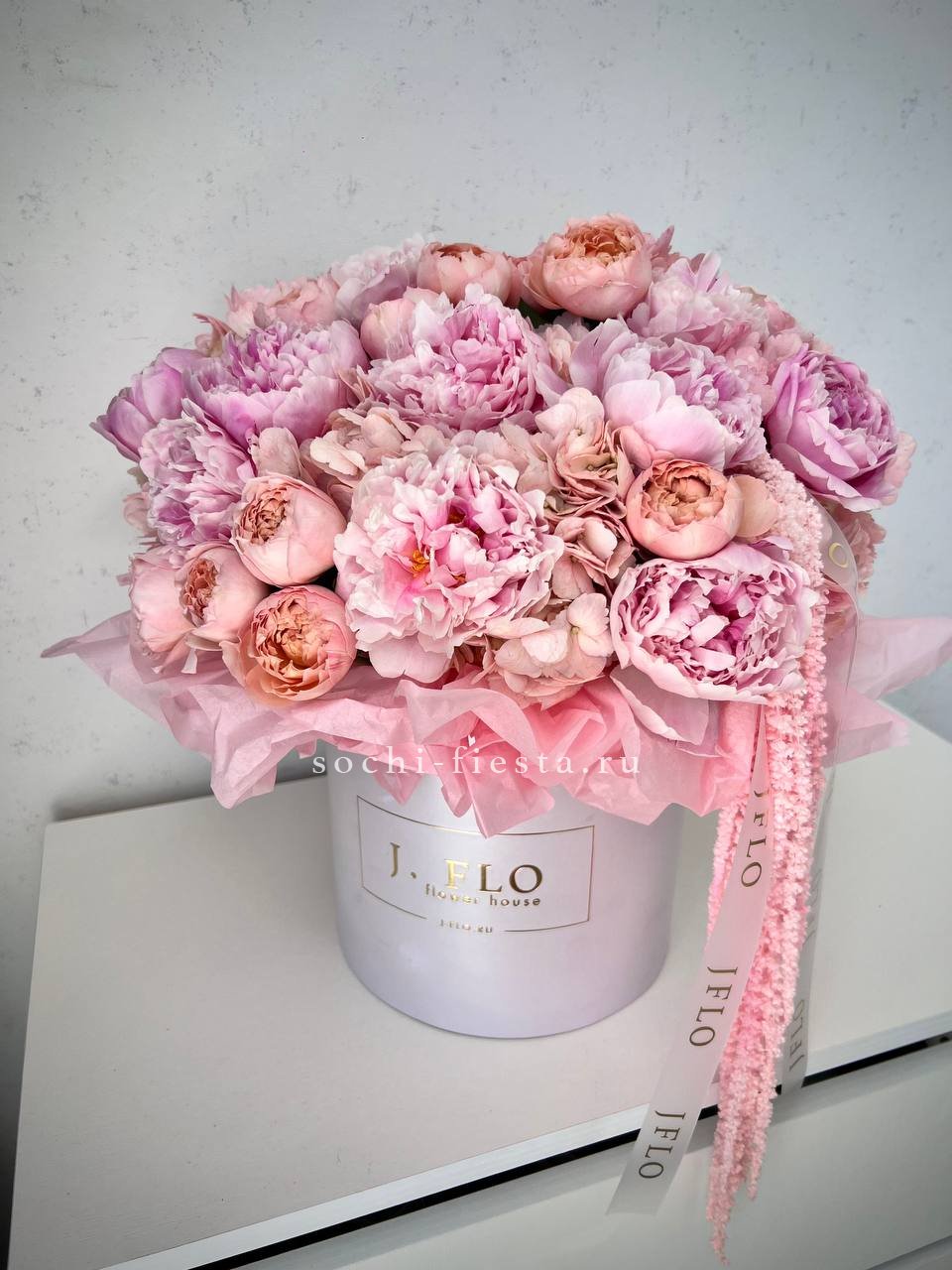
The category brings together single-variety bouquets of 9 to 51 stems, mixed arrangements with roses, lisianthus, and eucalyptus, and hatboxes for weddings and corporate orders. Unlike the rose, the peony in Brazil is an almost entirely imported, seasonal flower. It has no field season in the country: the peony needs real winter chill, which even the milder São Paulo lacks. Outside its weeks, a good peony is hard to find — and that's normal.

The main varieties in the catalogue
Each variety solves its own task — from a classic romantic bouquet to a complex wedding arrangement. They differ in bud shape, colour range, fragrance, and vase life.
- Sarah Bernhardt — a 1906 classic, a pale-pink double bud up to 18 cm, with a honeyed scent. A universal choice for weddings and anniversaries.
- Karl Rosenfield — a dark-red, dense peony. Suited to a dramatic wine palette.
- Festiva Maxima — white with a crimson "drop" at the centre. The most photogenic white peony, a wedding-floristry classic.
- Coral Charm — shifts from coral-peach to creamy yellow as it opens. One of the most fashionable varieties of recent years.
- Duchesse de Nemours — soft white with a creamy centre, a light vanilla scent, a romantic look.
- Itoh hybrids (Bartzella, Cora Louise) — a cross of herbaceous and tree peony, blooming longer and larger than the usual ones.
The cutting stage and why it matters
The main rule when buying peonies is the "marshmallow" stage. That's a coloured bud still soft to the touch. If the peony springs back like a marshmallow when squeezed, it will open in 1–2 days and last 7–9 days. If the bud is hard and green, it may not open at all. If it's already fully open, it will last 2–3 days at most.
Every lot goes through a florist's hand check against this criterion. Only "marshmallow" buds of the right firmness go into shipping — so the recipient sees the full bloom cycle, not the final fading stage. If you need open peonies for a specific date, say so when ordering and we'll pick a lot with the right head start.
Season and occasions
There is no natural peony season in Brazil — the flower arrives in two import waves. In May, for Dia das Mães, peonies come from the Northern Hemisphere, where it's the height of spring bloom; that's when they are most predictable and beautiful. The second wave is the Southern Hemisphere spring, roughly October–December, when Chile and other southern suppliers come in. As the country's main air gateway, São Paulo receives the fresh lot among the first, before it is distributed to other cities.
The peony is a traditional flower for weddings and major celebrations. In Brazil it's readily chosen for Dia das Mães, anniversaries, graduations, and corporate opening gifts. Mixed bouquets of peonies and garden-style roses form their own class: the two flowers are close in shape and complement each other in palette and vase life.
"The peony doesn't forgive haste. If you want to impress, order 3–4 days ahead and let the bud open in the recipient's room. And remember: in Brazil this is an imported flower — outside the seasonal waves there's honestly almost none. A freshly delivered closed peony is an investment in the moment, not the moment itself."
— Larissa Andrade, florist with 12 years of experience
Delivery specifics
São Paulo's climate is subtropical and milder than the coast: summer is warm and rainy, +25–32°C, and winter is dry and cool, dropping to +8–12°C at night. For a delicate bud this is broadly easier than the coast's tropical heat, but the main strain here is the sharp swings: the weather can change several times in a day, and the rainy summer stuffiness triggers grey mould. On hot, humid days we move peonies in insulated boxes and add moisture-retention gel at the stems. We handle delivery in Sao Paulo carefully, choosing the packaging to suit the weather of the specific day.
We cover the key districts: Jardins, Pinheiros, Vila Madalena, Itaim Bibi, Moema, Vila Mariana, Higienópolis, Morumbi, Brooklin, Perdizes, and Centro. Prices in the catalogue are in Brazilian reais (BRL, R$), paid by card online. The season is short and tied to imports, so for Dia das Mães, weddings, and graduations place the order 3–4 days ahead — peak dates sell out early.
Care at home
After delivery, refresh the cut at a 45° angle, remove all leaves below the waterline, and place the peonies in a tall vase with cool water. Change the water every 2 days. Don't keep them near fruit or a heater — ethylene and heat cut a peony's life in half.
In the cool, dry winter the peony does better in São Paulo than in the humid summer. In the hot months the bud's enemies are stuffiness and the dry draught of the split system: the first triggers rot on the petals, the second dries the flower out. Place the bouquet in the coolest room with some air movement, away from the direct flow of the split system. On days above +30°C, move the bouquet to the refrigerator overnight — that gives the peony 2–3 extra days of bloom.

