


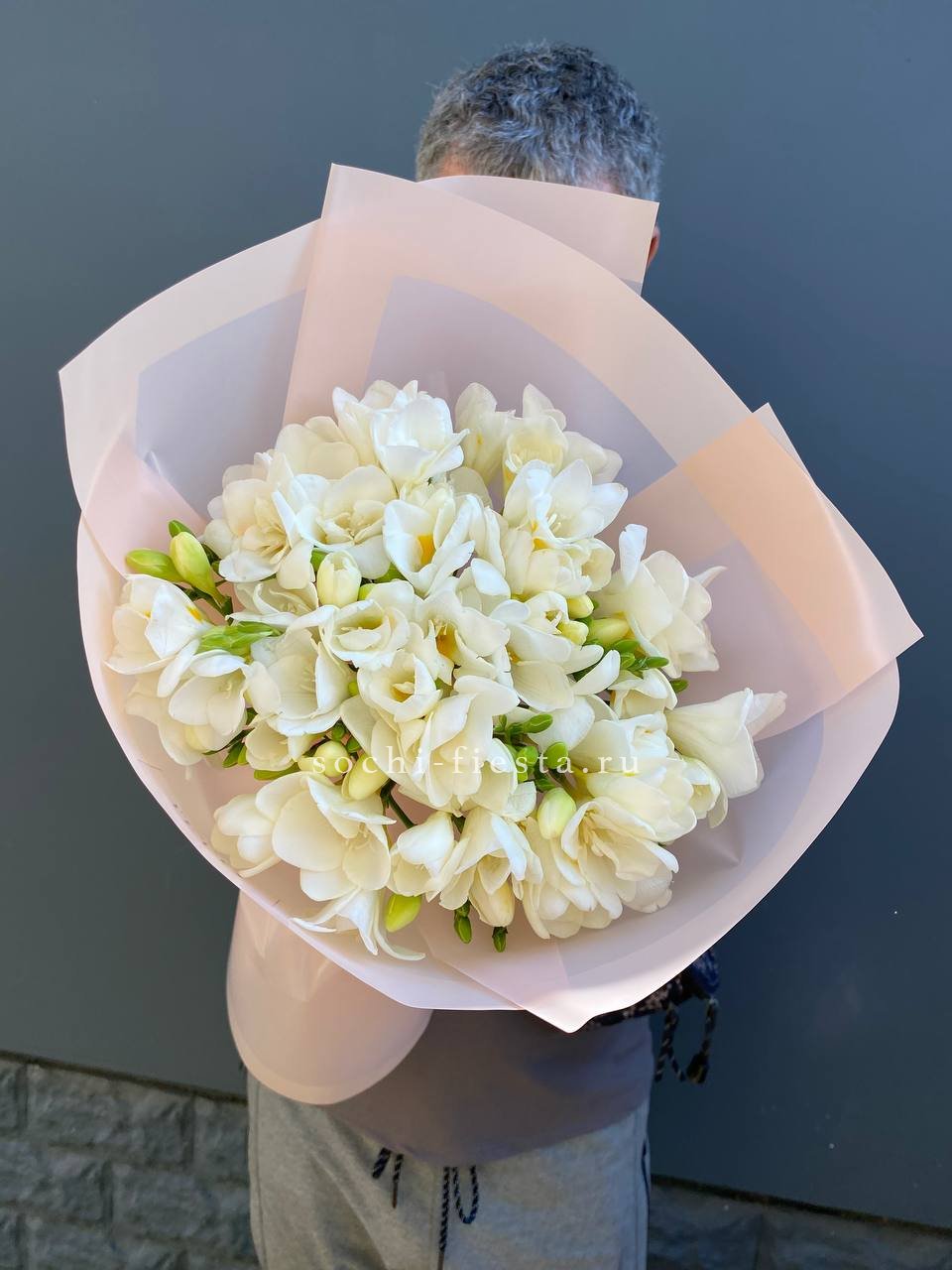


Bouquets in Tokyo: from Hakusan's hydrangeas to the stems you order
Bouquets in Tokyo have a June flower of their own: in early June, during the tsuyu rains, some 3,000 hydrangea bushes bloom at Hakusan Shrine in Bunkyo. Hydrangea also appears here as a cut stem, next to roses and lisianthus. Choosing one here comes down to three decisions: the flower, the size and the wrap, and the climate across the seasons is covered on the flowers in Tokyo page.
Ecuadorian roses, lisianthus and hydrangea: what a Tokyo bouquet holds
Japan brings in most of its roses from Kenya and Ethiopia, yet the catalogue here favours two other origins: Ecuadorian roses, grown for a long straight stem, and French roses, whose outer petals a florist turns back by hand to open the bloom wider.
Lilies, gerberas, lisianthus and hydrangea sit alongside them, with hyacinths in spring and peonies when their short season runs. One bouquet names its flower outright, the Hydrangea and Misty Bouquet, where the hydrangea head does the work other stems would need several of.
White chrysanthemum is a funeral flower in Japan, never given to the living. A coloured chrysanthemum, mixed into a bouquet with other stems, carries none of that weight. Carnations and orchids are not a given here either, so check the bouquet itself before counting on either one.
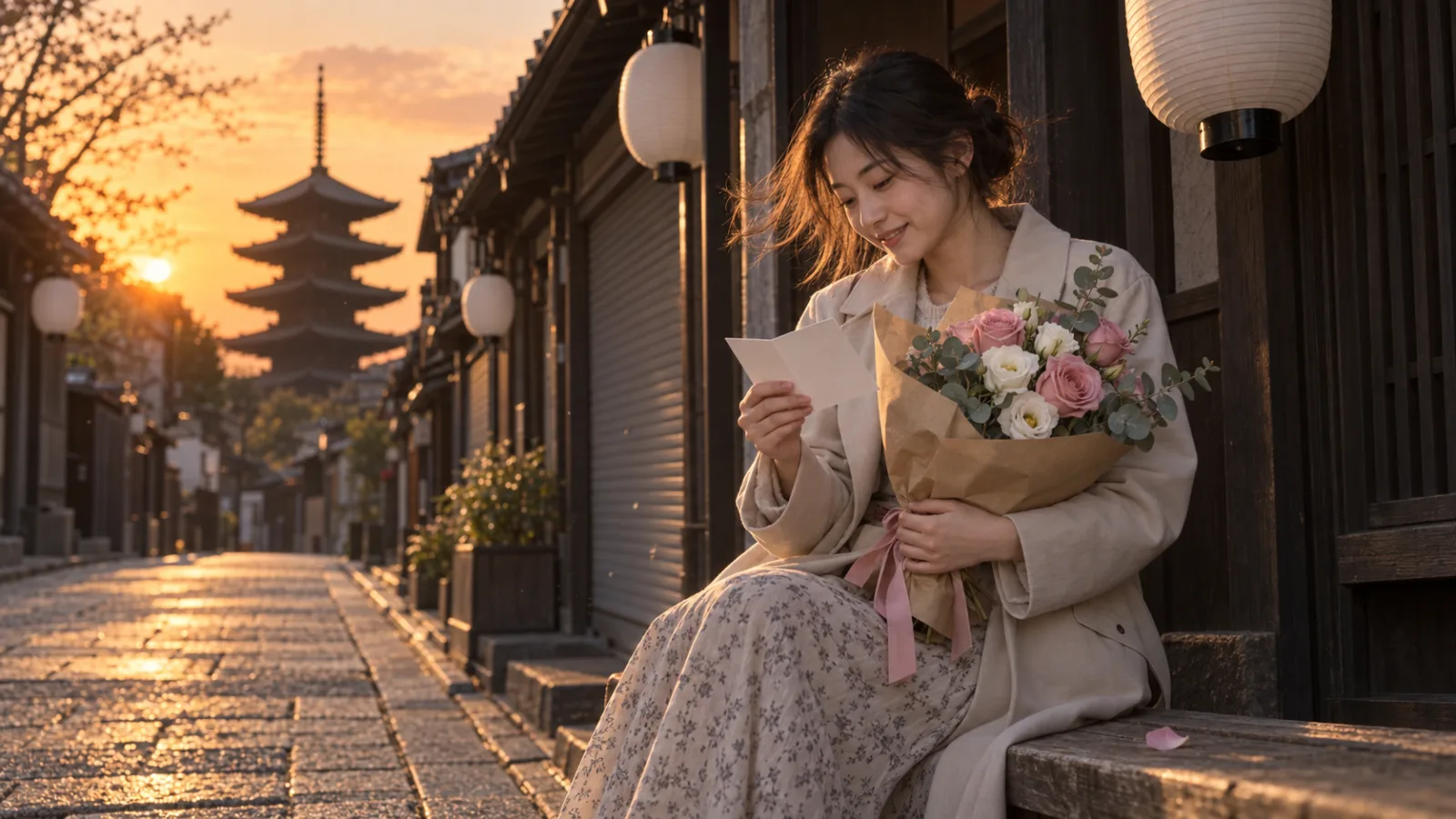
A small thank-you, or a bouquet the whole team stands behind
Compliment bouquets and the mini size are built for a quick thank-you, something handed over without much ceremony. Compliment bouquets suit a host after a visit, or a small favour returned.
A business bouquet reads differently: it goes to a colleague or a partner, sized and toned for an office rather than a home. Large and giant bouquets step up again, for moments when a whole team gives one gift rather than several people giving separately. At a sobetsukai, the farewell party held for someone leaving a company, it is the organiser who hands over the bouquet along with a shikishi card carrying messages from the whole department.
The section also sorts bouquets by mood, delicate, romantic, stylish, bright, classic and business among them, which is a quicker way into the choice than starting from the flower itself. One quiet local habit worth knowing: gift-giving in Japan steers clear of the numbers four and nine.
An envelope, a bag or a planter: bouquet delivery in Tokyo
Kraft paper and any outer wrap come off before the stems go into water, and a fresh diagonal cut underneath lets them drink properly from the start. A bag or envelope suits a bouquet the recipient will carry by hand, especially on the train.
A bouquet in a planter stands on its own, with no vase needed once it arrives. Bouquets in planters work well on a desk or a shelf, where nobody wants to go looking for a container afterwards.
In Japan, hospitals avoid potted plants: a plant that roots, nezuku, sounds like a wish for the patient to stay rooted in bed. Wards get only a cut bouquet, wrapped in paper or carried in a bag, as explained on the flowers in Tokyo page.
Each bouquet here is put together only after the order is placed, and a photo goes to the sender before the courier leaves. The exact timing shows on the bouquet's own page, and the delivery page covers the rest.
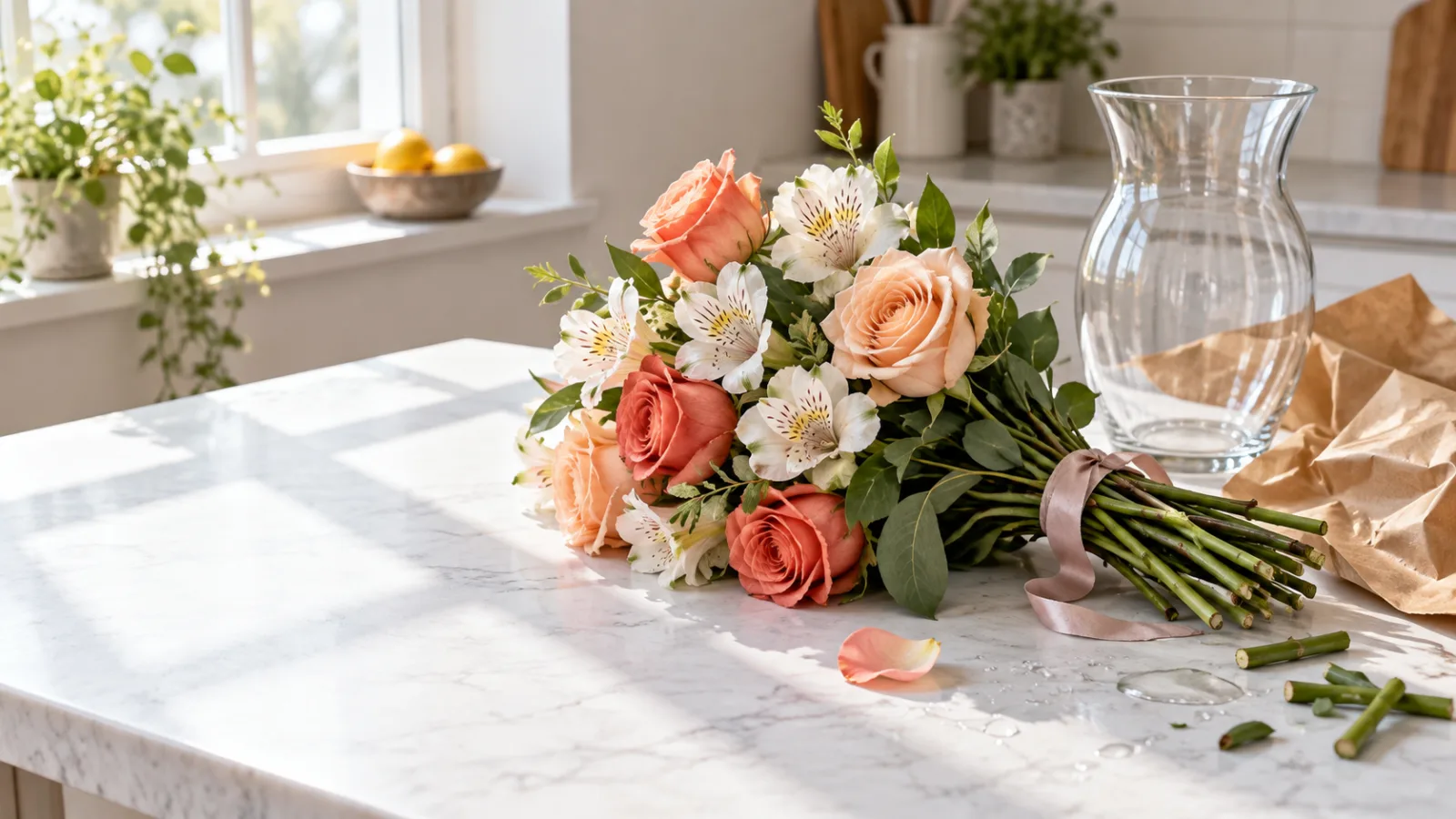
A first look is easiest through the wrap or the room it's for: bouquets in kraft paper for something simple and quick to unwrap, business bouquets for a colleague or a partner, and seasonal bouquets for whatever is at its best this month.