


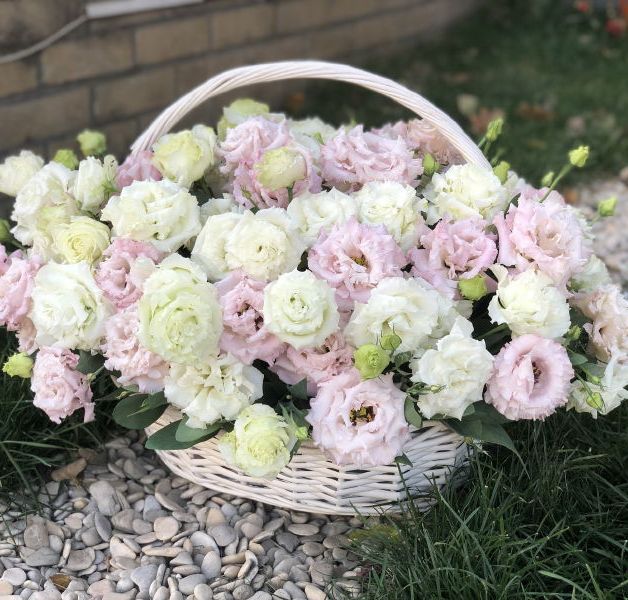


Flower baskets in Tokyo: counting the stems and choosing the size
Japanese gift etiquette avoids the numbers four (shi, which sounds like death) and nine (ku, suffering), even in how many stems go into a gift, and flower baskets in Tokyo come in fifty-one and a hundred and one stems. Before colour, the real decision is scale: a hundred stems for a big day, a smaller basket for a short visit. A basket needs no vase, since it stands on its own handle and base.
Fifty-one or a hundred and one: counting stems past four and nine
Japanese gift-giving tracks the number of items as closely as the items themselves. Four reads as shi, the word for death, and nine as ku, the word for suffering, so neither count sits well in a basket meant to please someone. Tokyo's larger baskets are counted in fifty-one, a hundred and one and two hundred and one stems, all of them clear of both numbers.
Ordering a custom count through a florist works the same way: steer past four and nine, and past any number ending in them, and the florist builds the basket to that total. A photo and the price come back before payment is taken, so the count is agreed in advance, not guessed at.
Most cut roses imported into Japan come from Kenya and Ethiopia, but the 51 and 101 rose baskets here are built on Ecuadorian stems instead, prized for their length. A basket called 51 Ecuadorian Roses in a Basket holds the smaller of the two large counts, and 101 Red Roses in a Basket is built to the full hundred and one; the same hundred comes in white as well. A basket of fifty-one lilies covers the same scale in a different flower.
One colour stays off the shelf regardless of count: white chrysanthemum belongs to funerals in Japan, so it has no place in a basket meant for a celebration.
Daisies, a duo or a smaller basket sized for a visit
Not every visit calls for a hundred stems. Below the large counted baskets sit smaller formats, sorted into their own smaller sizes listing and a separate basket types listing that includes the Duo Basket.
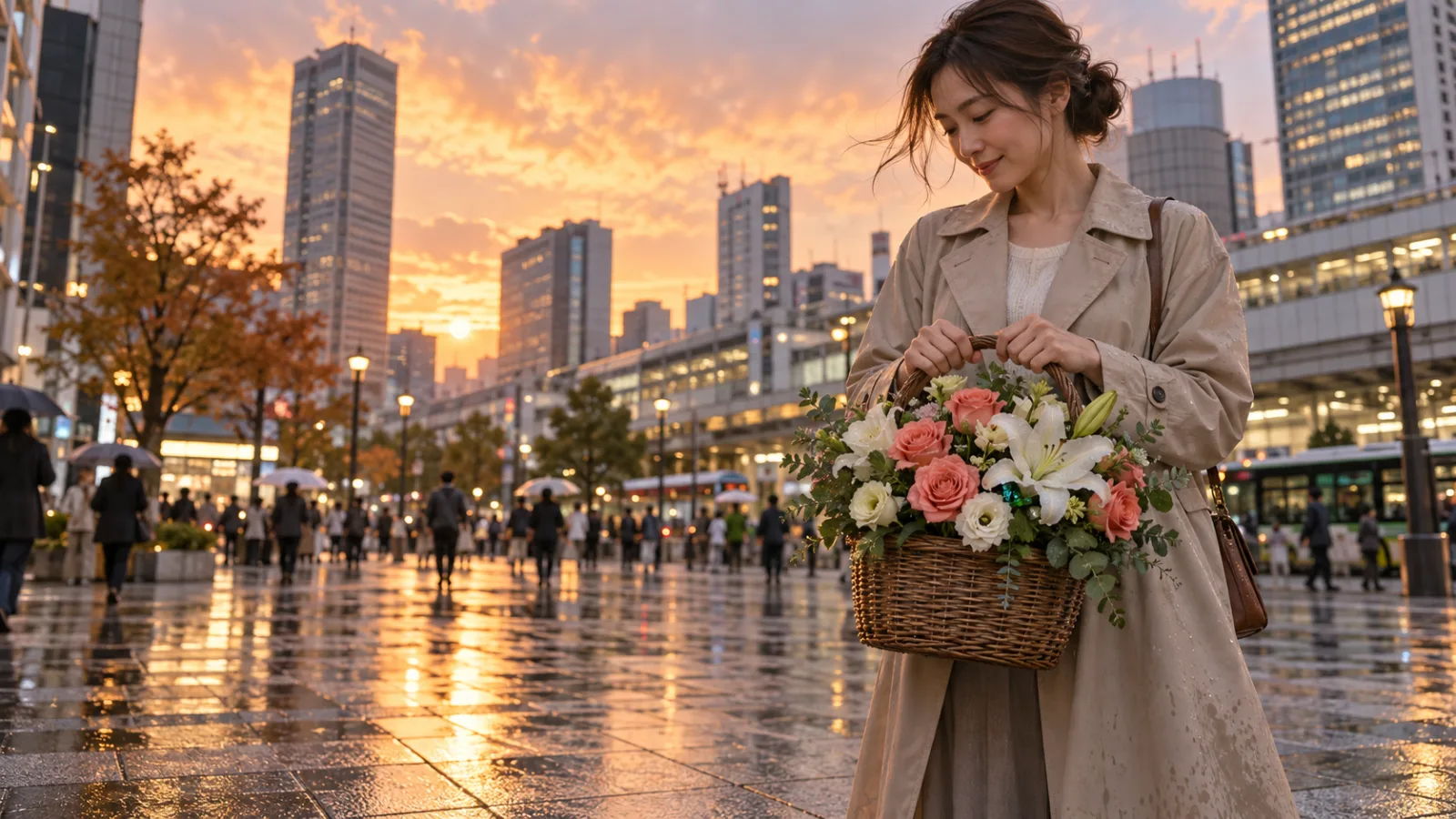
Daisies in a Basket brings the same handle and base down to an everyday size, light enough for a short visit rather than a milestone occasion. The Duo Basket sits in the same smaller range, built with the same thought in mind.
A basket arriving at home asks nothing of the person receiving it: the handle and base mean nobody has to find a vase or clear a shelf first. A hospital room follows its own habit instead. A potted plant there reads as a wish for roots to take hold, so wards expect cut stems, and a basket is exactly that.
One more thing worth knowing before sending lilies into a home with a cat: every part of the lily is toxic to cats, so roses or daisies are the safer choice there.
Flower basket delivery in Tokyo to a party table or a front door
Flower basket delivery in Tokyo reaches a restaurant table as readily as a front door. For a restaurant booking, the courier's arrival is agreed with staff beforehand, and the basket is timed to land at dessert or just before a toast, rather than at the start of the meal.
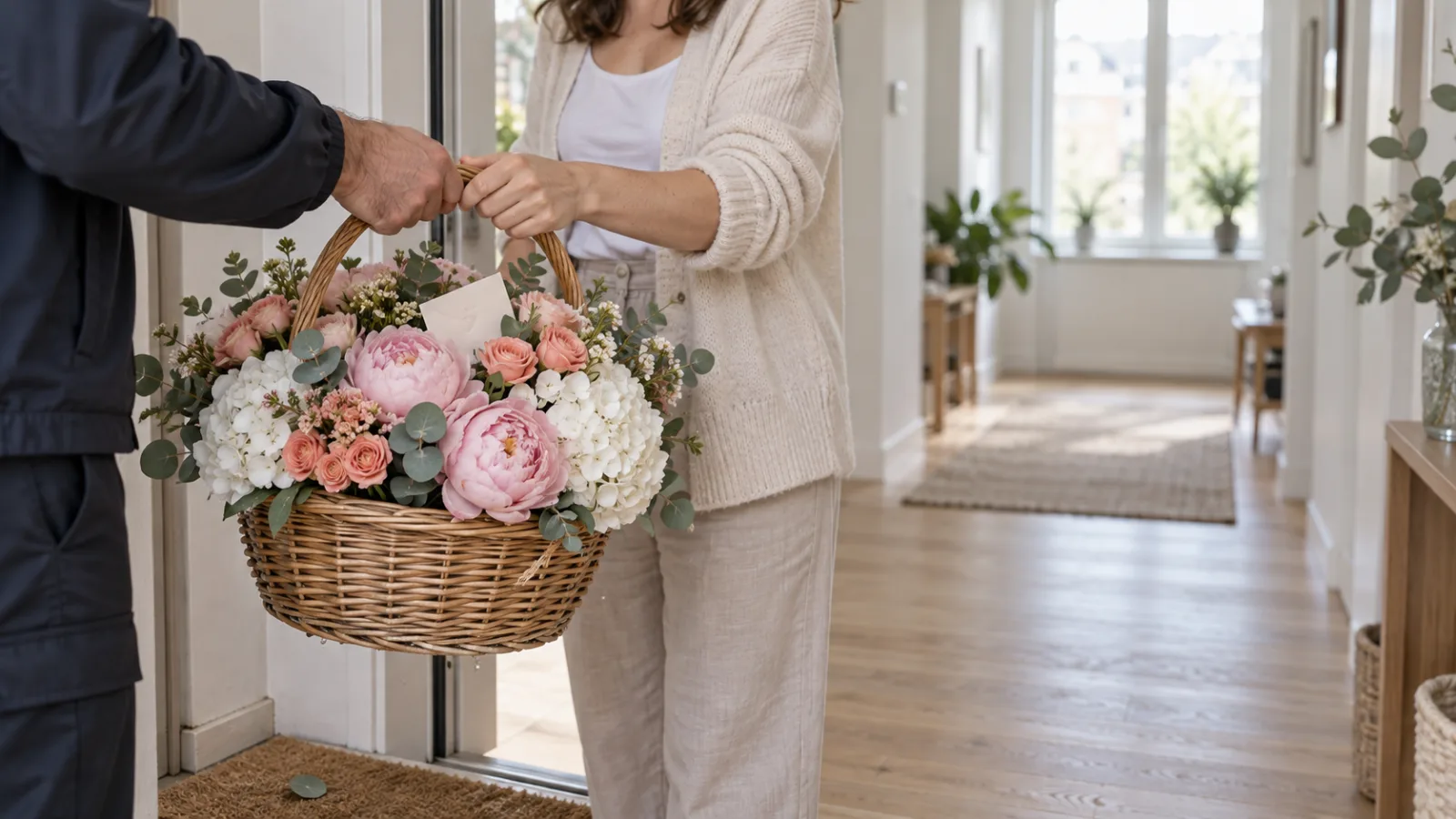
The courier hands the basket over in person, and a card goes with it at no extra cost. Before the courier leaves, the florist photographs the finished basket, and that photo is the moment to ask for any change. Most orders reach the recipient the same day they are placed, and the delivery time is shown on the basket page, alongside delivery zones and timing.
Once it arrives, the basket's foam is watered every day over its whole surface with a thin stream, without tipping the basket to one side. A hospital room, a hotel desk and Tokyo's weather each come with their own habits, rounded up under hospitals, hotels and Tokyo's weather.
The quickest way in is the flower itself: for a big day, open baskets by flower and build out from the rose count that suits the occasion. For a visit rather than a milestone, start smaller instead. A rose on its own stem, rather than gathered into a basket, has its own section: roses.