





Gifts in Tokyo: food for ochugen and oseibo, cakes, balloons and bears
Gifts in Tokyo follow a calendar of thanks: ochugen runs from late June to the middle of July, and oseibo takes over for the first three weeks of December. In both seasons, people send food to parents, relatives, friends, bosses and teachers: jelly and beer in the summer wave, ham and hot-pot sets once winter sets in. The section holds something for each of those moments: food that gets eaten, a balloon that lifts a room for an evening, and a preserved-rose bear that can last one to three years. Which to pick depends on who is receiving it and what the day is for.
Hampers and sweet gifts for the ochugen and oseibo weeks
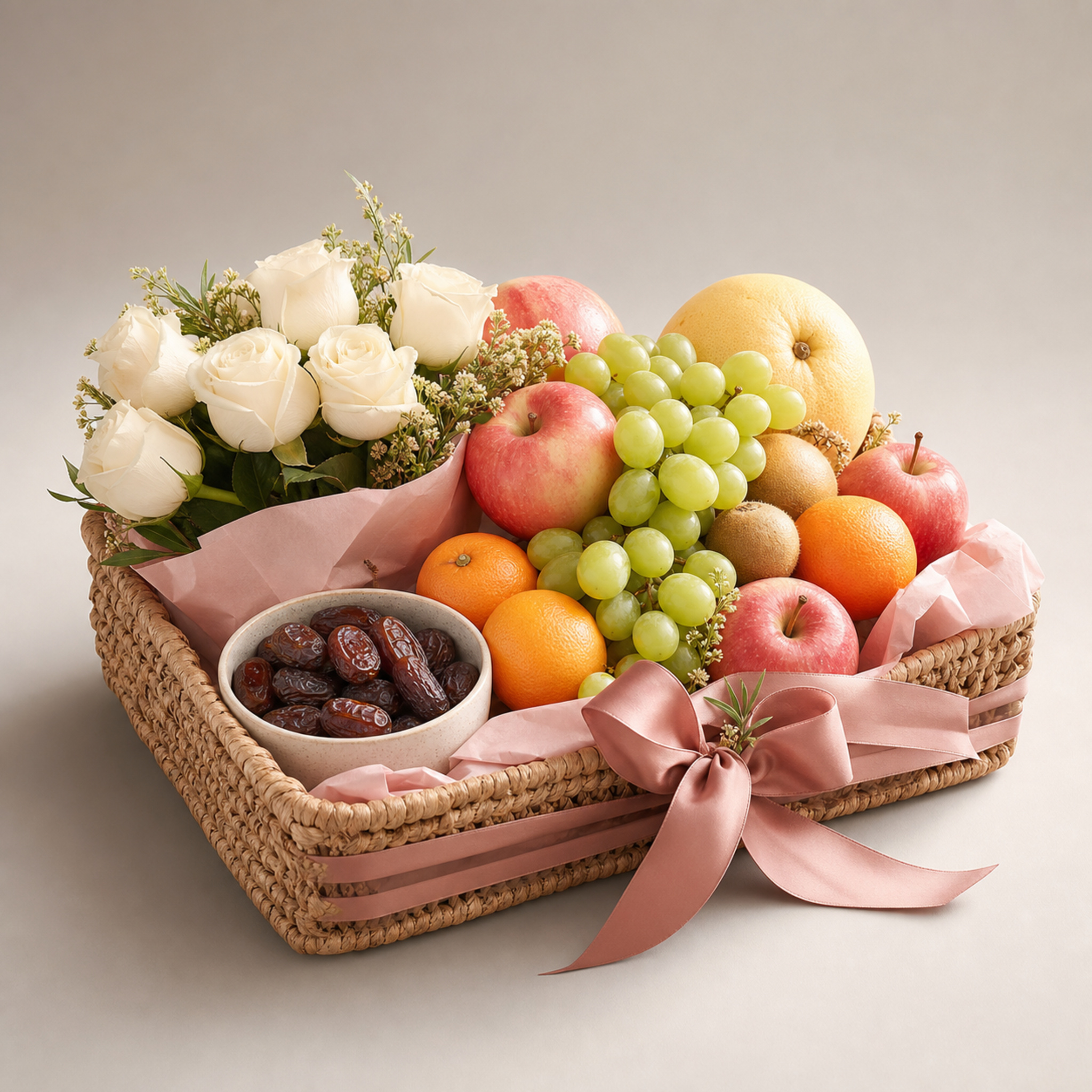
Ochugen and oseibo both thank someone for help already given rather than mark an occasion still to come, which is why food and drink are the usual choice. The summer round typically means jelly and beer; once oseibo begins in December the same idea turns into ham and sets for a hot pot. A hamper or fruit basket suits either season: it arrives packed and ready, so nobody has to plate anything for a parent, a relative, a friend, a boss or a teacher.
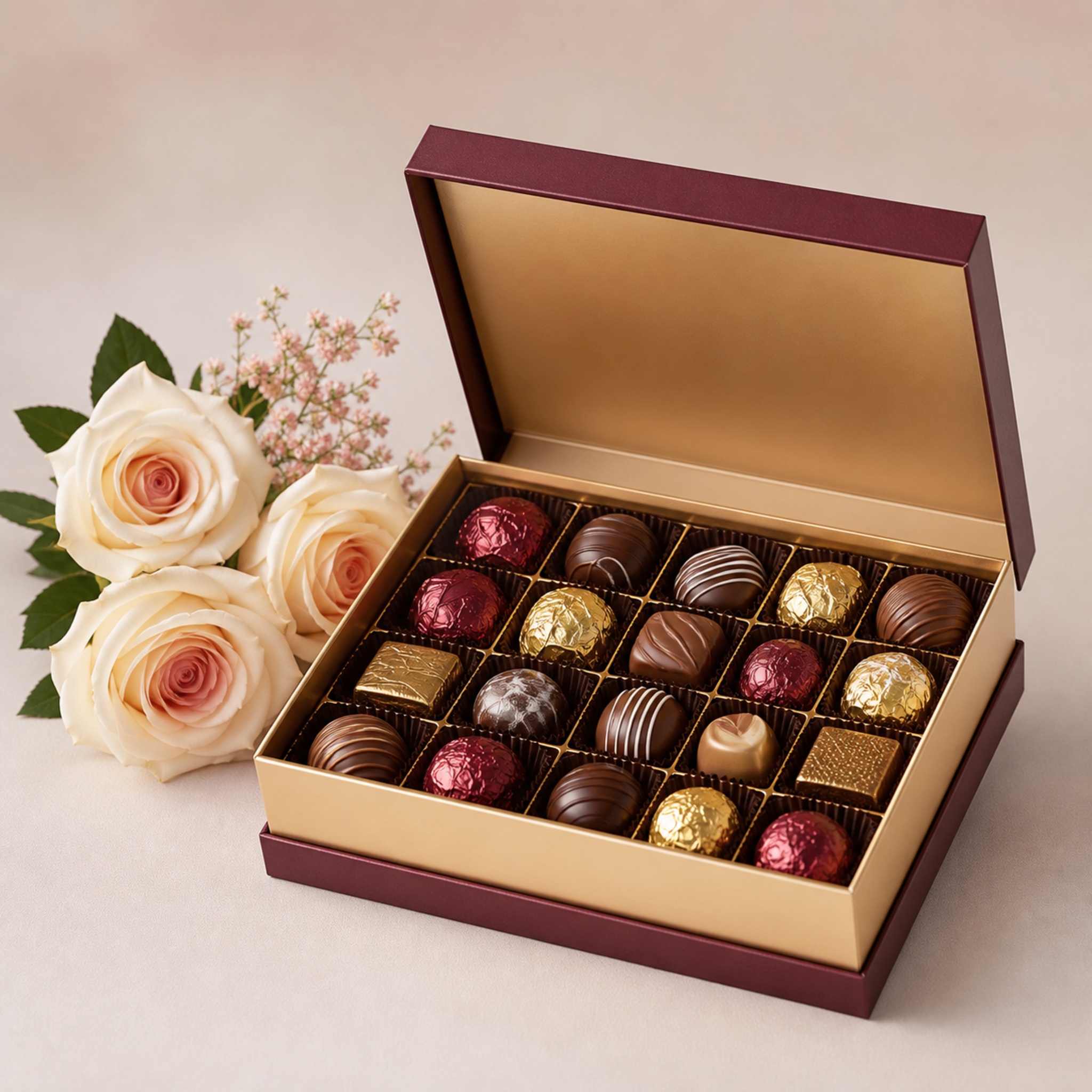
Sweet gifts cover a smaller version of the same gesture, a box to open rather than a meal to share, and work equally well in midsummer or in December. A different date on the same shelf is White Day on 14 March, when men return a gift received a month earlier and sweets are the usual choice; it sits beside the rest of the calendar that flowers in Tokyo follows throughout the year. Fruit and a bouquet are often sent as one order, but at home they are better kept apart, since ripening fruit gives off ethylene that ages cut flowers faster.

A cake for the family table, cupcakes for a Shinjuku floor
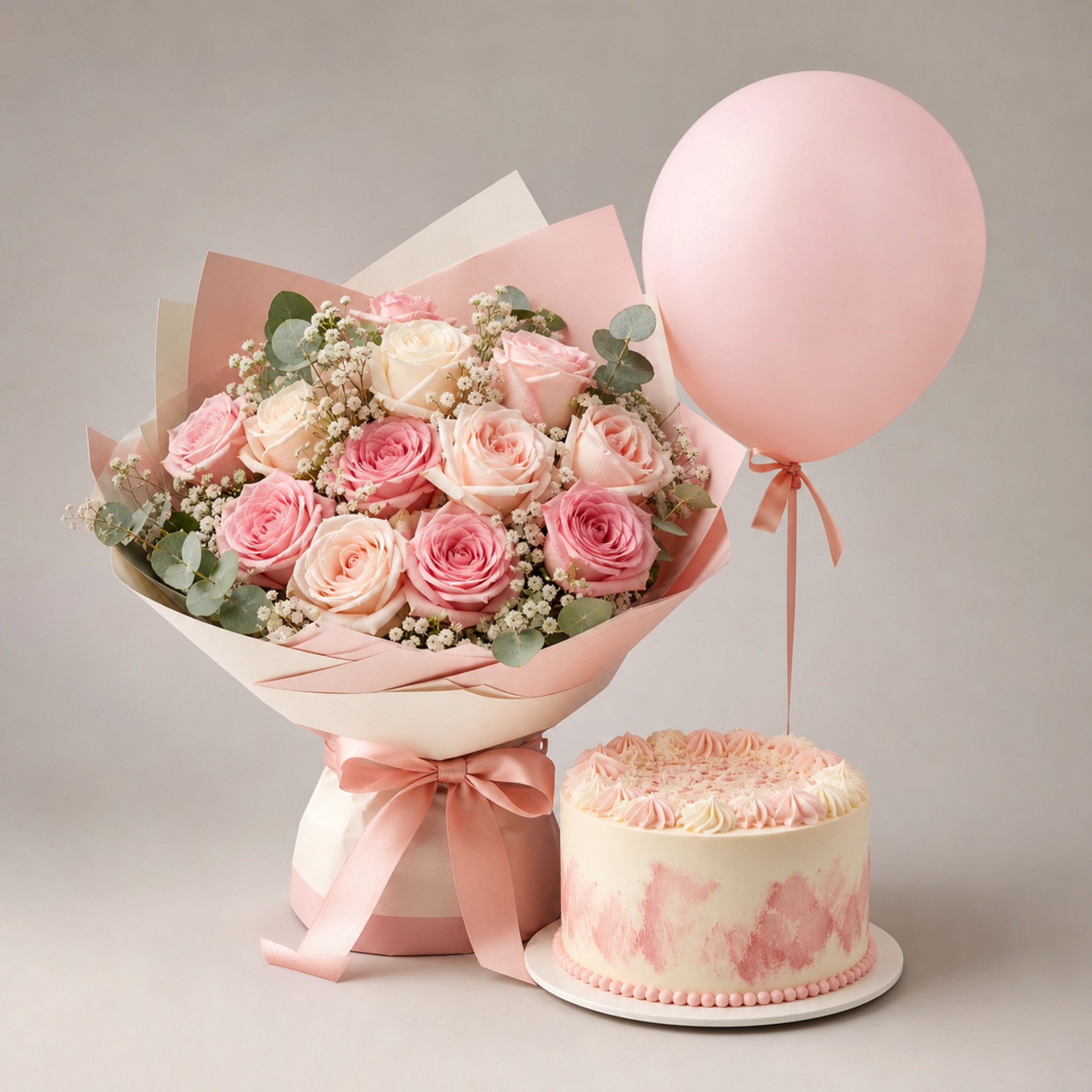
A whole cake is the gift sized for a family table, while a bento cake, built to fit in one hand inside its own box, suits a single person rather than a group. Cupcakes split the same idea into pieces that travel well, letting a sender cover several desks without anyone carving a slice.
In office districts such as Marunouchi and Shinjuku, it is worth checking company rules first: some companies forbid staff from giving or accepting gifts from colleagues and managers. Once a cream cake is out of the fridge it holds for about two hours before it needs eating or chilling again, so timing the drop-off matters more than the distance it travelled. One more habit carries into the box itself: gifts generally avoid the numbers four and nine, including in how many cupcakes or items go into a set.

Helium balloons for Children's Day and a birthday at home
Children's Day falls on 5 May, a national holiday and the last day of Golden Week, and the gift for it travels to a home address rather than an office, since the person being marked spends the day there. A latex balloon holds its lift for about half a day, enough for one afternoon of celebration and no more. A foil balloon keeps going for several days, so it's the one to choose if the balloon needs to still be floating a week later.
Helium balloons also come arranged as a balloon fountain, among them one called Double Start, built for a birthday held at home rather than handed over at a door. Mixing a few latex balloons for the day itself with one foil balloon for the week after covers both kinds of birthday wish without over-ordering either.
A plush bear, or one made of preserved roses
A plush bear suits a child best, paired with a balloon or a box of sweets rather than sent on its own. A bear built from preserved roses answers a different brief. The flowers are real roses whose sap has been replaced with a glycerine-based solution, so each petal stays soft to the touch long after a cut rose would have dropped. The finished bear lasts somewhere between one and three years.
Japan has had a hand in that market from early on: the country held its first competition for preserved flowers in 2003, and the trade grew sharply afterwards, with Japan now counted among the largest buyers of preserved flowers anywhere. Looking after a plush bear takes almost nothing, but a preserved rose bear needs a little more care: keep it indoors, out of direct sun, never watered or misted, and away from heaters and from any room that stays damp.
Gift delivery in Tokyo: a Flower Combo or a gift beside the bouquet
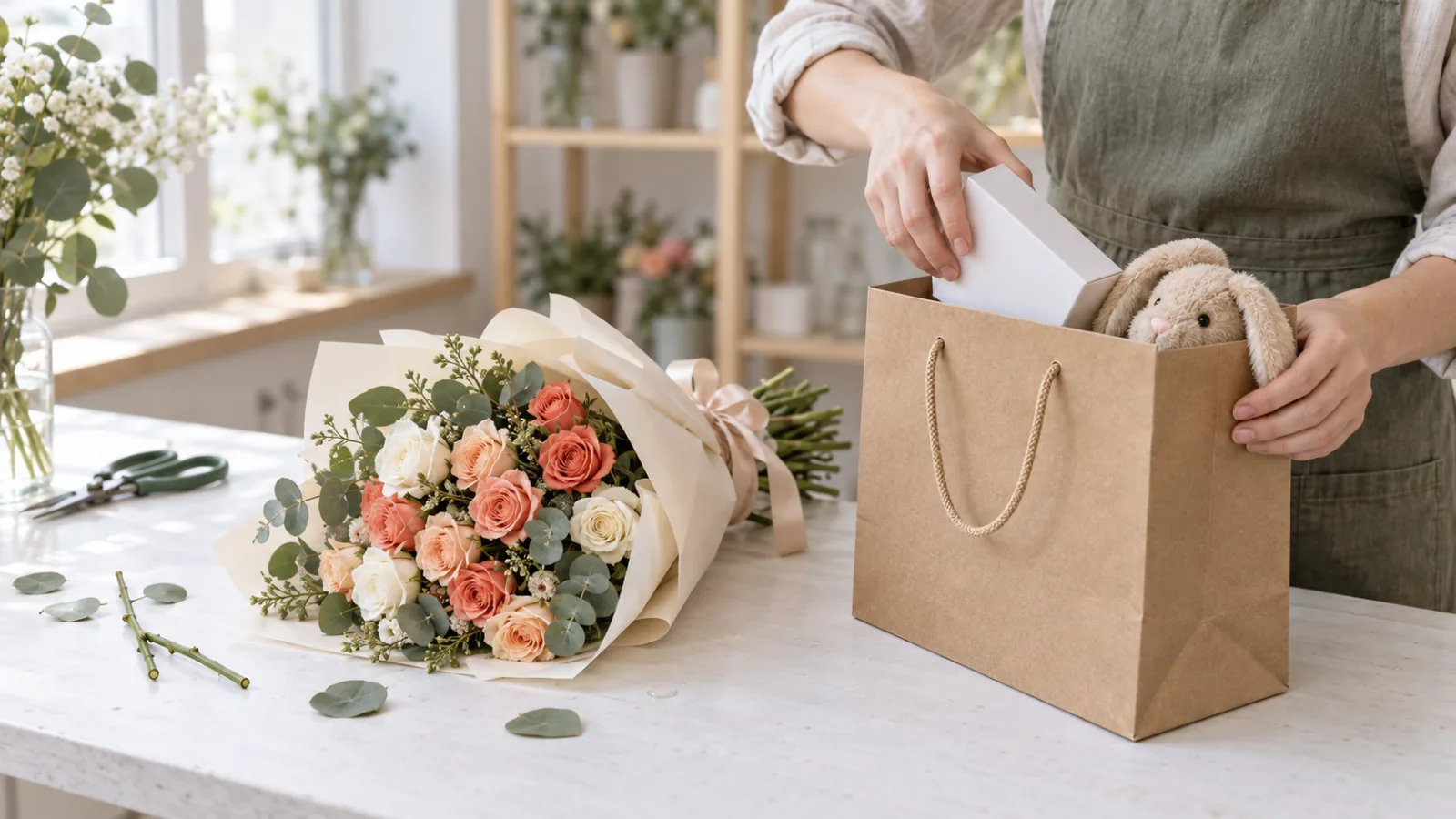
Flower Combos solve the question before it comes up, a bouquet and a gift put together as one set rather than left for the sender to match on their own. The same idea works the other way round too, since a balloon, a sweet box or a soft toy can be added to almost any bouquet in the basket, with a free message card either way.
Before a courier leaves, the finished order is photographed. The handover itself is face to face: the courier hands the gift and card to the recipient in person, rather than leaving them at a door. Most orders go out and arrive on the day they are placed. Delivery to the centre of the city costs nothing, and the rest of Tokyo is covered for a flat charge set out on the delivery zones page. Sending a gift into a hotel or a hospital follows its own few rules, covered along with the calendar and local customs.
A short list narrows the search. Sweet gifts and a hamper cover the thank-you seasons, while cakes and cupcakes decide themselves by headcount. Plush bears and soft toys suit a child or sit well beside a preserved rose, and anyone choosing gifts to go with bouquets can start from the flowers and add from there.