






Occasions in Tokyo: Children's Day, new keys and a quiet thank-you
Golden Week runs from 29 April to 5 May and ends on Children's Day, a public holiday that gives occasions in Tokyo a subsection of its own. In Tokyo, choosing a bouquet usually starts with a date on the national calendar or with news from the recipient, and only then comes the question of bouquet, box or basket.
Children's Day closes Golden Week: spring dates for the family
Golden Week fills the turn of April into May: 29 April is a public holiday, and so are 3, 4 and 5 May, with 5 May marked as Children's Day. For a family gathering during the holiday week, the Children's Day and Family Day sections are the obvious starting point. For a family table, choose one larger bouquet or basket rather than several small arrangements.
A second date follows close behind. Haha no Hi, Japan's Mother's Day, falls on the second Sunday of May, only a few days after Golden Week ends, and the Mother's Day section covers it in more detail.
When the whole family is gathered for the holiday, one generous bouquet or a basket set in the middle of the table serves the room better than several small arrangements. Everyone sees it at once, and no one has to claim it as their own.
A new shop, a promotion, new keys: congratulations in Tokyo
Opening a shop or starting a new job often comes with a kochoran, a phalaenopsis orchid in a pot, carrying a small plaque with a congratulatory line and the giver's name. It is a local custom rather than something this section sells outright, and a florist here works with cut flowers for the same news instead.
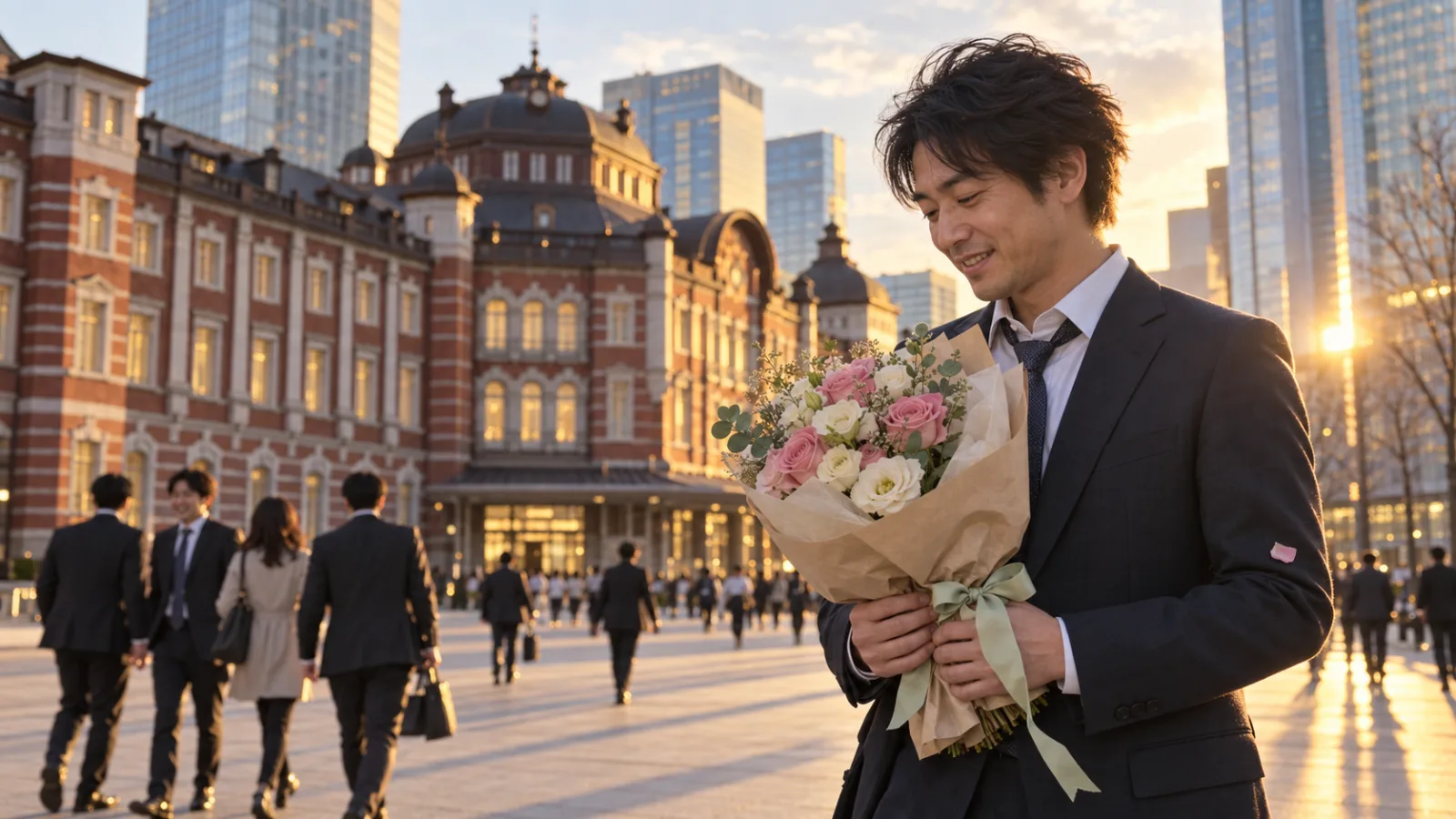
The Congratulations and Housewarming sections both answer that kind of message, whether it is a company opening its doors or a friend collecting the keys to a new flat. Where a kochoran carries the giver's name on its plaque, a bouquet carries it on the card instead, which comes with the order at no extra cost.
A potted plant suits an opening or a promotion because it reads as a wish to put down roots and stay. The same image works differently beside a hospital bed, where it is read as an invitation to linger.
April and November weddings, and the anniversaries they leave
Spring and autumn carry the bulk of Tokyo's weddings: April and May fill with ceremonies, and October and November bring a second wave once the summer heat has passed. June draws its own couples too, borrowed from the Western idea of the June bride, even though June here sits inside the rainy season.
Wedding dates set the calendar for the anniversaries that follow, so the Anniversary and Wedding Anniversary sections see the same spring and autumn pattern, year after year, as the weddings that started them. A fiftieth anniversary is the golden wedding, a tradition documented in German-speaking Europe, and the Golden Wedding Anniversary section is named for exactly that occasion.
One rule runs under every stem count here: flowers in Tokyo avoid four and nine, numbers a florist steers around when making up a bouquet of any size.
Occasion flower delivery in Tokyo for a newborn or a recovery
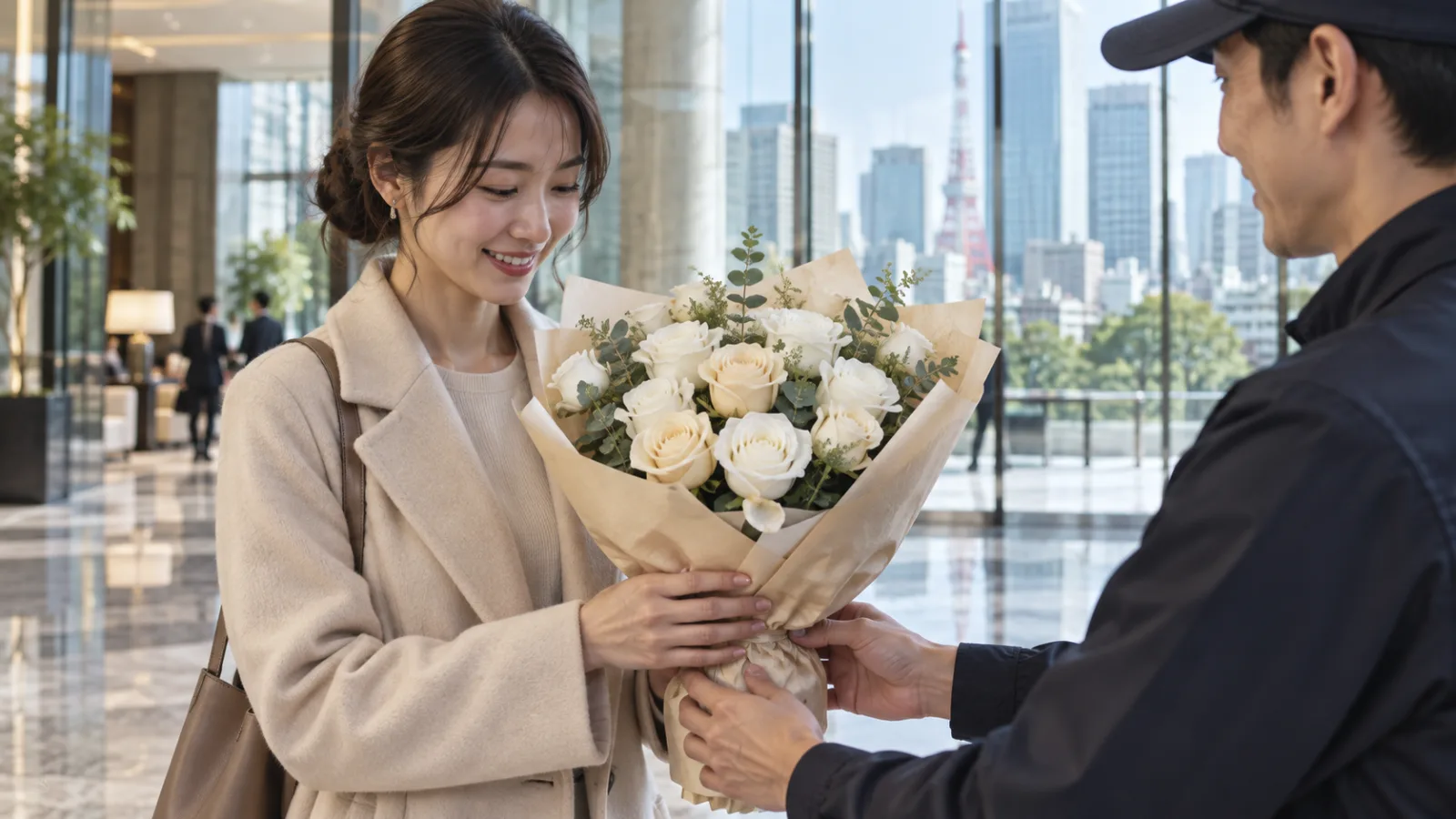
A newborn, a stay in hospital or a discharge home each call on their own part of the catalogue, from flowers for a new baby to flowers sent from the maternity hospital itself. Get-well bouquets and arrangements timed for the day someone leaves hospital fill out the rest, each answering a different stage of the same news.
A hospital room is the one place where a potted plant changes its meaning. The same image that reads as a wish to put down roots at a new shop or a new flat reads, beside a hospital bed, as an invitation to stay a long time, a custom called nezuku. Cut flowers carry none of that weight, so only cut stems go to a hospital room, never a plant in soil.
Keiro no Hi, a public holiday honouring older relatives, falls in late September on a date that moves from year to year. The occasions section has no subsection built around it, so a bouquet from Thank You or Thinking of You works as a stand-in, chosen for the message rather than for the calendar.
Date night, a confession, an apology: flowers between two people
Date Night, Confession of Love and Apology cover the moments that play out between two people rather than within a family, and timing matters more here than format. A restaurant can usually work a bouquet into the evening at a chosen point, delivered for dessert or brought out at the toast, once the booking confirms the moment.
Japan runs Valentine's Day the other way round from much of the world: on 14 February women give chocolate, and men reply a month later, on White Day, 14 March. A bouquet fits either date, or a quieter one in between.
Not every message needs a name attached. Anonymous flower delivery leaves the card unsigned if that is what the sender wants, and the courier works from the recipient's name and address alone, with nothing about who sent it.
Around 14 February and Mother's Day the delivery slots fill up faster than usual, so ordering a few days ahead keeps the date open. Every bouquet is photographed before the courier sets out, and most orders reach the recipient the same day they are placed; timing for each bouquet shows on its card, and the delivery page has the rest.

The quickest way into occasions in Tokyo is still a date or a piece of news: Children's Day and congratulations cover what is happening this week, while wedding anniversary flowers wait for whichever spring or autumn date applies. From there the choice comes down to format: a bouquet for one pair of hands, or a box or basket for a table.