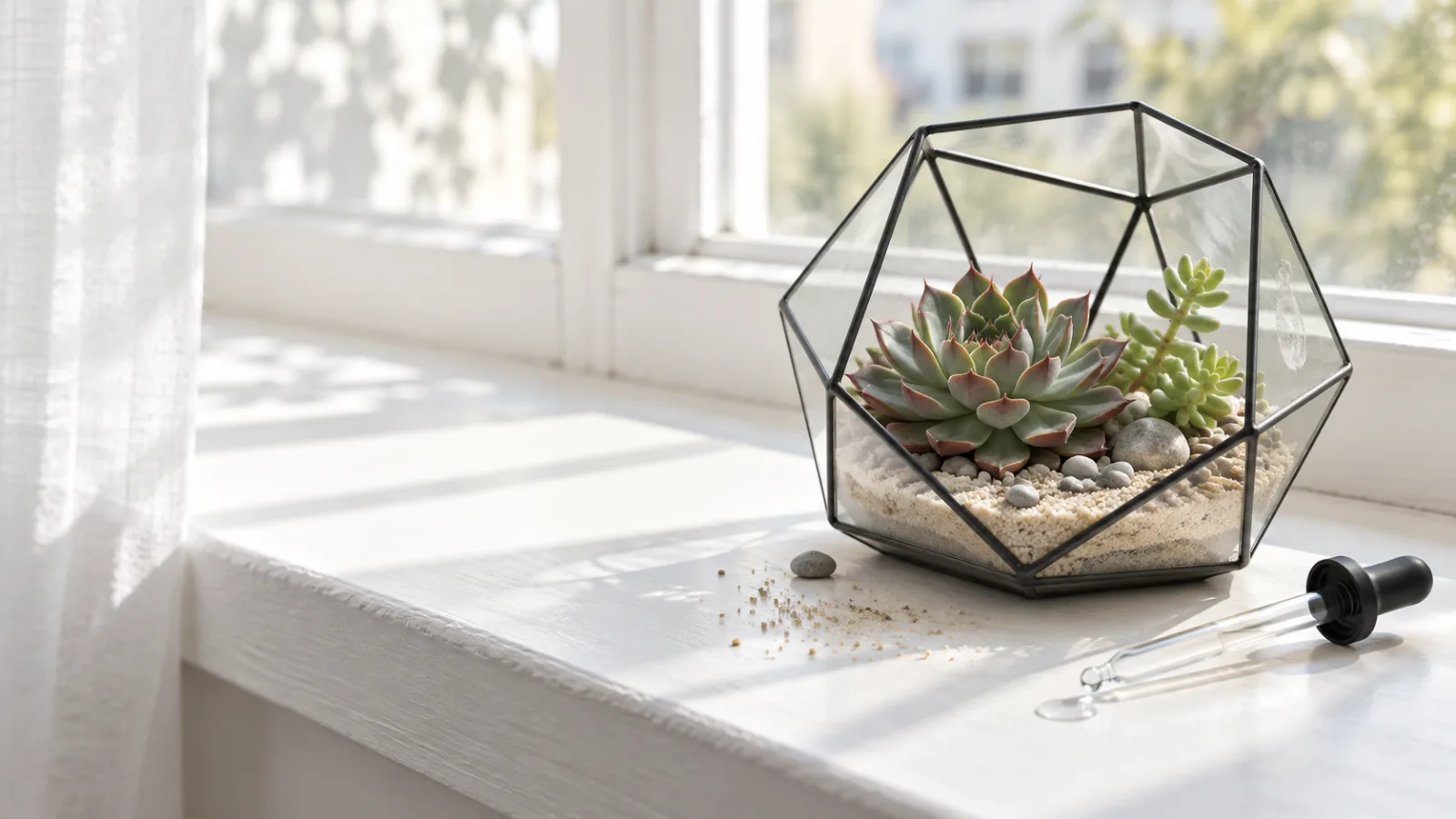


Plants in Tokyo: a kochoran that takes root, a succulent under glass
In Tokyo, a potted moth orchid called kochoran, with a plaque naming the sender, marks a shop, office or restaurant's opening day, and a promotion too. The plant takes root — nezuku — and the gift wishes the business the same start. Plants in Tokyo are chosen first by where they're going and what the day is for, long before anyone thinks about which kind to send.
Kochoran on opening day: what a potted orchid wishes a business
A potted orchid is the classic opening gift in Tokyo, picked for a new shop, office or restaurant and for anyone who has just been promoted. The custom runs on one word, nezuku, taking root, and the plant is meant to settle in just as the business does.
A plaque with the congratulation and the sender's name is usually clipped to the pot on the day itself. JFLOO doesn't make that plaque, but the free card that comes with every order carries the same text and the same name, so the gesture still reaches whoever sent it.
The same word, nezuku, closes a hospital room to a potted plant: something that roots is read as a wish for the patient to stay a long while, which nobody wants to send. For a ward visit, cut flowers do that job instead.
Orchids picked for an opening, with a card attached, sit in Flowering Plants, the largest of the four plant sections, alongside smaller pots chosen for no particular occasion.

A single potted orchid, visible from the counter or the reception desk, suits a shop or an office on its own, with no extra dressing needed. For a home delivery, a fuller gift such as 7 Orchids in a Box or the Orchid Box reads as more generous, and what sits inside each box is best read on its own page rather than guessed from the name.
A desk nobody waters calls for something that asks for less: a cactus or an open florarium asks for less watering, and either sits as happily on a shelf as on a desk. Other kinds of potted plant, beyond orchids, cacti and florariums, fill out the rest of the section.
Delivery across Tokyo runs free in the centre and at a flat rate per zone further out, with the details on the delivery page.
A 5 °C January and a humid July: an orchid and glass indoors
Tokyo's January temperature is around 5 °C, well below the 16–19 °C a moth orchid wants at night. The plant lives indoors from the start, and the only cold it meets is the doorstep on delivery day.
Winter heating and air conditioning dry the air inside most flats, and that's exactly when an open florarium asks the least of anyone. A stone rose or a sedum stores its own water in fleshy leaves, the way succulents do. So the glass stays open rather than sealed, and a few drops from a spray bottle are all it needs through the driest months.
Humidity climbs from around 50 per cent in January to around 76 per cent in July. Summer brings the orchid's own rule: kept off direct sun, since it scorches the leaves, and watered about once a week, with any water left in the saucer poured away.