



Roses in Sao Paulo: how to choose a variety, colour and stem count
The world's largest rose heads grow on Andean slopes near three thousand metres, far from any greenhouse. Day and night split close to evenly there all year, and the cool mountain nights slow a bud's growth just enough to let it swell bigger before it opens. Roses in Sao Paulo travel a similar route across several borders, and where a stem started out shapes its bloom, its price and how long it lasts in water.
Where roses in Sao Paulo come from: Ecuador, Kenya and the Netherlands
Three regions supply most of the world's cut roses. Ecuadorian farms sit in the Andes at around three thousand metres, where the gap between day and night barely shifts through the year and the cool air lets a bud grow large and a stem grow long and straight. Kenyan farms around Lake Naivasha sit a little lower but still in the highlands. Cool nights and steady equatorial sun there produce a dense bud, a strong stem and deep colour, and more than a third of the roses sold across the European Union arrive from exactly this region.
The Netherlands supplies a different kind of rose, classic varieties grown under glass, and doubles as the transit hub for the world's flower trade. Royal FloraHolland's auction in Aalsmeer sells around forty million flowers on an average day, which makes it one of the largest marketplaces for cut flowers anywhere.
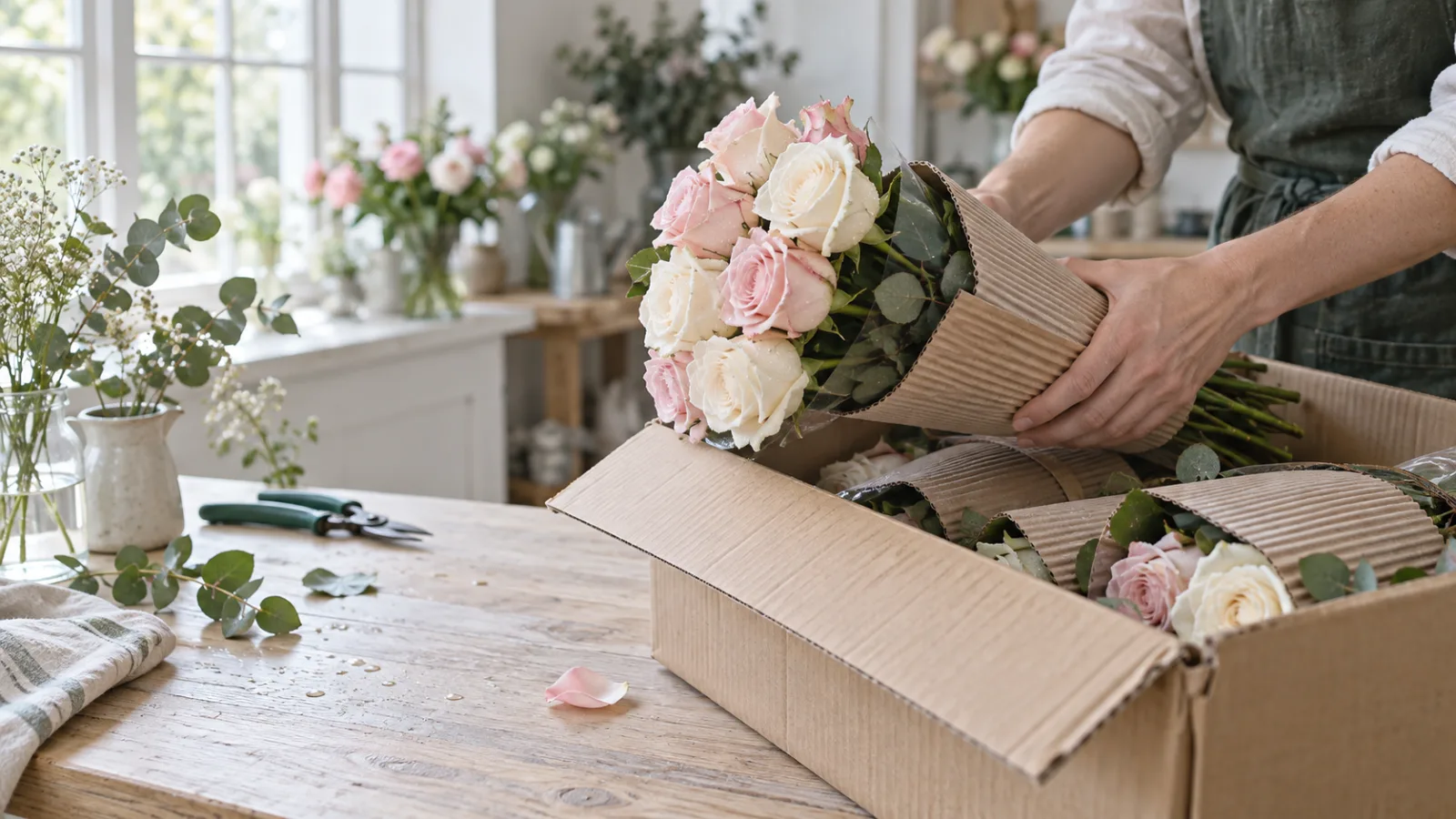
One thing keeps all of it fresh: cold. Every batch travels refrigerated, and a rose barely dips into its store of freshness as long as that cold chain holds. JFLOO assembles each bouquet to order for the same reason, rather than keeping ready-made ones on display.
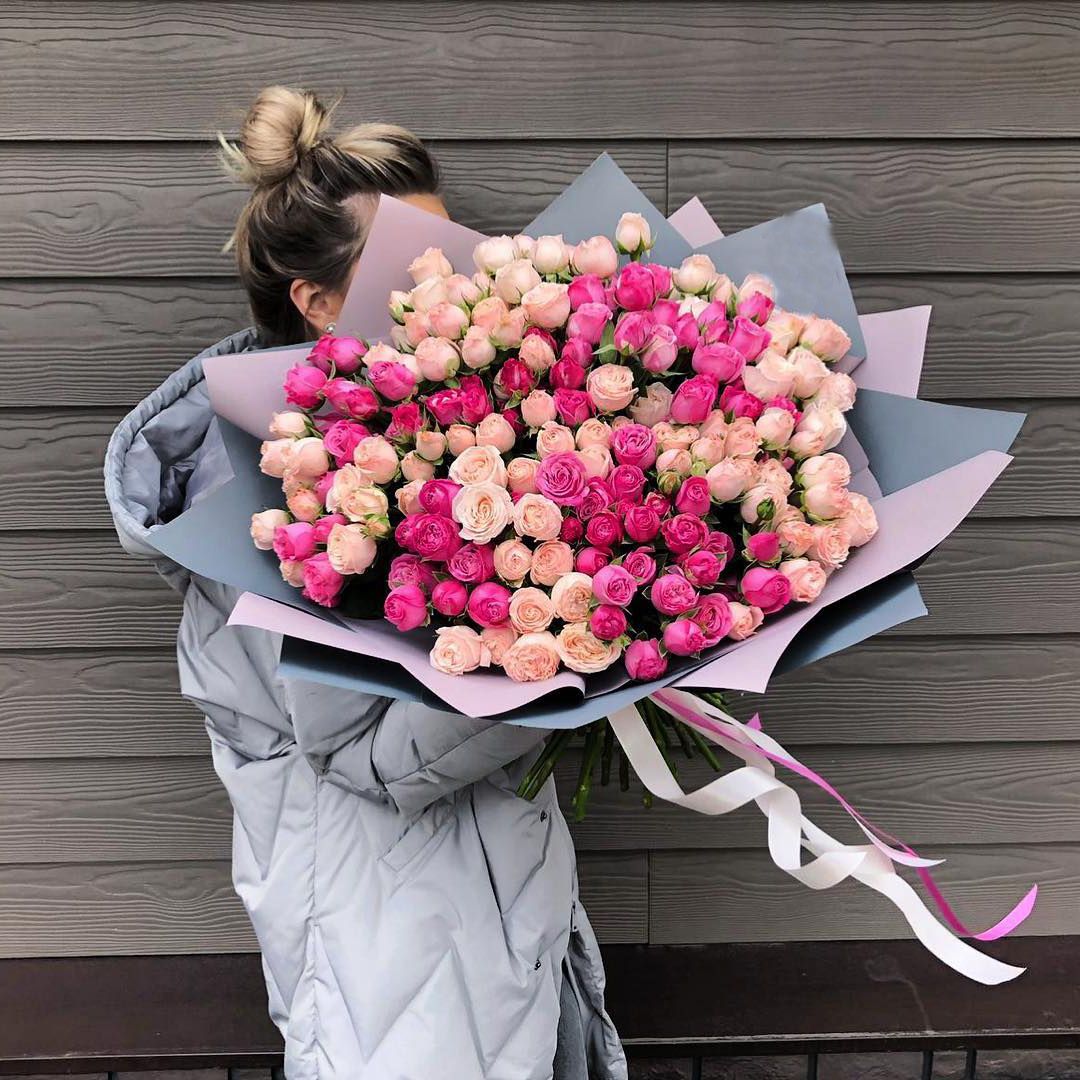
"Type" in the catalogue can mean a cultivar or an origin, and either one changes how a bouquet looks and how long it lasts. Spray roses carry several smaller blooms on one stem instead of a single large head, which is why they work so well in light, airy arrangements rather than a dense block of colour. Garden-style roses were bred specifically for a layered, almost spherical bloom. They look like peonies, though botanically they remain roses, and most of the ones on offer trace back to the English Roses that the David Austin nursery began breeding decades ago.
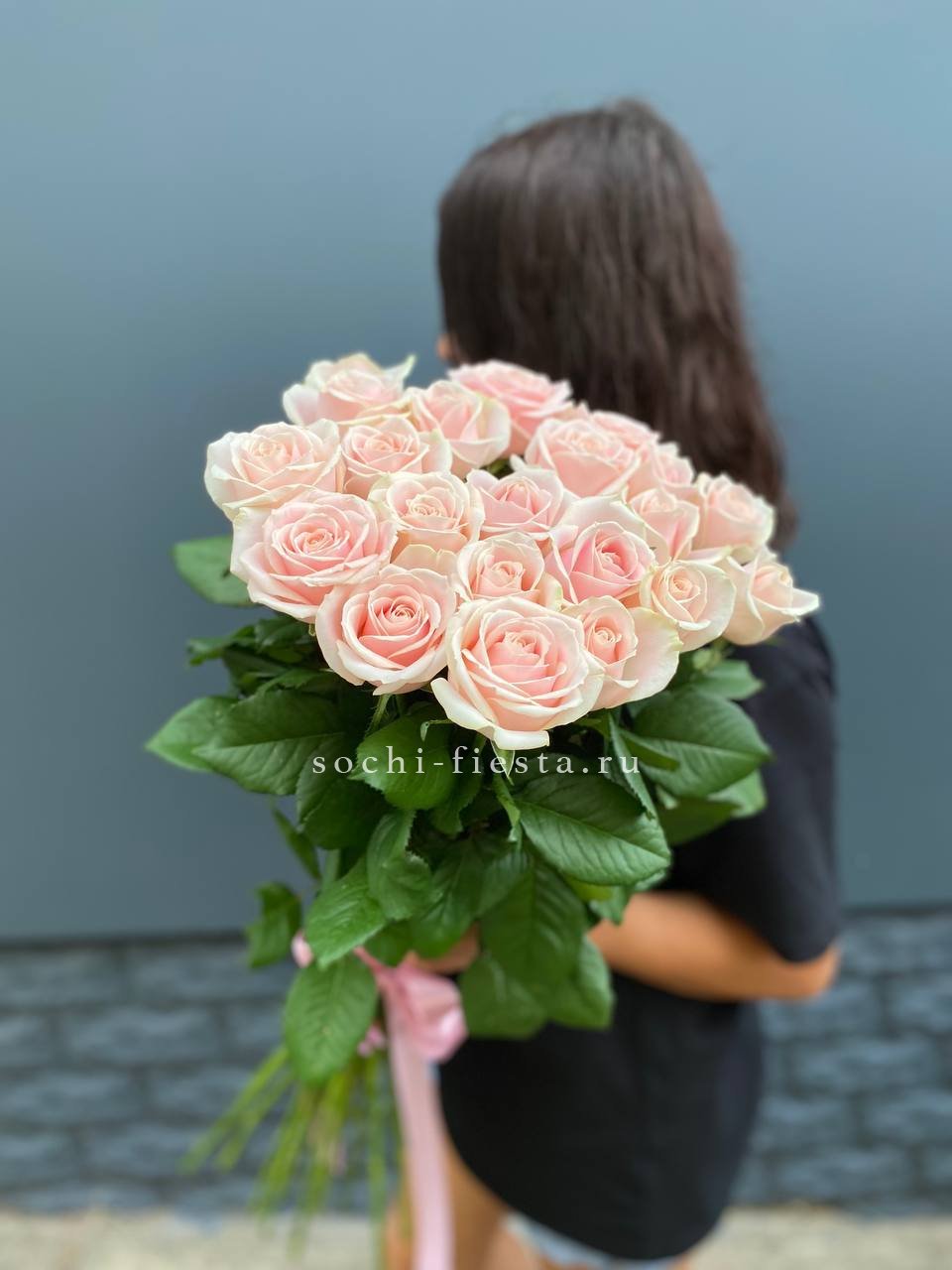
So-called French, or reverse-petal, roses are not a separate cultivar at all. A florist reflexes them, turning the outer petals back by hand so the bloom opens wider and fuller than it would on its own. Jumilia is a different case entirely: a large bud up to seven centimetres across, with a soft white base that shades into a bright pink edge, and a vase life of up to two weeks with good care. Alongside these sits a plainer roses by type option — the standard rose, a single full bloom on a long stem, for whenever the occasion calls for a classic gesture and nothing more.
Colour and stem count: choosing for the occasion
A rose's colour often says more than a card. Red still reads as passion or a direct declaration, white as respect or sympathy, cream and tea shades as understated warmth. Raspberry or burgundy tends to mark something weightier than a bouquet for dinner. Roses by colour run to rarer tones too: blue, turquoise, a near-black burgundy, even a rainbow stem carrying several shades at once.
Stem count carries its own weight, especially for anyone who grew up in Russia or its neighbours: there, odd numbers go to the living and even numbers are kept for remembrance, and the rule is taken seriously. Elsewhere nobody counts a dozen roses, but an odd number is safe everywhere. One stem reads as a modest gesture, three or seven as thanks, fifteen or twenty-five as a statement hard to overlook.
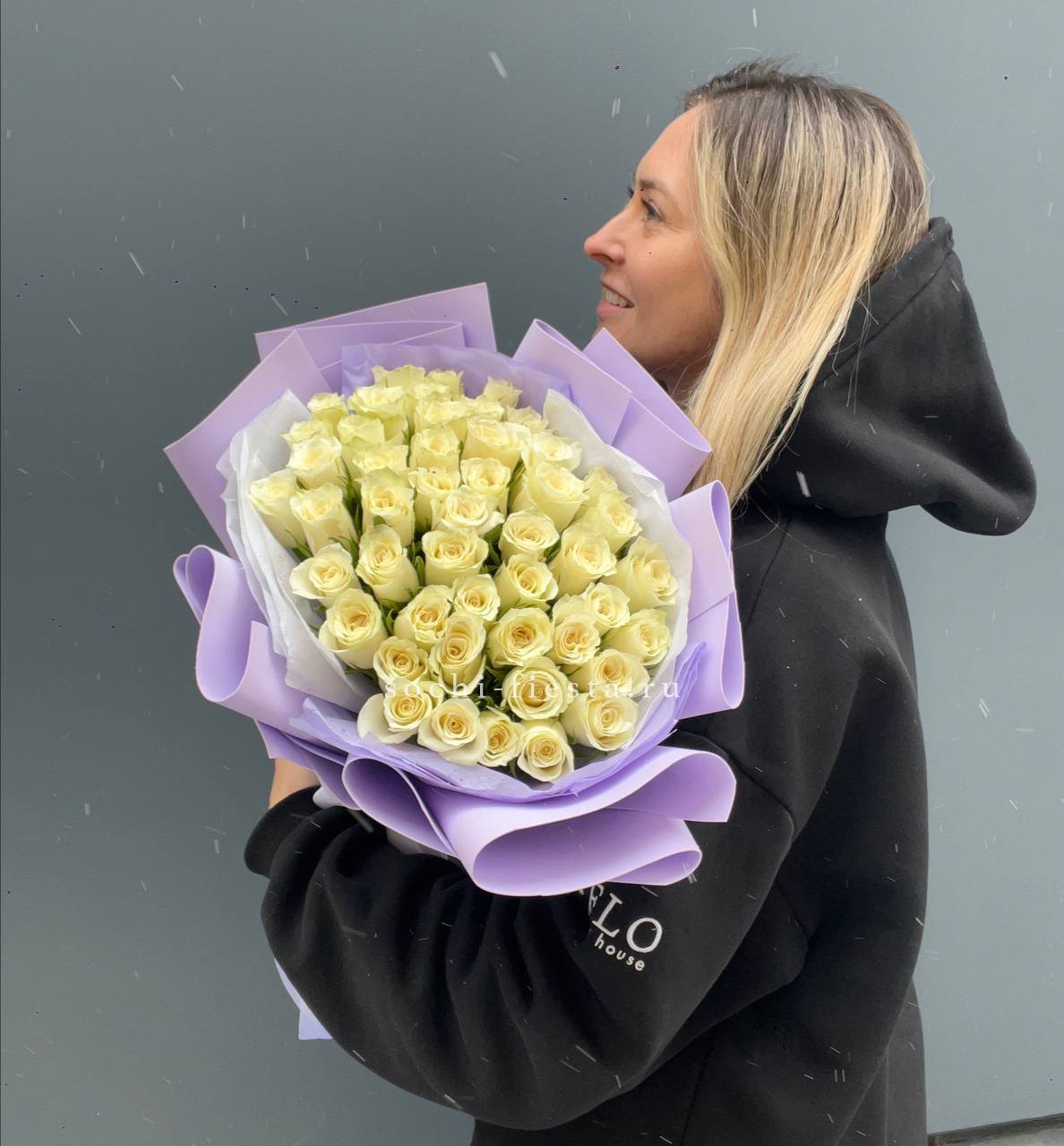
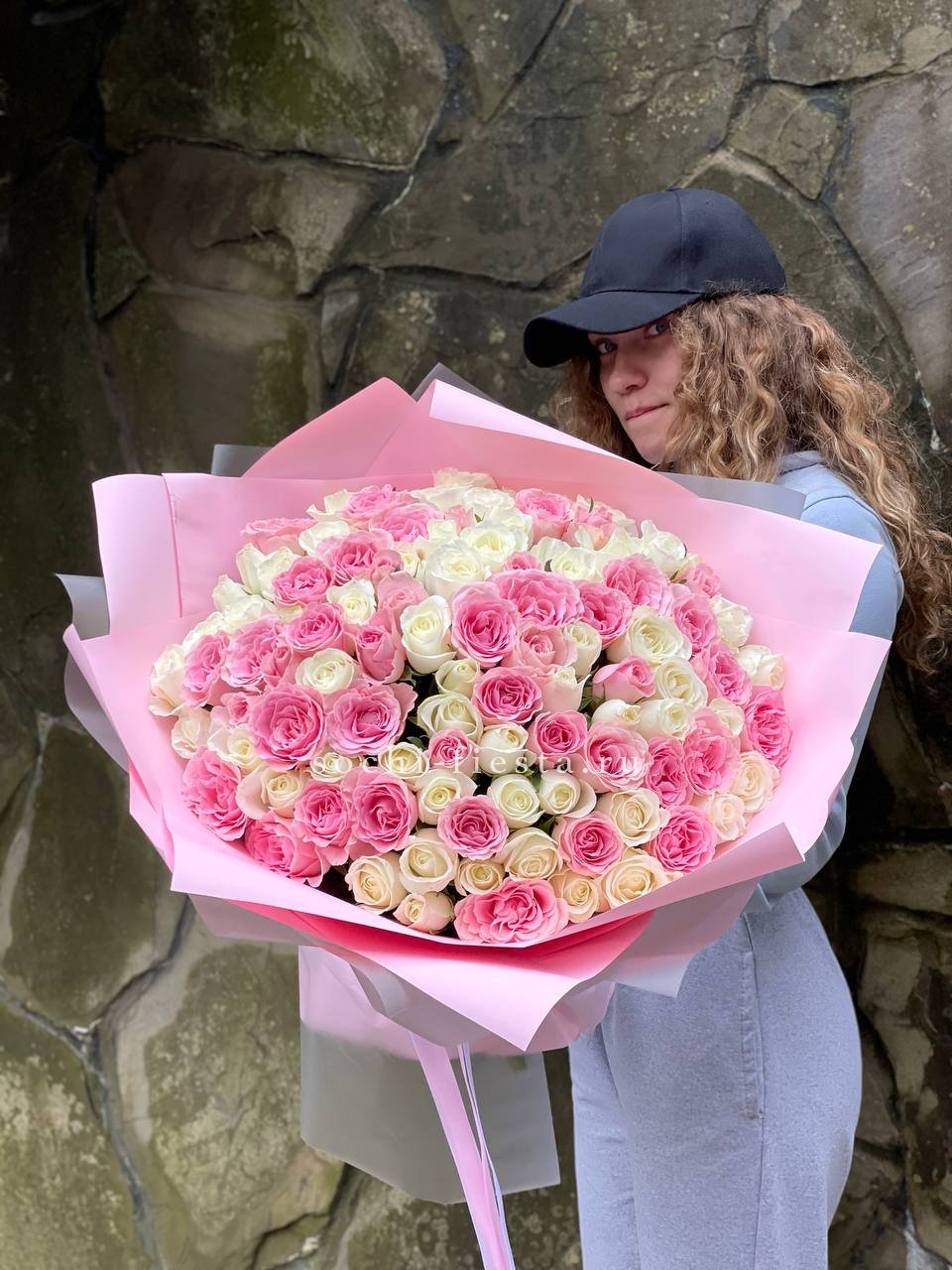
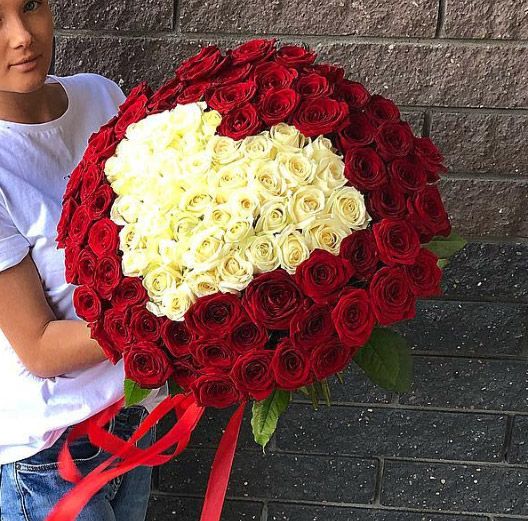
Fifty-one and a hundred and one roses sit at the far end of that scale — gestures nobody misses. The full range is easiest to browse in roses by quantity, and for a milestone anniversary a florist can go further still, into the giant rose bouquets that run to several hundred stems. At that size a bouquet stops being a personal gift and starts being a set piece for the event itself.
Stem length and format: bouquet, box or basket
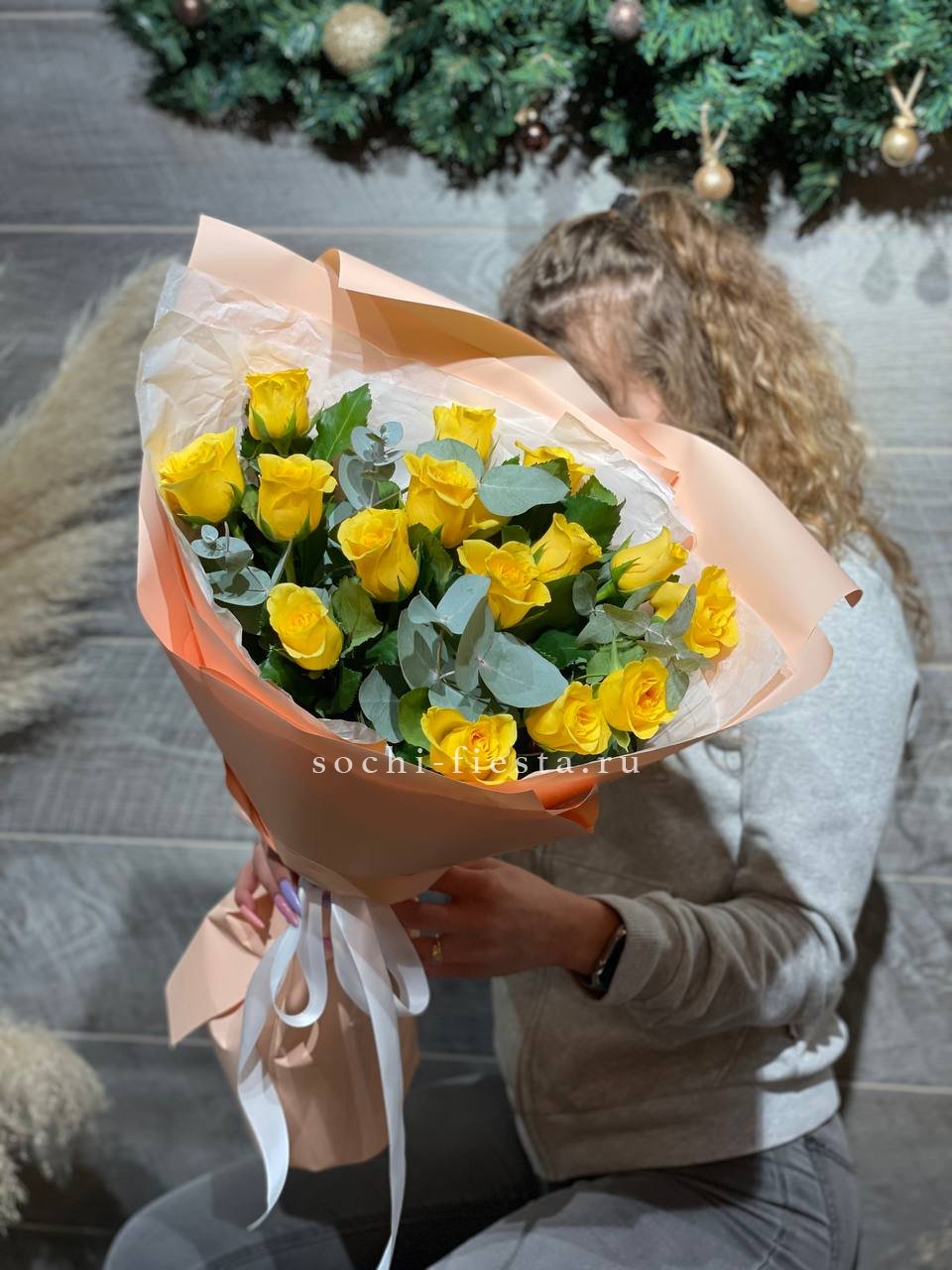
Stem length tracks how and where a rose grew. Ecuadorian roses carry the longest stems, seventy centimetres to a metre and more, flowers built for a tall vase and a gesture that gets noticed. Kenyan and Dutch roses usually run shorter. Spray and compact varieties usually stay closer to forty or fifty centimetres, and suit low, gathered arrangements instead. A separate format covers roses by height above a metre: an armful that size gets noticed from across a room before the recipient has even opened the card.
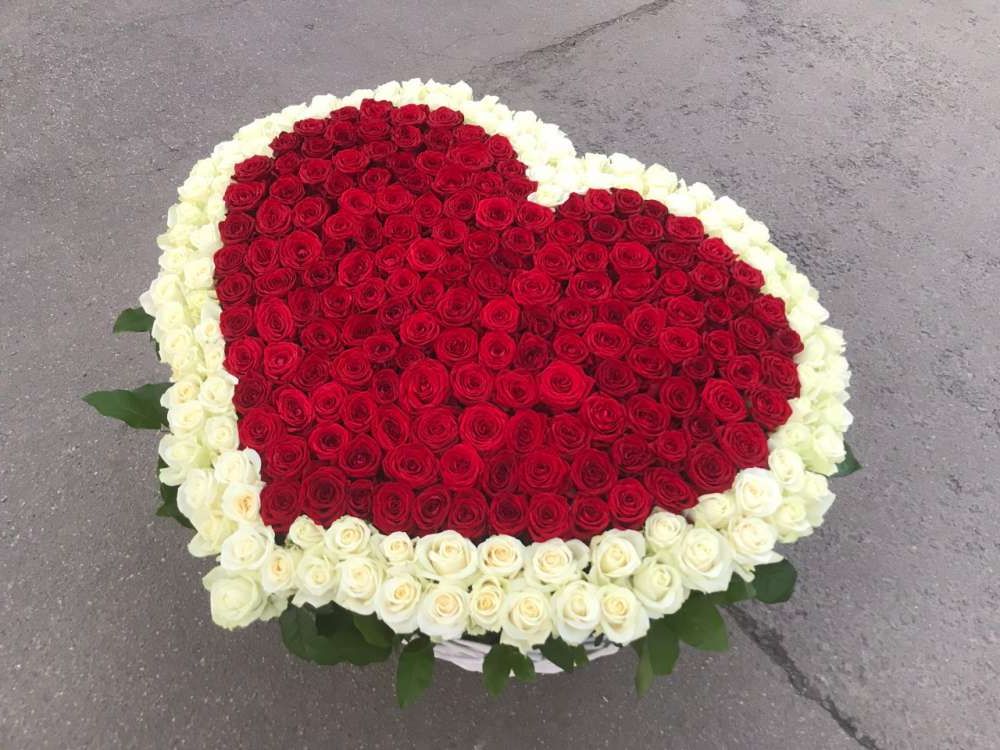
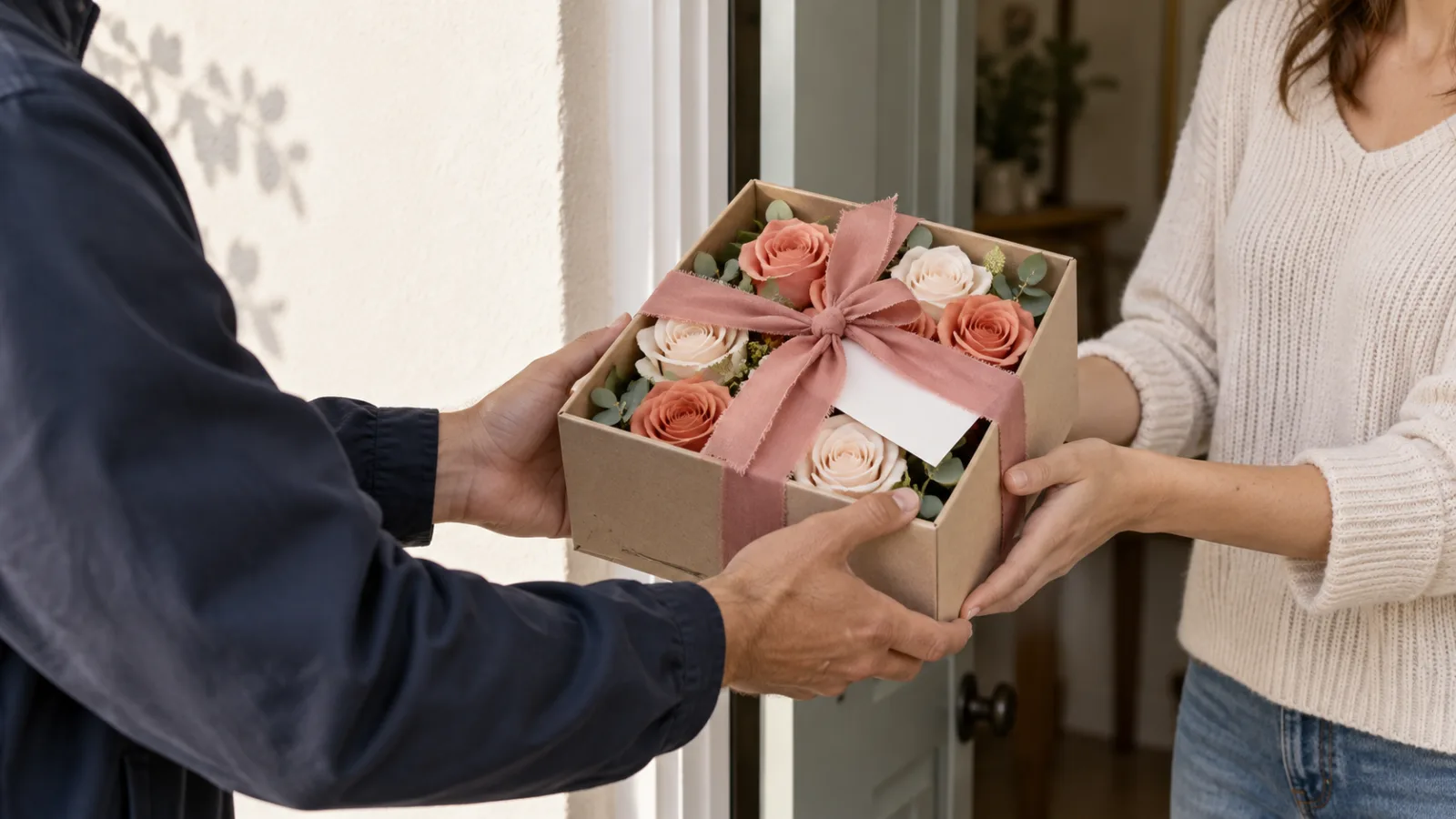
Format matters as much as length. A wrapped bouquet works well when there's a vase at home and someone ready to put the stems in water straight away. Roses in a box or basket sit in soaked floral foam instead, so they survive a long wait with no vase at all, which suits an office delivery or a recipient who would rather choose the container themselves. A romantic occasion gets its own shape too: a heart-shaped arrangement built from the same roses, tuned to a different mood. The full spread of formats is easiest to browse in roses by bouquet shape.
Most garden flowers keep to a defined season. Roses, in the usual sense, do not. Ecuadorian and Kenyan farms sit near the equator, where day length barely shifts across the year, so flowering runs continuously instead of in short bursts the way peonies or tulips do. Roses in Sao Paulo stay available in almost any month, and price shifts track demand rather than a growing season: order volumes climb sharply around 14 February, 8 March and Mother's Day, and wholesale prices climb with them.
In an ordinary week the opposite pays off. Ordering ahead and letting the florist choose the exact shade usually costs less, since the difference between similar varieties barely shows once the bouquet is finished.
Vase life and care: how long a rose lasts
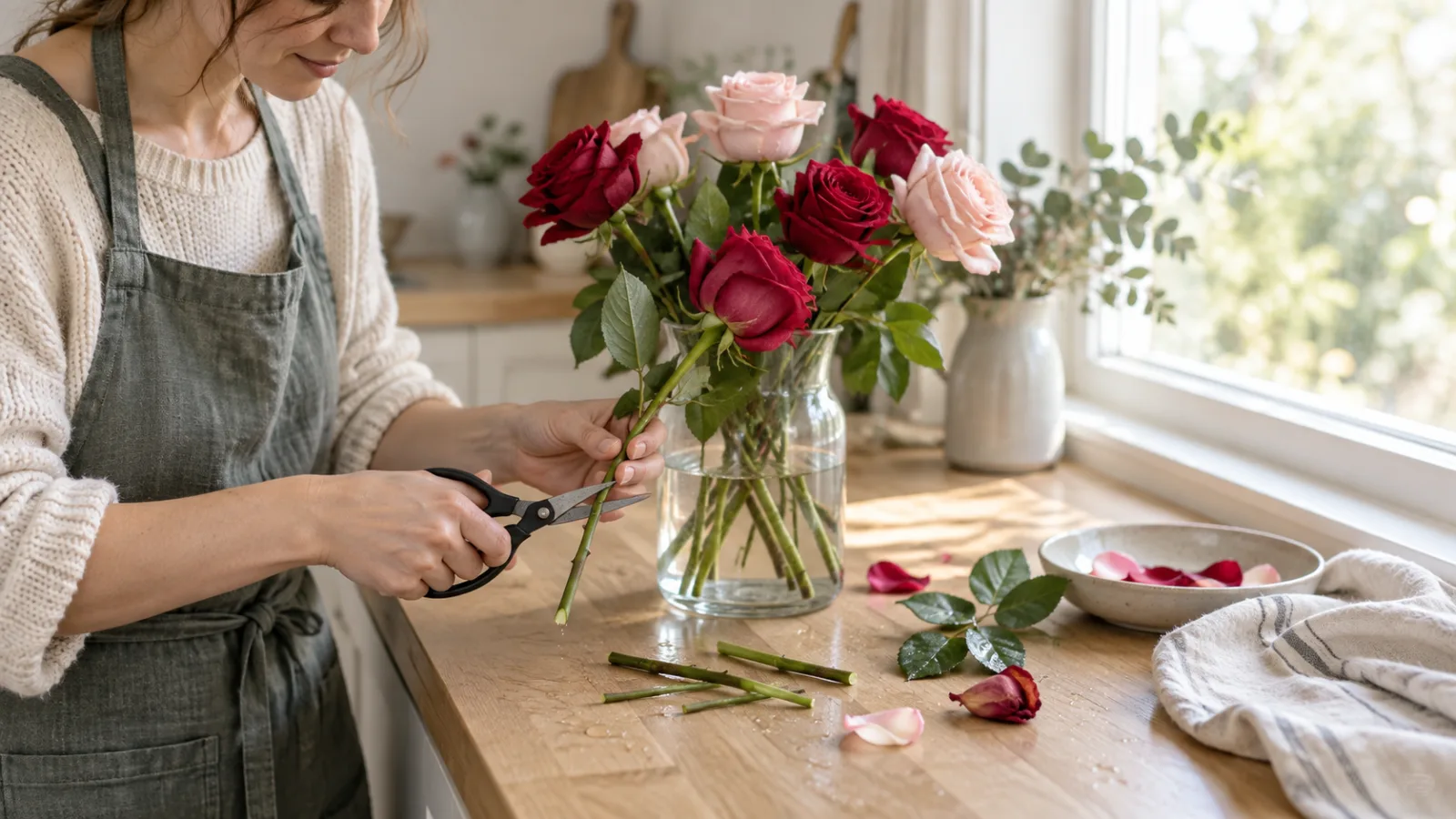
A clean cut does most of the work. Trim the stem at a forty-five-degree angle with a sharp knife or shears as soon as the bouquet arrives, and strip any leaves that would end up sitting under water. Left in place, they rot and shorten the life of every other stem in the vase. Change the water every two days, and keep the vase away from radiators, direct sun and a bowl of ripe fruit: apples and bananas give off ethylene, which ages petals faster than usual.
How long a rose lasts also depends on the variety. A standard rose holds for about a week, sometimes ten days, while a dense Jumilia bud can last up to two weeks with good care. Roses a florist has already reflexed by hand fade sooner than the rest, since they're bought precisely to look their fullest straight away — worth enjoying in the first few days rather than left on a windowsill until the weekend.
Rose delivery in Sao Paulo starts with a photograph. The florist puts the bouquet together and sends a picture before the courier ever leaves the workshop, which leaves time to swap a ribbon or adjust a shade before departure. Delivery in the central zone is free, and every other district shows its price in the cart before checkout. The bouquet card shows the delivery time; full terms and the zone map sit on the delivery page.
Nobody calls the recipient ahead of time unless asked to. The surprise stays a surprise. A courier works from a name and an address alone. Without an exact address, a phone number is enough — a manager will work out where to deliver without naming the sender or the occasion. Payment runs through Visa or Mastercard online, no cash changes hands with the courier, and orders are accepted around the clock.
Choosing roses gets simpler by working from the occasion and the address rather than the full list of varieties. A modest stem count suits a quick thank-you, a box or basket suits an office or a hotel delivery, and anyone who finds roses too obvious a choice might look instead at mono bouquets built from other flowers. Ready-made picks for a specific date sit in occasions.