


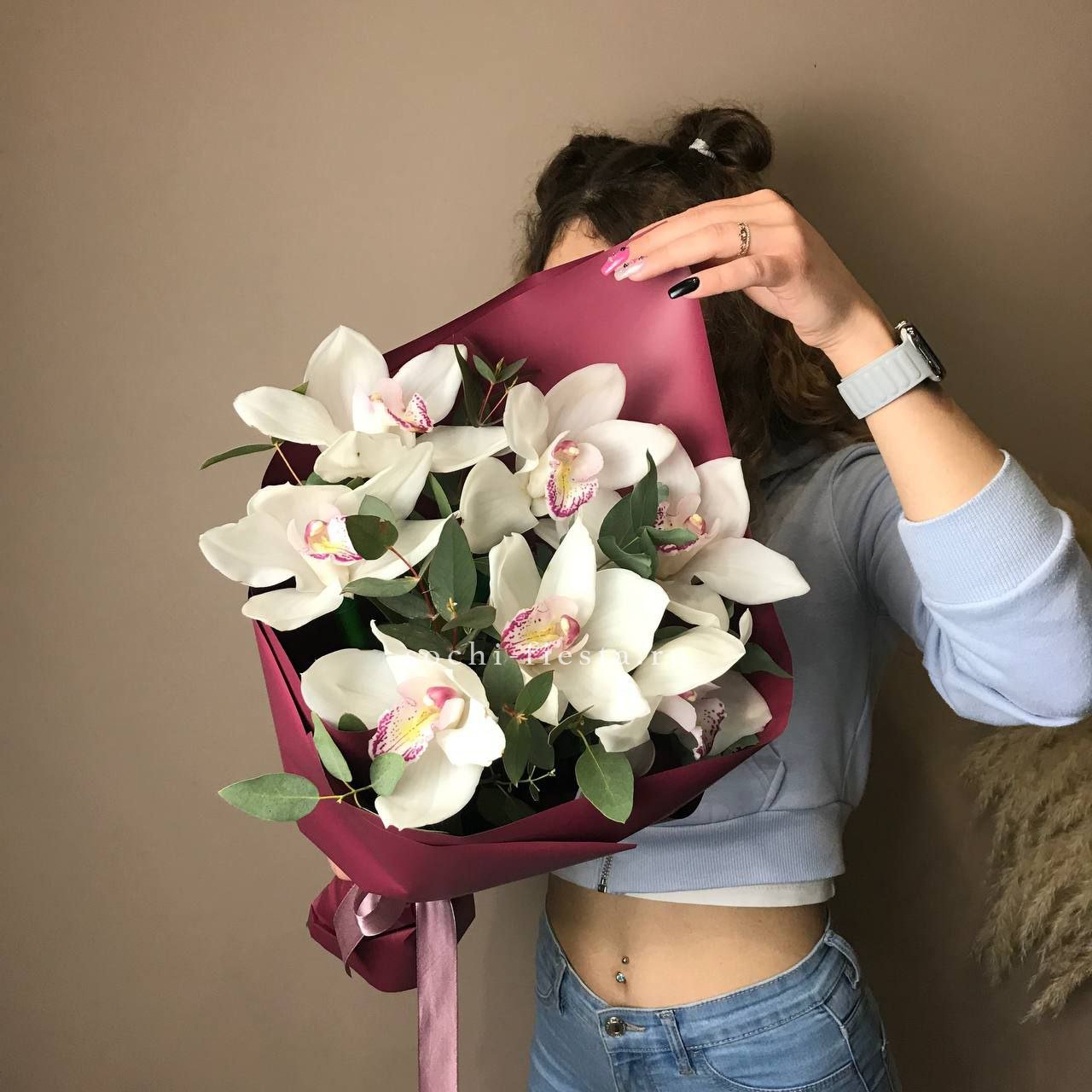


Plants in Singapore: from a UNESCO garden to a pot on the desk
Singapore Botanic Gardens, founded in 1859, became the first tropical botanic garden on UNESCO's World Heritage list in 2015, and its National Orchid Garden alone holds more than 1,000 species and 2,000 hybrids. A plant sent across the city lives in a smaller world than that: one window, the hum of air-con and the heat pressing against the glass. Choosing plants in Singapore comes down to picking something that will actually like the flat or desk it lands on.
Plant delivery in Singapore: CBD towers, HDB blocks and condo gates
Cactus plants, potted plants by type and floralariums with succulents are priced by the container as much as by the plant: a stone rose or a haworthia set inside a glass cube costs more to arrange than the same succulent in a plain pot.
Delivery is split into three zones, laid out in full on the delivery zones and rates page:
- Free, 7am–11pm — Marina Bay, Raffles Place, Orchard and Clarke Quay; a plant the florist already has in stock can leave from 45 minutes after the order is confirmed.
- Paid — Tanjong Pagar and Chinatown, Bukit Merah and Tiong Bahru, Bukit Timah and Holland Village.
- Paid, longer delivery — Bedok and Tampines, Woodlands, Yishun and Sembawang.
Between 11pm and 7am any address is served by arrangement, at a price quoted before payment. An office on Raffles Place needs the company name and floor: the courier hands the plant to reception, and the sender is told who signed for it. More than three-quarters of Singapore's residents live in HDB flats. Where a block or a gated condo needs a call to get past the entrance, the courier rings from the gate. A closed estate is handled the same way, on request, with the fee fixed before payment.
Sending from abroad works no differently from ordering next door. Payment runs on Visa or Mastercard, prices show in Singapore dollars, and the currency switcher on the site is there to read the total, not to change what the bank charges: the card issuer converts at its own rate, with nothing added. A phone number for the recipient is enough to place the order, and a photo of the finished arrangement goes out before the courier leaves.
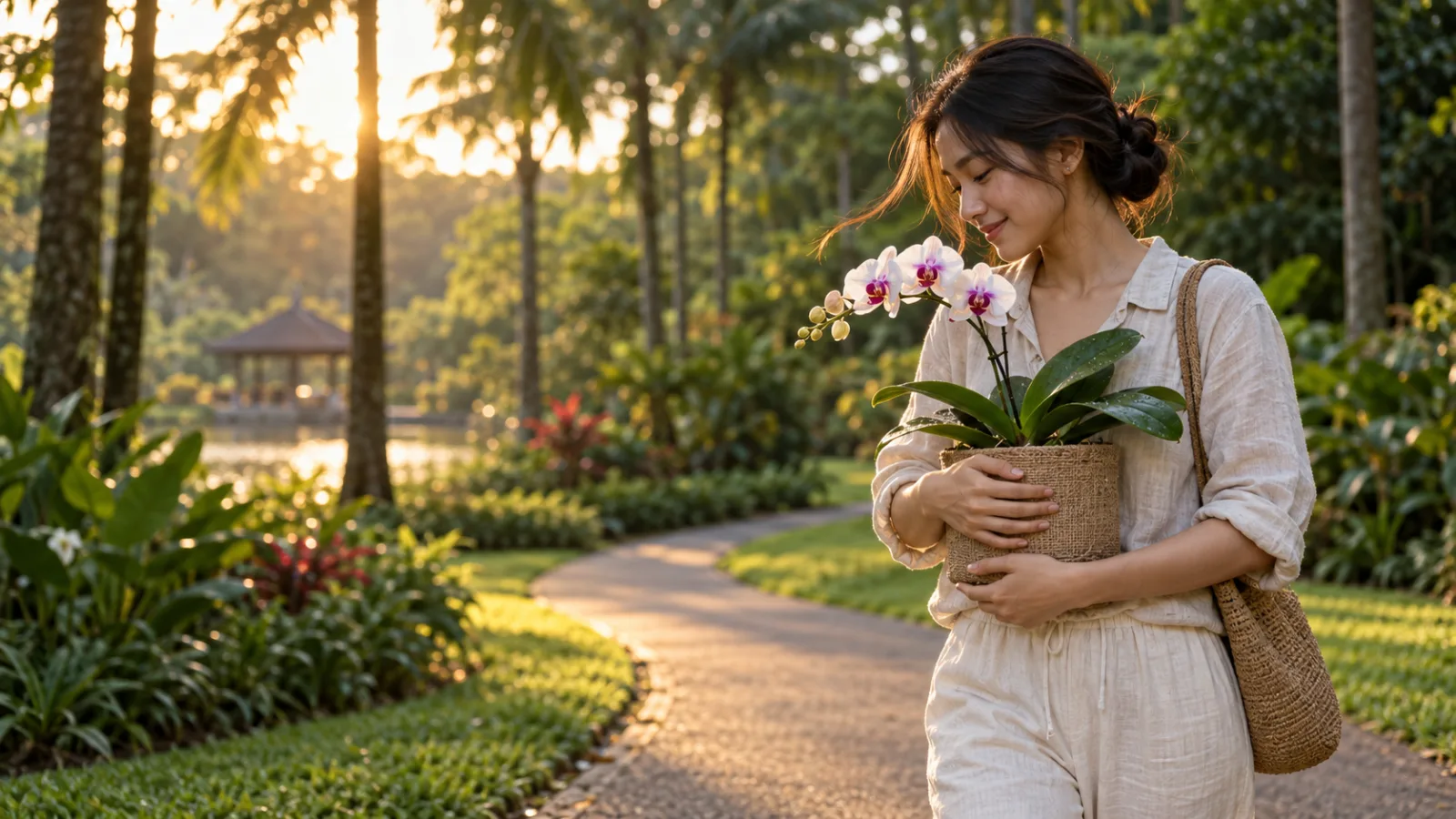
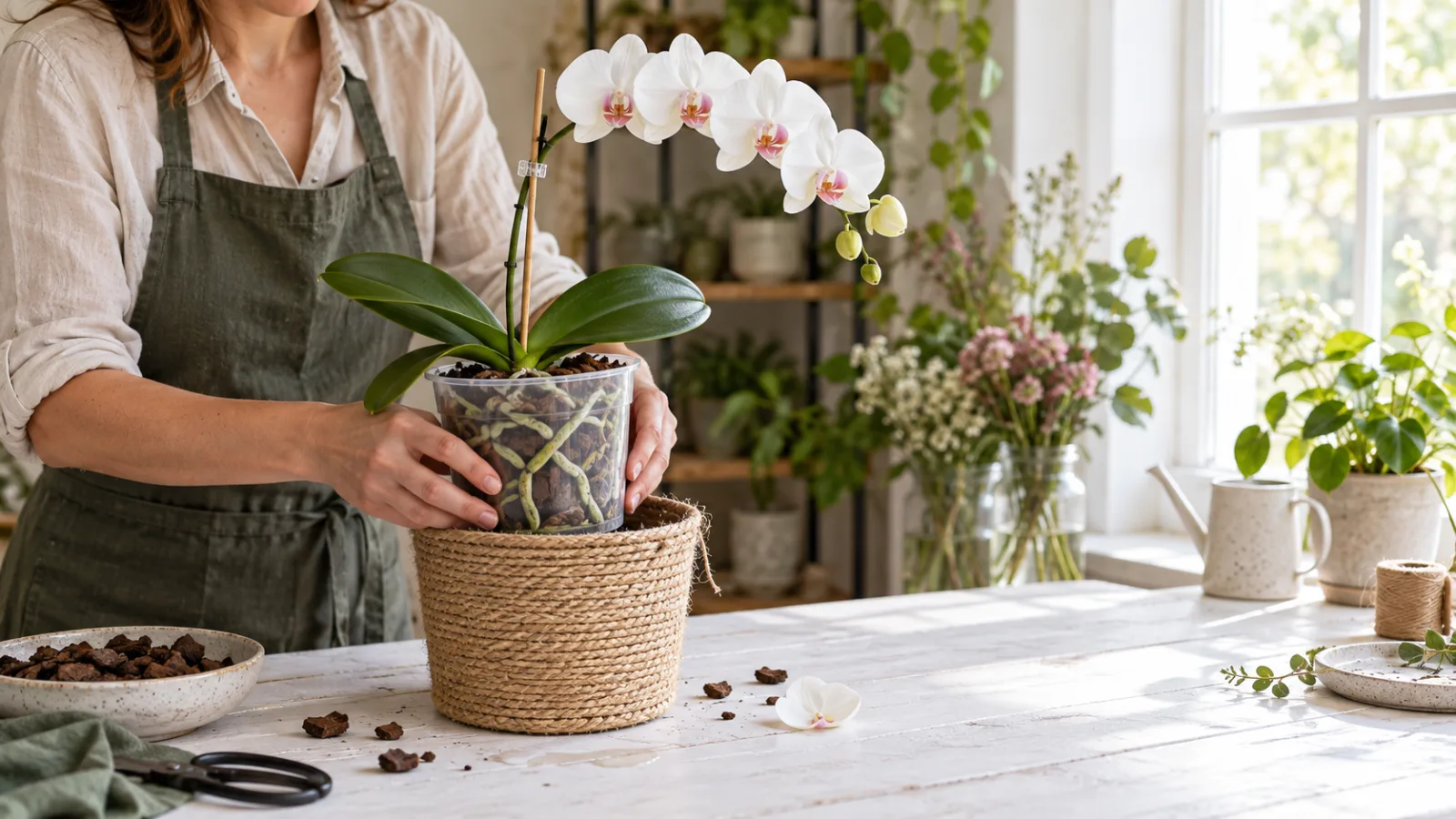
The moth orchid sold as a potted gift is native to this part of the world, growing wild from India through Malaysia and Indonesia to the Philippines, where it clings to tree bark rather than soil. That habit explains why it travels so well indoors: an epiphyte's roots are built to dry out between waterings, not to sit in wet compost.
Singapore's own climate works against a second flowering more than it helps one along. Outside temperatures hold around 31–33°C through the year, with no real seasons, and morning humidity regularly climbs above 90%. A new flower spike is more likely to start after several days below 27°C, so a room with air-con running is closer to that trigger than a balcony left open to the heat. Bright light suits the plant, but a window with midday sun coming straight through will scorch the leaves rather than encourage a spike.
Chinese New Year sends people looking for a potted kumquat, its small gold fruit read as a wish for prosperity, alongside orchids and branches of pussy willow; households usually buy one to two weeks ahead. Because the festival is a moving date each year, that one-to-two-week window shifts along with it. Kumquats are not currently in the catalogue, so an orchid stands in as the plant to send instead.
Teachers' Day falls on the first Friday of September, and it is a working day rather than a holiday. That is exactly when a desk plant earns its keep: a cactus or a floralarium takes up little room on a teacher's table and needs no daily watering while term runs on. Mother's Day, the second Sunday of May, is one of the service's busier dates, and delivery windows run wider than usual with no promise down to the minute, so it is worth placing the order a few days early rather than on the day itself.
Floralariums with succulents suit a desk that gets no direct sun, and where a bloom rather than a leaf feels right, flowering plants cover everything currently in the catalogue that opens on its own. For a cactus or succulent set inside glass, florariums with succulents is the section to browse first, and where a living gift feels like too much upkeep for the recipient, cut flowers arrive already arranged and need no repotting at all.