

720x720_q85.jpg?v=1787132831)


720x720_q85.jpg?v=1787132831)
720x720_q85.jpg?v=1787132831)
720x720_q85.jpg?v=1787131347)

720x720_q85.jpg?v=1787131348)
720x720_q85.jpg?v=1787132831)


Peonies with delivery in Tokyo: varieties, Tokyo weddings, and a short season
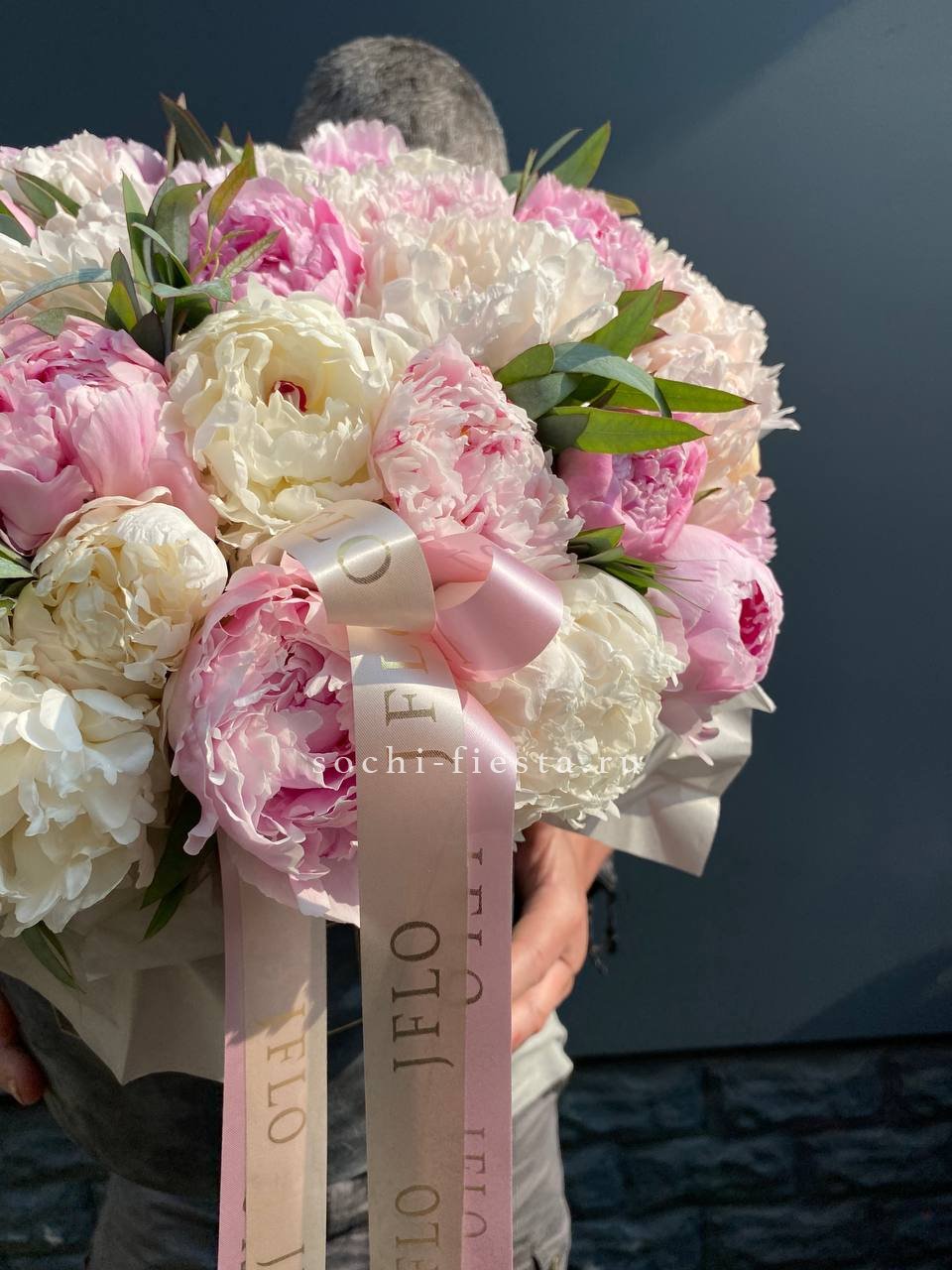
The peony is a deeply rooted flower in Japan. The tree peony (botan) has been painted for centuries on screens, kimono, and in tattoo as a sign of dignity and prosperity. The herbaceous peony (shakuyaku) means bashfulness and purity in the language of flowers. In Tokyo it is chosen when the moment calls for a large, dense, fragrant bouquet that speaks for itself. We built the range around that.
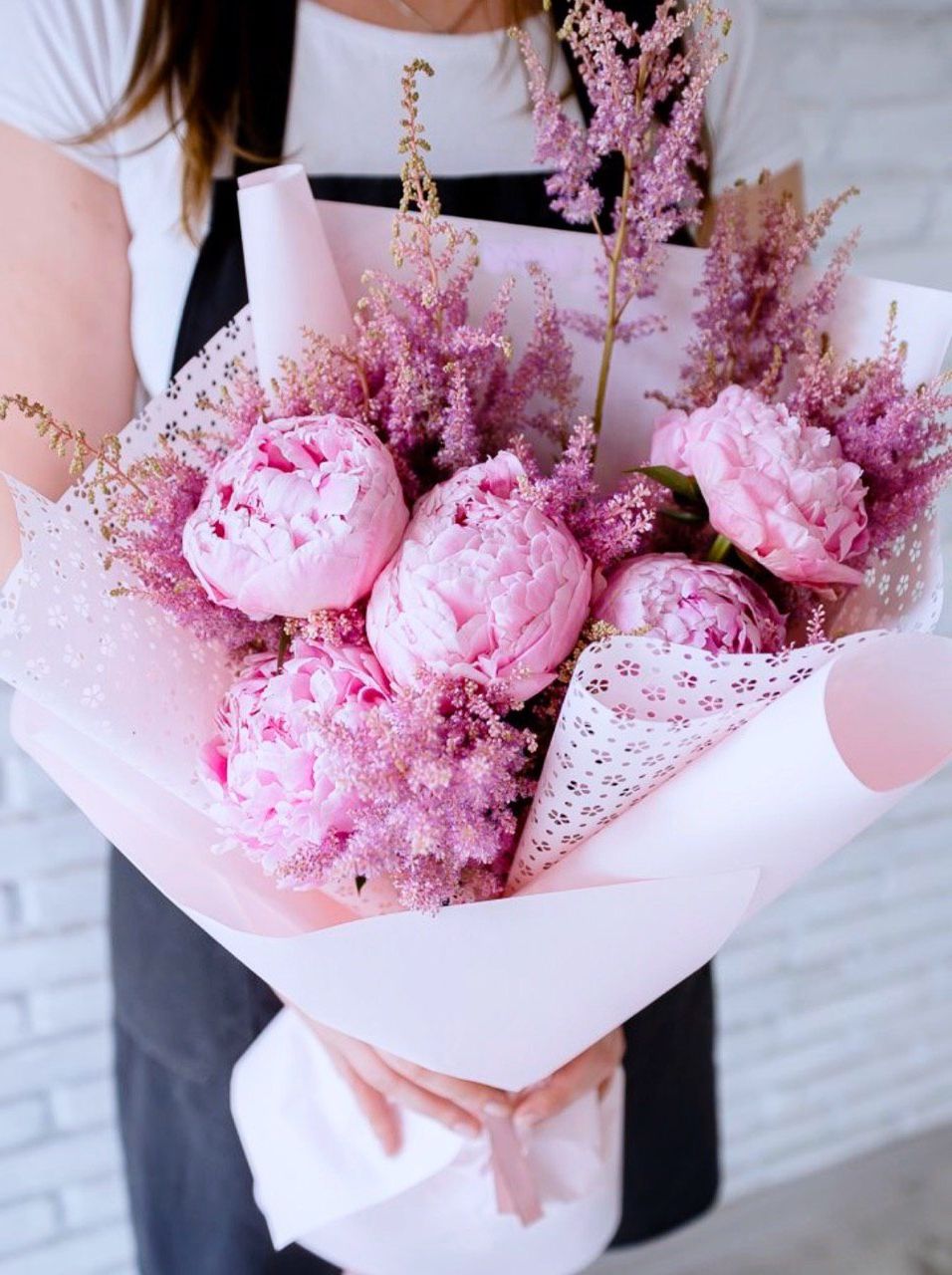
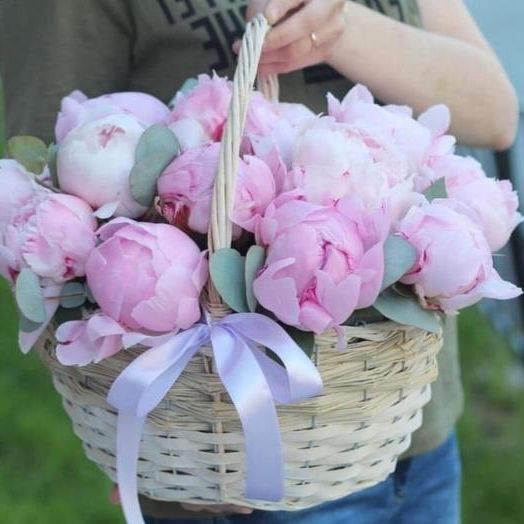
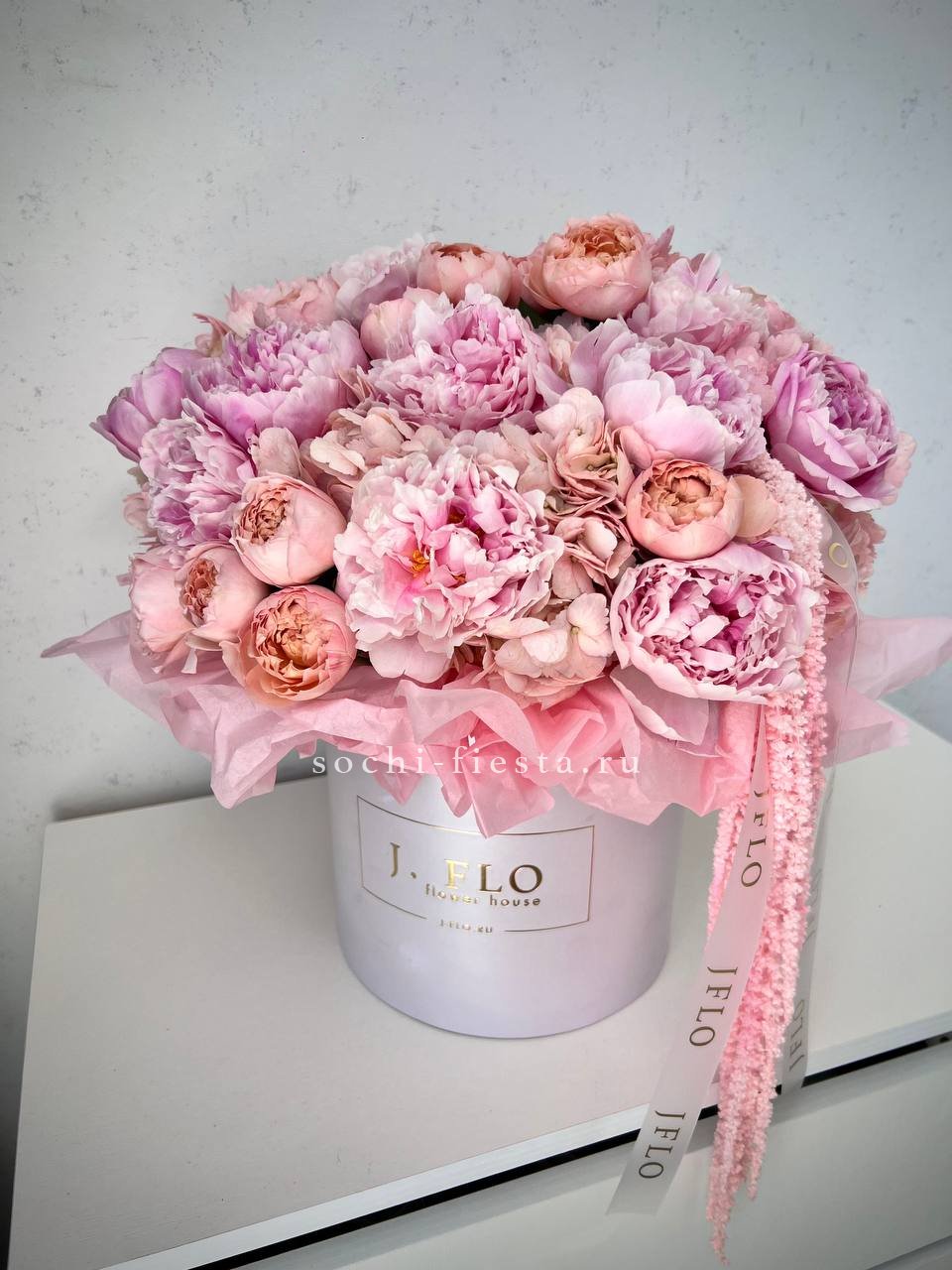
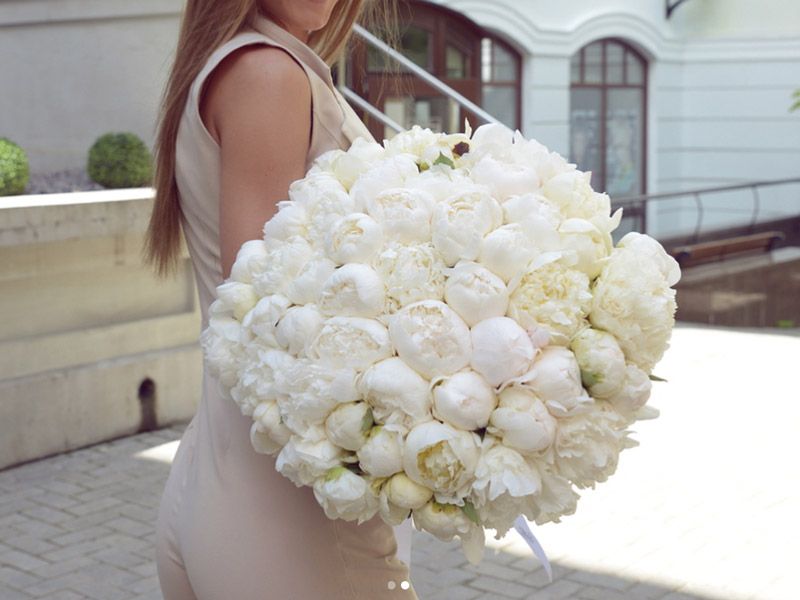
The category covers single-colour bouquets from 9 to 50 stems, mixed arrangements with roses, lisianthus, and eucalyptus, and hat boxes for corporate and wedding orders. The Japanese peony season is short: the tree peony botan runs April–May, the cut shakuyaku May–June. In Tokyo this overlaps with the wedding season, when celebrations in Marunouchi hotels and on Daikanyama terraces gather into these few weeks.

Which varieties to choose
We work along two lines: Japanese cut stems from local growers and proven international varieties. The Japanese peony moves in the short window of May–June, while the tree peony botan is traditionally grown in Shimane prefecture — the island of Daikonjima is known for it across the country. Below are the ones most often ordered in Tokyo.
- Sarah Bernhardt — soft pink-salmon, a large flower, a lasting scent. One of the best-known wedding varieties, a frequent choice for Tokyo ceremonies.
- Coral Charm — opens from coral to peach. It looks good in modern arrangements for restaurants in Ginza and Aoyama.
- Karl Rosenfield — deep dark red, a firm bud, a rich scent. A classic for anniversary and ceremonial bouquets.
- Duchesse de Nemours — pure white with a cream centre. Suited to bridal bouquets and white ceremonial arrangements.
- Japanese shakuyaku — soft mid-tones from local cut stems. Freshness and a short delivery leg are the main advantage.
- Botan (tree peony) — large, silky flowers from Shimane. The season is even shorter, and they go into pots and arrangements more often than into bouquets.
Occasions and seasonality
May and June are the peak of the peony in Tokyo. Most weddings in the city's hotels and banquet halls fall into these weeks. The peony is one of the main wedding flowers: it goes into the bridal bouquet, table arrangements, and arch decoration.
The season overlaps with Mother's Day (the second Sunday of May). The classic of that day is the carnation, but the peony is increasingly chosen as a refined alternative. Beyond weddings, it is given for milestone birthdays, summer anniversaries, and openings. February and March — Valentine's and White Day — come before the season, so roses and tulips lead then. As with roses, bouquets avoid counts of 4 and 9.
Freshness and logistics
Most of the peonies in the Tokyo catalogue are Japanese. The cut shakuyaku comes from growers in cooler prefectures, which stretches the season a little. The botan comes from Shimane. Deliveries pass through the Ōta Market and are distributed to florists. A short delivery leg is a real advantage: the peony arrives fresh, with minimal stress on the bud.
We deliver peonies at the "pea-sized bud" stage: they are still firm, and opening takes 2–4 days depending on temperature and variety. If you need an open peony for a specific date, say so when ordering and we'll prepare with a margin. At +18°C it opens in about 3 days, at +10°C in 5–6.
"The peony is a flower of planning. When someone calls the day before a wedding and asks for 'open peonies by tomorrow', I always tense up. The rule is simple: order at least a week ahead, take delivery 4–5 days before, and open them in a cool room. By the ceremony the flower reaches its most beautiful phase. And protect the buds from Tokyo's humidity — in damp air the petals stick together."
— Ren Takahashi, florist, Tokyo, 15 years in the trade
Delivery specifics in Tokyo
Tokyo's climate is humid subtropical. The hardest thing for the peony is the high humidity of May–June and the tsuyu rainy season, which begins in mid-June. An open peony copes poorly with damp and sudden heat: in humid air the petals stick together and drop sooner. We build event orders with an eye on the forecast and keep the cut stems at +4–6°C right up to assembly.
We deliver peonies across Tokyo: Ginza, Marunouchi and Nihonbashi, Shibuya, Shinjuku, Roppongi, Akasaka, Omotesando and Aoyama, Daikanyama, Ebisu, Meguro, Setagaya, Asakusa and Ueno, Shinagawa, the bay area and Odaiba. Payment is in yen (¥, JPY). We take wedding orders at least 7–10 days ahead. For June celebrations, book as early as April: the peak of the peony and of weddings coincide, and good stems go early.
Care at home
A peony in a firm bud keeps well at +4°C for 5–7 days. To speed up opening, move it to a room at +18–20°C. Cut the stems at a 45° angle, remove the lower leaves, keep the water cool, and change it every one or two days. Flower food (Chrysal) helps the buds open and extends the flower's life.
Don't keep peonies near fruit: the ethylene from ripe apples and bananas speeds petal drop. Tokyo's summer is muggy — place the bouquet in an air-conditioned room, but not under a direct stream of air. Open, at +18–22°C, the peony lasts 5–7 days, and at a cool +10–14°C up to 10 days. Message our manager and we'll help match the variety and stem count to the occasion and budget.

