




Peonies in Tokyo: Japan's "prime minister of flowers" and how to choose one
Peonies in Tokyo carry two ranks. The tree peony is Japan's king of flowers, and the herbaceous Paeonia lactiflora, the one that actually gets cut for a bouquet, is its prime minister of flowers. Choosing well then comes down to stem count, shade and the bouquet format.
Japan's "prime minister of flowers" in a Tokyo bouquet
The tree peony is a shrub with a woody stem that stays in the ground year after year, which is part of why it keeps the senior title. The herbaceous peony dies back to the ground every winter and carries the lower rank, the prime minister. Yet it is the one florists actually sell: cut peonies in Tokyo nearly always mean the prime minister, not the king.
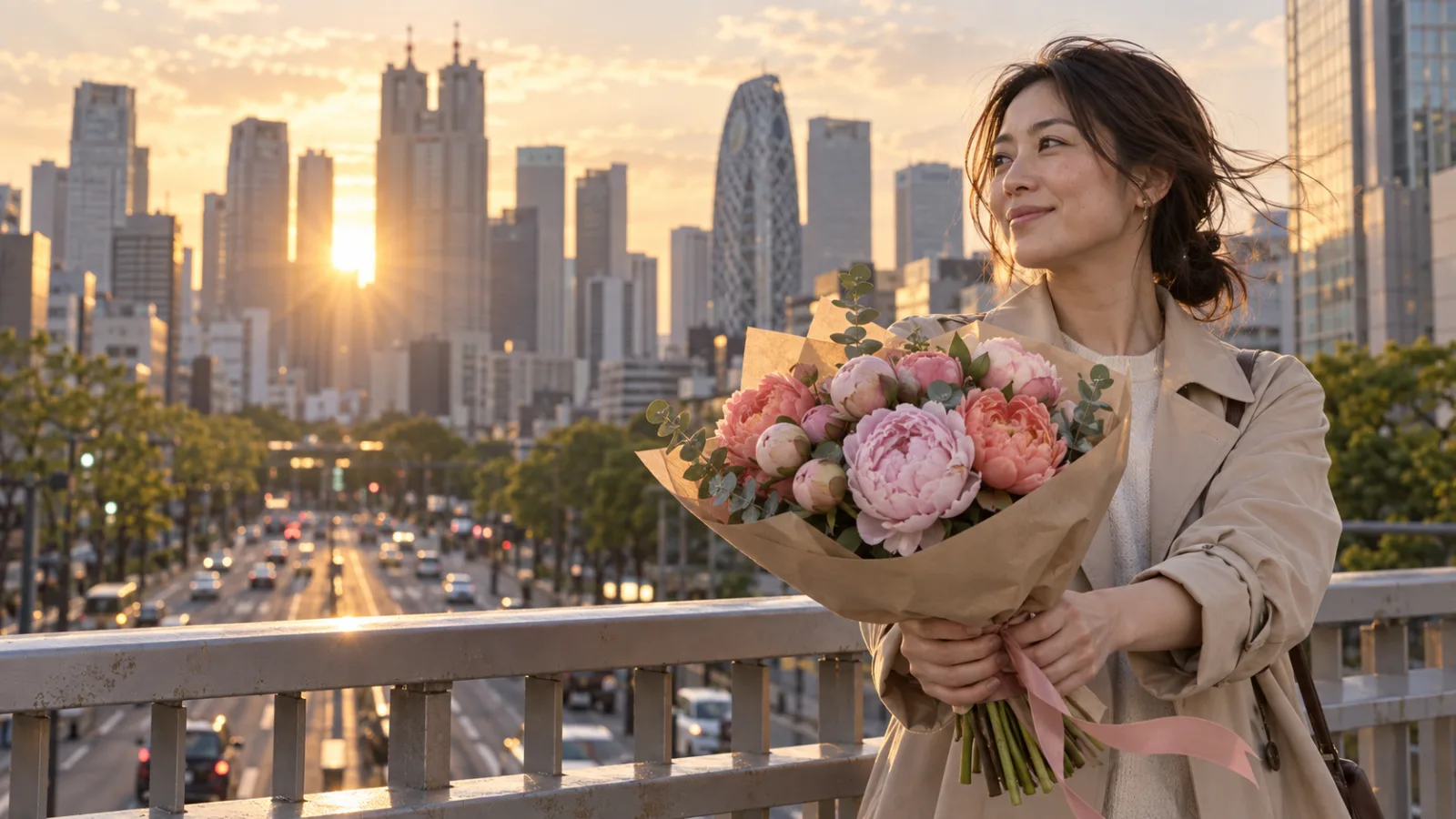
Tree peonies are garden shrubs; cut peonies are usually Paeonia lactiflora, with cup-shaped, fragrant blooms eight to sixteen centimetres across. Whoever receives a Tokyo bouquet is holding that cutting flower, not the one meant to stand in the garden for years.
A peony bush in a garden here flowers for roughly a week to ten days a year. Buying the cut stem is the only way to stretch that short season a little further.
Choosing peonies by stem count or shade, minus four and nine
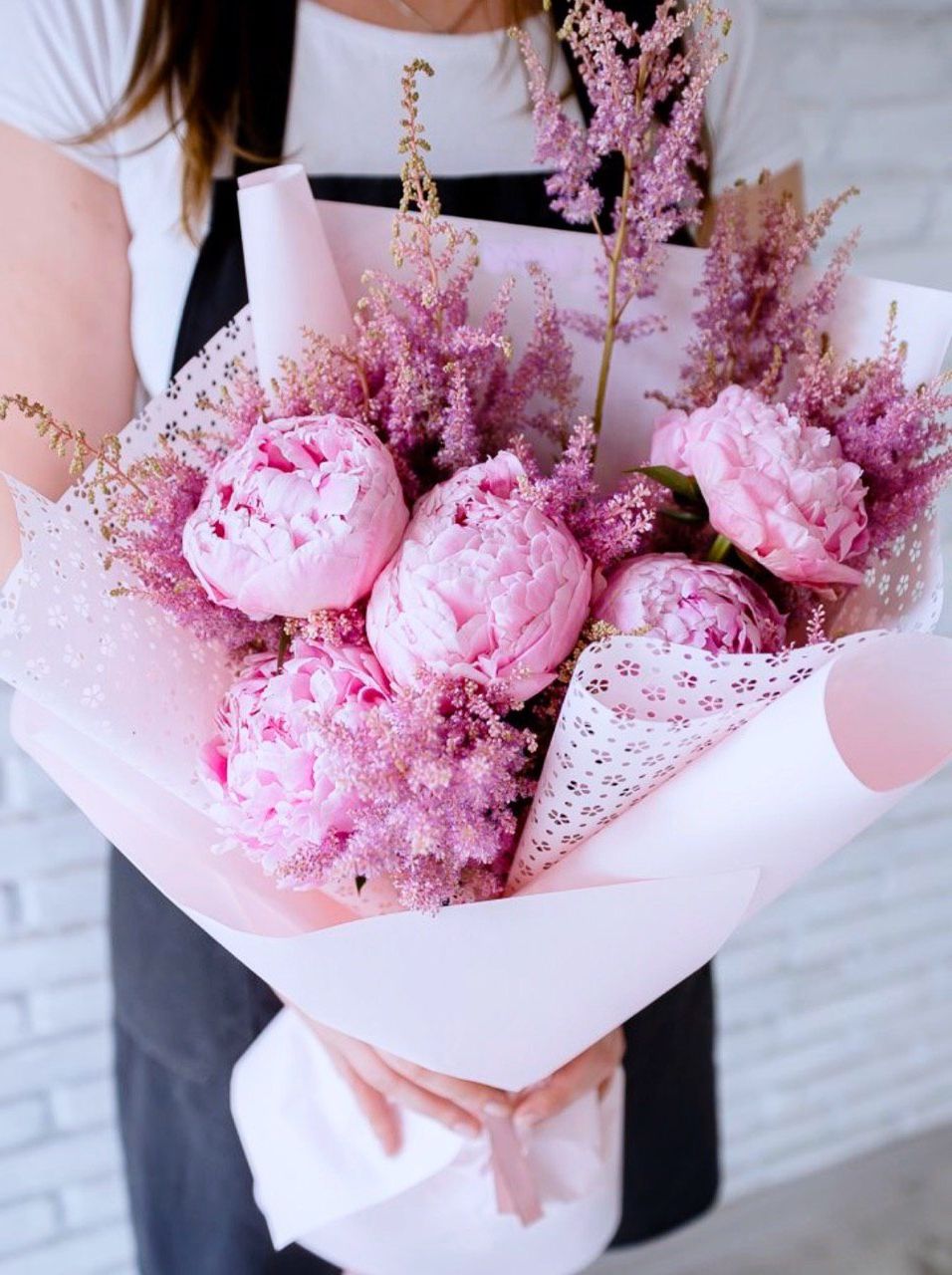
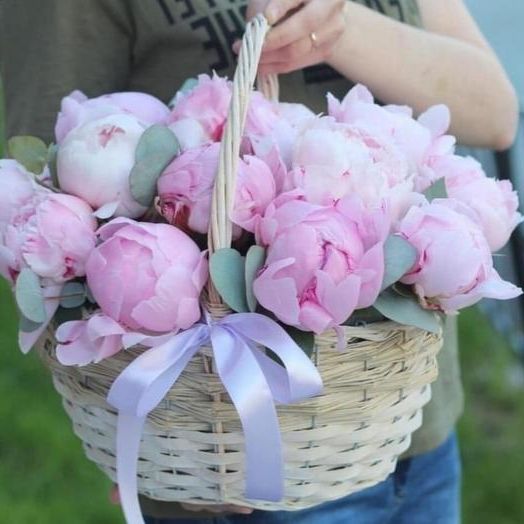
Buying peonies in Tokyo usually comes down to two decisions: how many stems, and which shade. At the small end, the 5 Peonies in Airy Wrapping show the flower loosely tied with little else added. Larger bouquets and a basket of fifteen carry the same stem in greater numbers, and peonies by stem count lines them up from smallest to largest.
Japanese gift-giving skips two numbers: four, which sounds like the word for death, and nine, which sounds like suffering. That applies to the count of stems in a bouquet as much as to anything else, so a gift built around four or nine is worth steering away from.
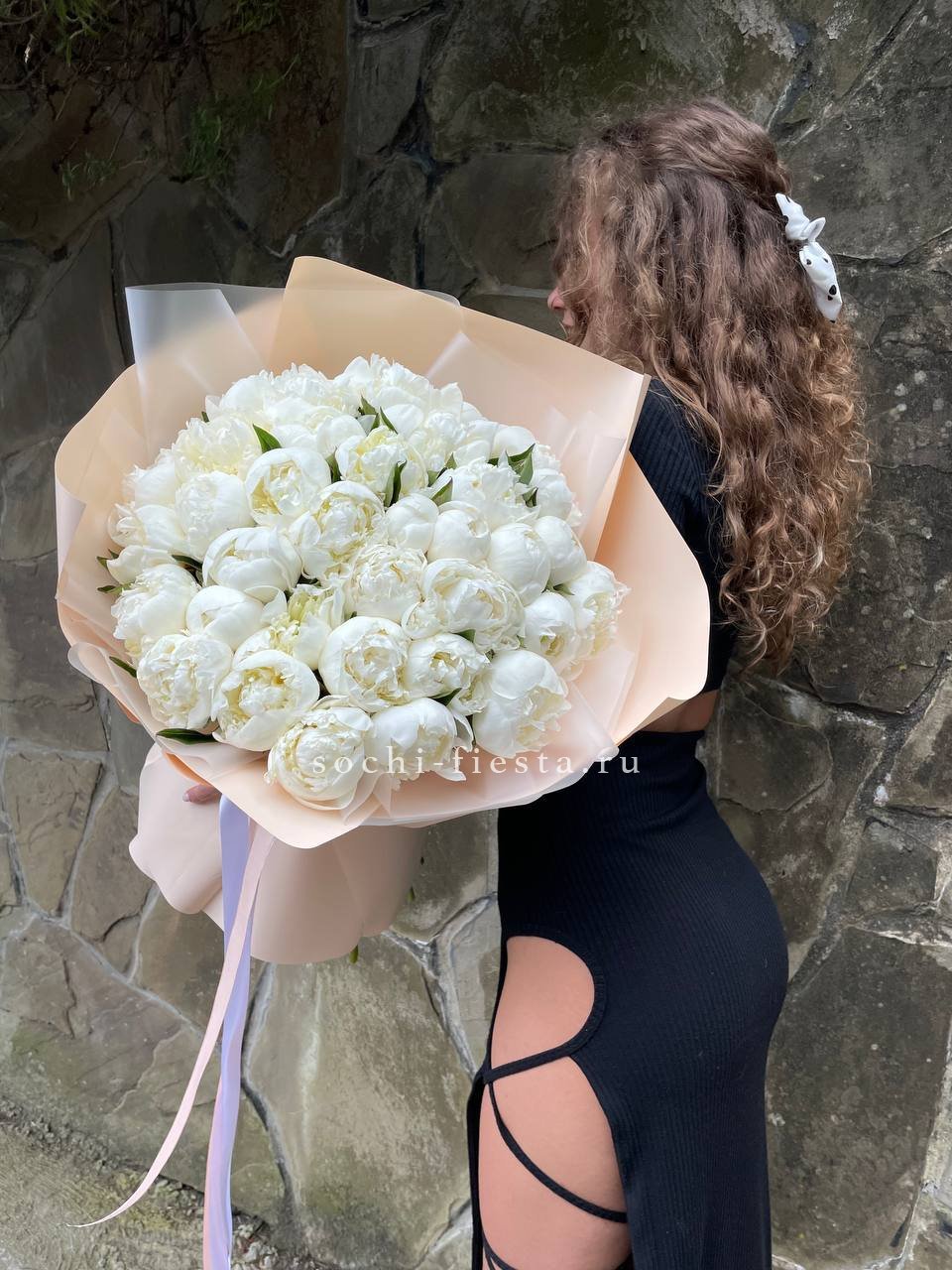
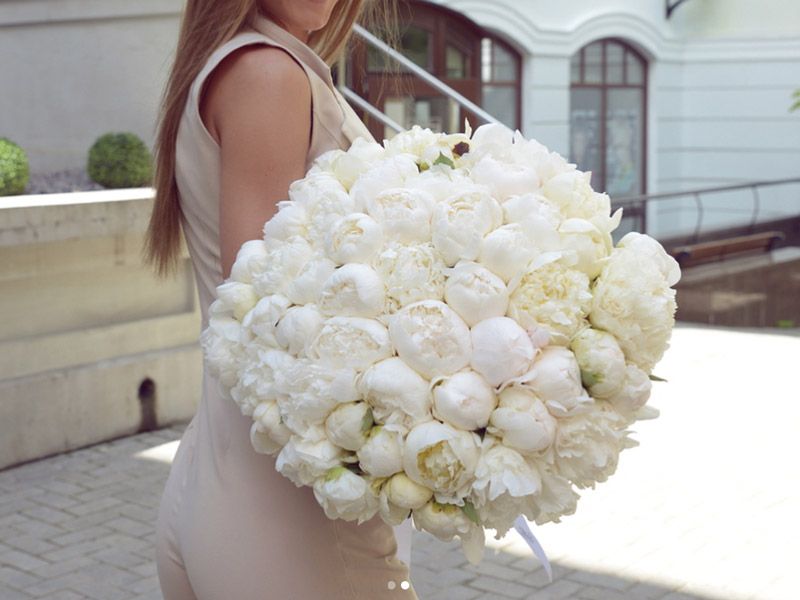
Shade is the other way in: coral, blush and all-white ranges sit side by side, and the 11 White Peonies with Eucalyptus is the obvious choice for anyone who wants the palest version. White chrysanthemums are kept for funerals in Japan and never given to the living, but that rule stops at chrysanthemums; a white peony carries none of it. The usual neighbours in a mixed bunch are matthiola, eucalyptus and peony roses, named on the bouquets that pair them.
Peony delivery in Tokyo: soft buds, a box, or peonies in foamiran
Growers cut peonies at what they call the marshmallow stage: the bud is already coloured but still soft, closed rather than open. Kept warm and in daylight it opens over a day or two. So the photo taken before the courier leaves can show a bunch that is still mostly bud, with the bloom finishing at home.
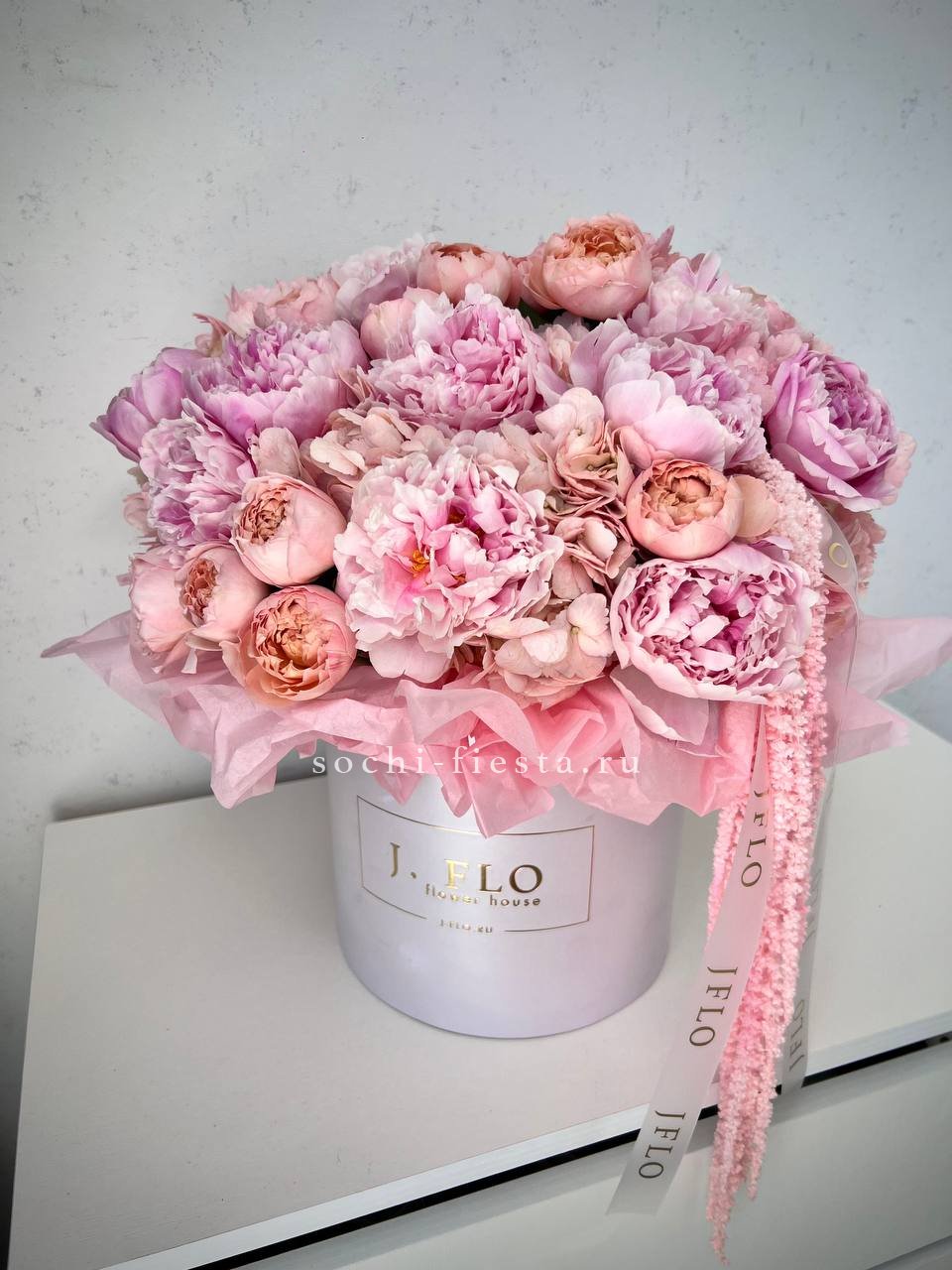
A box or a basket, such as the peony baskets, suits a recipient who may not have a vase to hand. The stems sit in foam rather than water and need no container at the other end.
The 7 Marshmallow Peonies in Foamyran skip the stem altogether. These are fabric flowers shaped to look like the bloom, not cut peonies.
Peony delivery in Tokyo splits by zone: central districts are free, other areas carry a flat charge shown before payment, and most orders are delivered the same day they are placed. How long any one bouquet takes is shown on its own product page, and delivery zones and timing covers the rest. Tokyo's summer humidity and the dry heat of a winter flat both work on a cut flower, and that is covered on the Tokyo's weather and cut flowers page.

Start with bouquets with peonies for the loosest, flower-only options, choose by colour if the shade matters more than the shape, or go straight to boxes with peonies for an office with nowhere to put a vase.