Calla lily (Zantedeschia) — varieties, care, and floristry
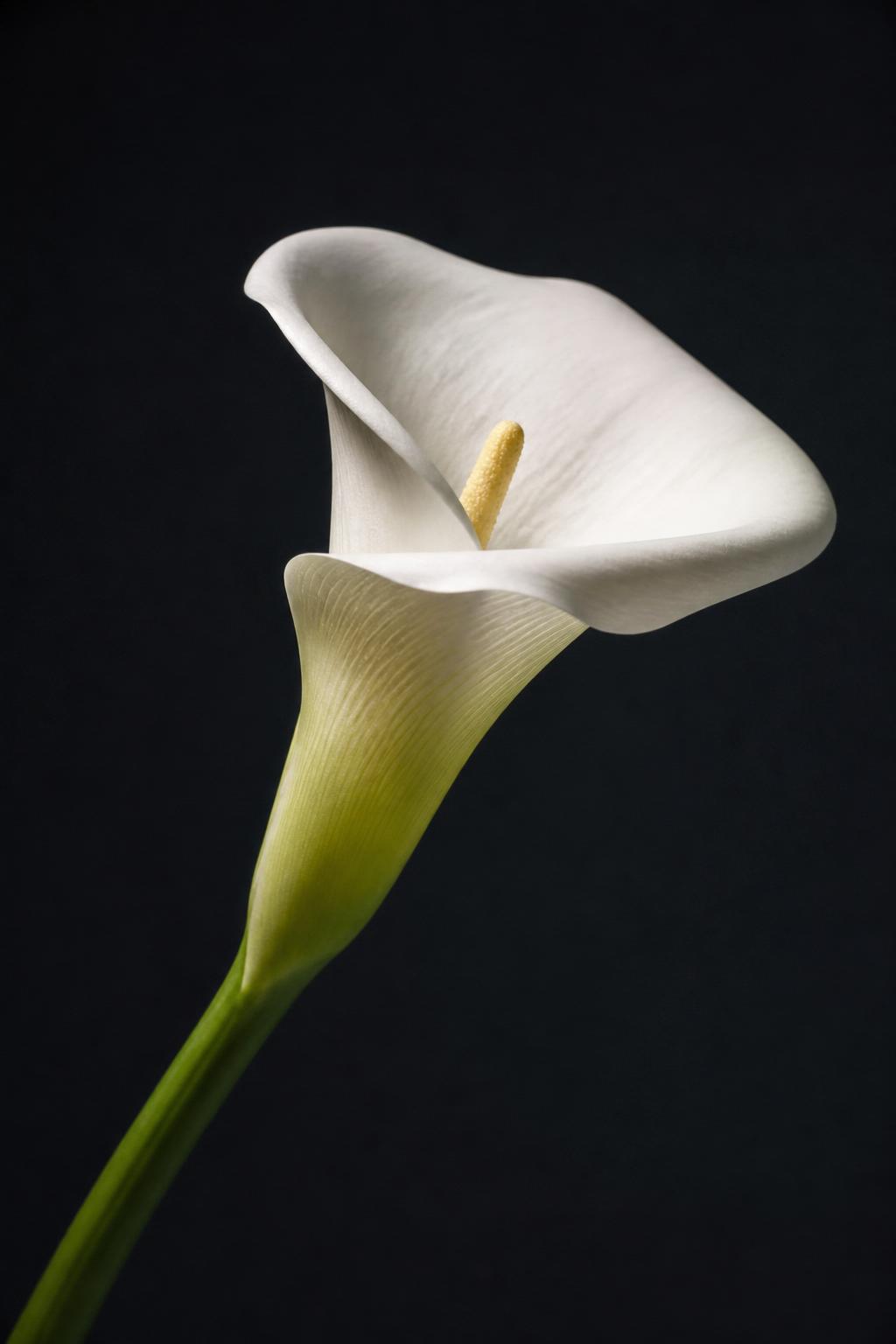
The calla lily is a flower with one funnel-shaped petal and a spadix inside. Its botanical name is Zantedeschia; its home is the marshy lowlands of South Africa. As a cut it holds up to 14 days, keeps form in wedding bouquets, and doesn't drop petals. Here's the full breakdown: from varieties and care to symbolism and florist work.
What is a calla: botany and origin
Calla belongs to the arum family (Araceae). The Latin genus name — Zantedeschia — honors the Italian botanist Giovanni Zantedeschi. What we treat as "the flower" is botanically a spathe — a modified leaf. The real flowers sit on the yellow or orange spadix inside the funnel.
The genus has 8 recognized species, all from Southern and Eastern Africa: South Africa, Lesotho, Swaziland, Malawi, Mozambique. Wild populations grow along streams, in seasonally flooded meadows, and at wetland edges.
The Dutch brought the first specimens to Europe in the late 17th century. By 1731 calla was already in the Leiden Botanical Garden catalogue. Industrial breeding launched in California and New Zealand in the 1920s.
"Calla" name confusion
In some botanical traditions, "calla" historically covered two different genera. First — Calla palustris, bog arum, a temperate-zone native. Second — Zantedeschia, the "wedding flower" of flower shops. In retail, "calla" always means the second.
Varieties: white giants and colored miniatures
White (Zantedeschia aethiopica)
The famous elegant white callas — large-flowered, up to 25 cm tall spathes.
- Green Goddess — white with a green throat
- Crowborough — cold-tolerant, pure white
- Wedding March — the wedding classic, snow-white spathes
- White Giant — the largest white variety, up to 30 cm
Colored (Zantedeschia rehmannii and hybrids)
Small-flowered "mini" callas — spathes 8–12 cm, in dozens of shades.
- Black Star — dark burgundy, near-black
- Schwarzwalder — deep purple-black
- Captain Romance — coral pink
- Mango — bright orange
- Yellow Callas — bright yellow (Solfatare, Crystal Yellow)
- Neon Amour — hot pink
- Odessa — dark burgundy
Total registered cultivars: 300+, most released after 2000.
Care in the garden and pot
Calla is a subtropical plant. In temperate zones it's grown as a summer bulb (Aethiopica) or a pot plant (Rehmannii).
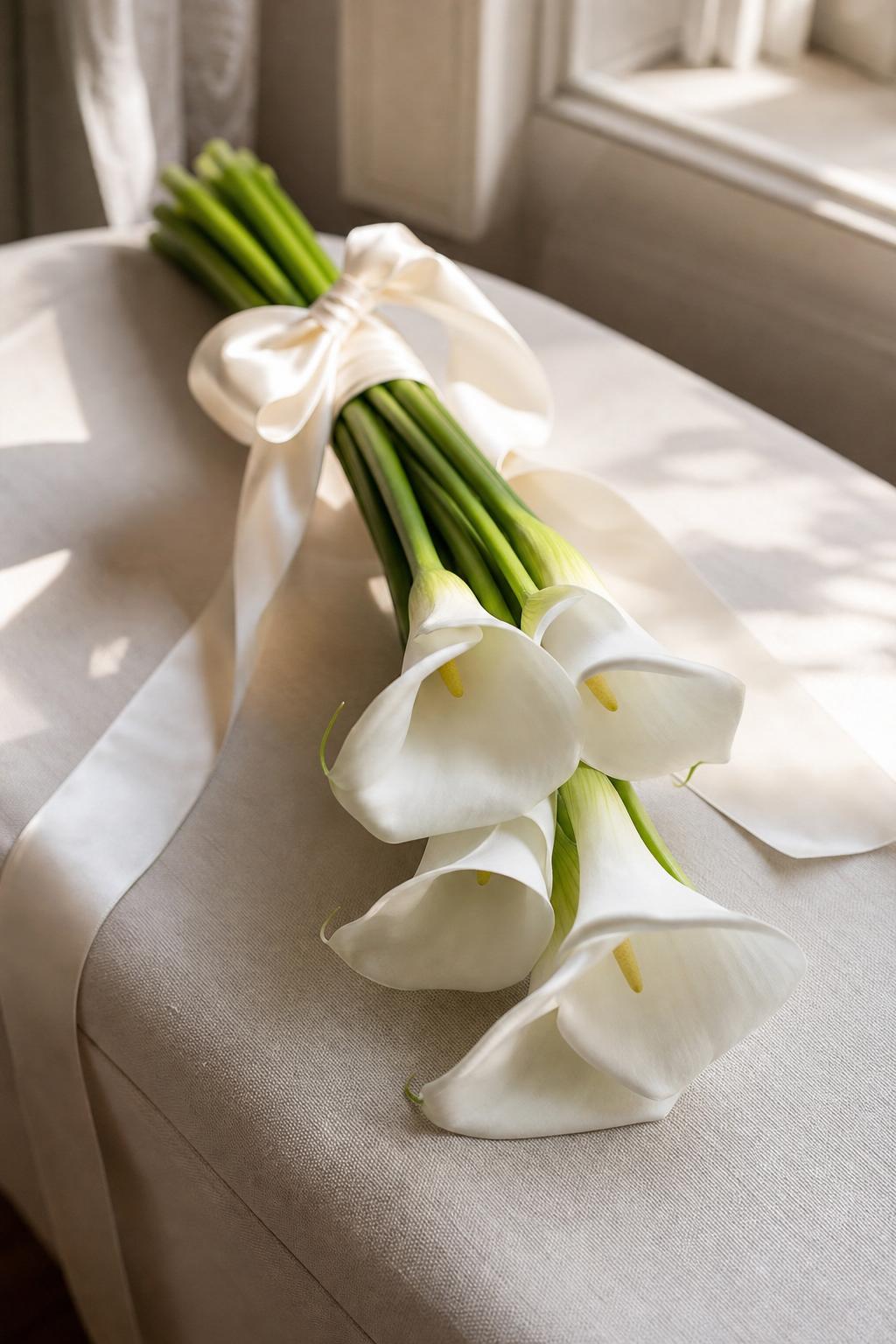 Aethiopica (white, large):
- Sun to partial shade, moist soil
- Winters underwater or in a cool cellar
- Rhizome divided every 3–4 years
- Blooms May–July
Aethiopica (white, large):
- Sun to partial shade, moist soil
- Winters underwater or in a cool cellar
- Rhizome divided every 3–4 years
- Blooms May–July
Rehmannii and hybrids (colored, small): - Tuber (not rhizome) - Sun, drained soil, moderate watering - Cold-hardy only to −5 °C - Tuber lifted for winter storage at +10 °C - Blooms 12–14 weeks after planting
Diseases: soft rot from overwatering. Prevention: don't overwater colored callas; drainage is critical.
Calla in cuts: extending life to 14 days
Calla is a champion vase-life cut flower. Rules to hit the maximum:
- Trim at 45° under water, cut a fresh 2 cm each time
- Cool water 12–15 °C, deep vase
- Change water every 2 days, wash the vase
- Add flower food (Chrysal)
- Refresh cut every 2–3 days
- No fruit nearby (ethylene sensitivity)
Vase life: 8–14 days for white callas, 10–14 for colored. In heat — 5–7 days.
Note: the calla spadix releases a viscous sap that can clog the vase. Wash the container every 2 days.
Callas in bouquets: wedding and beyond
Calla is one of the two most in-demand wedding flowers (with the peony).
Wedding uses
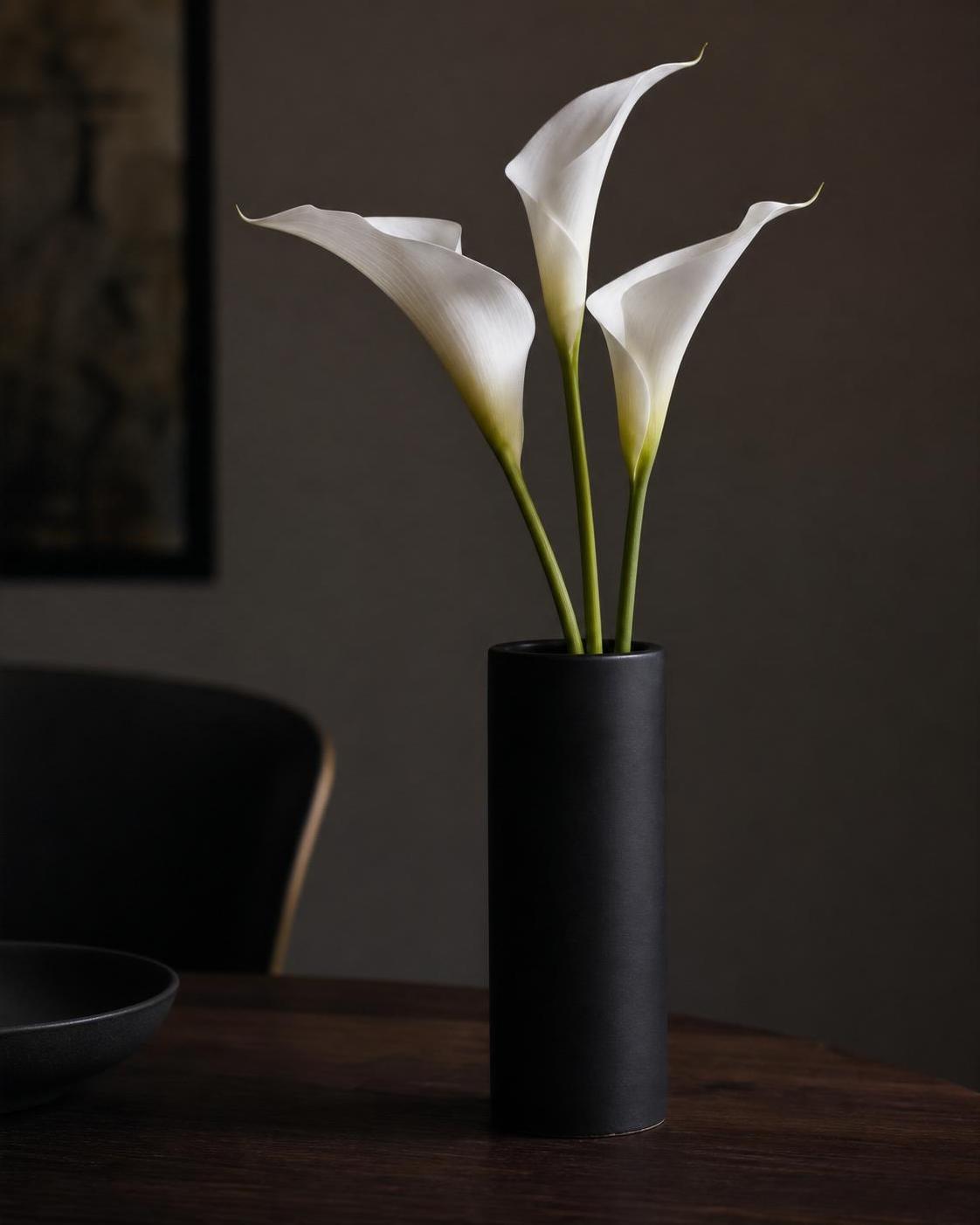
- Cascade bridal bouquet — 5–7 white callas curving downward create a "waterfall" — the classic modern style
- Minimalist bridal — a single white calla in a stark stem, tied with silk ribbon
- Colored theme — black Schwarzwalder callas for a gothic wedding
- Groom's boutonniere — one mini colored calla + eucalyptus
Working combinations
- Calla + eucalyptus + hydrangea (elegant classic)
- White calla + Sweet Avalanche + lisianthus (nude palette wedding)
- Black calla + Black Baccara + burgundy peonies (Scorpio composition)
- Yellow calla + narcissus + hyacinth (spring gift)
Combinations that don't work
- Calla + gerbera (visual clash)
- Calla + carnation (aesthetic mismatch)
- Calla + hydrangea + peony (three focal flowers competing)
Symbolism and meaning
The calla lily is a symbol of grace, purity, and the elegance of restraint. In classic floral iconography it appears in wedding processions and formal ceremonial art.
Meaning by color:
- White — purity, wedding solemnity, grace
- Black (Schwarzwalder) — dignity, dramatic beauty, mystery
- Purple — royal power, respect
- Yellow — deep gratitude, warmth
- Pink — tender affection, first love
- Orange — energy, warmth of feeling
In Christian symbolism the white calla is associated with the Annunciation and the Virgin Mary. In Art Nouveau, the calla was one of the two flagship "stylized" flower motifs (with the iris).
Modern language of flowers: the calla is "the flower of an elegant person." Gift it to someone with refined taste.
Seven facts not in the encyclopedias
- Calla is not a lily. Despite the English name "calla lily," it's from the arum family (Araceae), not lilies. The unofficial name is a marketing legacy.
- Toxicity. All calla parts contain calcium oxalate crystals — irritating for skin, mouth, and eyes. Keep away from pets and children.
- Longevity in the garden. A calla rhizome (Aethiopica) can live 15–20 years in the same spot without dividing.
- National flower. The calla is the national flower of the island of Saint Helena in the South Atlantic.
- Art Nouveau symbol. The stylized calla appears on the buildings of Antoni Gaudí, Charles Rennie Mackintosh, and in the "Metro" style architectural details of Paris.
- The Kim Kardashian effect. The wedding of Kim Kardashian and Kanye West in 2014 used 5,000 white callas — a wedding-industry record. Set a new fashion for calla weddings.
- In Georgia O'Keeffe's paintings. The American artist painted callas in 8 canvases between 1926 and 1927; her "Calla Lily" fetched $6.5 million at Sotheby's in 2014.
FAQ
What color calla to gift a wedding bride? White is the classic. If the wedding is thematic and modern — a single black Schwarzwalder as a statement.
Are callas poisonous? Yes, all parts are toxic to pets and irritating to human skin. Handle with gloves.
Do callas smell? White callas have a very light, delicate scent. Colored callas are scentless.
How long is a cut calla good? Up to 14 days with proper care. If it starts curving strangely at the tip — that's normal; the spathe naturally "reflexes."
Can I grow callas at home? Yes, colored callas grow beautifully as pot plants. White callas need more space and moisture — better outdoors.
Budget? Cut white callas: $4–8 per stem. Colored callas: $5–9 per stem. Wedding cascade bouquet with callas: $220–450.
Want a bouquet with callas? Browse the catalogue — white and colored varieties year-round.
Summary: calla is a florist's tool for elegance. Long vase life, graphic silhouette, high wedding demand. Especially strong in cascade bridal bouquets and minimalist compositions. Key rule: handle with gloves — the sap irritates.
— The JFLOO team