














Kenner rose in Chengdu: Kenyan roses kept cold from farm to florist
Kenner rose in Chengdu means Kenyan roses, and from farm to florist the cut stems travel at 0–2 °C, since every hour in warmth shortens their vase life. The bouquet names already spell out what matters most: colour, stem count and wrapping, so that is where choosing one starts.
Where Kenyan roses come from and how they travel
The roses in this section grow around Lake Naivasha, at an elevation of roughly 1,880 metres. That altitude and the equatorial daylight keep the plants growing steadily. Even so, the stems are usually shorter than Ecuadorian roses, which often run from seventy centimetres to a metre or more. From the farm to the florist the cut flowers are held at around 0–2 °C, and every hour spent in the warmth afterwards takes a little off their time in a vase. Flowers for the section are bought only once an order is paid for, and each bouquet is put together to order rather than taken ready-made off a shelf.

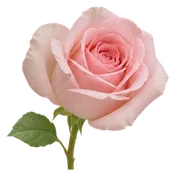
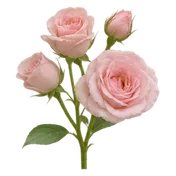
Red is the classic choice, and Madame Red covers it from 11 stems up to 101, so a small gesture and a large one draw on the same rose. White comes as Athena, sold as a bouquet of 101 stems, and as Amore, alongside 51 white roses offered in three different styles of presentation. A mixed bouquet, called Kenya, is available with 15 or 51 stems for anyone who would rather not choose a single colour.
Victorian flower dictionaries read red as passion and white as purity, though the sources disagree and the meanings shift from one to the next. Stem counts across the section run from a compact bunch to an armful:
- 11, 15 or 27 stems for a smaller gesture
- 31, 35 or 51 stems for a fuller bouquet
- 55 or 101 stems for a grand one
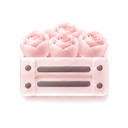
Soft wrapping, a hatbox or a flower box
The same roses appear in different presentations: soft wrapping, a hatbox, a flower box, arrangements and an airy loose bouquet all draw on the same stems. Where the roses stand in floral foam, the foam needs watering every day, right across its surface, because once it dries out it barely takes water back up. Kept damp, foam holds a bouquet together for roughly as long as a vase of water would.
Kenner rose delivery in Chengdu and care on arrival
Before the courier leaves, the finished bouquet is photographed, and that photo is the moment to ask for a change if something looks off. The card that goes with the flowers costs nothing and can carry a signature or stay blank, whichever the sender prefers.
Kenner rose in Chengdu care begins the moment the courier hands it over. Most orders reach the recipient on the day they are placed, and the exact timing shows on the bouquet's own page; more detail is on the delivery page.
At home, cut the stems on an angle, strip any leaves that would sit under water, change the water every one to two days and keep the vase away from radiators, direct sun and ripe fruit. A rose usually lasts about a week in water, sometimes stretching to ten days.
Choosing usually starts with colour and stem count, then it helps to look at all roses to see how the Kenyan stems compare. A single variety is easier to browse among the mono bouquets, and for a hotel room or an office reception, flowers in boxes travel better than a hand-tied bunch.


