
















































Sympathy bouquets go to a person, not to a service

Most funeral flowers are addressed to an event. A wreath belongs to the ceremony, is seen by a room full of people and is gone by the evening. Sympathy bouquets are addressed to one household, arrive at a door rather than a hall, and stay in a kitchen for a week afterwards.
Work out who opens that door before you choose anything else.
Where it lands
A home delivery reaches the closest relatives, which is the point, and it also reaches them at their most exposed. Somebody has to answer the bell, take the wrapping, find a vase. On the day of the funeral that household is not in a state to do any of it.
An office delivery is often the kinder option for a colleague who has lost a parent. It arrives at a desk on a working day, the person handles it in their own time, and nobody in the family has to receive strangers.
Either way, the card decides how the gesture lands.
The card
Write who you are in relation to the person who died. The bereaved receive messages from dozens of people they have never met, and a first name alone leaves them guessing. A line saying that you shared an office with him for years does more than any careful phrasing of condolence.
Keep it to two or three sentences. Restraint reads as respect, and long messages tend to be about the sender.
If a team is sending one bouquet, sign it with the team and one name that can be replied to.
Timing
The week after the funeral is usually better than the day of it. By then the visitors have gone, the phone has stopped, and the quiet in the house is at its worst. A bouquet arriving into that quiet is remembered far longer than one delivered into a crowded hallway.
There is no expiry on it either. A month later, or on the first anniversary, the same bouquet still reads correctly, and for people who could not attend at all it does the work that a phone call cannot.
Size and upkeep

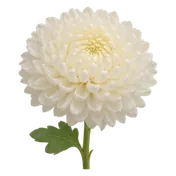
Keep it modest. A large arrangement asks for a large vase, and by the second day the household has run out of vases and out of patience for cutting stems. A hand-tied bunch that fits an ordinary vase, sits low enough not to block a table, and holds without daily attention is the practical shape here. Chrysanthemum, lisianthus, alstroemeria and carnation forgive a missed water change, which is exactly what happens in a house in mourning. Stems go into a water pouch for the journey so the recipient only has to unwrap and drop them in.
Wrapping stays matt and plain, in one colour, with no cellophane and no bow.
Colour
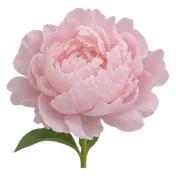
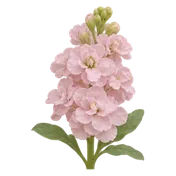
There is more room here than at the service itself, because this bouquet lives with someone for a week or two. White with foliage is the safe centre, and soft lilac, dusty pink or pale peach sit comfortably beside it. Bright colour still reads as a mistake, even a month on.
Brief the courier properly. No second ring at the door, no congratulations, no photograph of the recipient on the doorstep.
If the family in Doha would rather not have anyone at the house, sending the bouquet to a workplace or leaving it with a concierge is a reasonable answer, and it is better than not sending at all.


