















Baskets with carnations: a gift that asks nothing of the person receiving it

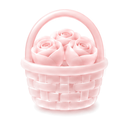
Cut stems arrive with a small obligation attached. Somebody has to find a vessel, trim the ends, fill it with water and clear a surface, usually within the hour and usually while other things are happening. A basket removes that entirely: the flowers are already seated in soaked florist foam, the water sits inside the liner, and the person who opens the door can put the whole thing down and walk away.
That is the whole argument for the format, and with carnations it is stronger than with most flowers.
Where these baskets end up
Hospital rooms come first. Few wards have a spare vase, staff rarely have time to hunt for one, and a carnation's scent is light, which matters in a room where somebody spends all day. The basket sits low on the bedside cabinet without blocking anything.
Offices come second. A reception counter, a meeting room, a colleague's desk after an anniversary at the company: the arrangement stays low enough to talk across, and no receptionist quietly inherits the job of watering it.
Then there are the deliveries where the recipient is simply not the sort of person who owns a vase. A student flat, a rented room, a man who has never been given flowers before. Handing someone a wrapped bunch in that situation creates a small problem for them; handing them a basket does not.
Spray or standard, and what it changes

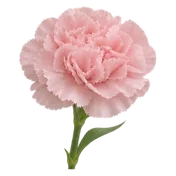
A standard carnation gives you one large head on one stem. Spray types branch, carrying several smaller blooms at different heights on a single cut, so a basket built from them fills its volume with fewer stems and reads as looser and less formal. Most mixed baskets use both, the standard heads for structure and the spray stems to close the gaps between them.
The week after delivery
Carnations last well in foam, and the arrangement usually stops looking good for a different reason: the foam dries out. Water goes in from the top, poured slowly at the edge until the block stops taking it, and the block is checked with a fingertip rather than by eye. Damp foam springs back. Dry foam crumbles, and once it has gone that far it takes water back reluctantly.
Spent heads are pulled out with their stems, and the socket left behind is covered with a leaf rather than refilled, because that hole no longer holds water. If the basket is kept away from a radiator and out of direct sun, the flowers will outstay the block they are standing in.


