









Roses in Hangzhou: how to choose a variety, colour and stem count
The world's largest rose heads grow on Andean slopes near three thousand metres, far from any greenhouse. Day and night split close to evenly there all year, and the cool mountain nights slow a bud's growth just enough to let it swell bigger before it opens. Roses in Hangzhou travel a similar route across several borders, and where a stem started out shapes its bloom, its price and how long it lasts in water.
Where roses in Hangzhou come from: Ecuador, Kenya and the Netherlands
Three regions supply most of the world's cut roses. Ecuadorian farms sit in the Andes at around three thousand metres, where the gap between day and night barely shifts through the year and the cool air lets a bud grow large and a stem grow long and straight. Kenyan farms around Lake Naivasha sit a little lower but still in the highlands. Cool nights and steady equatorial sun there produce a dense bud, a strong stem and deep colour, and more than a third of the roses sold across the European Union arrive from exactly this region.
The Netherlands supplies a different kind of rose, classic varieties grown under glass, and doubles as the transit hub for the world's flower trade. Royal FloraHolland's auction in Aalsmeer sells around forty million flowers on an average day, which makes it one of the largest trading centres for cut flowers anywhere.
One thing keeps all of it fresh: cold. Every batch travels refrigerated, and a rose barely dips into its store of freshness as long as that cold chain holds. jfloo assembles each bouquet to order for the same reason, rather than keeping bouquets on display.
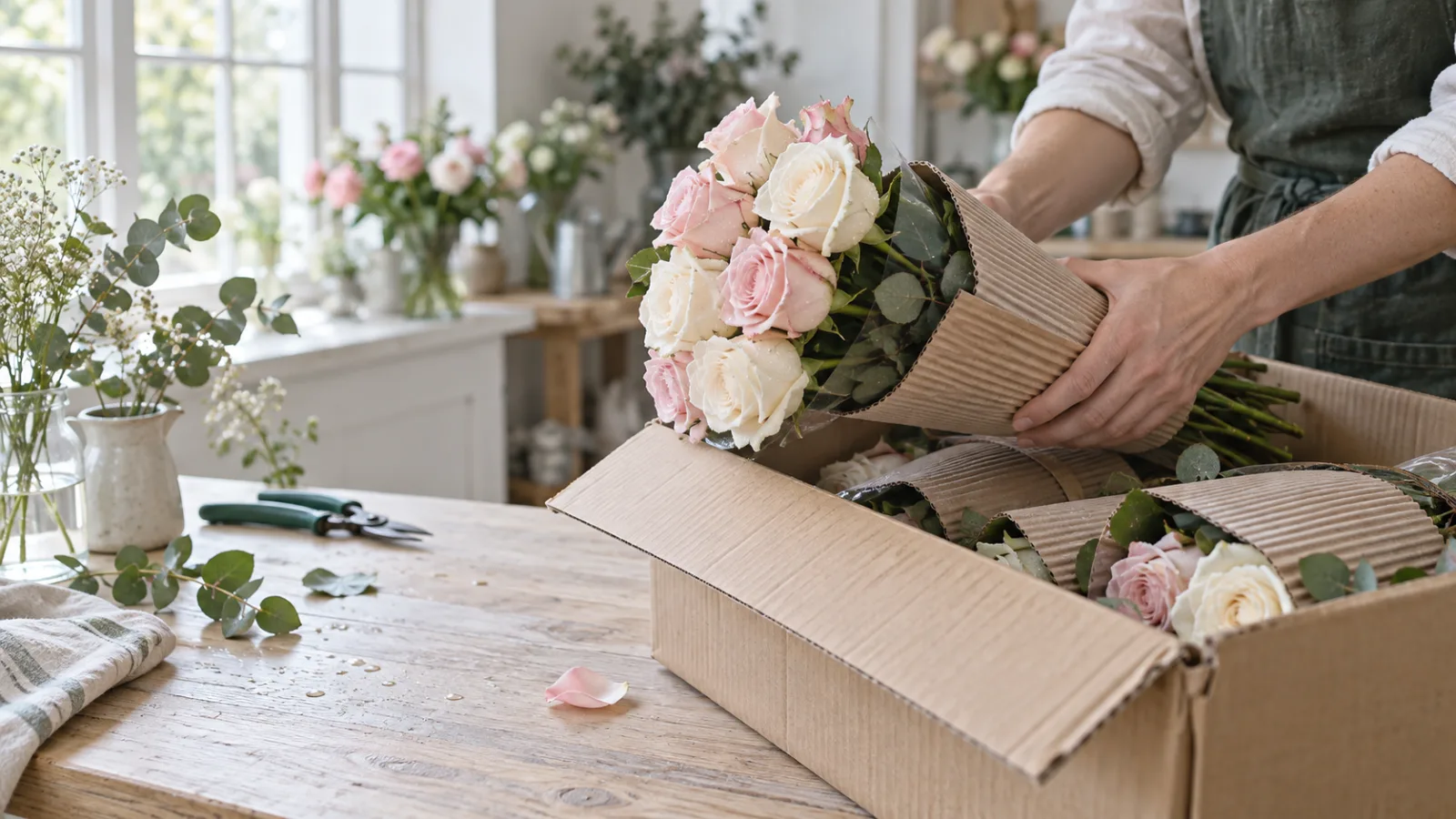
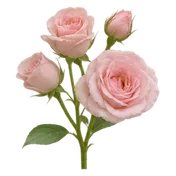
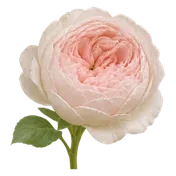
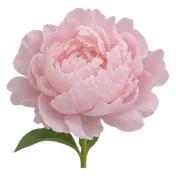
"Type" in the catalogue can mean a cultivar or an origin, and either one changes how a bouquet looks and how long it lasts. Spray roses carry several smaller blooms on one stem instead of a single large head, which is why they work so well in light, airy arrangements rather than a dense block of colour. Garden roses were bred specifically for a layered, almost spherical bloom. They look like peonies, though botanically they remain roses, and many of them trace back to the English Roses that the David Austin nursery began breeding decades ago.
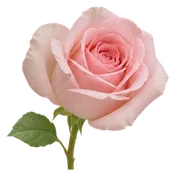
Reflexed roses, sometimes called French roses, are not a separate cultivar at all. A florist turns the outer petals back by hand so the bloom opens wider and fuller than it would on its own. Jumilia roses are a different case entirely: a large bloom up to seven centimetres across, with a soft white base that shades into a bright pink edge, and a vase life of up to two weeks with good care. Alongside these sits the plainer classic, a single full bloom on a long stem, for whenever the occasion calls for a simple gesture. You can see them all under roses by type.
Colour and stem count: choosing for the occasion
A rose's colour often says more than a card. Red still reads as passion or a direct declaration, white as respect or sympathy, cream and tea shades as understated warmth. Raspberry or burgundy tends to mark something weightier than a bouquet for dinner. Roses by colour run to rarer tones too: blue, turquoise, a near-black burgundy, even a rainbow stem carrying several shades at once.
Stem count carries its own meaning. One stem reads as a modest gesture, three or seven as thanks, fifteen or twenty-five as a statement hard to overlook. In some countries odd numbers of flowers are traditional, so it is worth checking local custom.
Fifty-one and a hundred and one roses sit at the far end of that scale — gestures nobody misses. The full range is easiest to browse in roses by quantity, and for a milestone anniversary a florist can go further still, into the giant rose bouquets that run to several hundred stems. At that size a bouquet stops being a personal gift and starts being a set piece for the event itself.
Stem length and format: bouquet, box or basket
Stem length tracks how and where a rose grew. Ecuadorian roses carry the longest stems, seventy centimetres to a metre and more, flowers built for a tall vase and a gesture that gets noticed. Kenyan and Dutch roses usually run shorter. Spray and compact varieties usually stay closer to forty or fifty centimetres, and suit low, gathered arrangements instead. A separate format covers roses by height above a metre: an armful that size gets noticed from across a room before the recipient has even opened the card.
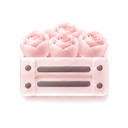
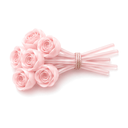
Format matters as much as length. A wrapped bouquet works well when there's a vase at home and someone ready to put the stems in water straight away. Roses in a box or basket sit in soaked floral foam instead, so they survive a long wait with no vase at all, which suits an office delivery or a recipient who would rather choose the container themselves. A romantic occasion gets its own shape too: a heart-shaped arrangement built from the same roses, tuned to a different mood. The full spread of formats is easiest to browse in roses by bouquet shape.
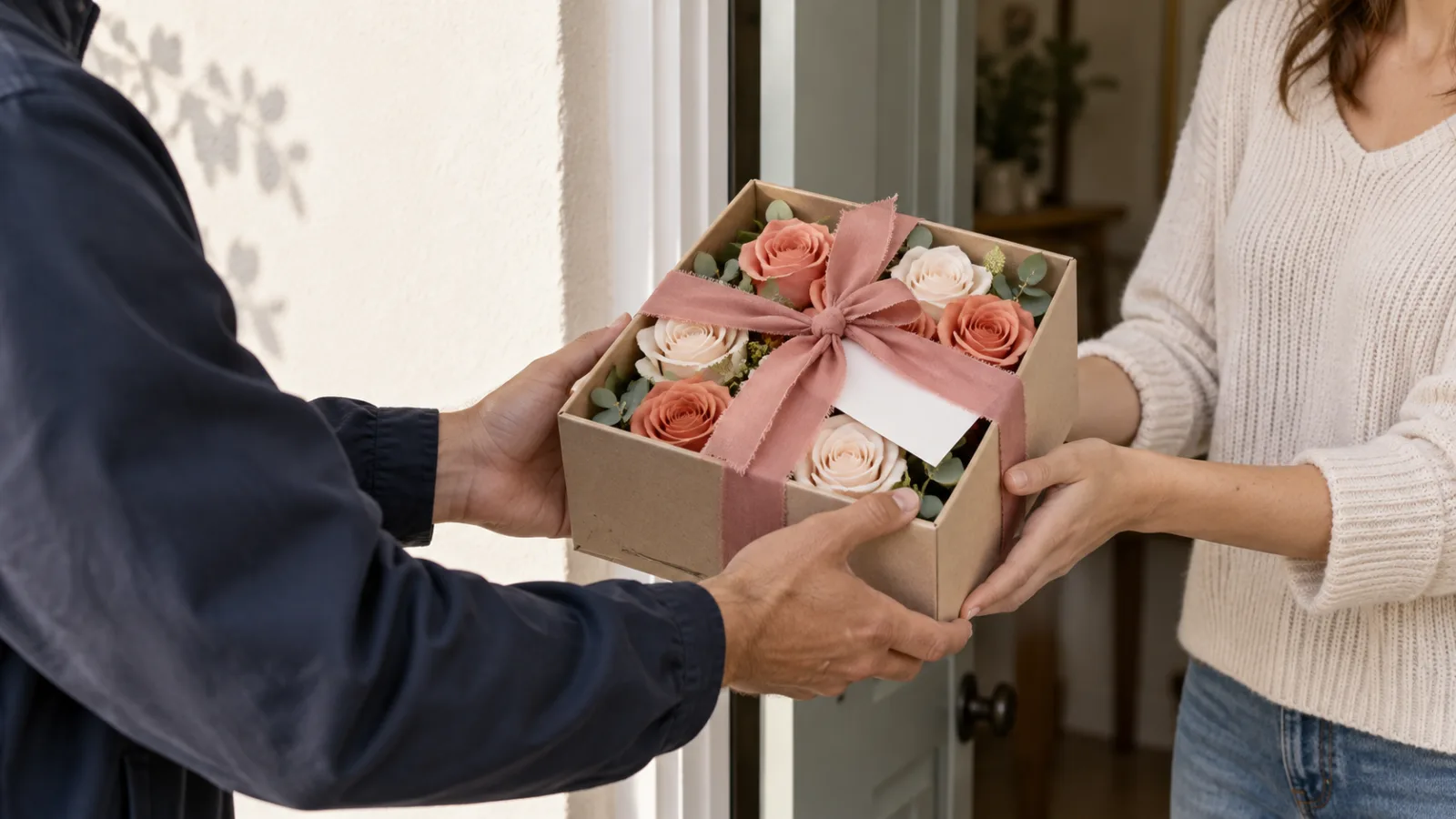
Most garden flowers keep to a defined season. Roses, in the usual sense, do not. Ecuadorian and Kenyan farms sit near the equator, where day length barely shifts across the year, so flowering runs continuously instead of in short bursts the way peonies or tulips do. Roses in Hangzhou stay available in almost any month, and price shifts track demand rather than a growing season: order volumes climb sharply around Valentine's Day, International Women's Day and Mother's Day, and prices climb with them.
In an ordinary week the opposite pays off. Ordering ahead and letting our florist choose the exact shade is a sensible option, since the difference between similar varieties barely shows once the bouquet is finished.
Vase life and care: how long a rose lasts
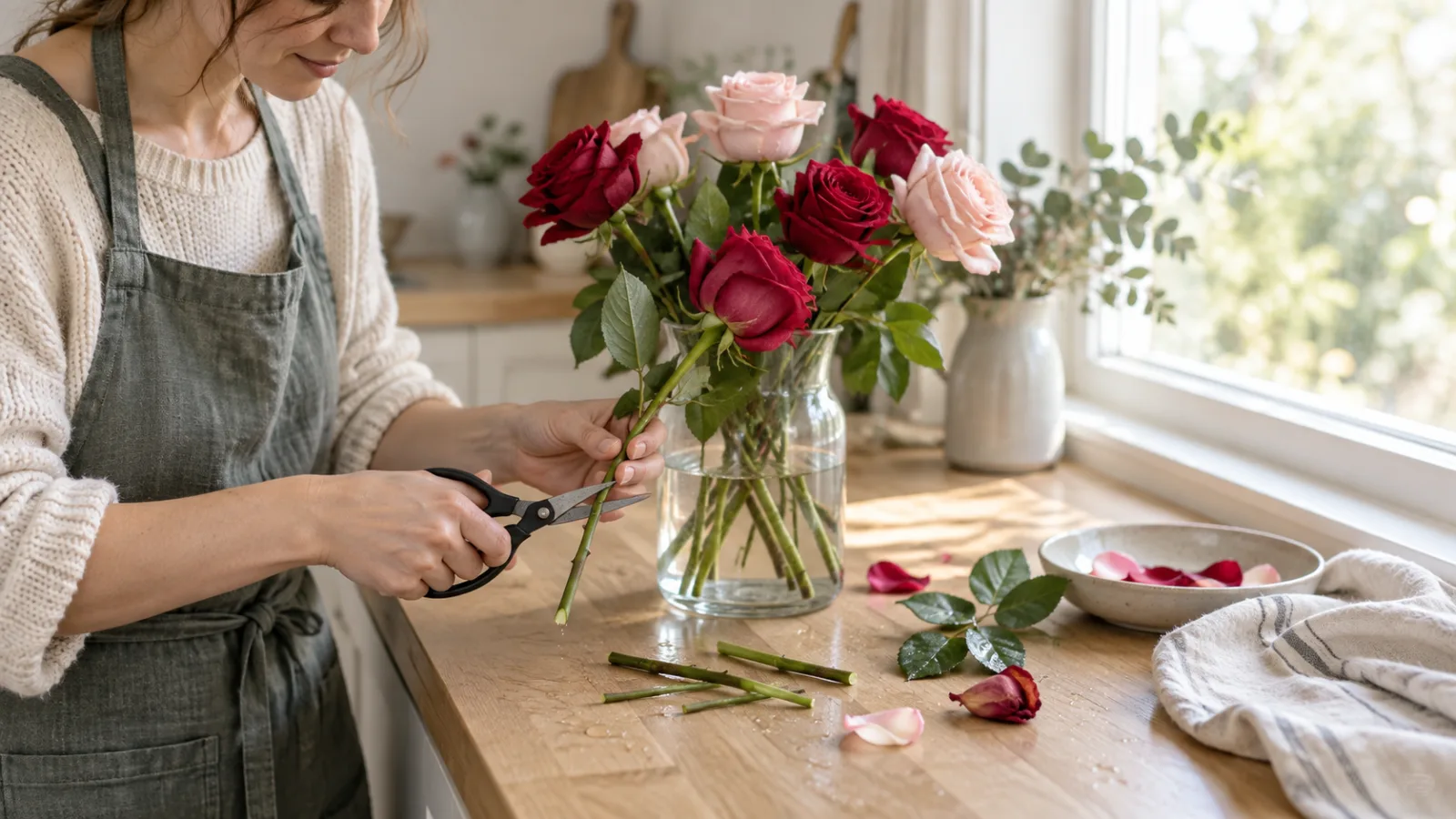
A clean cut does most of the work. Trim the stem at a forty-five-degree angle with a sharp knife or shears as soon as the bouquet arrives, and strip any leaves that would end up sitting under water. Left in place, they rot and shorten the life of every other stem in the vase. Change the water every two days, and keep the vase away from radiators, direct sun and a bowl of ripe fruit: apples and bananas give off ethylene, which ages petals faster than usual.
How long a rose lasts also depends on the variety. A standard rose holds for about a week, sometimes ten days, while a dense Jumilia rose can last up to two weeks with good care. Reflexed roses open fully straight away and fade sooner than the rest, so they are best enjoyed in the first few days rather than left on a windowsill until the weekend.
Rose delivery in Hangzhou starts with a photograph. Our florist puts the bouquet together and sends a picture before the courier leaves, which leaves time to swap a ribbon or adjust a shade. The delivery price is shown in the cart before checkout, and the bouquet card shows the delivery time. Full terms are on the delivery page.
Nobody calls the recipient ahead of time unless asked to, so the surprise stays a surprise. A courier works from a name and an address alone. Without an exact address, a phone number is enough: a manager will work out where to deliver without naming the sender or the occasion. Payment is made online by Visa or Mastercard, and orders are accepted around the clock.
Choosing roses gets simpler by working from the occasion and the address rather than the full list of varieties. A modest stem count suits a quick thank-you, a box or basket suits an office or a hotel delivery, and anyone who finds roses too obvious a choice might look instead at mono bouquets built from other flowers. Ideas for a specific date sit in occasions.


