


Roses by type worldwide: variety, origin or a florist's technique
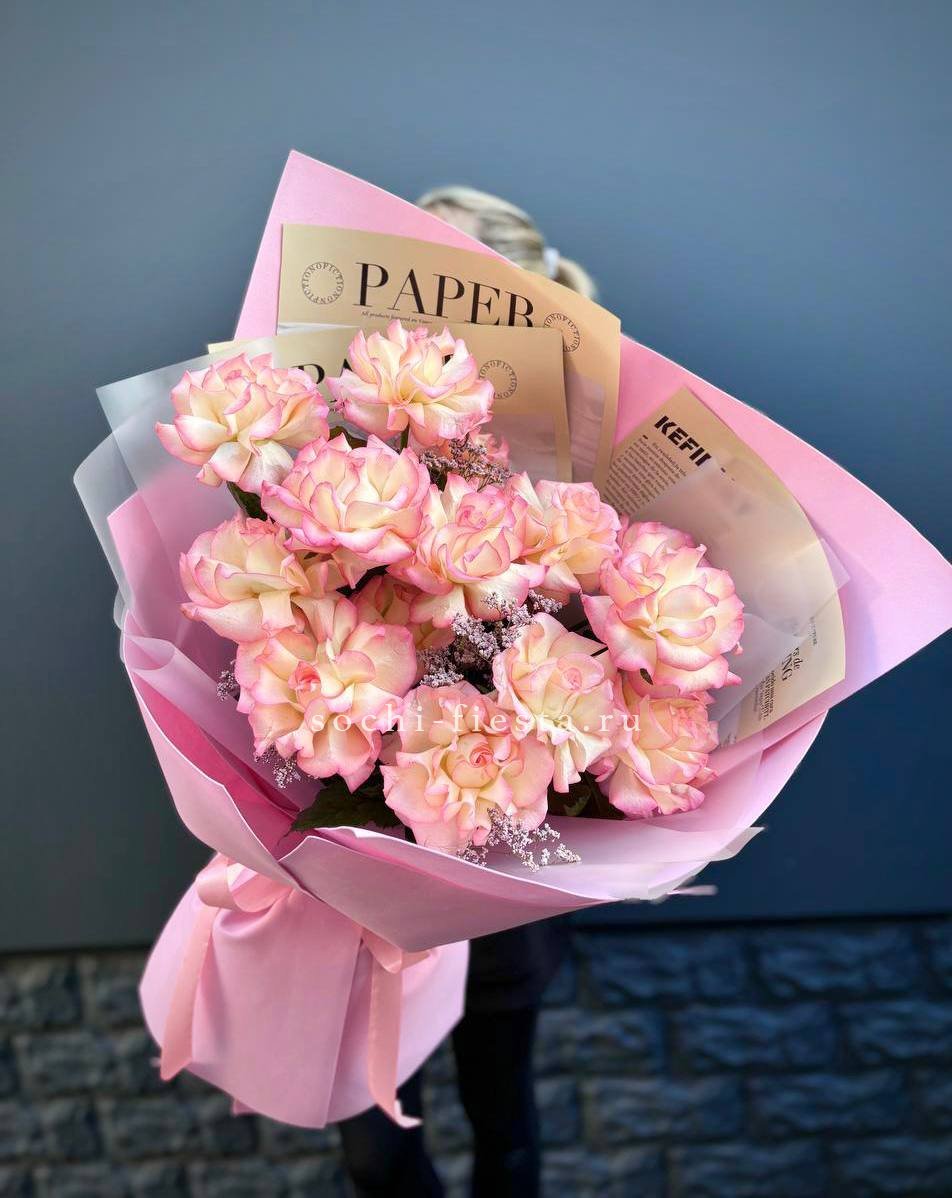
Roses by type worldwide include Jumilia, whose bud reaches seven centimetres, white at the base and pink at the edge, and lasts up to two weeks in a vase against about a week for a typical rose. Under this section, "type" covers several different things: for some roses it names a variety, for others a country of origin, a head shape or a technique the florist applies by hand. Knowing which one applies to a given rose makes it easier to see what will actually turn up at the door.
Variety, origin or technique: what a rose type tells you
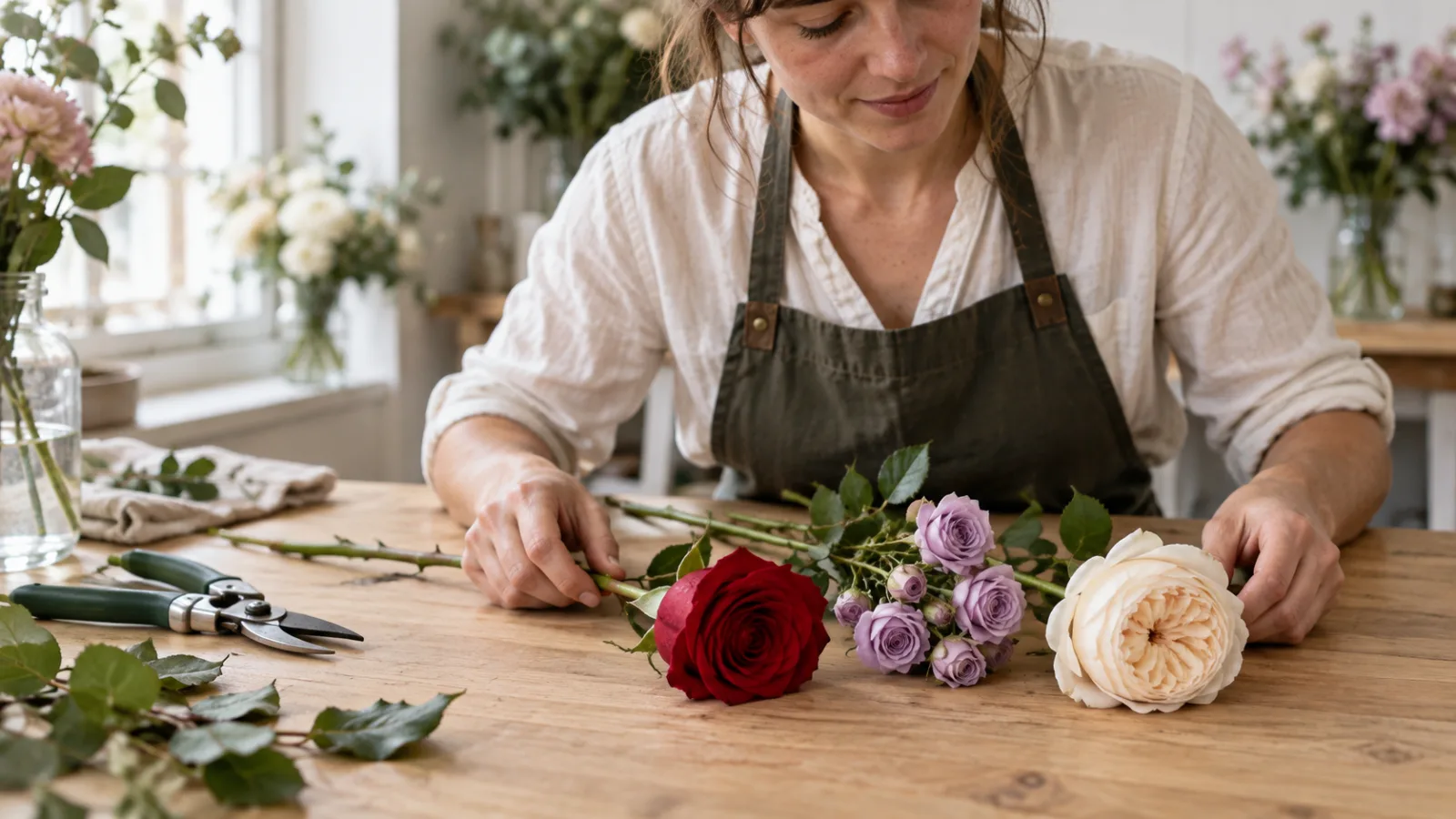
The storefront mixes four kinds of labels under one word. A name such as Jumilia, O'Hara or Misty Bubbles points to a variety. A country label, Ecuadorian or Dutch, points to where the stem grew rather than to the plant itself, and a shape label, peony-style or spray, describes how the head looks rather than its parentage. French roses are neither a variety nor a country: a florist bends the outer petals back by hand, and in principle any rose can be finished this way.
That mix is worth sorting out before scrolling further. Two roses with similar-sounding names can differ in everything that matters: one is a variety, the other is a florist's technique. Once you know which kind of label you are reading, the rest of the choice comes down to colour, size and price rather than guesswork.
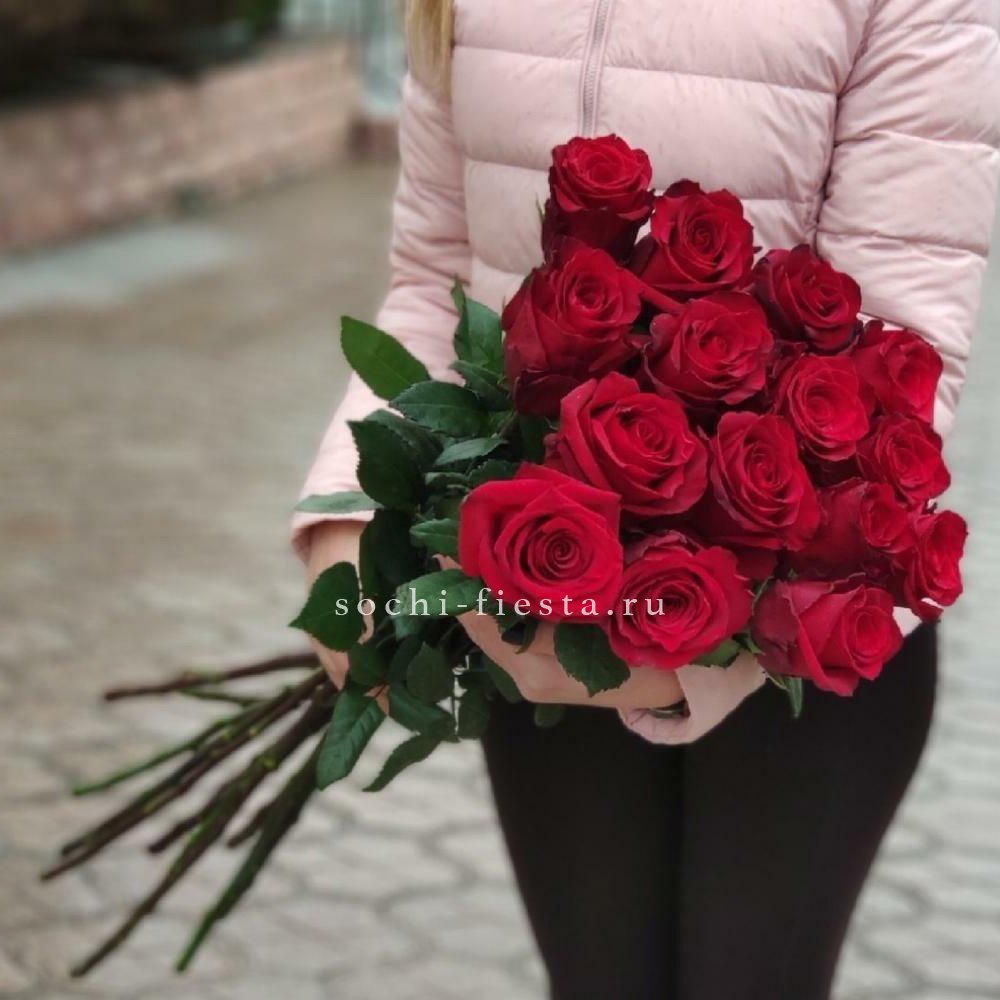
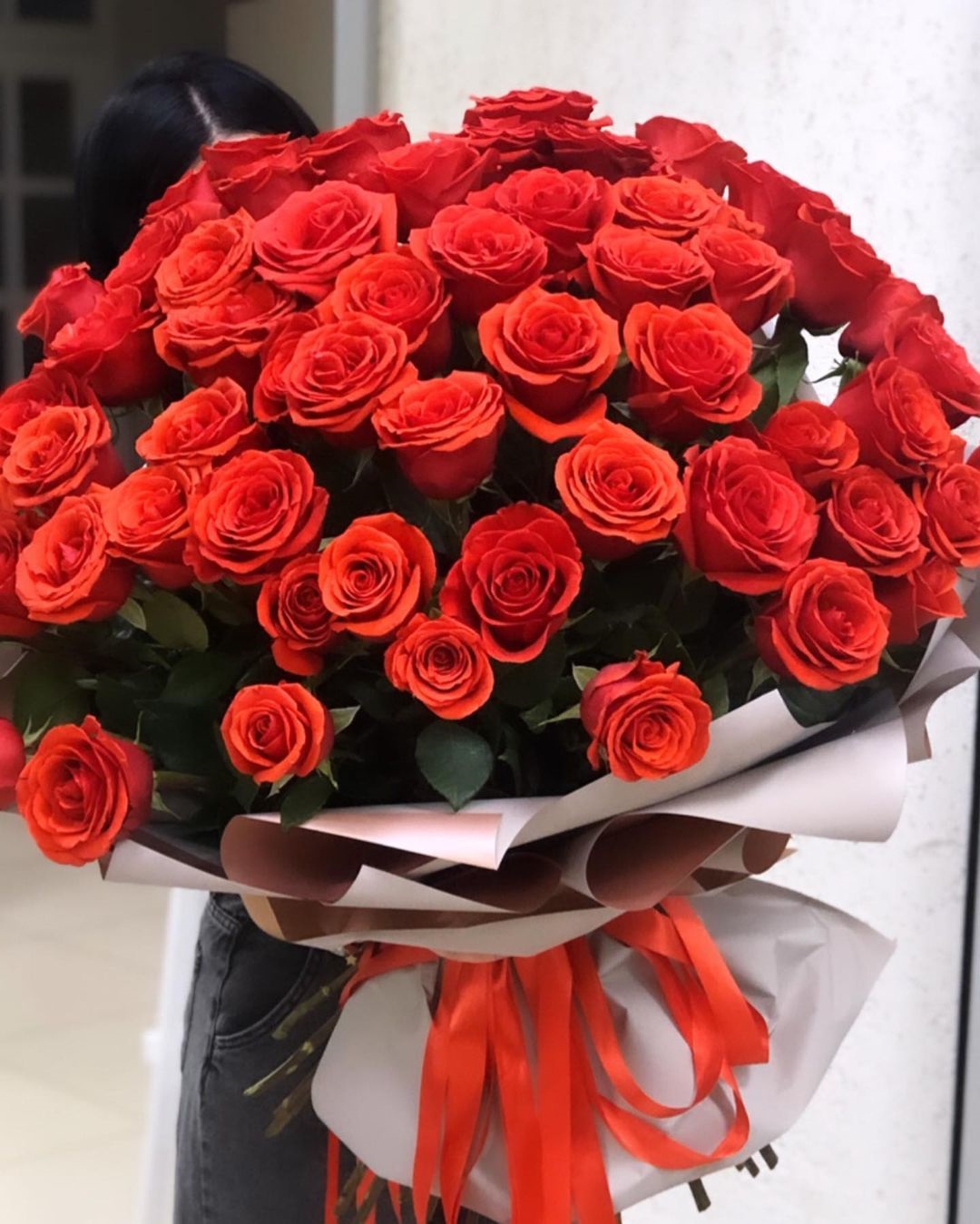
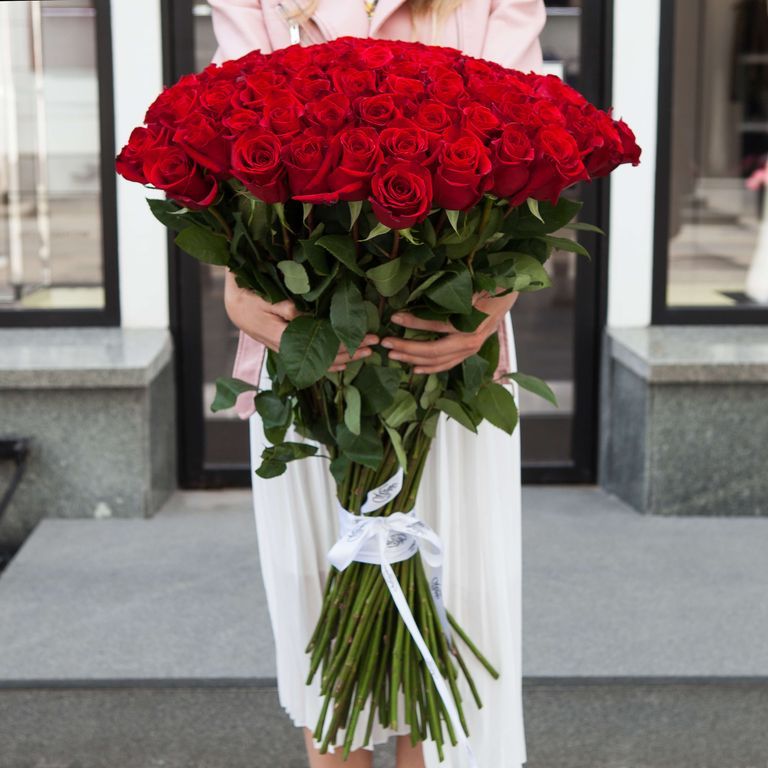
Ecuadorian roses grow in the Andes, at around two thousand eight hundred to three thousand metres above sea level, where the equator gives the plant close to twelve hours of daylight all year round. That steady light and altitude push the stems long, and the tallest of them run anywhere from seventy centimetres to a metre.
Dutch roses come from a different tradition: classic greenhouse varieties grown at lower altitude, on stems of medium length rather than the long Ecuadorian kind. The 25 Dutch White Roses bouquet is a straightforward example of that classic Dutch stem, plain and even rather than dramatic.
Peony-style, French and spray roses: choosing by the shape of the head
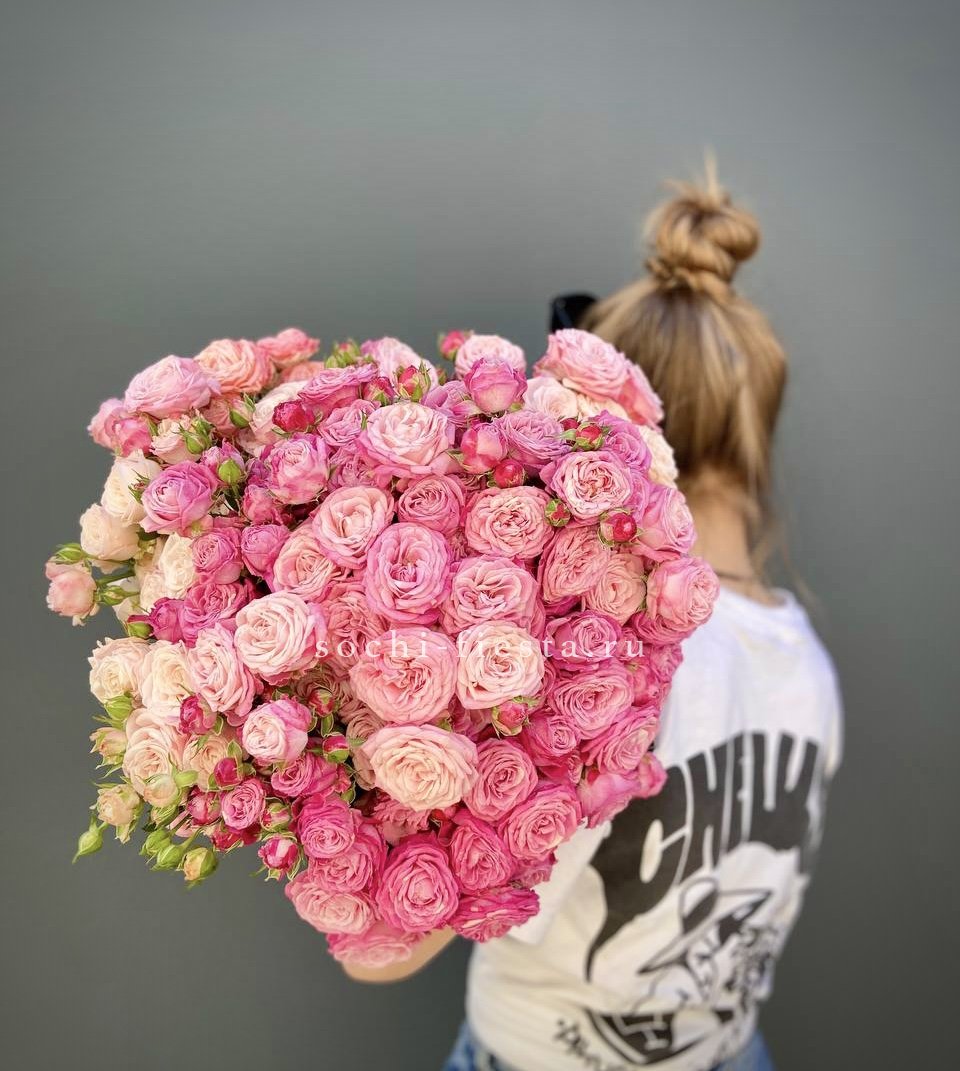
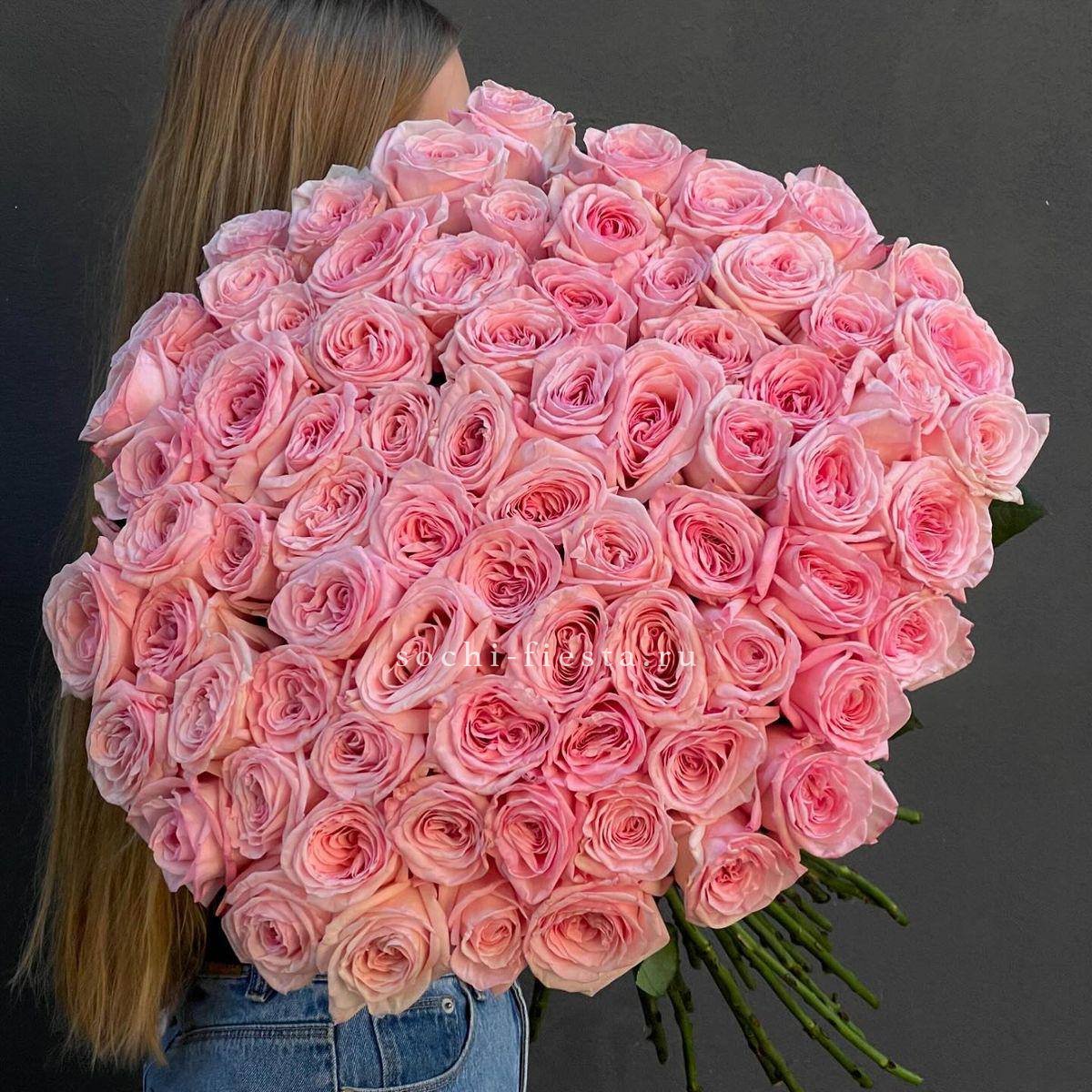
Peony-style roses get their cupped, many-petalled head mostly from English varieties bred in the style of David Austin roses, and from similar breeding lines. The 15 Peony Lavender Roses and the Peony Roses Bubbles bouquets both build on that full, rounded head rather than the pointed bud of a classic rose.
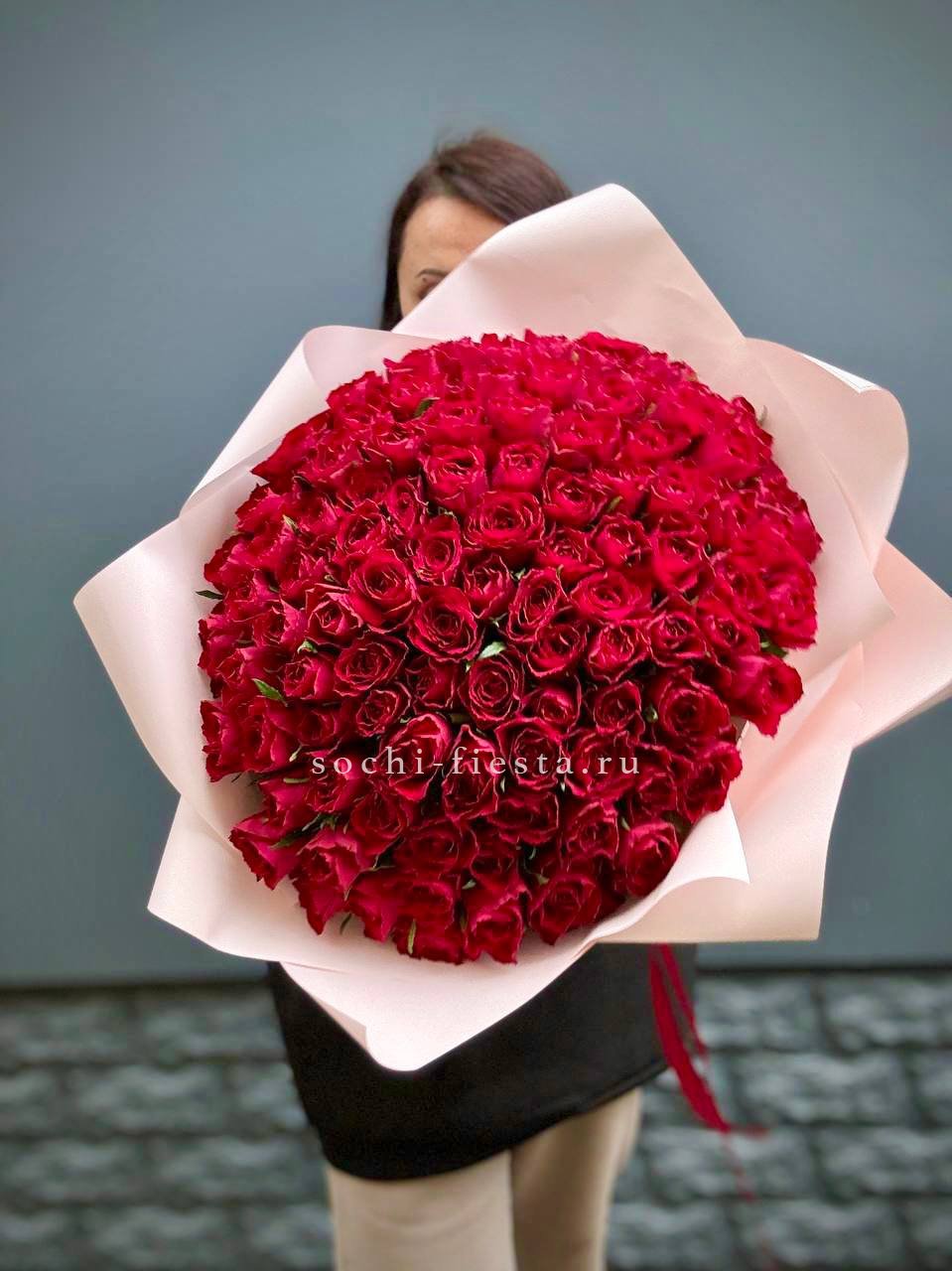
Jumilia, listed as Gumillia in the section title, is bi-colour: white at the base and pink at the edge. It comes as 15 Jumilia French Roses in a Box, or as 51 Jumilia in Airy Wrapping for a looser, unstructured look. Spray roses are named individually rather than described here: Lavender Spray Roses and the Bouquet with Misty Bubbles and Chamomile are the two on the shelf. The shelf also includes standard roses and Kenner Rose, both worth a look as sections in their own right.

Every bouquet worldwide is put together to order, and the florist buys the stems only after payment clears. Before the courier leaves, a photo of the finished bouquet goes to the sender, and there is still time to ask for a change at that point.
If a variety is not in stock, the florist substitutes a rose close in shade and price, and that substitution shows up in the same photo rather than as a surprise at the door. Most orders go out on the day they are placed, though the exact window is shown on the bouquet's own page; the delivery page covers zones and timing in full.
A rose in a vase lasts about a week, sometimes closer to ten days with attention. That attention is simple: an angled cut, water changed every day or two, and a spot away from radiators, direct sun and a bowl of fruit.
A good place to start is the shape you already picture: French roses for the reflexed classic look, peony-style roses for a fuller head, or Jumilia (Gumillia) roses for the two-tone bud and the longer vase life. From there, the country and the occasion narrow things down on their own.

