Aster is the flower that keeps the garden in shape from July to November, when most perennials have finished. The genus Aster and its close relatives from the genus Symphyotrichum cover about 180 species — from tiny alpine shrublets 15 cm tall to New England giants pushing 180 cm. Here's which varieties to pick for a bed and for cutting, how to grow aster without powdery mildew, and why Amsterdam florists use it in wedding bouquets instead of chrysanthemum.
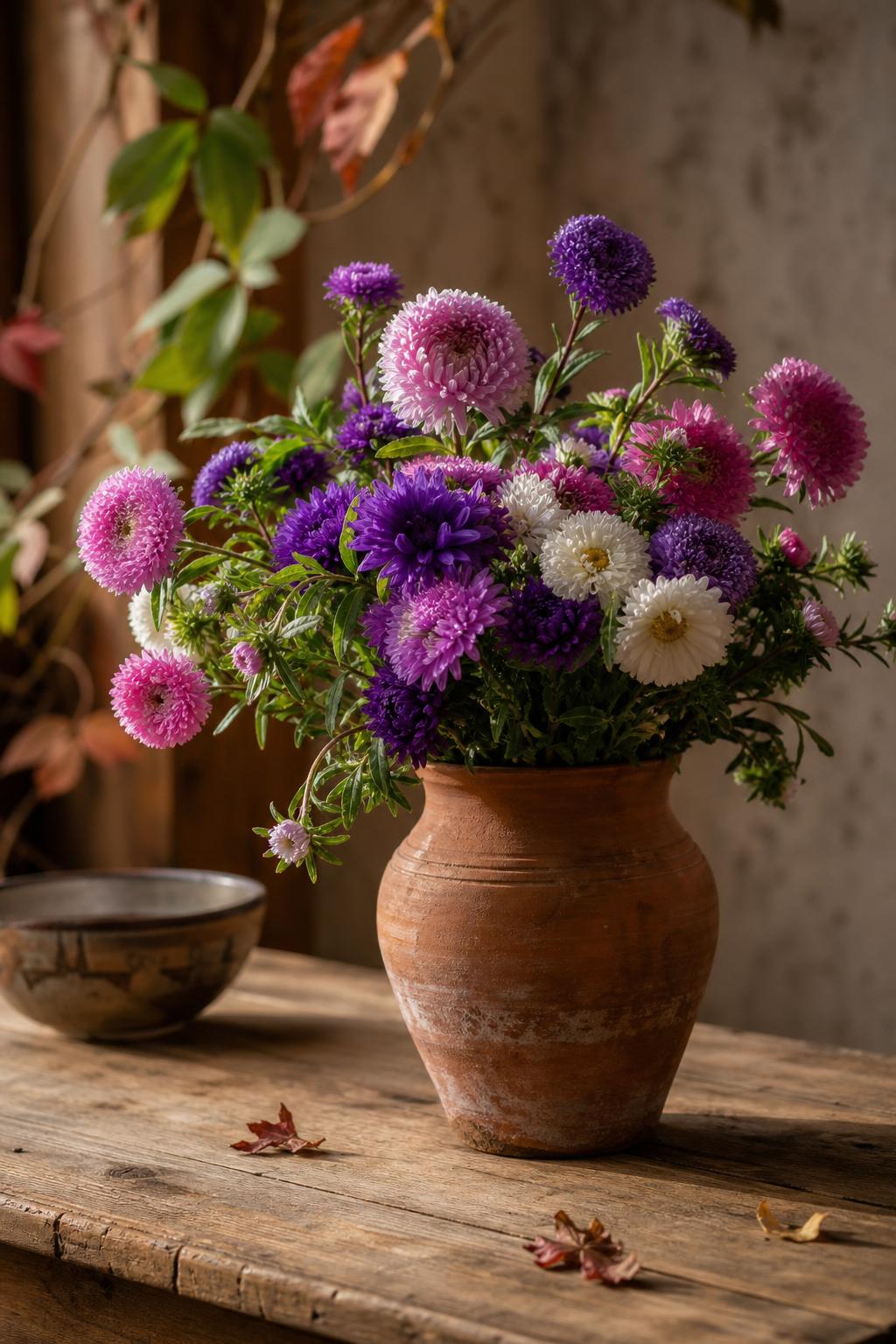
Botanical description
Aster (Aster) is a genus of herbaceous plants in the Asteraceae family, alongside sunflower, daisy, and chrysanthemum. The Latin name comes from the Greek astēr — "star": the inflorescence is composed of ray florets and a tubular center, forming a regular star 2 to 12 cm across.
In the strict botanical sense today, the genus Aster counts about 180 species, mostly Eurasian. Most North American "asters" were reclassified in 1994 into Symphyotrichum by molecular systematics — but in garden and floristry practice, the name "aster" stuck for both groups.
Roots are fibrous and shallow — the main mass sits 15–25 cm deep. Stems upright; tall cultivars slightly woody at the base. Leaves alternate, lance-shaped, 4–12 cm long, edges entire or toothed depending on species.
Species and varieties
Aster amellus (Italian aster)
Compact perennial, 40–60 cm tall. Blooms August–September. Lilac-purple flowers 4–5 cm. Very hardy.
Varieties: 'King George' (dark violet), 'Rudolf Goethe' (lavender), 'Sonia' (pink).
Aster novi-belgii (New York aster)
Popular border perennial 80–130 cm. Blooms September–October. Small flowers 2–3 cm in profuse sprays.
Varieties: 'Marie Ballard' (blue), 'Winston Churchill' (red), 'Prof. Anton Kippenberg' (blue-violet).
Aster novae-angliae (New England aster)
Tall species 120–180 cm. Blooms September–October. Large flowers 4–5 cm.
Varieties: 'Purple Dome' (purple, dwarf), 'Alma Potschke' (pink), 'Harrington's Pink' (pale pink).
Callistephus chinensis (China aster) — annual
Not a true Aster (own genus), but historically classified with asters. Annual, 20–90 cm. Blooms June–October in the garden.
Varieties: 'Duchess' series (double), 'Matsumoto' (spray form for cutting), 'Pompon Splendour' (small pom-poms).
Planting
- Perennial asters — spring or autumn division; ready plants in April–May
- China aster (annual) — seedlings in April, transplant in May
- Position: sun to light shade
- Soil: drained, pH 6.5–7.5
- Spacing: 30 cm for compact, 50–60 cm for tall
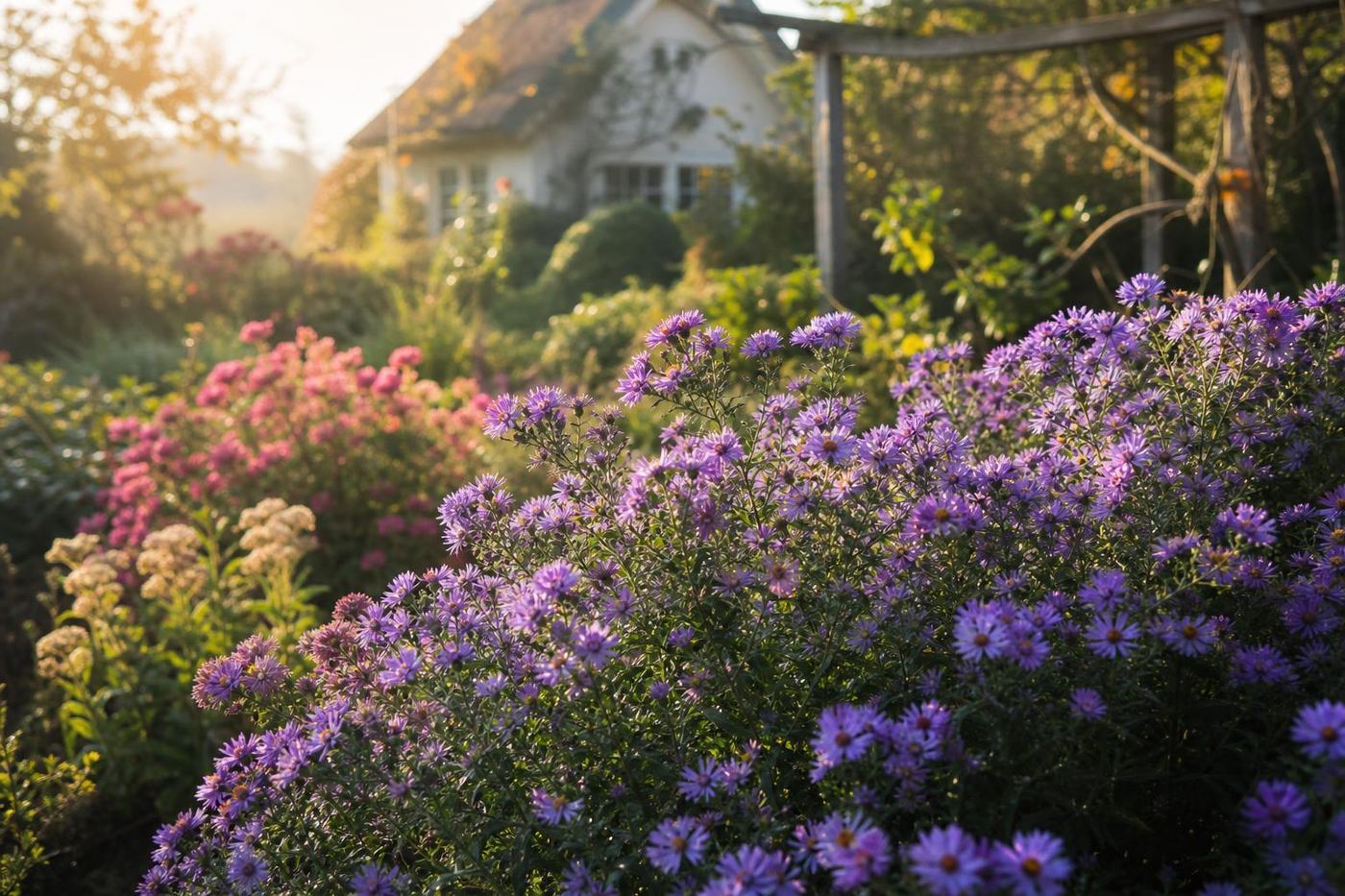
Season care
- Watering: moderate — asters don't like waterlogging
- Feeding: at bud stage — potassium magnesium 15 g/m²
- Cut back: perennials to 10 cm above ground in late autumn
- Division: every 3–4 years — otherwise flowers shrink
- Staking: tall varieties may need bamboo support
Diseases and pests
- Fusarium. Systemic wilt disease. Prevention: don't plant asters in the same spot for 5 years; treat corms with fungicide before spring planting.
- Powdery mildew. White dust on leaves in warm humid weather. Spray with Topaz or copper oxychloride; avoid overhead watering.
- Aphids. Soap solution or Actara.
- Chrysanthemum nematode. Twisted, blackened leaves. Destroy affected plants; don't compost.
Aster in bouquets
Aster is an underrated florist tool. Perfect for autumn compositions — comes cheap, adds mass, holds well in the vase.
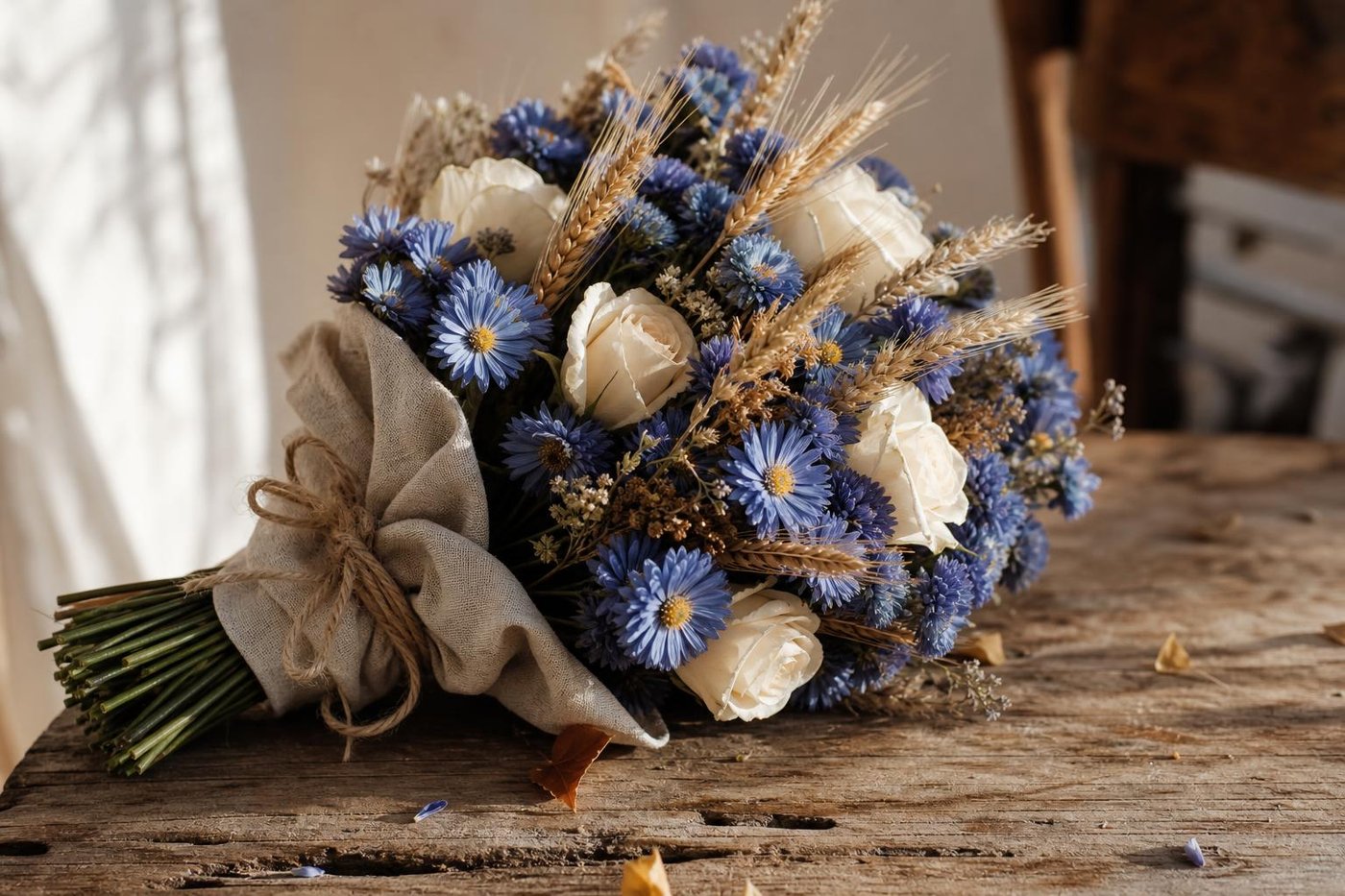
Working combinations
- Aster + chrysanthemum + eucalyptus (autumn classic)
- Aster + rose + wheat (rustic wedding)
- Aster + sunflower + hypericum berries (autumn statement)
- Aster + gerbera + spray rose (bright everyday bouquet)
Combinations that don't work
- Aster + peony (peony's grand format eats aster's small heads)
- Aster + lily (aroma clash)
Cut care
- Cut at 45° under water
- Cool water, medium vase
- Strip lower leaves — asters rot fast in water
- Add flower food
- Refresh cut every 2 days
Vase life: 10–14 days at proper care. Longer than most flowers of similar price.
Symbolism and cultural notes
The Greeks called the aster a "star flower" and believed it grew where Astraea, the goddess of justice, wept as she left Earth. In Christian tradition asters became a symbol of the Virgin Mary and were laid at church altars in September.
Meaning by color:
- Purple — wisdom, dignity
- Pink — tender affection, gratitude
- White — pure feelings, innocence
- Blue — loyalty, trust
- Red — passion (rare)
Aster is the traditional birth-flower for September in American florist culture and the twentieth wedding anniversary flower.
10 facts
- Latin for "star." From the Greek astēr.
- Underused. The aster ranks 15th in world cut-flower sales despite excellent vase life — pure marketing gap.
- Butterfly and bee magnet. Autumn asters are the last major nectar source before winter — critical for pollinators.
- Aster on the U.S. state flag. New York's state flower is the aster (novi-belgii).
- NASA's aster. NASA has grown aster on the ISS as part of pollinator plant research.
- The most expensive aster. In 2020 the Dutch auctioned an experimental doubled cultivar 'Black Star' at €50 per stem — 100× normal aster pricing.
- Aster in medieval medicine. European monasteries used asters as an antiseptic for infected wounds.
- The 20th anniversary flower. In Anglo-American tradition, aster marks the 20-year wedding anniversary.
- Marie Curie's favorite. The Nobel laureate kept a collection of 15 aster cultivars in her garden.
- The world's tallest aster — 2.4 m New England aster, USA, 2019.
FAQ
Do asters and chrysanthemums compete? Yes, they occupy similar autumn floral roles. Asters are more delicate, chrysanthemums more graphic.
Can asters be given at a funeral? In parts of Europe, autumn asters are traditional at cemeteries; in North America they're a standard autumn gift with no funeral association.
Why did my asters get powdery mildew? Overhead watering + high humidity. Water at the root, thin the bed for airflow, treat preventively with Topaz.
Which variety for a bridal bouquet? 'Matsumoto Blue' (China aster spray form) or 'Marie Ballard' (blue novi-belgii) — modern autumn bridal picks.
When are asters in season? September–October is peak. In greenhouse cultivation — year-round in the Netherlands.
Budget? Cut aster stem: $1.50–3. Bouquet of 15 asters with greenery: $30–50. Wedding autumn bouquet: $120–260.
Are asters safe for pets? Non-toxic to cats and dogs.
Want an autumn bouquet with asters? Browse the catalogue — mono-bouquets from $30 in season September to November.
Summary: aster is an autumn workhorse. Long vase life, huge color palette, cheap per stem. Best in autumn compositions, rustic weddings, and everyday gifts. Key rule: don't overwater in the garden and thin plantings for airflow to avoid powdery mildew.
— Sofia Bell
Author
Sofia Bell
Florist and blog editor