Summer generates more bouquet-care questions than the entire winter. Not because more bouquets are sold — because heat kills bouquets 2–3× faster.
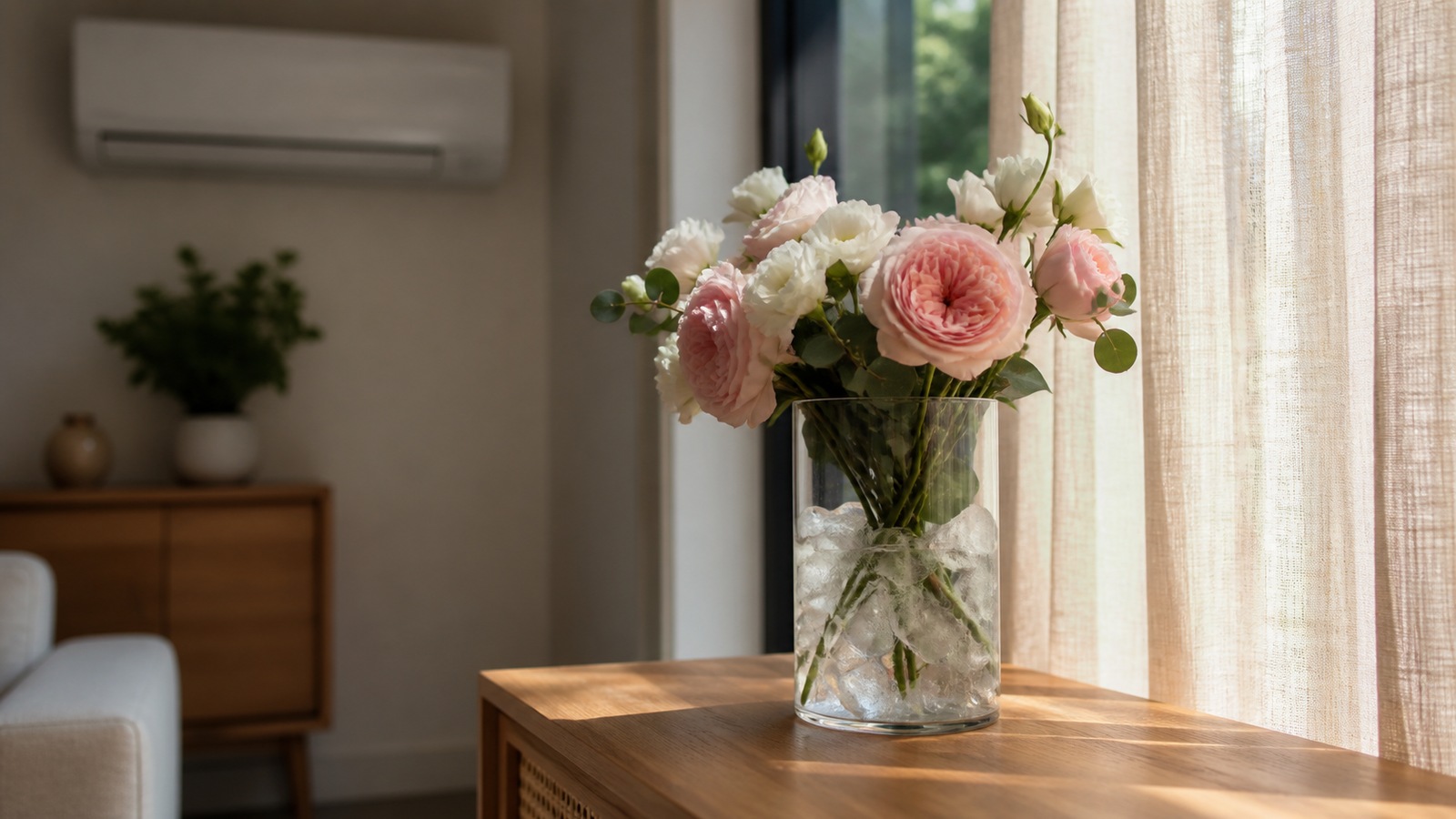
Most common post-delivery messages in July:
"I just bought peonies — they're already crumpling."
"My husband's bouquet arrived at 7 p.m. and already looks tired."
"By day three it was completely wilted — is that normal in summer?"
Here's the full summer bouquet care guide. What to buy, how to deliver, how to store. 9 steps to get 7 days out of a summer bouquet, even at +30 °C.
What happens to a bouquet in heat
To fight the problem, you have to see it.
Enemy #1: Transpiration
A flower "breathes" through its petals and leaves, releasing water vapor. At +30 °C transpiration is 2× faster than at +20 °C. Meaning the bouquet "loses water" twice as fast.
Enemy #2: Bacteria in the vase water
At +25 °C bacteria multiply 4× faster than at +18 °C. Bacteria clog the stem capillaries; the flower "starves."
Enemy #3: Direct sun
UV destroys petal pigments. Pink roses in sun bleach out in a day; whites yellow at the edges.
Enemy #4: Ethylene from fruit and other flowers
Heat accelerates ethylene release. One tomato near a bouquet in July can kill it in a day. In winter it would take a week.
Enemy #5: Dry air (air conditioning)
AC cools but dries the air to 30% humidity. Flowers want 60%+. Over-dry air = fast wilt.
9 steps for summer care
Step 1. Buy the right varieties
The main decision is made before purchase.
Heat-hardy varieties:
- Chrysanthemum (single-head and spray) — summer champion
- Carnation — unfashionable but genuinely tough
- Lisianthus (eustoma) — looks delicate, actually hardy
- Alstroemeria — strong in heat
- Anthurium — subtropical, +30 °C is normal for it
- Sunflower — summer by definition
- Lavender — hardy and repels insects
What NOT to buy in summer:
- Peonies — #1 heat casualty
- Tulips — out of season; at +30 °C a herbarium within a day
- Open hydrangeas — without cold chain, they collapse in 2 hours
- Lilies — the scent becomes aggressive in heat
- Lily of the valley, forget-me-nots — weak stems
Step 2. Delivery timing — morning or evening
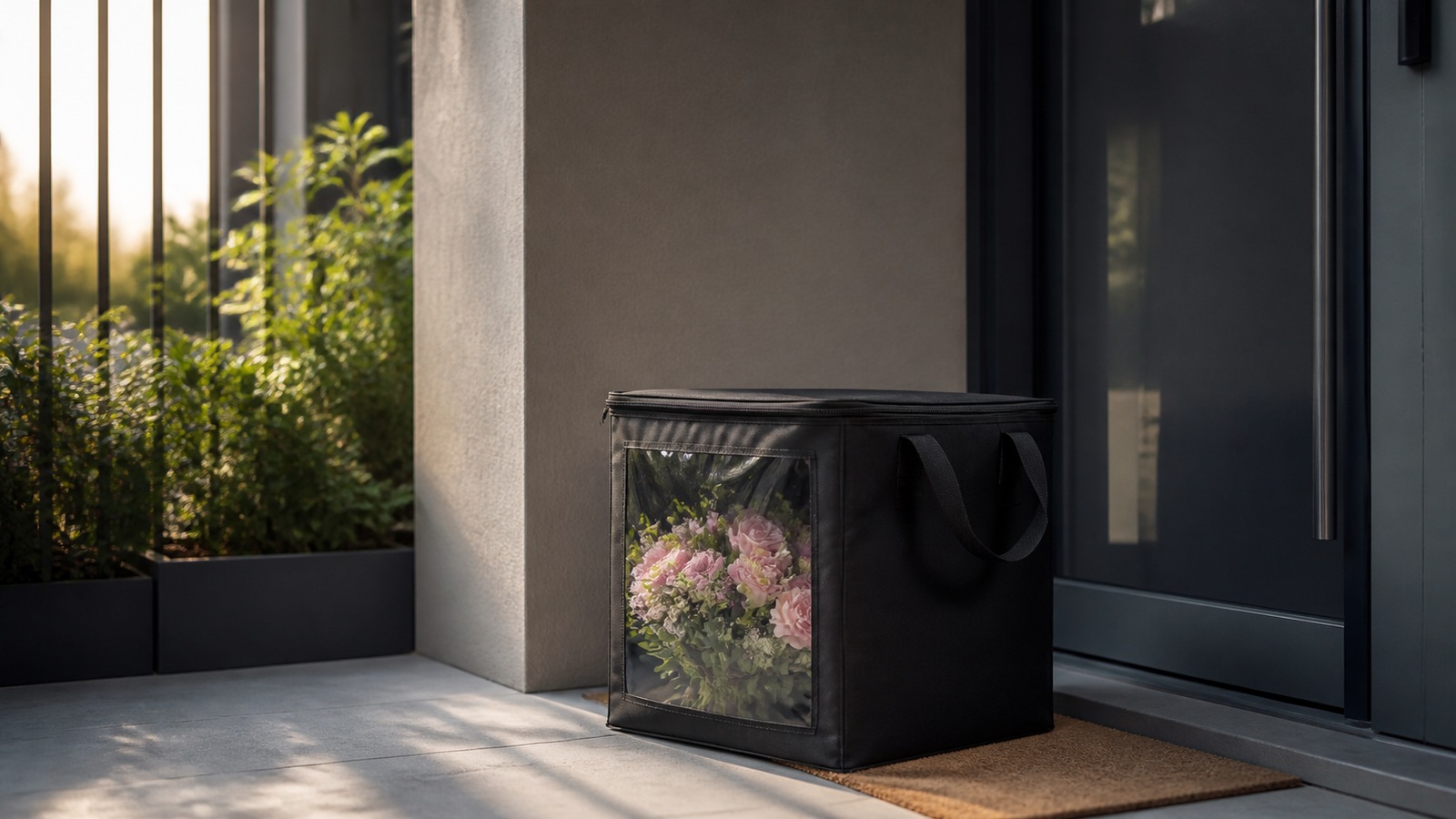
In hot months, book delivery before 11 a.m. or after 7 p.m. Mid-day (12–6 p.m.), +33 °C outside becomes +45 °C in a courier's trunk.
At +45 °C even a thermal bag with ice works for 1.5 hours maximum. A courier stuck in traffic for two hours with flowers — a disaster.
Step 3. Straight to water on arrival
Within the first 15 minutes of receiving the bouquet:
- Remove the wrap (kraft, film — everything)
- Re-cut under water — 45° angle, submerged in a filled sink
- Strip leaves from the lower third
- Cool water, not room temperature, 2/3 of the vase
- Flower food in the water
- Move to the coolest spot in the apartment
These 6 actions in 15 minutes add +2 days of life.
Step 4. Location — not a windowsill, not near a stove
In heat, placement is critical.
Absolutely not:
- On a windowsill in sun — direct UV + overheating
- Near AC — dry air will parch the petals
- In the kitchen near a stove — hot air + ethylene from cooking
- On a balcony in summer — +40 °C in sun
- In a parked car even for an hour
Where to place:
- The coolest room in the apartment (usually an entry hall or corridor)
- In shade, no direct sun
- 2 m from a window (not in a draft, not pressed against glass)
- In an AC'd office but not directly under the airflow
Step 5. Flower food — mandatory
Summer care makes flower food especially critical. Bacteria multiply faster → you need antiseptic + nutrition.
If your florist didn't include a sachet — 1 tsp sugar + 1 tbsp apple cider vinegar per liter. Not perfect, but works.
Step 6. Change water daily (not every 2 days)
In winter water is changed every 2 days. In summer — daily. Bacteria multiply twice as fast; water clouds within 24 hours.
Sign that it's time to change — smell. If the vase smells "stagnant" within 12 hours, change earlier next time.
Step 7. Ice in the water — done right
2–3 cubes of ice in the vase = -5 °C for an hour. Helpful.
But no more than 4 cubes — water at +5 °C shocks the stems and they "close."
Optimal: refresh the vase with cool water (tap + a splash of cold from the fridge); add ice only on the hottest days.
Step 8. Overnight in cold
The main summer trick.
Before bed, move the vase to the coolest place:
- Bathroom floor (usually +18–20 °C)
- Balcony overnight (if open, temp drops to +20)
- Kitchen with a cracked window (extractor fan on)
- Fridge, if the bouquet is small (no longer than 5 hours; longer, and the flowers "close")
Adds 2–3 days of life even during the hottest July–August weeks.
Step 9. Misting
Once a day, mist the petals and leaves with cool water from a spray bottle.
This raises local humidity around the bouquet for 20–30 minutes, slowing transpiration.
Important:
- Use a fine mist, not a heavy spray
- Not in sunlight — lens effect, petals burn
- Not on open peonies or roses — petals can waterlog and bend
- Perfect for hydrangeas — they drink water through their petals
Summer bouquet life table
| Variety |
Normal life |
Summer life |
Full summer care |
| Chrysanthemum |
14 days |
12 days |
14–18 days |
| Carnation |
12 days |
10 days |
14 days |
| Lisianthus |
10 days |
8 days |
12 days |
| Alstroemeria |
10 days |
9 days |
12 days |
| Imported roses |
7 days |
5 days |
8 days |
| Tulips |
5 days |
3 days |
6 days |
| Peonies |
5 days |
3 days |
7 days |
| Wild daisies |
3 days |
1 day |
4 days |
"+30 °C bouquet" checklist
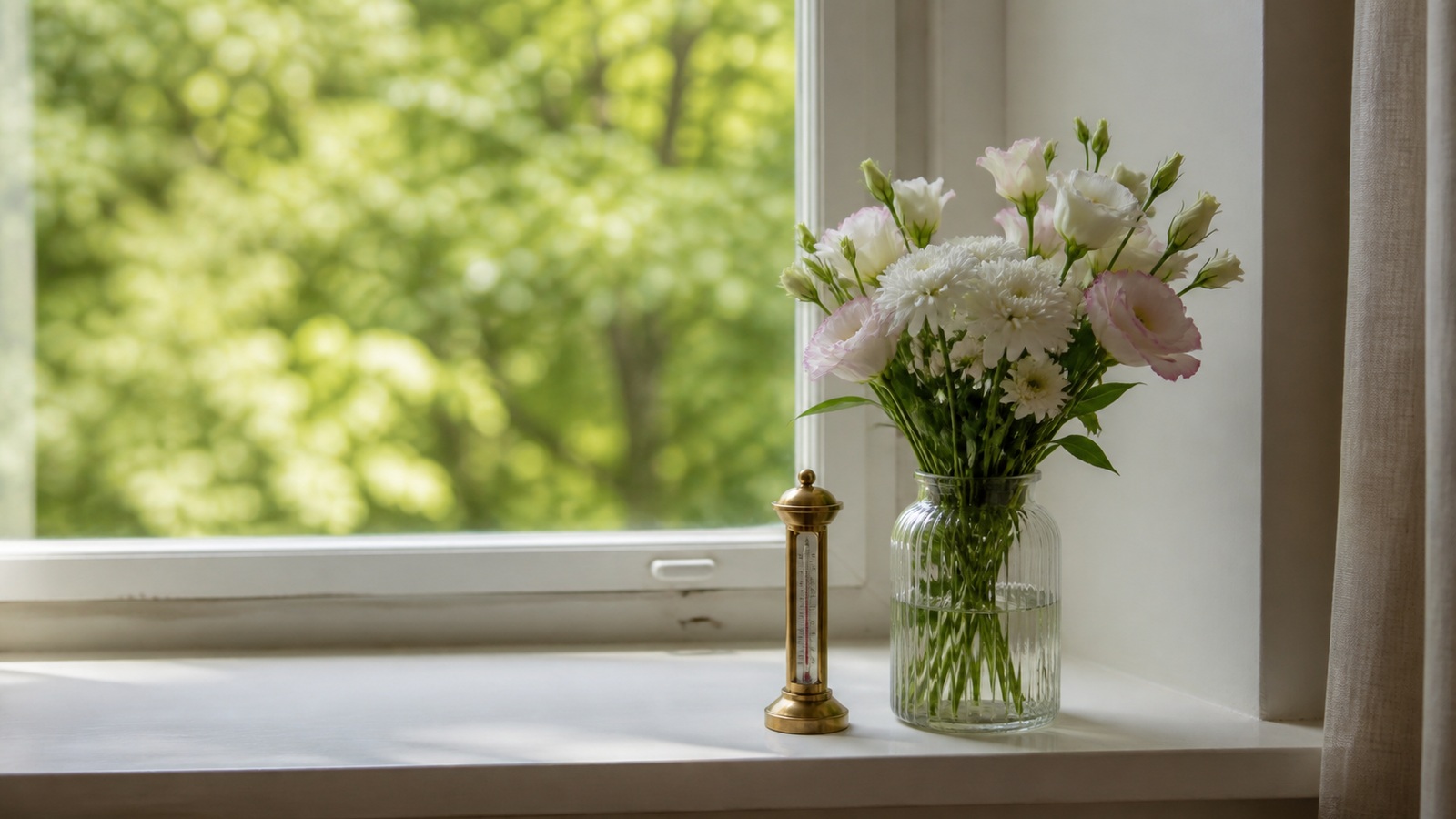
- Heat-hardy variety (chrysanthemum, carnation, lisianthus)
- Delivery before 11 a.m. or after 7 p.m.
- First 15 minutes after receiving — re-cut, clean water, flower food
- Cool spot, not a windowsill
- Change water daily
- 2–3 ice cubes on the hottest days
- Overnight in the cold
- Mist once a day (except open peonies and roses)
- No fruit nearby!
If you need a summer bouquet
Summer arrangements with delivery — a dedicated summer category with heat-hardy varieties. Thermal-bag delivery with ice. Every bouquet ships with a summer care card.
— Sofia Bell
Author
Sofia Bell
Florist and blog editor