Every December, design magazines publish "the top 10 flower trends of the coming year." We read them with a smile. Usually those are things Instagram florists shoot for the feed, but no real customer buys.
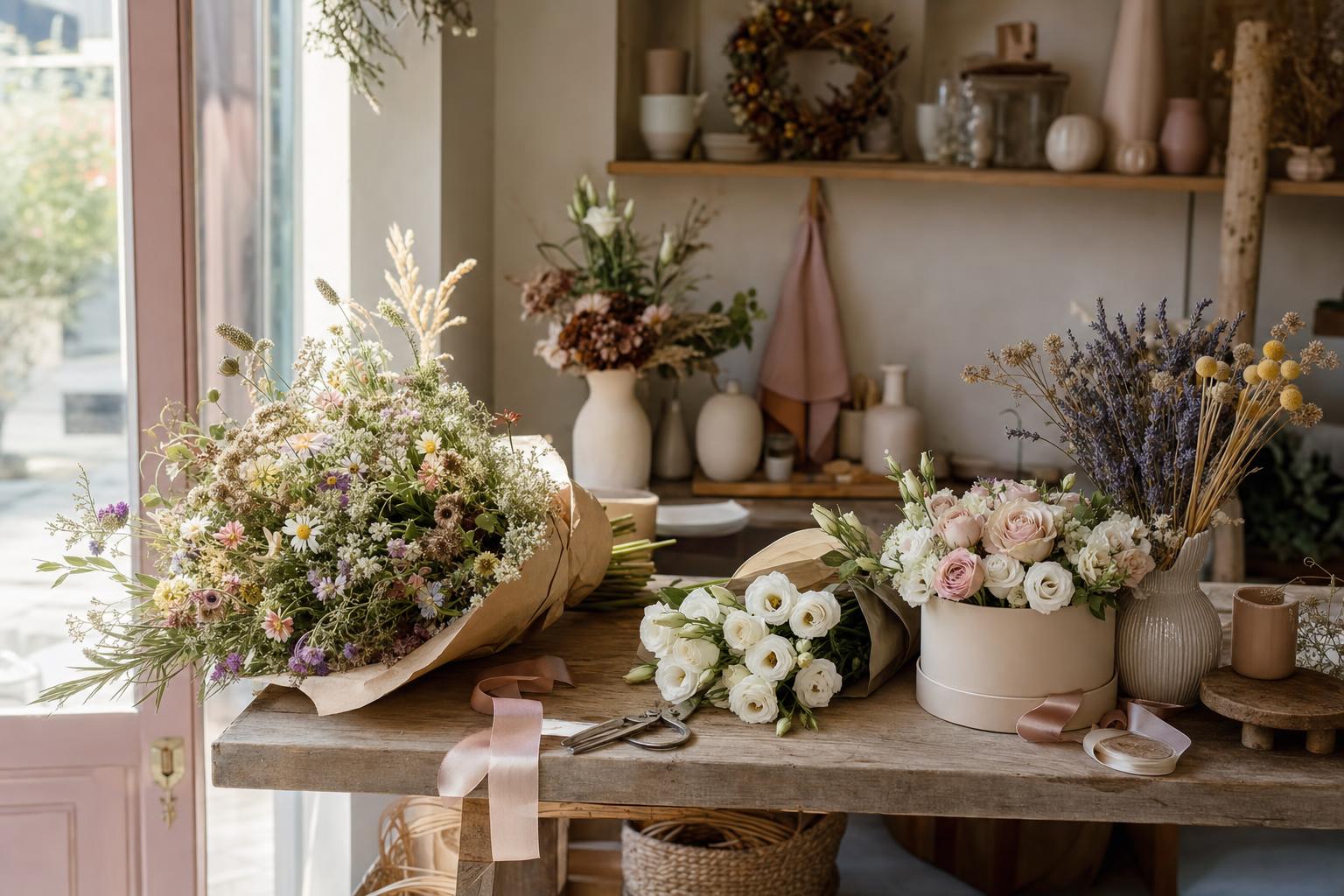 This is our actual 2026 trend list. Not from a feed, from the register. What people order most, what has become "the new normal," and where Instagram diverges from reality.
Eight years behind the counter, thousands of orders a year. Source — our shop sales and the wholesalers we work with.
1. Wildflower aesthetic goes year-round
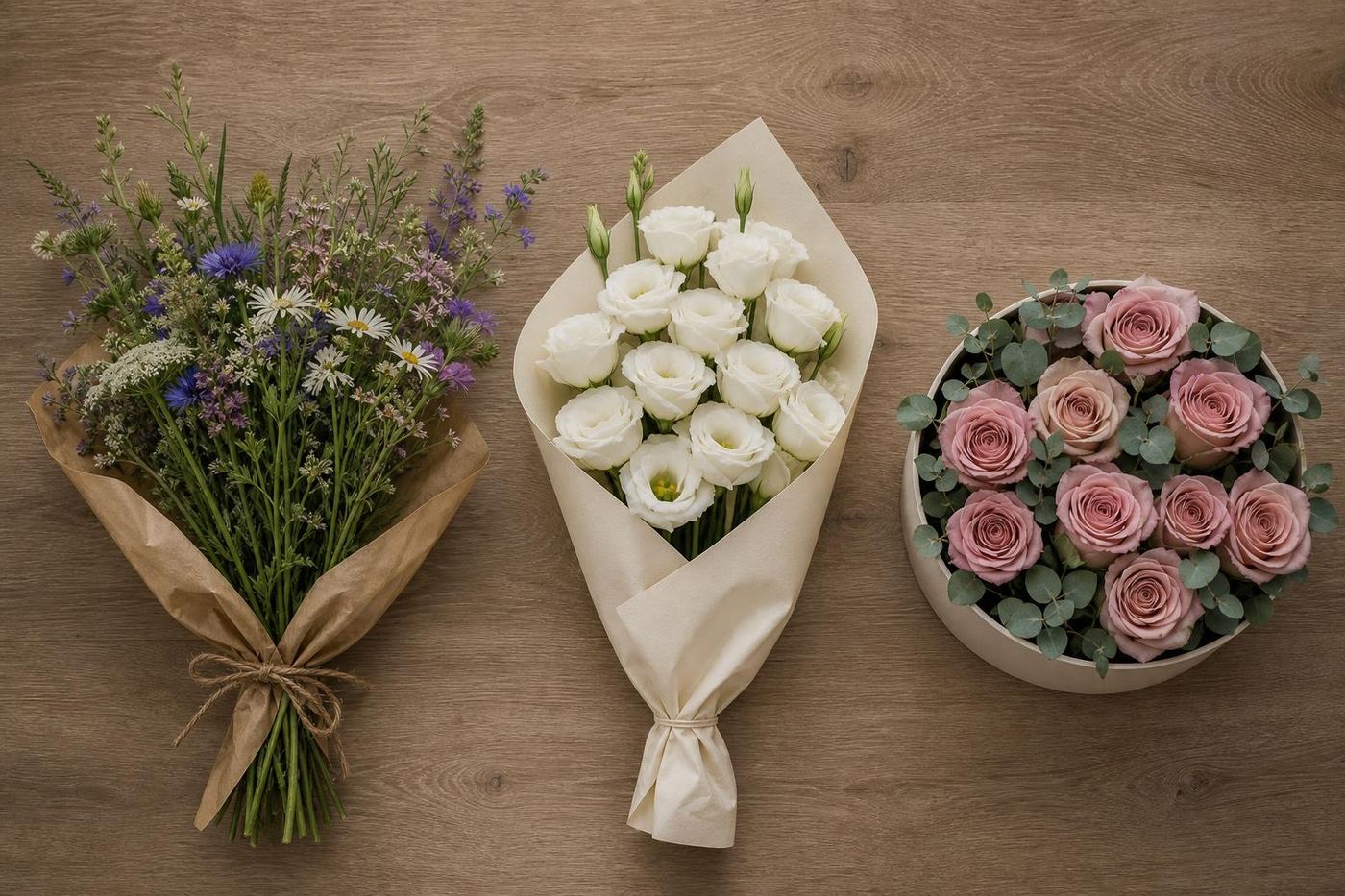
Traditionally, "wildflower bouquet" meant summer, June–August, daisies and cornflowers. Since late 2024, customers ask for the wildflower aesthetic all year, even in winter.
What that looks like in practice:
- Winter bouquets with craspedia, yarrow, immortelle
- The classic bridal bouquet replaced with a wildflower style even in December
- Compositions pairing dried wildflowers with fresh stems — a way to bring "summer feeling" into the cold months
Who buys it: women 25–35, the design community, photographers. Who doesn't: the classic 45+ audience.
2. Dried flowers — not "budget" but a genre of their own
A trend we noticed two years ago that is only gaining speed in 2026: dried flowers have become their own premium category.
Dried stems used to read as "a cheap substitute." Now:
- 100% dried-flower arrangements retail from $60
- 30% of interior bouquets in our shop are dried
- Studios are opening that specialize in dried flowers only
Genre leaders: lavender, craspedia, bunny tails (lagurus), statice, dried gypsophila, preserved eucalyptus, protea.
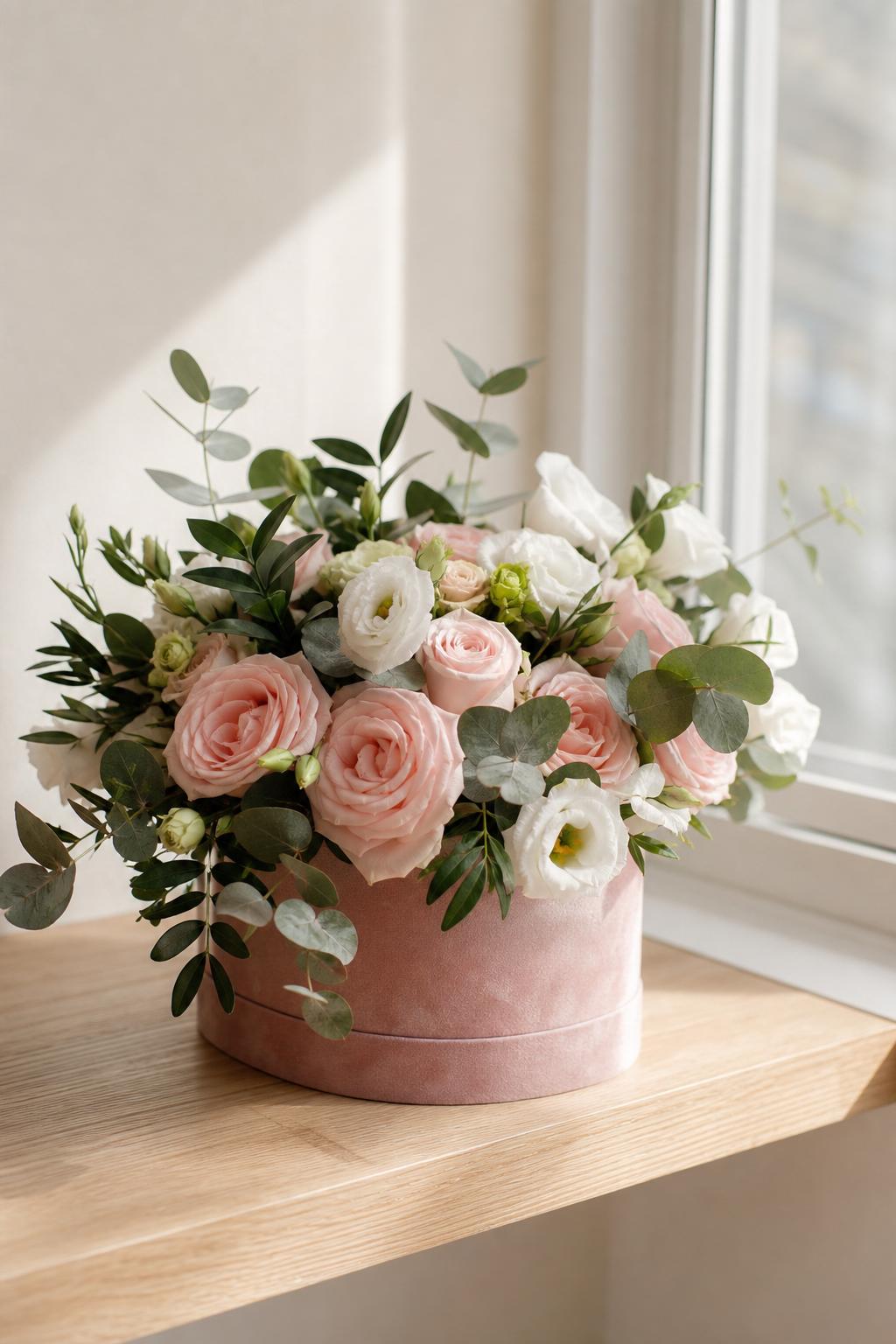
3. Hatbox arrangements displace the classic wrapped bouquet under $60
This trend started around 2020 and became the new normal in 2026. In our shop, hatbox arrangements have displaced classic sleeved bouquets in the "gift for a colleague / mom / first meeting" segment.
Why it works:
- No vase required — put it on the table and you're done
- Nothing to do — the florist already soaked the foam
- Lasts longer — the foam holds moisture for 5–7 days
- Photogenic — the box reads as more expensive visually
Our 2026 forecast: 50% of all bouquets under $60 will be hatbox format.
4. Minimalist mono-bouquets
A global design trend. Instead of a "mixed bouquet" — one variety in one color, 7–15 stems.
 The most popular in our shop:
- 11 white lisianthus in kraft
- 15 pink tulips in monochrome
- 7 spray chrysanthemums in one color
- 9 peonies in season
The most popular in our shop:
- 11 white lisianthus in kraft
- 15 pink tulips in monochrome
- 7 spray chrysanthemums in one color
- 9 peonies in season
Very designer, very "current." Especially strong at weddings, corporate events, and offices.
5. The 2026 palette — dusty pink, smoky blue, cream
What's fading:
- Bright red (declining even for Valentine's Day)
- Fuchsia and neon pink
- High-contrast "wedding mixes" (red + white)
What's arriving:
- Dusty pink — the best-selling shade of 2026
- Smoky blue — especially in weddings
- Cream and ivory — replacing pure white
- Warm ochre, amber — autumn weddings
In 2026, 80% of our wedding bouquets are in this palette. Compare that to 2022, when "burgundy + red" was king, and you can feel the shift.
6. "Less is better"
Bouquets are getting more compact in 2026. If in 2018 the average bouquet ran 25–30 stems, today it's 11–15.
Reasons:
- Prices rose, incomes didn't keep up
- Smaller apartments → smaller vases
- Minimalist aesthetic
- Environmental angle: less waste
This is the biggest shift we see: people are trading "more = better" for "better = better."
7. Hydrangeas replace peonies at weddings
"Wedding bouquet = peonies" used to be a rule. Now (especially in major cities) — hydrangeas.
Why:
- Hydrangea gives more "mass" per stem — visually impressive
- Available 9 months a year, versus peonies (only 4)
- Broader palette — white, blue, pink, lilac, cream
- Cheaper than peonies on average
Downside: hydrangeas don't tolerate heat — summer weddings in hot climates require refrigerated logistics.
8. "Small floristry" — bouquets at $15–25
A retail-daily trend. Small bouquets, 5–7 stems, $15–25 — for "thank you," "no occasion," "hello from the shop next door."
A bouquet under $40 used to be a shameful segment. In 2026 it's a legitimate category: compact, considered, tender, not aiming to impress but genuinely beautiful.
Especially popular:
- 3 roses with eucalyptus in kraft
- 5 tulips in season
- Lavender + dried mini-bouquets
- A single peony in kraft (in May)
45% of our daily revenue in 2026 sits in the $15–25 range. Compare to 2020 (15%).
9. Flowers in interiors — arrangements "to match the furniture"
A new niche: flowers as part of interior design. Not a "receive-and-forget" bouquet, but a composition chosen to match the room's furnishings.
 Orders coming in:
- An arrangement in the same palette as the sofa upholstery
- A "floral screen" for a new apartment or café interior
- Weekly subscription refreshes
Orders coming in:
- An arrangement in the same palette as the sofa upholstery
- A "floral screen" for a new apartment or café interior
- Weekly subscription refreshes
Still a niche (3–5% of revenue), but growing faster than any other segment.
10. Single-accent bouquets
A European floristry trend. Instead of a "harmonious bouquet" — one accent (one vivid rose, one gypsophila cloud) with everything else in a background tone.
Very designer, requires skill. 20% of our 2026 wedding bouquets are in this style.
Example: a bouquet 90% white lisianthus and greenery + one red peony at the center. Reads as expensive, minimal, modern.
Trends we do NOT see in real customers (despite Instagram)
For honesty's sake — five "trends" the media pushes that nobody actually buys:
- Flower arches at weddings — magazines love them, but 95% of weddings skip them
- Bouquets of vegetables and fruit — fun for content, useless in reality
- "Natural wild-field freedom" — looks great in photos, at home turns into "an uncombed shrub"
- Pantone Color of the Year bouquets — nobody actually orders by Pantone
- Flowers in water-filled glass spheres — reads as a "lab experiment," unwieldy in real life
What to actually buy in 2026
To summarize:
Yes:
- Wildflower aesthetic year-round
- Hatbox arrangements
- Mono-bouquets in one palette (dusty pink, smoky blue)
- Small $15–25 bouquets
- Hydrangeas instead of peonies for weddings
No:
- "Pantone trends"
- Vegetable bouquets
- Wedding arches on a limited budget
- Glass-sphere flower novelties
If you want a 2026-style bouquet
Fresh bouquet catalogue — we update to current trends every week. On display right now: dusty pink palette, hatbox arrangements, and compact designer bouquets in kraft. Care card included with every order.
— Sofia Bell