Every month at least five clients ask the same question: "What plant should I put in the office that won't die?" Open-plan office, AC, dry air, nobody remembering to water for two weeks during a business trip — this is the harshest environment for houseplants.
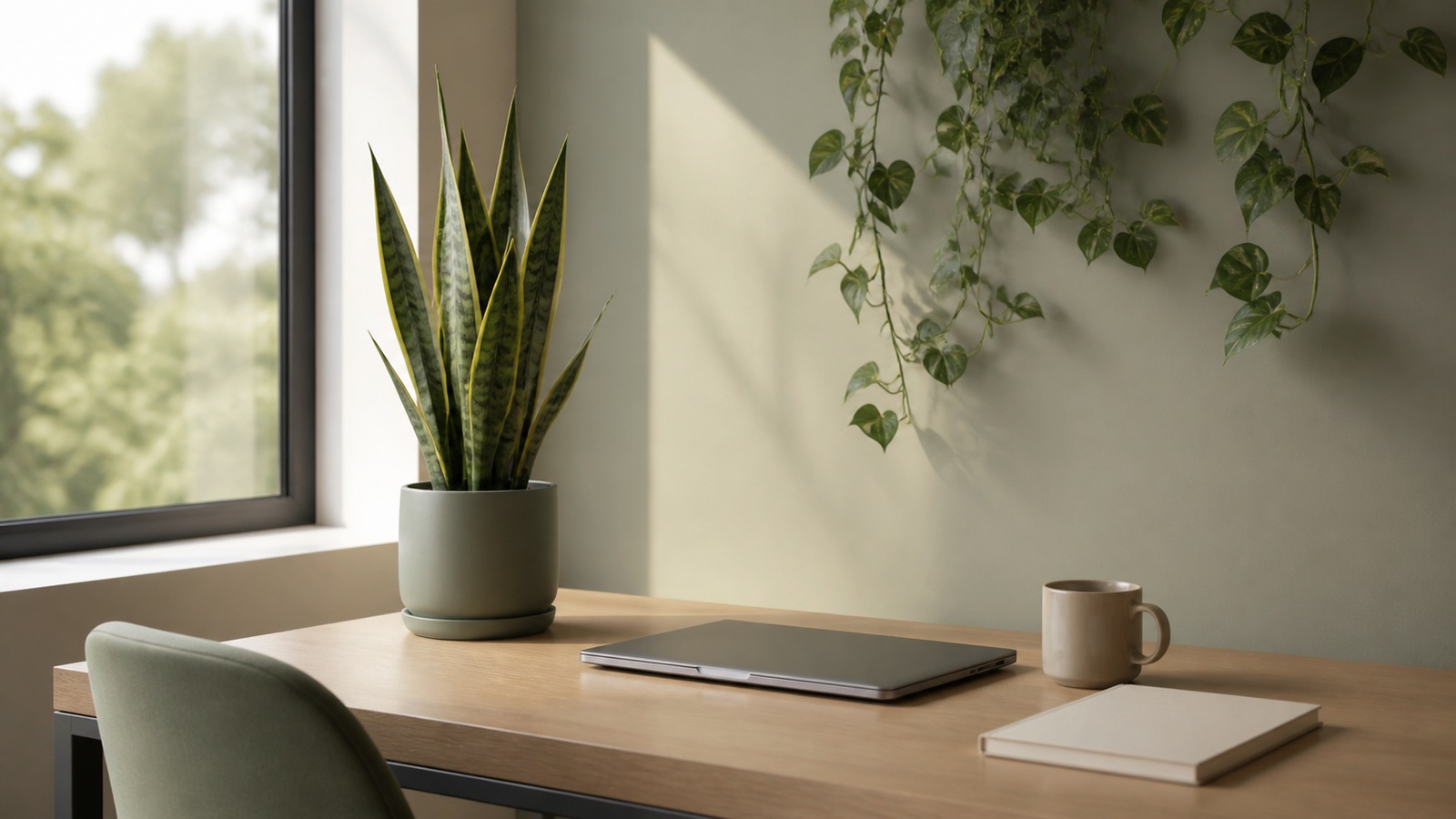
Here's the full breakdown. Not "the 10 prettiest" from an Instagram feed, but a real playbook: which plants survive office extremes, how much they cost, how to place them in open space / at home / in a nursery, and the mistakes 8 out of 10 buyers make. We've worked this segment since 2019, seen hundreds of plant "returns," and can tell you what actually works.
Table of contents
- What Urban Jungle is and why plants belong in the office
- 10 unkillable plants for the office
- Plants for the home: living room, bedroom, kitchen
- Plants for the nursery: safe species
- 2026 pricing: pot, soil, planter
- Basic care without the lecture
- 7 beginner mistakes
- How to pick a plant at the shop
- FAQ
What Urban Jungle is and why plants belong in the office
"For a long time I thought Urban Jungle was about aesthetics. Over time I realized it's about the psychology of a workspace. Without greenery an office feels sterile — greenery changes it in a single day."
Urban Jungle is a city-jungle interior style that emerged in Scandinavia in the early 2010s. The idea is simple: lots of live greenery in the room, varied leaf shapes and textures, a "wild room" effect.
What greenery does in an office (from our observation and published research):
- Lowers stress by 15–20% (University of Exeter study)
- Raises indoor humidity by 5–10% (especially important in heated winter months)
- Absorbs VOCs (formaldehyde from furniture, benzene from copiers)
- Creates a visual pause for the eyes — critical in open space
Companies that put greenery in the office typically re-order 30–50% more plants a year later — the effect is real.
Where Urban Jungle works well:
- Open-plan offices — walls, zone dividers, windowsills
- Meeting rooms — large floor plants
- Lounge and kitchen areas — for warmth
- Home living rooms and home offices
Where it doesn't:
- Industrial shops with dust and chemistry
- Rooms with no natural light (only lamps)
- Very hot boiler rooms and server rooms
10 unkillable plants for the office
Our short list of tried plants we place in offices, holding up under the harshest conditions.

1. Sansevieria (snake plant, mother-in-law's tongue)
The most unkillable plant in our practice. Rigid leaves, tolerates dry air, water every 2–3 weeks.
- Height: 30–100 cm
- Light: any, including windowless offices
- Watering: every 14–21 days
- Price potted: $14–45
2. Epipremnum (pothos)
Vining plant, can climb a wall or hang. Very forgiving.
- Height: vine up to 2–3 m
- Light: indirect
- Watering: every 7–10 days
- Price potted: $12–32
3. Zamioculcas (ZZ plant)
Fleshy leaves store moisture — survives business trips.
- Height: 40–80 cm
- Light: indirect to low
- Watering: every 14–20 days
- Price: $27–80
4. Spathiphyllum (peace lily)
Blooms with white "sails." Watering tell — leaves droop when it's dry.
- Height: 30–70 cm
- Light: indirect
- Watering: every 5–7 days
- Price: $14–45
5. Rubber fig (Ficus elastica)
Large floor plant with glossy leaves. Great for lounge areas.
- Height: 1–2 m
- Light: bright indirect
- Watering: every 7–10 days
- Price: $60–210
6. Monstera
Iconic split leaves. The visual symbol of Urban Jungle.
- Height: 80–150 cm
- Light: indirect
- Watering: every 7–10 days
- Price: $45–150
7. Chlorophytum (spider plant)
Beginner-easiest. Produces "pups" that transplant easily.
- Height: 30–50 cm
- Light: any
- Watering: every 5–7 days
- Price: $7–22
8. Dracaena marginata
Bare trunks with tufts of leaves at the top. Architectural.
- Height: 60–150 cm
- Light: bright indirect
- Watering: every 7–10 days
- Price: $45–135
9. Aglaonema
Patterned leaves in red-and-green tones. Doesn't need bright light.
- Height: 30–60 cm
- Light: low indirect (ideal for offices)
- Watering: every 7–10 days
- Price: $22–60
10. Peperomia
Compact — fits even a small desk. Perfect for a workstation.
- Height: 15–25 cm
- Light: indirect
- Watering: every 7–10 days
- Price: $12–32
Plants for the home
Living room
Main zone for floor plants and large specimens:
- Rubber or fiddle-leaf fig
- Monstera in a large pot
- Dracaena or yucca
- Areca palm
- Bird of paradise (indoor Strelitzia)
Tip: one large plant in a corner does more than three medium plants scattered around.
Bedroom
Air-purifying species work here:
- Sansevieria (releases oxygen at night — rare for a plant)
- Spathiphyllum
- Chlorophytum
- Aloe
Don't: strongly aromatic plants (jasmine, gardenia) — they can disturb sleep.
Kitchen
The kitchen means heat, humidity, swings. Take resilient options:
- Pothos (on top of the fridge or a shelf)
- Chlorophytum
- Sansevieria
- Fresh mint or basil (useful and fragrant)
Don't: delicate thin-leaf plants — they'll scorch near the stove.
Bathroom
Surprising to many, but the bathroom works — natural humidity:
- Pothos
- Sansevieria
- Fern (indoor asparagus)
- Phalaenopsis orchid
Requirement: a window or at least 1–2 hours of natural light a day.
Plants for the nursery: safe species
A separate category, because many popular plants are toxic to children and pets.
Safe for a nursery:
- Sansevieria
- Chlorophytum
- Peperomia
- Calceolaria
- Bromeliad
Dangerous (do NOT place with small children or cats):
- Dieffenbachia (toxic sap)
- Oleander (lethal)
- Euphorbia / spurge (skin and mucous irritant)
- Monstera (moderately toxic; a kid will try it)
- Rubber fig (irritant sap)
Important with small children:
- Plant above reach or on a shelf
- No sharp leaves (agave, sansevieria with rigid edges)
- No allergens (strong scents)
- Regular check — kids knock over anything at floor level
2026 pricing
Indoor plant prices in 2026 rose 12–18% vs last year. Realistic ranges (USD equivalents):
| Category |
Size |
Budget |
| Small desktop |
10–20 cm |
$7–22 |
| Medium (windowsill) |
25–40 cm |
$12–45 |
| Medium floor |
40–80 cm |
$32–80 |
| Large floor |
80–150 cm |
$80–210 |
| Premium large |
150–200 cm |
$210–450 |
| Trained climber with support |
80–150 cm |
$45–115 |
| Composition of 3 plants |
in one planter |
$60–150 |
Included in price:
- The plant itself
- Basic plastic or ceramic pot
- Soil
Not included:
- Designer planter (separately $27–150)
- Delivery (from $9)
- Installation for large plants (from $27)
- Fertilizer (from $6)
Where to save:
- Buy "pups" instead of adult plants — 3–5× cheaper, 6–12 months longer to look full
- Take a young sansevieria or ZZ — slow growers, cheaper
- Solid-color ceramic planters are 2–3× cheaper than designer ones
Basic care without the lecture
The simplest rule we give every client:
"A plant dies more often from overwatering than from drying out. Underwater, don't overwater."
Watering
- Finger-test the soil: dry 2–3 cm down = time to water
- Pour at the base, not on leaves (ficus and monstera can burn from water on leaves in sun)
- Drainage tray: if water sits 30 min after watering, drain it
- Heating season: water more often but in smaller portions
- When away: self-watering globes or a neighbor, not "a lot in advance"
Light
- Rotate the pot 90° every 2 weeks — plant grows evenly
- Direct sun through glass burns many leaves (especially in summer)
- In winter add a grow-light if the room is dim
Feeding
- March–September: every 2 weeks with liquid fertilizer
- October–February: monthly or nothing (dormant period)
Repotting
- Young plants: yearly
- Adults: every 2–3 years
- Sign: roots poking through drainage holes
Leaf cleaning
- Every 1–2 weeks, wipe leaves with a damp cloth
- Not cosmetic — it lets the plant breathe (photosynthesis through leaves)
7 beginner mistakes
Mistake 1. Watering "just in case." The #1 killer is overwatering. Finger-test.

Mistake 2. Placing next to a radiator. Dry heat + weak watering = mummified plant. Minimum 50 cm from a radiator.
Mistake 3. Placing on a south window under direct sun. Many species (monstera, pothos) burn in direct sun.
Mistake 4. Buying in winter and immediately moving from a warm shop to a cold car. Temperature shock kills within 24 hours. Transport in an insulated box.
Mistake 5. Repotting immediately after purchase. Give the plant 2–3 weeks of adaptation in the new place before repotting.
Mistake 6. Fertilizing "extra to grow faster." Overdose burns roots. Mix at half the label strength — safer.
Mistake 7. Ignoring AC-dry air. AC dries leaves within a week. Put a humidifier or a bowl of water nearby.
How to pick a plant at the shop
What we check before buying:
- Leaves: smooth, no spots, no yellow edges
- Stem: firm, not limp
- Soil: moderately moist, no green scum on top (mold)
- Pot bottom: roots not poking through drainage
- Insects: check the underside of leaves — scale and thrips hide there
- Stage: for the office, take an adult plant — it's adapted to harsh conditions
What to ask the florist:
- Supplier (local or import)
- When it arrived at the shop (more than a month = weakened)
- Your home/office conditions (light, temperature, watering routine)
- Fertilizer type and frequency
FAQ
Which plant is guaranteed to survive a windowless office? Sansevieria and zamioculcas. Both tolerate artificial light only.
How often to water in summer? Every 5–7 days on average for most species; every 2–3 weeks for sansevieria and ZZ. The main signal is soil dryness.
What if I'm going on vacation for 2 weeks? Buy an automatic self-watering globe (from $7) or ask a neighbor to water once a week. Most plants survive 10–14 days without water if you water thoroughly before leaving.
Can I keep a plant in the bedroom? Yes — especially sansevieria (oxygen at night) and spathiphyllum. Skip strongly aromatic species.
Which plants are safe for cats? Chlorophytum, peperomia, sansevieria (moderate), calceolaria. Toxic: dieffenbachia, oleander, monstera, ficus, lilies.
How much is a large floor plant? Ficus, monstera, dracaena in a 1–1.5 m pot — $80–210 without a designer planter.
Can plants be delivered? Yes, we deliver plants across major cities. Delivery from $9; large plants get separate packaging and setup.
How to order office greening in bulk? Message us via the site. Minimum order — 10 plants, discount from 15%.
Bottom line
Urban Jungle is not a complicated style reserved for designers. It's a working way to make an office or home feel alive with 10 unkillable plants. The rules: don't overwater, don't put them in direct sun, don't forget about AC dryness.
If you want to green an office or a home — message us and we'll match plants to your conditions (light, humidity, travel schedule). Full catalogue: houseplants.
— Sofia Bell