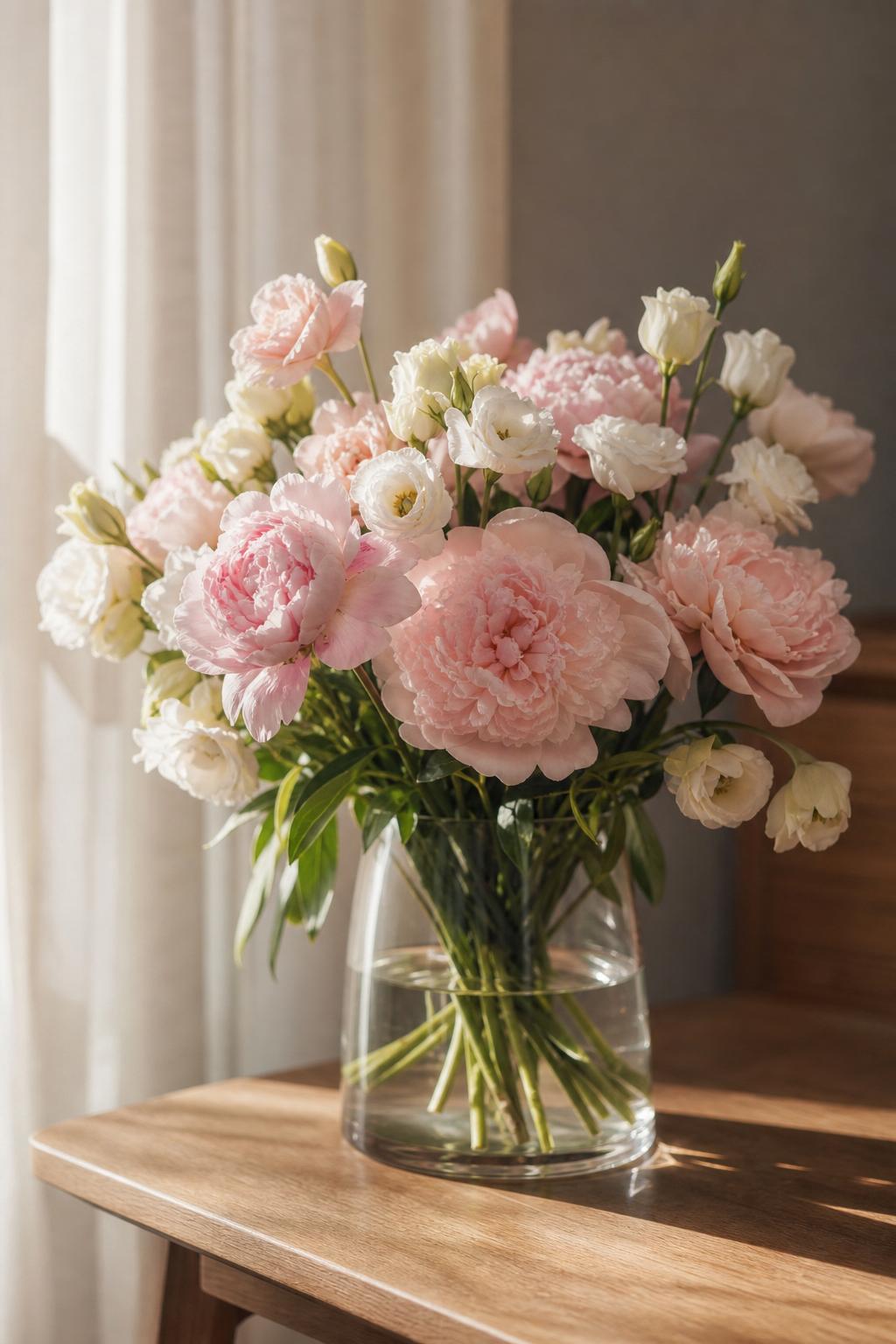
If you've ever said "I bought a beautiful bouquet and by day three it looked sad" — this article is for you. Most often it isn't the shop's fault, but a handful of small habits at home.
A cut bouquet isn't a potted plant. It has no roots. It drinks only through the stem cut. Clog that cut, let the water turn green, put the flowers in a draft — and even a fresh rose will droop in two days.
Five mistakes that make bouquets wilt in three days instead of the expected week. All are household mistakes, all are easy to fix.
First — diagnosis: is the bouquet old, or just unwell
Before blaming the shop or yourself, look closely. Not every kind of wilt is the same.
- Petals soft, heads dropping, stems firm, water clean — the bouquet is simply thirsty. Re-cut, place in fresh cold water, move to a cool spot. Roses, lisianthus, hydrangea often bounce back in an evening.
- Stem bottom brown, watery, smells — rot. Cut back to healthy tissue. If little healthy stem remains, remove that flower so it doesn't poison the rest.
- Kink under the head, cracked stem, snapped neck — mechanical damage. These flowers rarely recover; water can't cross the injury.
If none of that applies and it still wilts — you're making one of the five mistakes below.
Mistake 1. Placed in water without a fresh cut
The most common. The bouquet came in, you unwrapped part of it, straight into the vase. Logical — it was already cut at the shop, right?
The problem: while the bouquet traveled and waited for a vase, the stem cut dried out. When you place it in water the lower stem doesn't open fully. This is an air lock. There's water in the vase, but the flower can't drink it.
What to do:
- Re-cut each stem by 1.5–3 cm
- Use a sharp knife or florist shears (not kitchen scissors — they crush the stem)
- Cut at a 45° angle
- Cut immediately before placing in the vase — not an hour ahead
- Repeat the cut every 2 days when changing the water
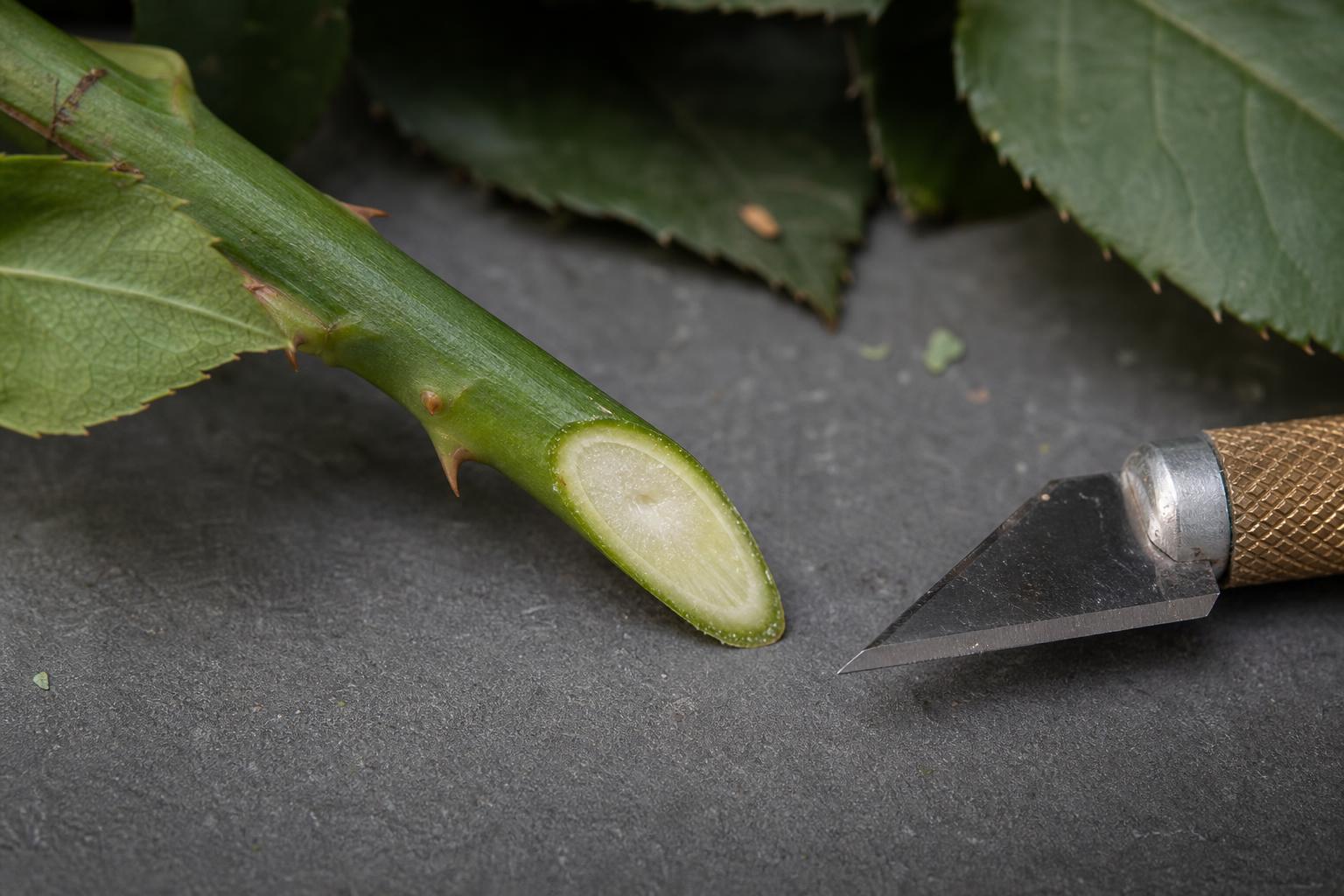
Especially sensitive to this mistake: roses, peonies, hydrangeas, tulips, lisianthus, ranunculus.
Mistake 2. Leaves below the waterline
You didn't strip the bouquet — leaves left along the full length of the stem. Within 24 hours the vase water turns green and starts to smell.
Underwater leaves rot fast. Bacteria multiply in the water, clog the stem cut, and the flower physically stops drinking. Not visible on day 1 — by day 2 you see it: the bouquet slumps and the water clouds.
What to do:
- Before placing in the vase, strip every leaf that would sit below the waterline
- Leave leaves only on the upper stem
- For roses — remove the lower thorns as well (they nick the stem and open entry points for rot)
After this simple step the vase water stays clear for 2–3 days and the bouquet lives 1.5–2× longer.
Mistake 3. Heat and sun
You put the bouquet on a windowsill in a sunny room or next to a radiator. Pretty, photogenic — but lethal for cut flowers.
Cut flowers love cool. Flower wholesalers hold flowers at 4–8 °C year-round. At home you can't replicate that, but 18–22 °C is fine. Above 25 °C, flowers wilt many times faster. Direct sun dries petals in hours.
What to do:
- Put the bouquet in the coolest spot in the room, away from direct sun
- Not near a radiator, oven, or stove
- Not on top of a fridge (compressor heats from below)
- At night, move to a cold balcony or hallway — the bouquet "rests"
- On hot days, change water daily instead of every 2 days
Peonies, hydrangeas, tulips, and ranunculus suffer most from heat. Roses and chrysanthemums hold up longer but still don't like overheating.
Mistake 4. Bouquet near fruit
Not widely known. Ripening fruit — especially apples, bananas, pears, tomatoes — releases ethylene, a gas that acts as a "ripening signal" for the fruit itself.
For flowers, ethylene is a disaster. Buds open fast and finish fast under it. Petals drop. Some species — carnations, for example — curl and darken.
So a vase on the kitchen table next to a fruit bowl is the classic fast-wilt scenario.
What to do:
- Keep the bouquet in one room, fruit in another
- If the same room — as far apart as possible (1.5–2 m minimum)
- Don't set anything fruit-y "temporarily" near the bouquet
- Especially guard against fruit: carnation, gypsophila, sweet peas, lisianthus
Mistake 5. Didn't wash the vase
You put the bouquet in a pretty vase where the previous bouquet stood. Water changed, bouquet fresh — but it wilts again in three days.
Vase walls carry residue from the previous bouquet, invisible to the eye — a bacterial film. It multiplies fast in fresh water. Within 24 hours the water is "infected" even if it looks clear. Bacteria clog stem cuts — the flower stops drinking.
What to do:
- Wash the vase with detergent before every new bouquet
- Rinse well — soap harms flowers too
- Once a month, disinfect with a weak bleach solution (1 tsp per liter of water), then rinse thoroughly
- Keep 2–3 vases at home for rotation
Bonus: what to add to the water
"Grandmother's tips" — aspirin, sugar, copper coin, vodka — don't work as advertised. Aspirin barely acidifies the water (minimal effect); overdoing sugar feeds bacteria; a coin does almost nothing; vodka kills bacteria and the stem's capillaries alike.
What actually works:
- Chrysal, Bouquet, Crystal Flower Food — professional sachets from flower shops. Nutrition + antibacterial + acidification in one. One sachet per 0.5 L — bouquet lives 1.5× longer.
- No sachet on hand? — plain cold water, changed more often (daily). Beats any homemade mix.
We break down the aspirin/sugar/vodka myths in a separate test.
The bottom line: correct care in one frame
Short version:
- Re-cut stems at 45° with a sharp knife before placing in the vase
- Strip leaves below the waterline
- Place in a cool spot, out of direct sun
- Keep away from fruit
- Use a clean vase
- Change water every 2 days with a fresh re-cut
- Add flower food if you have it
With that routine, roses, chrysanthemums, gerberas, and lisianthus last 7–12 days. Peonies 5–8. Tulips 5–7. Hydrangeas 4–7. These are the normal ranges for a fresh bouquet from a decent shop.
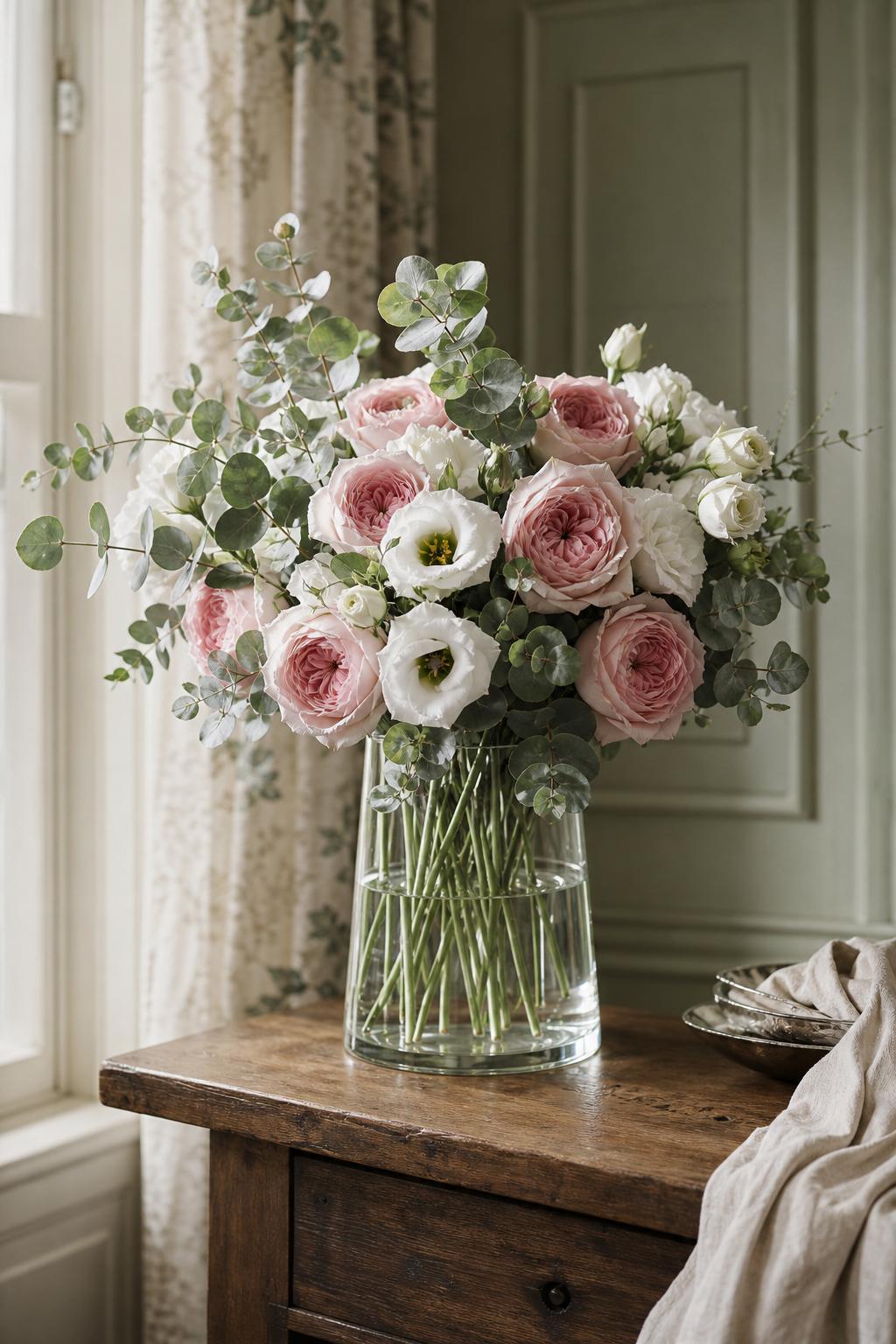
If it still wilts — the problem may actually be the shop, and it's worth switching suppliers.
Fresh, farm-sourced bouquets with same-day delivery — our catalogue. If a bouquet wilts before the promised time, message us and we'll fix it.
— Sofia Bell
Author
Sofia Bell
Florist and blog editor