Juliet, the £3 million rose: what garden roses are and why they cost more
The “£3 million rose” has never sold for £3 million. The figure is what David Austin, the English breeder who raised Juliet, says it cost to develop the variety. Juliet stems are sold at ordinary garden-rose prices. Garden roses are the full, cupped, many-petalled roses florists reach for when a bouquet should look gathered rather than bought. They cost more for practical reasons: shorter stems, heavy heads that bruise in transport, and a supply that can be tighter.
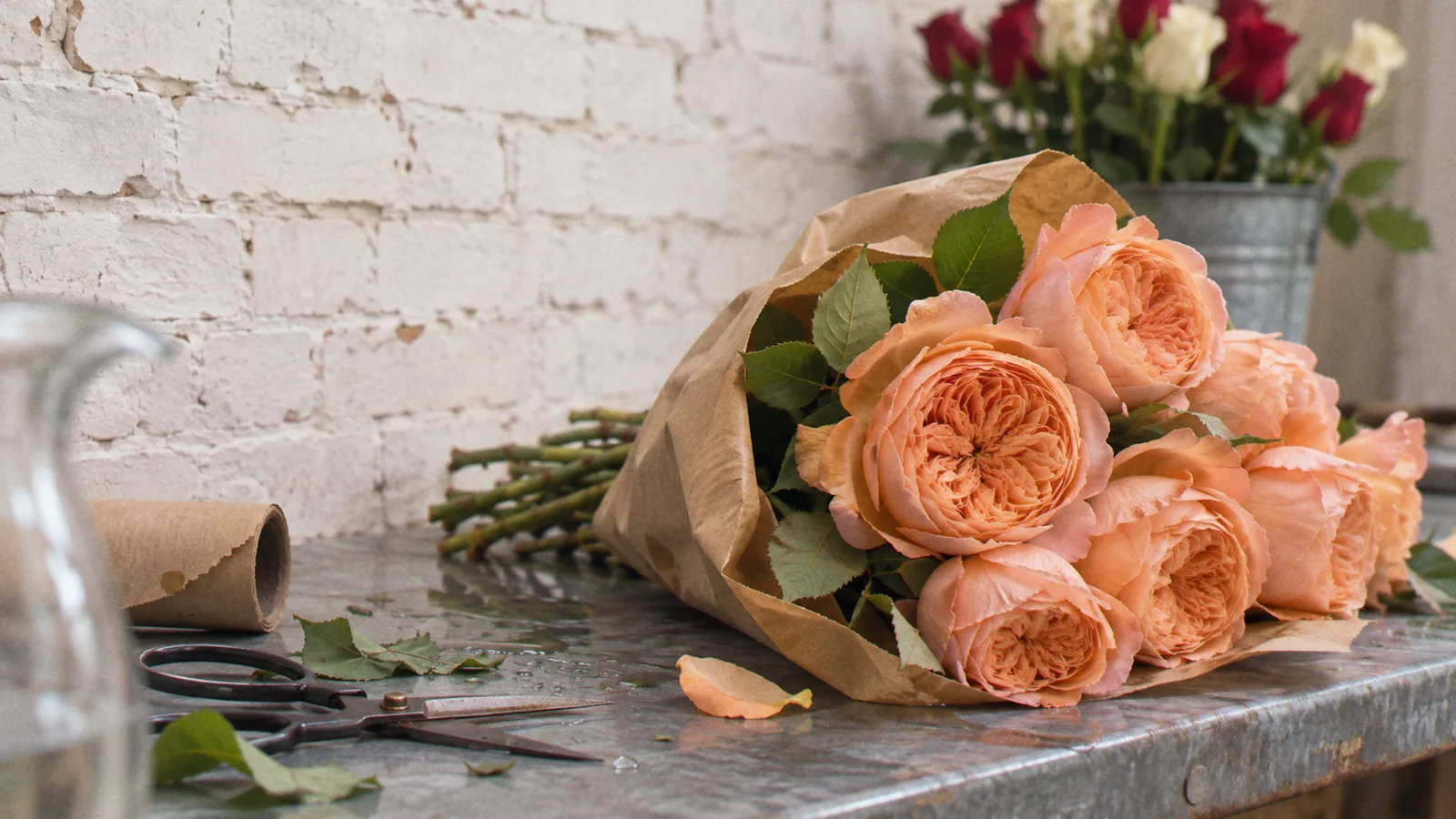
Juliet herself is an apricot rose with a packed, rounded head, launched to florists in 2004 and presented at the Chelsea Flower Show in London in 2006. Since then her development budget has been retold as a price tag, converted into dollars and inflated, until she picked up the title of the rarest rose in the world. If you’ve seen “Juliet” or “garden roses” on a florist’s list at a higher price, it helps to know whether you’re paying for a flower or for a story.
Six things people tend to believe about Juliet and her kind, with the short verdict first:
- No
Juliet costs £3 millionThat is roughly what the breeder says the variety cost to develop. A stem sells at an ordinary garden-rose price.
- Invented
$4.3 million, and the rarest rose in the worldAn inflated retelling with no source behind it. Juliet is grown in volume by licensed farms and sold by the stem.
- Unverified
It took fifteen years to breedThe cross was made in 1999 and the rose reached florists in 2004. The fifteen years are the breeder’s own count.
- No
A peony-shaped rose is part peonyRoses and peonies are unrelated and cannot cross. “Peony-shaped” describes the bloom and nothing else.
- Mostly no
Garden roses are just a pricier labelFlorists often point to shorter stems, delicate heavy heads that need a couple of days to open fully, and sometimes tighter supply when explaining the price.
- Used to be
Garden roses don’t lastOlder cut varieties faded fast. Modern ones are bred for the vase, though they open fully within a couple of days and standard roses usually outlast them.
What garden roses are, and where Juliet fits
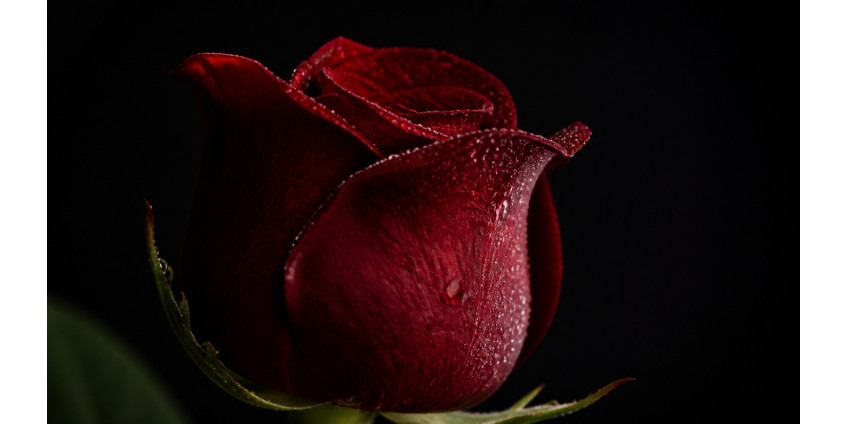
The rose in most bouquets, at a supermarket or a florist’s, is a hybrid tea type: a high-centered, pointed bud on a long, straight stem, bred to be grown in greenhouses in enormous numbers and to open neatly. US plant patents for greenhouse varieties of this kind describe stems averaging around 66 cm, or 26 inches.
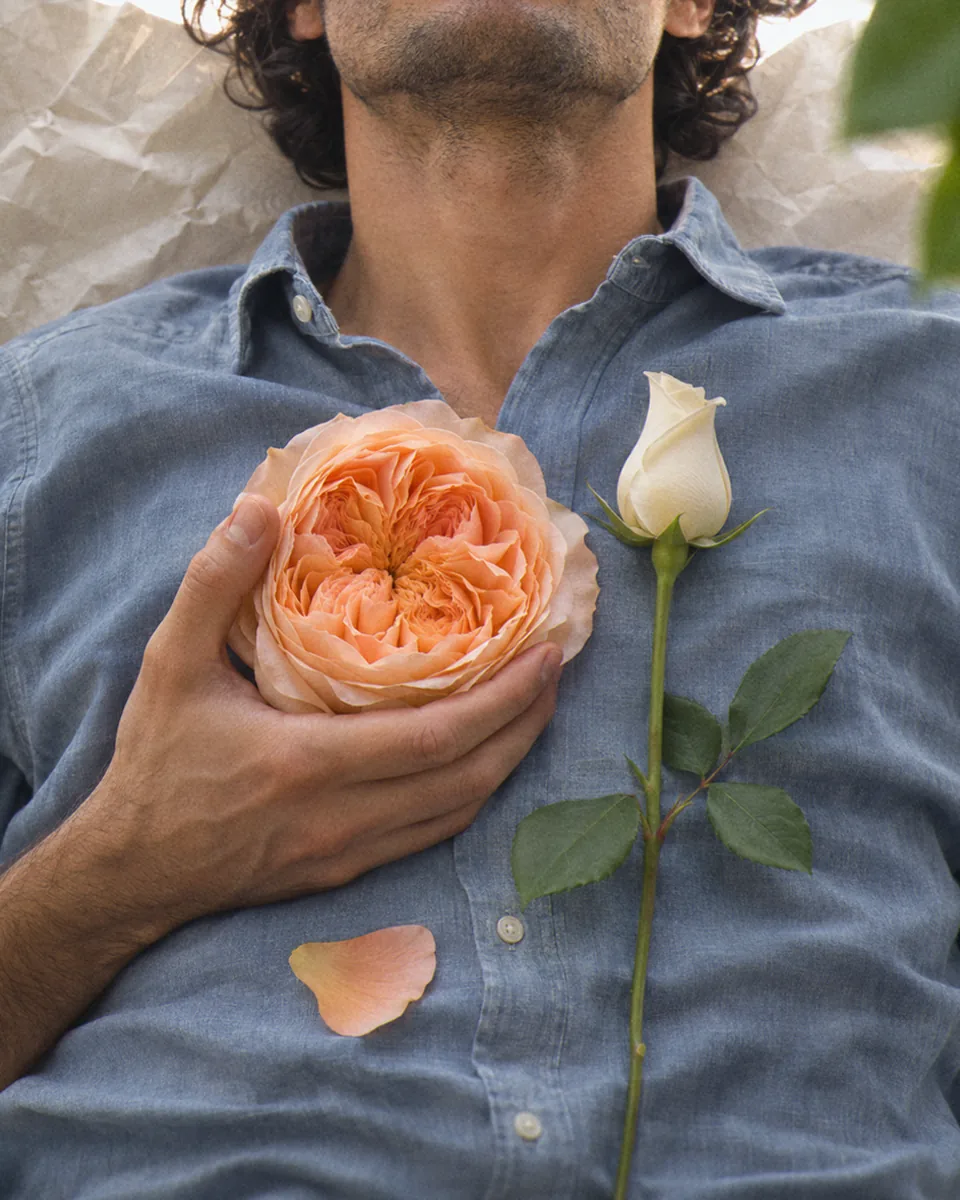
A garden rose is a different look altogether: densely double, crowded with petals, opening into a cup or a flat rosette, closer to the roses in old still lifes than to the ones in a florist’s cooler. The term belongs to the flower trade rather than to botany, and it covers varieties from several breeders. The best known are the English Roses of David Austin, who crossed old garden roses, often gallicas, with modern hybrid teas and floribundas. He wanted the old rosette shape with the modern habit of repeat flowering. His first commercial English Rose, ‘Constance Spry’, came out in 1961.
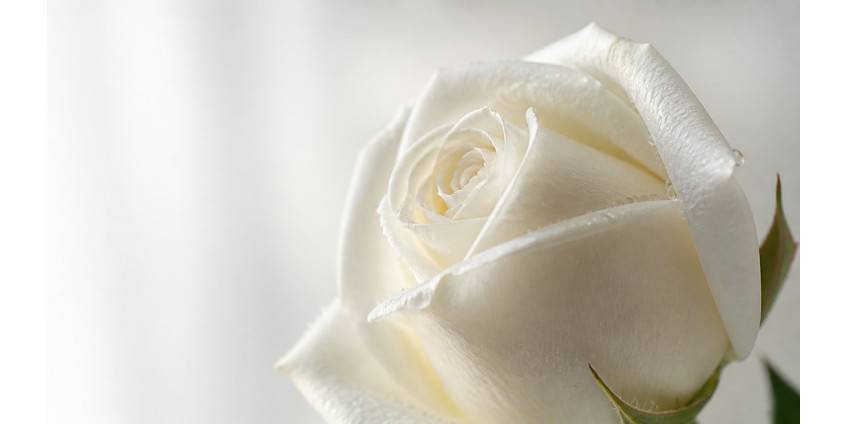
Roses for cutting came much later. In 1995 David Austin and his son began a range bred specifically for florists, and Juliet, registered as ‘Ausjameson’, was one of the first five, released in 2004. The registry classes her as an apricot blend: light yellow to orange-pink at the heart, yellower toward the base, paler at the edges, with “very many petals” in a head that looks round from above and flat to slightly domed from the side. She was selected for a high number of stems and a good vase life.
Two other names get tangled up with hers. “Juliette” is simply a common misspelling in searches. ‘Sweet Juliet’ is a separate David Austin rose grown in gardens, and several “world’s most expensive rose” pages have confused the two. A spray rose, with several small heads on one stem, is another category again, with a guide of its own to spray roses.
Where the £3 million came from
The number is real in one sense: the breeder stands behind it. In a 2019 interview with the flower trade press, a David Austin representative said Juliet “cost about £3 million to breed over 15 years” and called her the company’s signature bloom. No one, including the breeder, has ever claimed that anyone paid that sum for a flower.
A variety like Juliet starts as a single cross, in her case made in 1999 at Albrighton in Shropshire between two of the breeder’s own English Roses. The seedling then has to be grown on, propagated and protected before any florist sees a stem. The US patent was filed in February 2005 and granted in October 2006, the same year she appeared at Chelsea.
But the dates don’t quite add up to fifteen years. From the 1999 cross to the 2004 launch is about five years, and to Chelsea about seven. Even the cut-rose program as a whole, begun in 1995, was eleven years old at Chelsea. The fifteen years probably include groundwork laid before the program had a name. No breakdown of the £3 million has ever been published.
How it became $4.3 million and “the rarest rose in the world”
Retold, the story behaved the way good rumors do: the numbers went up and the details fell away. A 2024 article on a US finance website called Juliet “the rarest rose in the world” and said she “cost an astonishing $4.3 million to cultivate”, citing nothing. Other versions put her at $5 million, at $15.8 million (90 crore rupees, in a viral Indian story), at £10 million paid at a sale, or at twelve years of work. None of them leads back to the breeder.
The route is easy enough to reconstruct. Pounds became dollars, and the dollars grew. A development cost became a sale price, because “a rose that sold for millions” is a better headline than “a rose that cost millions to breed”. And “expensive to breed” slid into “rarest”, which sounds like the same idea and is close to the opposite.
A rarest rose ought to be hard to find. Juliet is grown in volume by licensed farms and sold by the stem around the world, and the breeder names nine cut-rose growers producing her.
Peony-shaped, with no peony in it
In some markets garden roses are sold as “peony roses” or “peony-shaped roses” (in Russian, pionovidnye rozy, “peony-like roses”), and it’s natural to read that as a cross between the two. It isn’t one, and it couldn’t be. Roses belong to the genus Rosa in the family Rosaceae. Peonies are Paeonia, the only genus in a family of its own, Paeoniaceae. The two plants are unrelated and cannot be crossed.
So the phrase describes the head and only the head: round, densely double, packed with petals in a way that recalls a peony in full bloom. Juliet’s recorded parents are both Austin roses, and there is no peony anywhere in her line. If what you love is the look of a peony, a garden rose is simply the rose that comes closest to it.
Why are garden roses so expensive?
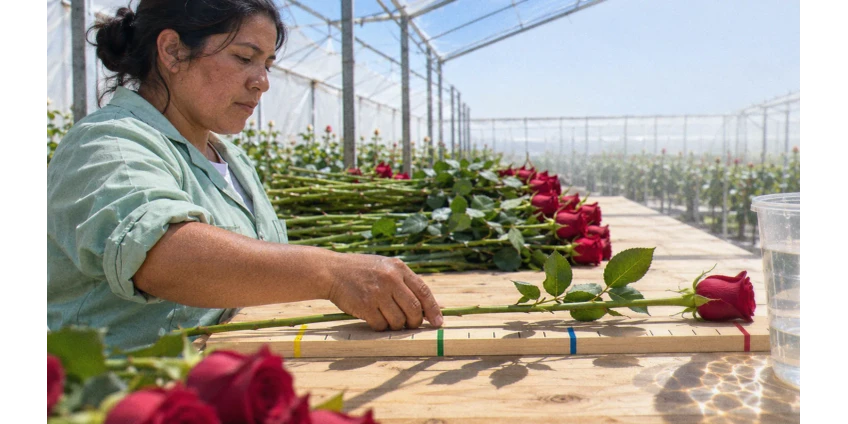
The extra cost comes mostly from how these plants grow and how much care the flowers need on the way to a bouquet. Long-stem hybrid teas are favored in the cut-flower trade because they tend to be highly productive. Florists often describe garden roses as yielding fewer, shorter stems, though that is a trade rule of thumb rather than a universal measure. That Juliet was selected specifically for a high stem count suggests that this is unusual in her group.
Then there is the head itself. A bloom with that many petals is heavy, and heavy heads bruise in boxes, in buckets and in transport in ways a tight pointed bud does not. A bruised stem may become unsaleable. These roses also need a day to drink and a couple more to open, time spent in a florist’s cooler rather than in a bouquet.
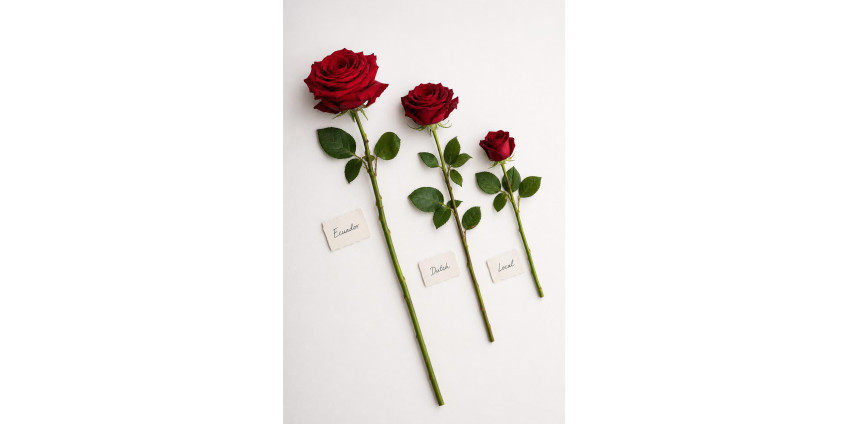
Supply can matter too. Cut garden roses were often described as delicate, seasonal and hard to find in quantity. They are now often grown in controlled greenhouses, mainly in Colombia and Ecuador, which has made them easier to get without making them cheap. How the growing region shapes a rose is a subject in itself, covered in our comparison of Ecuadorian, Dutch and local roses. Rose prices of every kind tend to climb in the run-up to Valentine’s Day, February 14, when everyone wants roses at once.
Quick to open, not quick to fade
Older cut garden-rose varieties could fade fast. Many modern cut varieties were bred with vase life in mind, and Juliet’s registration lists good vase life among the reasons she was chosen. A common florists’ estimate puts garden roses at around five days or more, depending on the variety and on how they were handled, while standard roses usually last longer.
For a Saturday wedding, David Austin’s wedding team recommends having garden roses delivered on Tuesday, about four days ahead.
A garden rose arrives tight and spends its first days unfolding: the stems need a day to drink in cold storage and the heads a couple more days to open, so they peak on the day itself rather than after it. For a gift the same logic works in your favor: a garden-rose bouquet often looks fuller on its third day than on its first.
Care is the usual routine with one adjustment. Strip the leaves below the waterline, recut the stems at an angle, use a clean vase and the flower food sachet. Heavy heads sit best in a taller, narrower vase that holds them upright, since a wide one lets them flop over the rim. The rest of the routine is in our guide to making cut flowers last.
When garden roses are worth paying for
None of this makes garden roses better than standard ones. They are built for different work, and the table below sets them side by side, together with the compromise many florists offer.
| Rose | Head and stem | Opening and vase life | Price level | Best for |
|---|---|---|---|---|
| Standard cut rose | Pointed, high-centered bud on a long, straight stem | Opens steadily; florists’ rule of thumb: usually lasts longer | Lower | Tall bouquets, large quantities, a classic look |
| Garden rose, such as Juliet | Cupped or rosette head, many petals, usually shorter stem | Opens fully within a couple of days; florists’ rule of thumb: often fades sooner | Higher | Bridal bouquets, small luxurious gifts, a looser, gathered look |
| A few garden roses among standard ones | Garden roses as the focal flowers, standard roses for height and volume | Mixed: the garden roses open last | In between | Weddings and gifts on a budget |
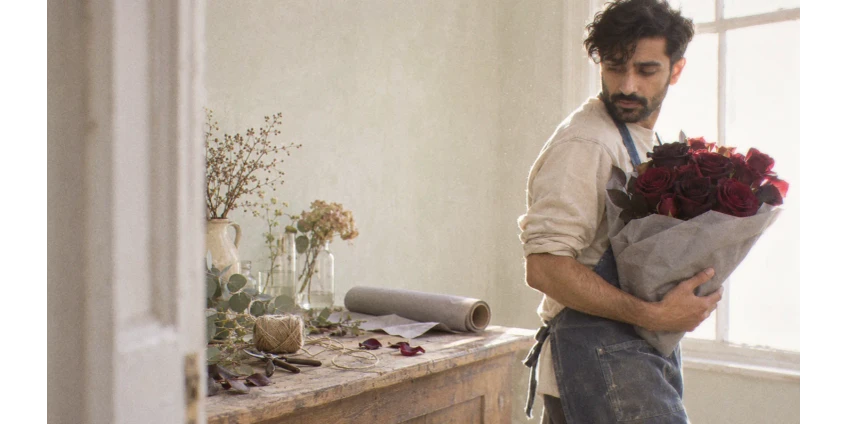
A wedding is where garden roses make the clearest case. Juliet has been described in the breeder’s own collection material as one of the most popular wedding roses in the world, and the reason is easy to see: a bride holds her bouquet close, for hours, in photographs taken from a meter away, and that is the distance at which a packed rosette outdoes a pointed bud. Which shape suits which dress is answered in our guide to seven bridal bouquet shapes.
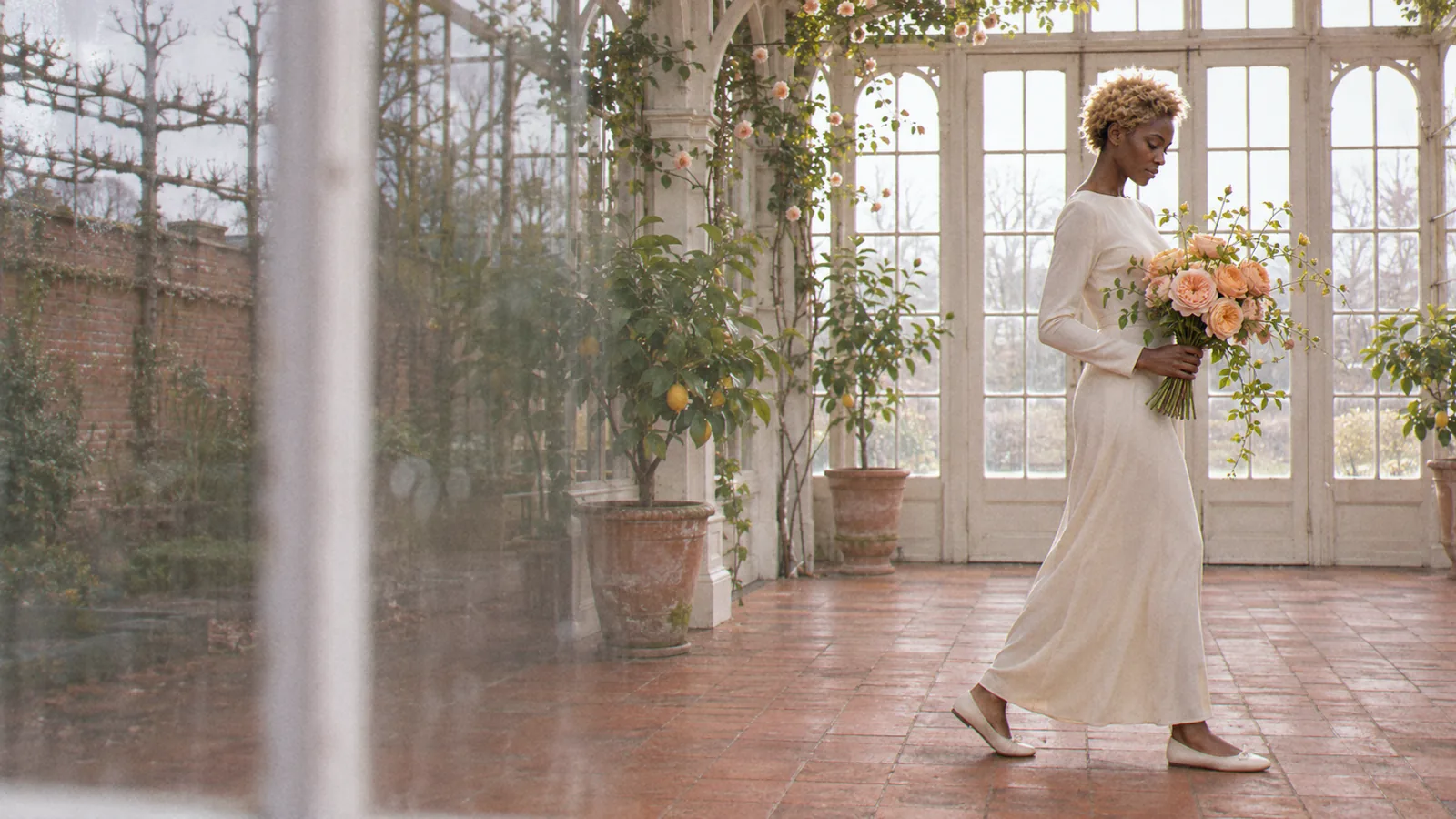
For a gift, the argument runs the other way round. A small hand-tied bouquet of a few garden roses reads as more deliberate than a large bunch of standard ones, and it keeps changing in the vase for days. Where the budget is tight, florists may use a few garden roses at the heart of a bouquet and build the rest from standard roses and greenery. Where the money actually goes in a wedding order is broken down in our look at what drives the price of wedding floristry.
If you’re sending garden roses to another city, keep in mind that jfloo’s florists arrange bouquets locally on the day of delivery, so availability may depend on place and season. How ordering works explains the steps, including the card with your own message. The photo we send before delivery lets you see the bouquet before the recipient does.