St Nicholas Day traditions: Sinterklaas, Mikuláš and what to write on the card
On the evening of December 5, in living rooms across the Netherlands, the parcels come out: lumpy, homemade things disguised as something they are not, often with a poem rolled inside, written in the saint’s name and read aloud by the person it teases. That is the heart of Dutch pakjesavond, and the plain answer to what people give: something small, something sweet, and a few rhyming lines that gently tease the recipient. Elsewhere the saint keeps different hours: in Belgium, Germany, Austria and Poland the gifts turn up on the morning of December 6, while in Czechia he walks the streets on the evening of the 5th with an angel and a devil at his side.
Flowers belong to none of these customs: no Dutch surprise, German boot or Czech handout traditionally holds a bouquet. But if you live far from the person you would have handed a chocolate letter to, a small pot of hyacinth or a handful of early tulips can stand in for your visit, with the card doing the work of the custom.
Pakjesavond and the Sinterklaas poem
Pakjesavond means “parcel evening,” and it closes a season that begins in mid-November, when the saint arrives. Small children simply receive. Once the children are older, many families switch to drawing names (lootjes trekken, “drawing lots”), the Dutch cousin of Secret Santa, so each person makes one present for one other person, and makes it properly.
Making it properly has two parts. The first is the surprise, a word borrowed from French: a gift hidden in handmade, personal packaging meant to be laughed at before it is opened. The second is the sinterklaasgedicht, the poem: four-line verses, rhyming in pairs, running to eight lines or more, teasing the recipient about a habit or small blunder from the year, read aloud to the whole room and meant to be good-natured rather than sentimental. The giver hides behind the saint’s name, so a poem signed “Sint” could have come from anyone at the table.
Around all this sit the treats: a chocoladeletter (the first letter of your name in chocolate), pepernoten, kruidnoten, speculaas, and mandarins. In the south of the Netherlands, as in Belgium, many children get their presents on the morning of December 6 instead.
In a Dutch house, the joke counts for more than whatever it is wrapped around.
Nikolaustag traditions, Mikuláš and Mikołajki: letter to a boot
Dear boot by the door, you are older than any of the poems. The story goes that Nicholas of Myra secretly gave dowry money to three poor sisters, dropped into stockings or shoes left drying by the fire: the shared root of every shoe, stocking and secret-giver custom here.
In Germany and Austria you get cleaned on the evening of December 5 and set out by the door; by morning you hold nuts, mandarins, chocolate and something small. In Belgium you are a shoe by the fireplace, often with a carrot or sugar cube for the saint’s horse. In Poland you share the work with a pillow and a stocking; in Czechia you can mostly rest, since there the saint knocks at the door himself.
| Where | When | What happens | Typical gifts |
|---|---|---|---|
| Netherlands | Evening of December 5 (Saturday in 2026); in the south often the morning of December 6 | Pakjesavond: surprises, poems read aloud, names drawn among adults | Chocolate letter, pepernoten, kruidnoten, speculaas, mandarins |
| Belgium | Morning of December 6 (Sunday in 2026) | Shoes set out the evening before, often with a carrot or sugar cube for the horse | Sweets and small presents in the shoe |
| Germany | Boots out on the evening of December 5, found filled on December 6 | Nikolaustag: a cleaned boot or shoe by the door | Nuts, mandarins, chocolate, a small gift |
| Austria | December 5–6 | Boots filled overnight and Nikolaus visits; in the Alpine region the masked Krampus traditionally appears on December 5 | Much as in Germany |
| Czechia | Evening of December 5 | Mikuláš walks with an angel and a devil; children say a short rhyme or sing | Sweets, fruit, small gifts; coal or potatoes as a joke threat |
| Poland | Night of December 5–6 | Mikołajki: gifts under the pillow, in a stocking or a boot; offices and schools draw names | Small presents, for adults too |
Wherever you stand, you keep the old pattern: the present arrives while nobody is watching, and the giver slips away unthanked.
What to give for Sinterklaas, and where flowers fit
The honest order of things is this: sweets, fruit, a small gift and, in the Netherlands, the poem. Flowers come after all of that, something a far-away sender adds instead of filling the shoe. They make sense if you choose ones that belong to the season.
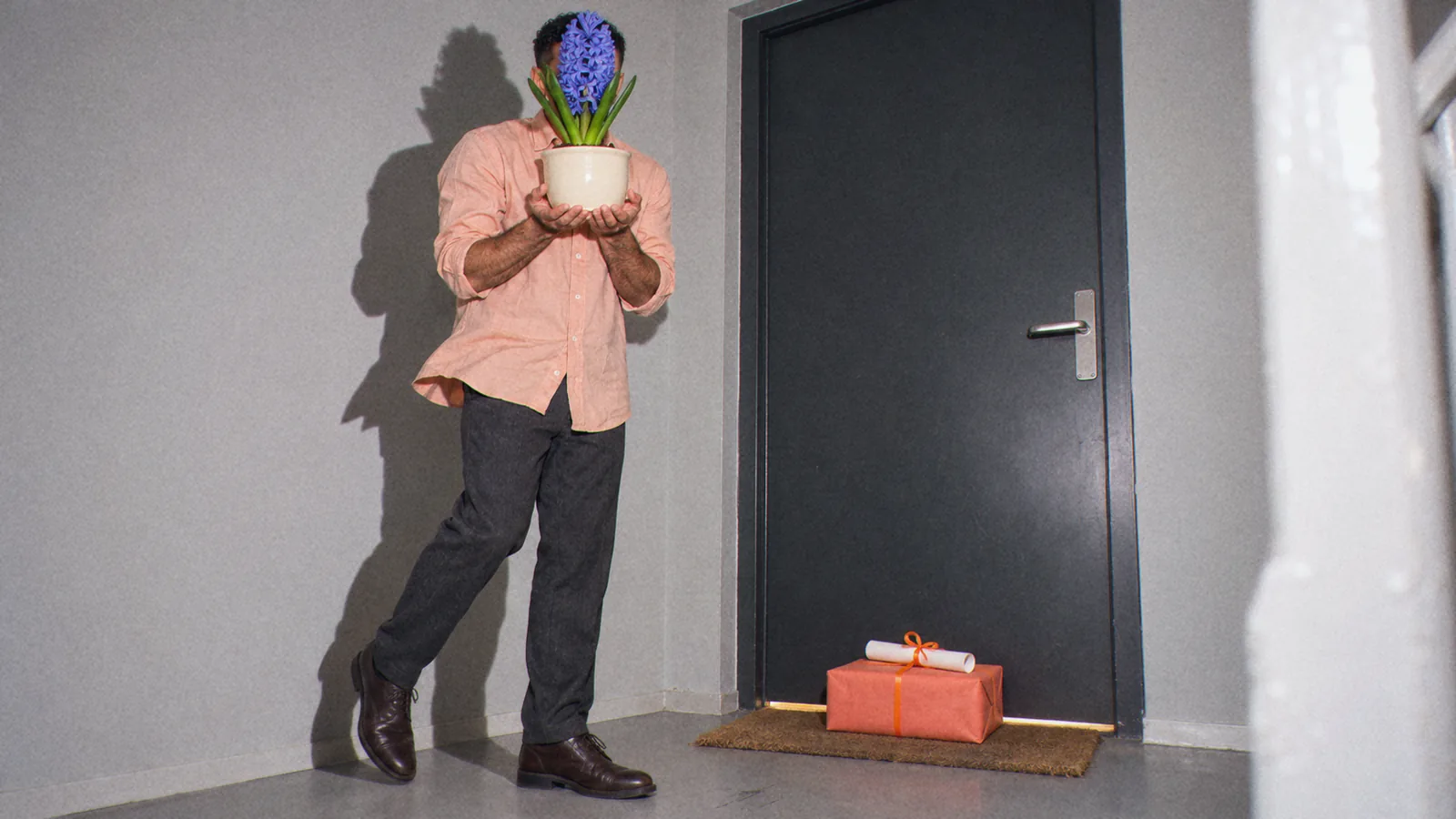
A potted hyacinth is the most natural choice. The bulbs sold in early winter are “prepared,” cold-treated by the grower so they flower indoors around Christmas, which means a hyacinth on December 5 is in season, not out of place. It perfumes a hallway out of all proportion to its size and lasts longer kept away from the radiator. More in our hyacinth guide.
Tulips are lovely and slightly ahead of themselves: in early December they are forced, early flowers, while Dutch growers officially open the cut-tulip season on National Tulip Day in Amsterdam, the third Saturday of January, January 16 in 2027. Call them early, not at their peak, and let the card joke about their impatience. More in our florist’s guide to tulips.
If you want a touch of orange, borrow it from the saint, not the Dutch royal color: the orange of Sinterklaas is the mandarin in the shoe and the old rhyme pairing Spanje with appeltjes van oranje, meaning little apples of orange. A few orange tulips, or flowers beside a bowl of mandarins, say that well, and the card that goes with them is as close as a sender abroad can get to tying a rolled poem to the pot.
How do you write a Sinterklaas poem on a flower card?
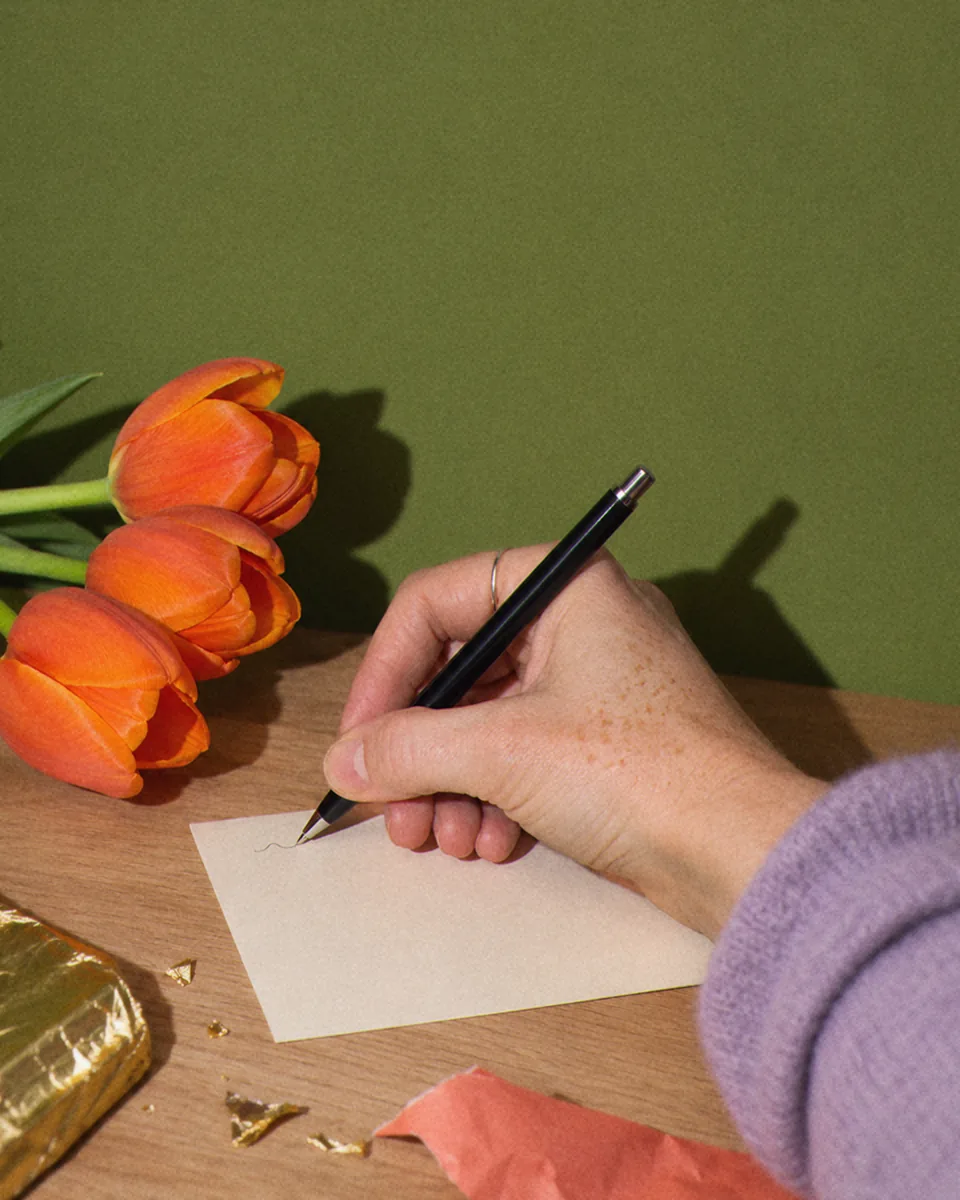
A real sinterklaasgedicht runs to eight lines or more, read out at a table. A flower card is smaller, usually read standing in the hallway with the coat still on, so its natural size is one verse: four lines, rhyming in pairs, or only the second and fourth, a scheme Dutch families use too. The meter is allowed to wobble; these poems are meant to sound homemade.
Choose one small habit and stay with it: shoes left all over the house, a mug that never gets washed, a duvet that migrates across the bed every night. The best teasing lines are oddly specific, so even a poem signed by the saint still feels personal. Let the joke turn toward the flowers in the last line, so the card and the gift close the same loop.
Then sign it in the saint’s name: “Sint” is enough in Dutch, “Dein Nikolaus” for a German child, “Mikuláš” for a Czech one. If the recipient will not guess, add your own name on the back in small letters, or let the mystery last until the phone rings.
Czechia offers a nice reversal: there the child recites a short rhyme, a básnička, to the saint in exchange for sweets, while in the Netherlands the saint writes the rhyme to the person. A card can play with both, asking a Czech grandchild for a verse in return. For the craft of short messages, see what to write on a flower card.
A good Sinterklaas line teases the habit and spares the person.
Cards to copy, by situation
For children, the tease should be something they can laugh about at once and repeat to their friends.
Your shoes, I hear, just love to roam:
one in the hall, one halfway home.
This hyacinth will stay in place,
so keep it cool and give it space.
Fijne pakjesavond! Sinterklaas
One boot was polished, Nikolaus knows;
the other still smells faintly of toes.
He filled the clean one, as is fair,
and left these tulips standing there.
Dein Nikolaus
Both stay on the side of mischief and close with a practical instruction disguised as a punchline.
The Sint has noted, all year through,
the duvet goes wherever you do.
He sends you tulips, early, bright,
and asks for half the bed tonight.
Sint
The Sint has seen your coffee cup,
the one that’s never once washed up.
He sends these tulips, so at least
your desk holds one clean thing this feast.
Sint (you’ll never guess who)
With grown-ups the teasing can be drier, but the target is still a habit, never a weakness. The partner card puts its tenderness into a request rather than a declaration, which suits a genre that frowns on sentimental endings.
I checked your boots: they’re full of snow,
and mud, and things I’d rather not know.
So this one came in a pot instead.
“Wesołych Mikołajek,” the card said.
Mikołaj
In Prague, I’m told, the children pay
for sweets in rhymes they learn to say.
These tulips came without a fee,
but save one little verse for me.
Mikuláš
A line in the recipient’s language says you know where they live and what the day is called there. Keep it to phrases you are sure of, and let the rest of the card stay in your own language, where the jokes land properly.
What to leave off the card
Anything that is a real sore point: weight, money, a lost job, exams, the ex. The Dutch rule is that the joke stays with harmless habits, and a flower card, read alone in a hallway, is even less forgiving than a poem read aloud at a table.
Leave off the sentimental last line, too. The urge to end with “and I miss you so” is strong, but the card feels warmer when the affection stays implied, not stated. If you must say it, say it on the back, in your own name.
For small children in Czechia, leave out the devil: some parents now ask for him to wait at the door, and a card has no reason to bring him inside. Keep foreign phrases to the ones above; other German and Czech greetings are worth a quick check with a native speaker first. And do not call the flowers the traditional gift; the recipient will know better.
Timing: a Saturday and a Sunday this year
In 2026, December 5 falls on a Saturday and December 6 on a Sunday, which puts every delivery on a weekend, never a given. For the Dutch evening, order several days ahead and ask for Saturday. For Belgium, Germany, Austria and Poland, where gifts are found on Sunday morning, ask for Friday, December 4, or Saturday, December 5: a hyacinth that arrives a day early simply waits for the morning, in keeping with the custom. Sunday opening in Germany depends on the federal state, so treat it as something to ask about, not count on.
The flowers do not cross any border: a partner florist in the recipient’s city makes them on the day, and the card with your rhyme goes in with them. Pay by bank card or PayPal; how ordering works covers the rest. Our guide to holiday delivery deadlines abroad and our tour of Christmas flowers around the world pick up where the saint leaves off.
Before delivery we send you a photo of the flowers, so you see the hyacinth before your grandchild does. If something is wrong, write to us within 24 hours with a photo and we will sort it out. See how our guarantees work.