What to write on a flower card, with examples that sound like you
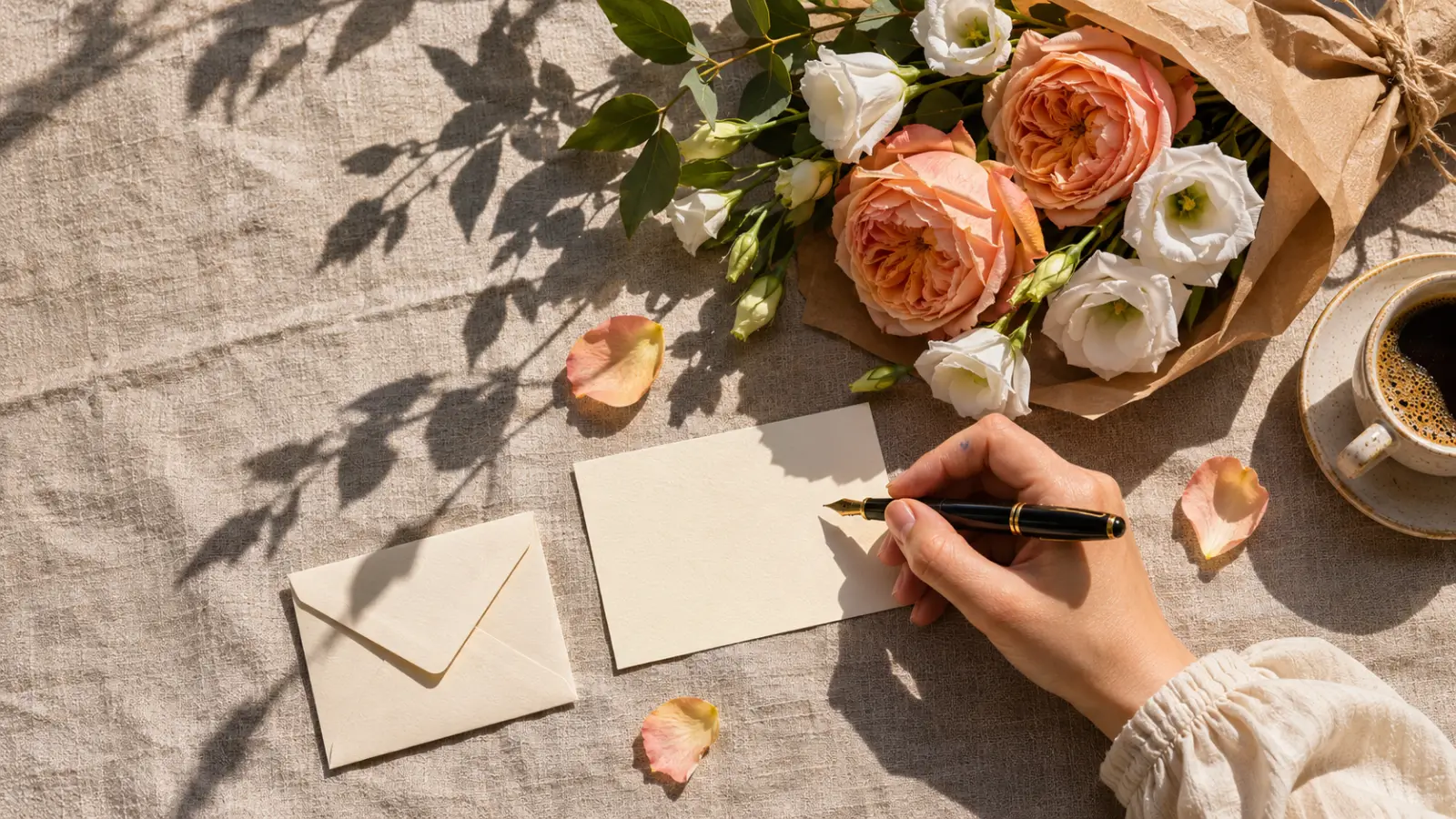
On a flower card, write two to four short lines. Start with the name you actually call the person, add one true detail about them or this moment, say the occasion or feeling in plain words, and sign with a name they’ll recognize. Roughly 20–30 words is plenty. If the card could only have gone to this one person, it works.
That shape works for most occasions, from a mother’s birthday to a colleague’s leaving day. It also stretches to the harder ones: an apology, a birthday missed from abroad, a friend in grief. The examples below cover each case, plus phrases to avoid, who else reads the card, and how to sign it.
What should I write on a flower card?
Start with the name you really use: Mom, not her full name; your brother’s nickname, not the one on his passport. Then add one detail that belongs to this person alone, something they did, something you share, something happening in their life this week. Say the occasion plainly, and sign last.
The detail does most of the work. Here is a standard birthday wish, and the same wish with one true line added:
Happy birthday. Wishing you happiness, health and love.
Happy birthday. I still think about the soup you left on my doorstep in February. Lucky to have you.
The second card is barely longer, yet it couldn’t have gone to anyone else. Swap in another name: if the card still fits, add one more true line.
Keep it short. A flower card gets read standing up, at the door or at a desk between emails, so a brief message is the one that actually gets read. Say it aloud first: if you run out of breath, cut it. Anything long, the full story or a proper thank-you, belongs in a call, and the card can say when that call is coming.
What to write for a girlfriend, wife, husband or mom
With the people closest to you, the best details are small and domestic: the side of the bed, the cake only they make properly, the hallway light that finally got fixed. Grand declarations sound borrowed; a line about your own kitchen could only come from you.
Happy birthday, love. Another year of you stealing the warm side of the bed, and I wouldn’t trade it.
Happy anniversary. I’d still choose you, and the wobbly kitchen table we carried home. All my love.
No occasion. You fixed the hallway light without being asked, and I noticed.
Happy birthday, Mom. I made your lemon cake and it was almost as good as yours. Calling you tonight.
Happy Mother’s Day. Thank you for every lift to the station and every “text me when you’re home.”
Gran, the geranium from your cutting is flowering on my windowsill. Happy birthday.
Flowers for a husband or boyfriend need no explanation on the card; the message works exactly as it would for anyone else. If you’re unsure what to send him, our guide to flowers for men covers the choice. For a mother abroad, check the date before writing “Happy Mother’s Day,” since it moves around the calendar from country to country; the full list is in Mother’s Day around the world.
What to write for a friend, a thank-you or a colleague
Friends get the same formula with a lighter touch. At work the warmth stays, but the detail changes: name the project, the result, or what the person made easier for everyone. A client reads your card as a message from your company.
Congratulations on the new place. Save me a spot on that balcony you kept sending photos of.
Congratulations on the new job. They’re lucky: nobody prepares for an interview the way you do.
Thank you for looking after the cat all week. The photo you sent every evening made the trip.
Congratulations on the launch. Weeks of late testing, and it went live without a hitch. Well done.
Congratulations on the new office. It has been a pleasure working with your team, and we look forward to the next project.
Thank you for keeping us calm through every deadline week. The team won’t be the same. Good luck with what’s next.
For a group card, sign as “the whole team” rather than listing nine names: a long run of signatures crowds out the message, and someone always gets left off.
What to write on apology flowers, or when you can’t be there
With apology flowers, the card matters more than the bouquet, because flowers alone don’t say what you’re sorry for. Name the mistake plainly, with no “but” and no excuse, then offer one concrete thing and stop: “I’m sorry I forgot our dinner on Friday. You deserved better. I’ve booked the same table for Saturday at eight, if you’ll come.” Three sentences are enough; a longer card starts to sound like a defense.
When the flowers stand in for you, say where you are and give a time you’ll call, in their time zone: “Happy birthday from a very gray Toronto. I wish I were at your table tonight. I’ll call at nine your time.” Skip “good morning” or “good night,” since you can’t know what hour the bouquet arrives. The practical side of ordering abroad is in how to send flowers internationally.
What to write on a sympathy card with flowers
Keep it short and sincere. If you knew the person who died, use their name; grieving families notice when it’s missing. Add one memory if you have one, and offer something specific: dinner on Thursday, the school run, walking the dog. Offer only what you will actually do. “Let me know if you need anything” leaves them to do the asking, which is the last thing they have energy for.
Some phrases hurt even when they’re meant kindly: “everything happens for a reason,” “at least,” “I know how you feel,” “be strong.” Match religious wording to the family’s faith; if you don’t know it, “With deepest sympathy” and “Thinking of you” suit any family. Cruse, the UK bereavement charity, says that saying something matters more than worrying about getting it wrong.
I’m so sorry about your dad. I keep picturing him at your graduation, prouder than anyone in the room. I’ll bring dinner on Thursday.
With deepest sympathy on the loss of your mother. Please don’t think about work; we have everything covered for as long as you need.
We are so sorry for your loss. Your grandfather waved to us from the garden every morning, and the street feels quieter without him.
I’m so sorry, and sorry to be so far away. Your mom made me feel at home the first time I visited.
Flowers aren’t the usual gesture in every tradition; in Jewish mourning, for instance, many families don’t expect them. Our guide to sympathy flowers etiquette covers when flowers fit and when another gesture is kinder.
Phrases that ruin a card
Most weak cards fail in the same few ways. Before you paste the message in, check it against these.
- Cut
The wish list“Happiness, health and love” fits everyone, which is why it says little. Swap one of them for something true about this person.
- Cut
Borrowed poems and quotesThe recipient hears the poet instead of you. Two plain lines of your own carry more.
- Not at work
Inside jokesOn a card going to an office, a joke only the two of you understand will puzzle everyone who handles it first.
- Cut
Puns that need a second readingIf the reader has to work it out at the door, the moment has passed.
- Wrong day
“Thinking of you” on a birthdayIt can read like condolence. On a sympathy card it’s exactly the right phrase.
- Maybe
Song lyricsFine if it really is your song and the line makes sense on its own. Otherwise it reads as borrowed.
Who else reads the card, and which language should it be in?
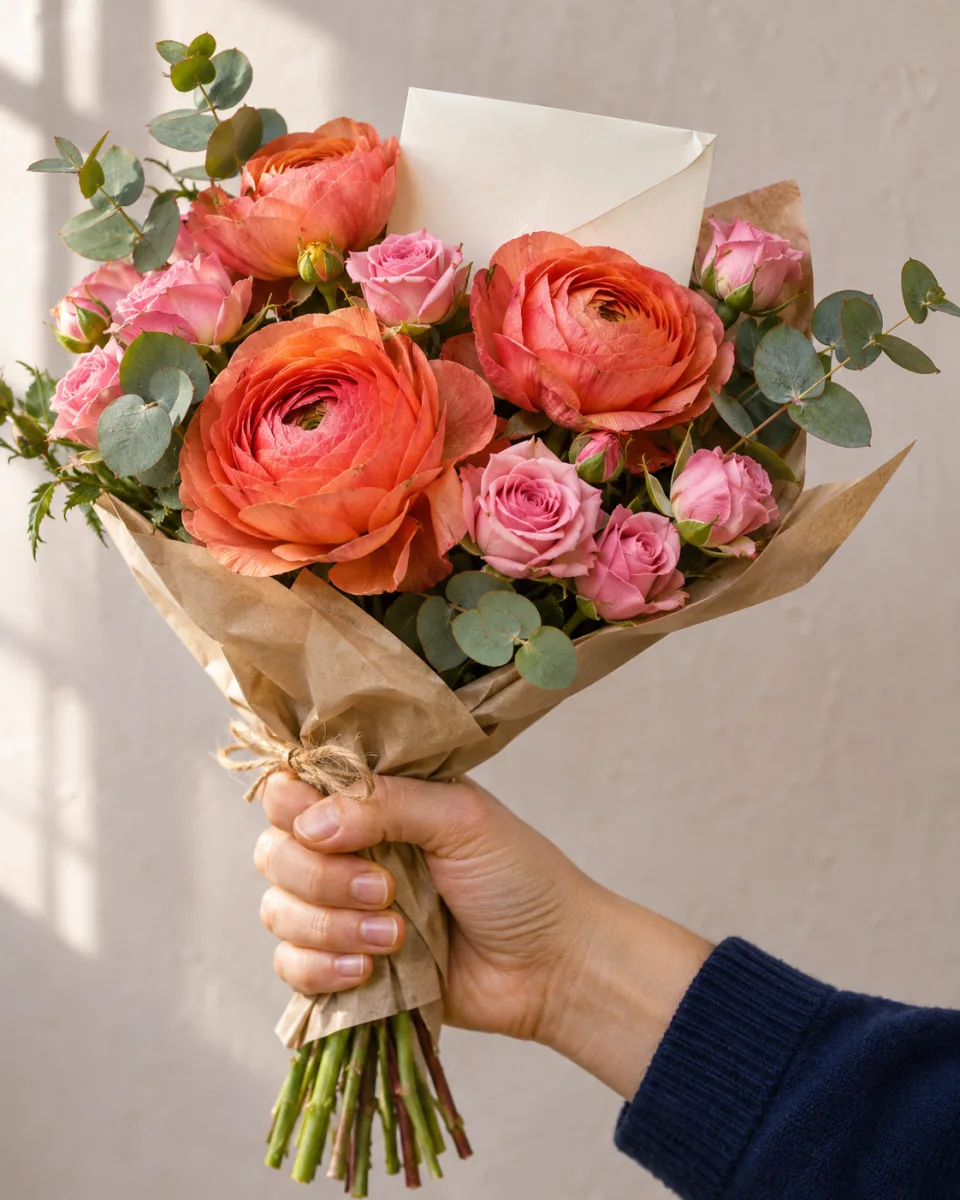
When you send flowers to another city or country, the flowers themselves don’t travel. You type the message in the order form, it goes to a partner florist who makes the bouquet and prepares the card. So the florist reads your words first, the courier hands over the card, and at an office or hotel a receptionist may take the bouquet in. Write as if a stranger might glance at it, and keep anything private for the phone.
Keep formatting plain too: emoji, symbols and fancy line breaks may not survive the trip to the card, and a heart that turns into a question mark is worse than none. Ordinary punctuation is most likely to arrive as written.
If the recipient lives abroad, write in the language you actually speak together, since that’s the language they hear your voice in. A phrase in their own language is lovely only if a native speaker has checked it: machine translation copes with directions far better than with affection. Non-Latin scripts may not survive the trip either, so if the card goes to a country with a different alphabet, check before relying on them.
Check the spelling of their name, accents included, against something they wrote themselves. Flower customs differ by country too, from numbers to colors; our guide to flower etiquette around the world covers the main ones.
How do I sign it, and can I send flowers anonymously?
Always sign; a card without a signature arrives from nobody. Match the signature to the relationship: the nickname your family uses, your first name for friends, your full name and company for a client. If the flowers come from a couple or a family, sign for everyone, so nobody wonders whether they were included.
Anonymous delivery is possible: say so in the order comment, and the courier will know only the recipient’s name and address. But an unsigned bouquet at an office or hotel reception tends to cause confusion, as staff try to work out who sent it. If the flowers are romantic and going to a workplace, put your name on the card.
On a phone, draft the message in your notes app first, read it aloud, then paste it into the order form, since rewriting inside a small screen is fiddly. The photo we send before delivery shows the bouquet, so the moment to reread the card is before you pay.