Can you send flowers for Hanukkah? What fits, and when to deliver
Yes, you can send flowers for Hanukkah. They aren’t a Hanukkah custom, but nothing about the holiday rules them out, and a bouquet makes a considerate host gift, whether you carry it to a candle-lighting or send it to a family you can’t visit this year. Two things matter more than the bouquet itself. In 2026 the holiday begins on a Friday, so for a family that keeps Shabbat the flowers should arrive before it starts, not during it. And Hanukkah has its own look, so the red and green stay with Christmas.
The worry behind the question is usually a polite one. A colleague in New York has asked you over for the first night, or your in-laws in Jerusalem are hosting the third, and you don’t want to get it wrong. There are no rules about Hanukkah gifts, so flowers for the hosts are an ordinary, easy choice.
What follows is the practical part: the eight nights of 2026 with their weekdays, what Shabbat means for a doorbell on Friday evening, a palette that reads as Hanukkah rather than December in general, and a few lines for the card.
Can you send flowers for Hanukkah?
You can. Flowers are a familiar way to thank someone for having you, and nothing in the holiday makes them out of place.
It helps to know where Hanukkah sits in the Jewish year. In Jewish law it is a minor festival. Its story comes from the Books of Maccabees rather than the Hebrew Bible, and work is permitted on all eight days. Its prominence in America owes a good deal to its place on the calendar, close to Christmas; in Israel it remains a minor holiday.
Gifts aren’t a religious requirement either. Gelt, money given to children (originally to their teachers), dates from roughly eighteenth-century Europe, and presents for children took hold only in the late nineteenth century. Nothing prescribes what a guest should bring, which leaves plenty of room for flowers.
So flowers are not a Hanukkah custom in themselves, but they suit a dinner invitation, a family you can’t visit or a colleague. Each comes with the same two caveats: the day and the colors.
Hanukkah 2026 dates, night by night
Hanukkah 2026 begins at sundown on Friday, December 4, and ends at nightfall on Saturday, December 12 (25 Kislev to 2 Tevet in the Hebrew calendar). A Jewish day starts in the evening, so the first night is Friday night and the eighth day is the following Saturday. One more candle is lit each evening, and two of the eight evenings are Fridays.
| Date | Weekday | Candles | When lit | For an observant family |
|---|---|---|---|---|
| December 4 | Friday | 1 | before sundown | Shabbat begins at sundown. Aim for Thursday; Friday morning only if confirmed. |
| December 5 | Saturday | 2 | after nightfall | Shabbat until nightfall. Avoid. |
| December 6–9 | Sunday–Wednesday | 3–6 | at dusk | The easy days. Any time before the candles. |
| December 10 | Thursday | 7 | at dusk | The best day if you’re aiming at the last Friday. |
| December 11 | Friday | 8 | before sundown | Shabbat begins at sundown. Aim for Thursday; Friday morning only if confirmed. |
| December 12 | Saturday | none | eighth day | Shabbat and Hanukkah end at nightfall. Avoid. |
Shabbat changes the picture only for families who keep it, but in 2026 it touches the first night and the last day, which are exactly when people tend to send flowers. If you plan a year ahead, Hanukkah 2027 begins at sundown on Friday, December 24, 2027, which is also Christmas Eve. The Friday question returns, along with a calendar full of red and green.
Shabbat and delivery: why Friday evening is too late
Shabbat runs from sunset on Friday to nightfall on Saturday, and during it observant Jews don’t light a flame. That is why on the two Fridays of Hanukkah the menorah is lit in the afternoon, before sundown and before the Shabbat candles. In December the afternoon is short: Shabbat candle-lighting comes shortly before 4:00 pm in Jerusalem, where the custom is to light 40 minutes before sunset, and at about 4:10 pm in New York.
A delivery that lands after that puts an observant family in an awkward spot. Many observant families won’t take a package from a courier or sign for it on Shabbat, and some won’t handle items considered muktzeh, objects set aside and left untouched on Shabbat. Your bouquet may spend Friday night on the doorstep, or the family may spend it wondering what to do about the doorbell. Nobody is offended, exactly, but it isn’t the greeting you meant to send. If in doubt, ask the family.
Observance varies a great deal, and many Jews in Israel and the US don’t observe it at all. For them a Saturday bouquet is simply a Saturday bouquet. If you know the family well, ask; it’s an ordinary question and they’ll appreciate it. If you don’t, plan for Thursday or Friday morning, or pick one of the weeknights from Sunday, December 6, to Thursday, December 10, when Shabbat doesn’t come into it.
Israel adds its own rhythm. The weekend there is Friday and Saturday, shops close around midday on Friday in winter, and Jerusalem keeps the day most strictly of all. For an Israeli home, Thursday is the calmer choice before either Friday.
One more courtesy applies on every evening of the week. In many homes, some women avoid work for the first half hour or so after the candles are lit, and in some homes everyone does. A doorbell at that moment pulls someone away from the window, so earlier in the day is kinder.
A Hanukkah flower arrangement in blue and white
Religion sets no colors for Hanukkah. The blue and white on wrapping paper and table runners come from the Israeli flag, whose design was based on the tallit, the striped prayer shawl. Using them for Hanukkah is largely an American décor convention, a pleasant one, and silver is a more recent trend with nothing older behind it. Treat the palette as the usual choice rather than a tradition.
In the US a blue-and-white bouquet reads as Hanukkah at a glance. In Israel the same colors can read as national colors as much as festive ones, so a white bouquet with soft greenery, or a seasonal mix, can be an easier choice there.
- White roses
- White roses are the easiest base for a blue-and-white bouquet, and they sit well in a low bowl. There’s more on what they carry in our guide to white roses.
- Hydrangea
- Full blue or white heads that fill a low bowl quickly, though hydrangea is toxic to cats and dogs. If you use it, the hydrangea guide explains how to keep the heads full.
- Delphinium
- Tall blue spikes, also sold as larkspur; cut them short for a low arrangement. Toxic to cats and dogs.
- Anemone
- White anemones suit a plain white bouquet. Anemones also appear on some lists of plants harmful to pets, so ask before sending to a home with a cat or dog; the pet-safe flowers guide linked below has alternatives.
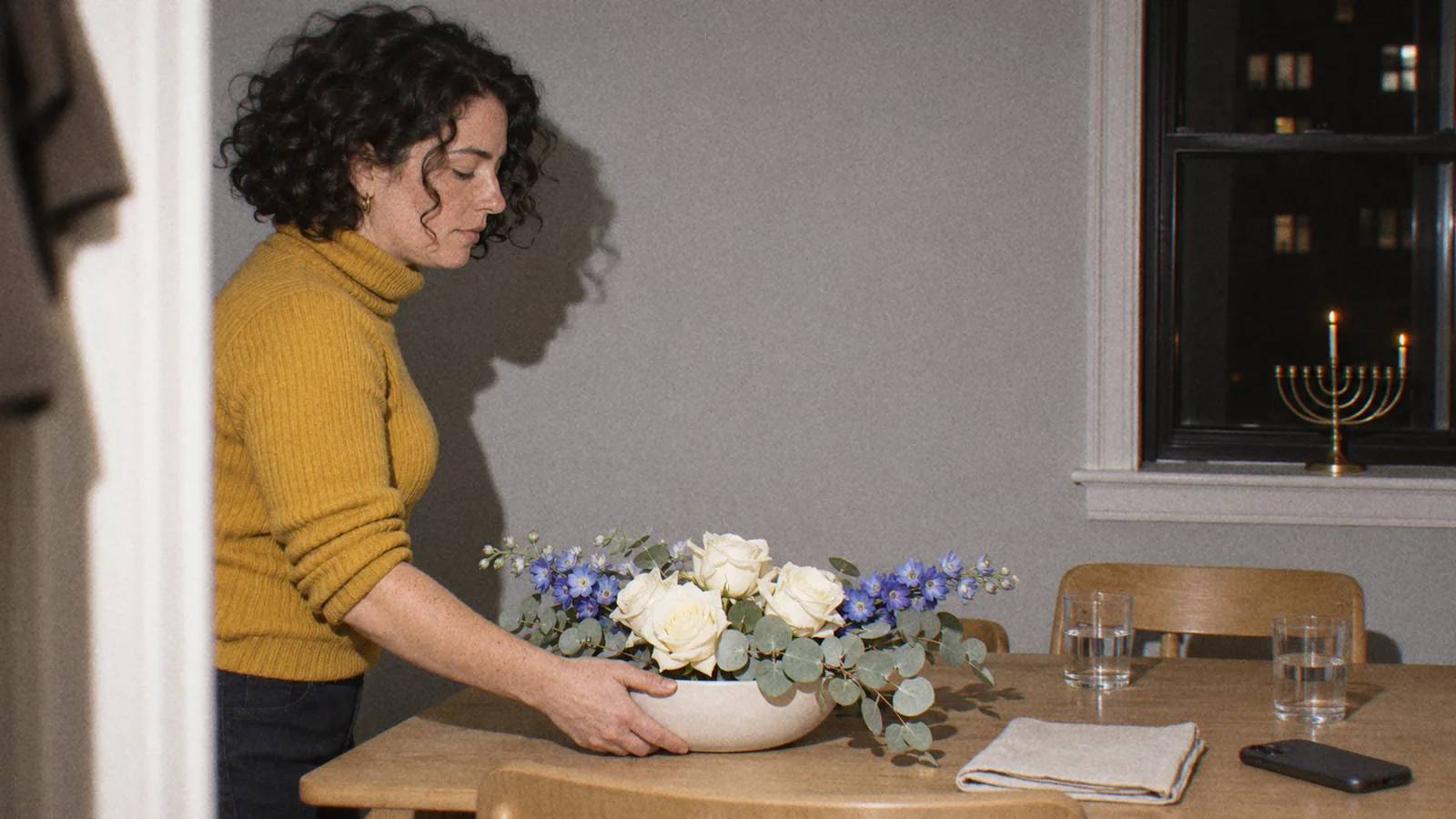
Then the shape. A centerpiece for a Hanukkah dinner should stay low, below eye level once everyone sits, so people can talk across it and pass the latkes. Its place is the dining table. The menorah stands in a window facing the street, or by the doorway opposite the mezuzah, and its lights are there to be seen, never used for reading or anything practical, so they need clear space around them. Tall stems and kraft paper don’t belong on a windowsill with a row of flames.
If the family has a cat or a dog, check before you commit to the classic palette. Hydrangea, delphinium (also called larkspur) and eucalyptus are toxic to cats and dogs; true lilies and daylilies are dangerous for cats even in small amounts, including pollen licked off fur. Our guide to pet-safe flowers has alternatives.
What to leave out
Hanukkah often falls in the same weeks as Christmas (in 2026 Christmas is on Friday, December 25, less than two weeks after Hanukkah ends), and shop windows don’t always keep the two apart. Hanukkah is not a Jewish version of Christmas. It has its own story and its own food, and the kindest gift is one that knows which holiday it is for.
- Skip
Red and greenThe holly palette says Christmas from across the room, however well it sits with white roses.
- Skip
Trees and ornamentsPine branches, cones, baubles and anything shaped like a wreath belong to the other holiday.
- Skip
Christmas wording“Merry Christmas,” “Season’s Greetings” and their cousins have no place on a Hanukkah card.
- Never
Flowers by the flameNo arrangement on the windowsill beside the menorah, and no candles worked into the bouquet.
- Ask first
LiliesLeave true lilies and daylilies out of any home with a cat.
- Fine
Plain white or a seasonal mixWorks in the US and in Israel alike, and needs no explaining.
Light in the window, flowers on the table, and no doorbell once Shabbat has begun.
Hanukkah gift for a host: what to bring to a candle-lighting
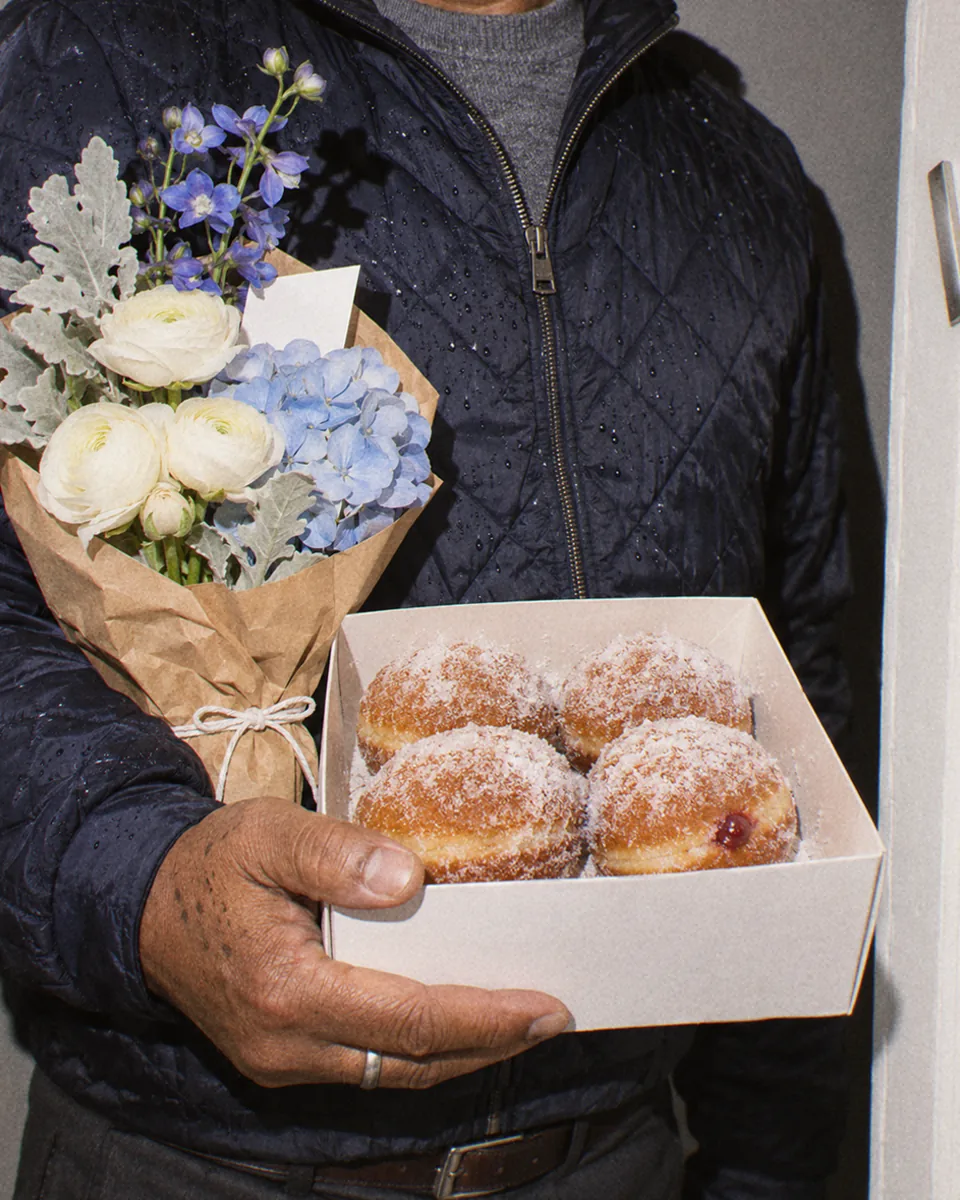
If you’re invited to light candles, bring flowers that are ready to go: a compact hand-tied bouquet that can drop straight into a vase, rather than a large arrangement the host has to clear space for while something sizzles on the stove. Arrive a little early, hand them over, and let the candles come first. The vase can wait.
Food is the other natural gift, and Hanukkah food is fried, in memory of the oil that lasted. In Israel that means sufganiyot, jam doughnuts. The other is latkes, potato pancakes. If the family keeps kosher, ask the host before you bring anything edible; it saves both of you an awkward moment at the door.
If there are children, the traditional gifts are gelt, these days often chocolate coins in gold foil, and a dreidel, the small spinning top.
And if you can bring only one thing, flowers with a short card in your own words will do.
What to write on a Hanukkah card
“Happy Hanukkah” is correct, complete and enough. If you’d like a Hebrew phrase, Chag Chanukah sameach is the full form, “a happy Hanukkah holiday,” and Chanukah sameach is the shorter one many Israelis use. Chag urim sameach means “a happy Festival of Lights.” Chag sameach, “happy holiday,” is right too, though it serves for any Jewish festival.
English spellings vary (Hanukkah, Chanukah, Hanukah) and all are accepted; pick one and keep to it. The Hebrew phrases are usually written with “Chanukah,” so leave them whole rather than mixing the two. Keep the message short, and for more ideas see what to write on a flower card.
Happy Hanukkah, and thank you for letting us share the first light with you.
Chag Chanukah sameach. Eight bright nights to all of you, and one sufganiya with my name on it.
Happy Hanukkah to you and the whole family. Wishing you a warm, bright week.
Chag urim sameach, a happy Festival of Lights. Thinking of you every evening this week.
Sending flowers for Hanukkah from abroad
When you send from another country, two clocks matter: the recipient’s and Shabbat’s. In December Israel runs on UTC+2 and New York on UTC−5, so Jerusalem is seven hours ahead. Friday at 1:00 pm in Jerusalem is 6:00 am in New York, and by the time a New Yorker sits down to lunch on Friday, Shabbat has already begun in Israel.
With jfloo the flowers themselves don’t travel. We take the order, and a partner florist in the recipient’s city arranges the bouquet on the day of delivery and brings it to the door, so the anemones that reach an apartment in Jerusalem were put together in Jerusalem. The details are in how ordering works. Planning still matters, because of the Fridays.
- Assume cautionIf you don’t know how the family keeps Shabbat, treat them as observant. A cautious choice is to send flowers a day early.
- Pick the daySunday to Thursday, December 6–10, has no complications. For the first night, aim for Thursday, December 3, or Friday morning; for the eighth, Thursday, December 10. Whether Friday-morning delivery is available in Israel depends on the city; check when you order, and use the order comment to ask for delivery before midday.
- Count in their timeChoose the delivery day as the recipient will live it, not as your own calendar shows it.
- Write the card earlyA short message in your own words travels with the flowers, and it is easier to write calmly a week ahead.
- Look at the photoBefore delivery we send you a photo of the bouquet, so you see the palette before the family does.
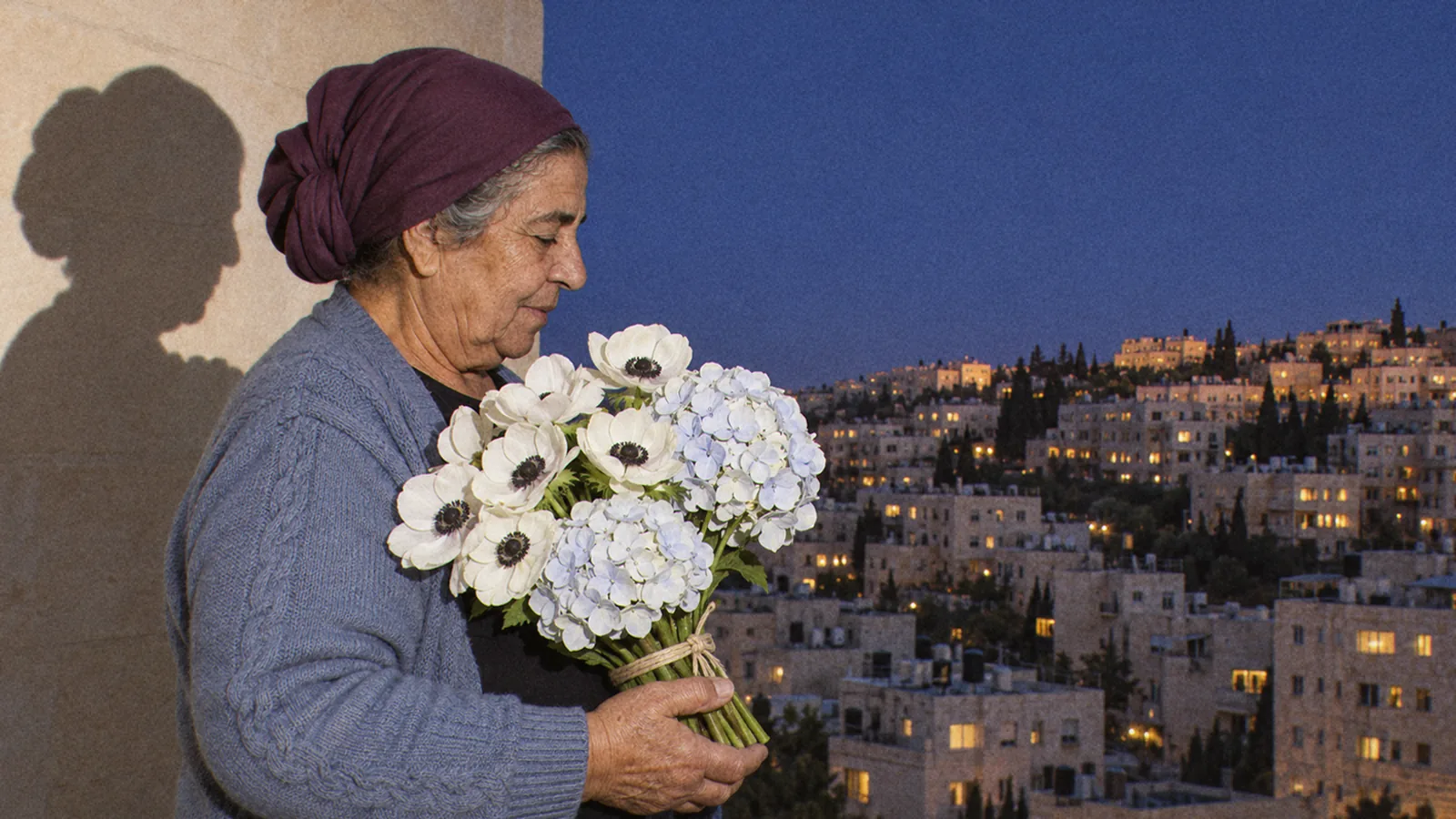
For the wider logistics, see how to send flowers internationally, and for customs in other countries, flower etiquette around the world. Get the day right and the colors close, and the rest is the warmth you would bring to any family table: people by a window, watching a little more light each night.