Are lilies toxic to cats? Flowers safe for pets and for allergies
Yes, lilies are toxic to cats. For a cat, true lilies and daylilies are among the most dangerous things a florist sells: every part of the plant is toxic, including the pollen and the vase water. If your cat has chewed a leaf, drunk from the vase or has lily pollen on its fur, call a vet now. Most other bouquet flowers do far less harm, and allergies in people are a separate question with a separate list.
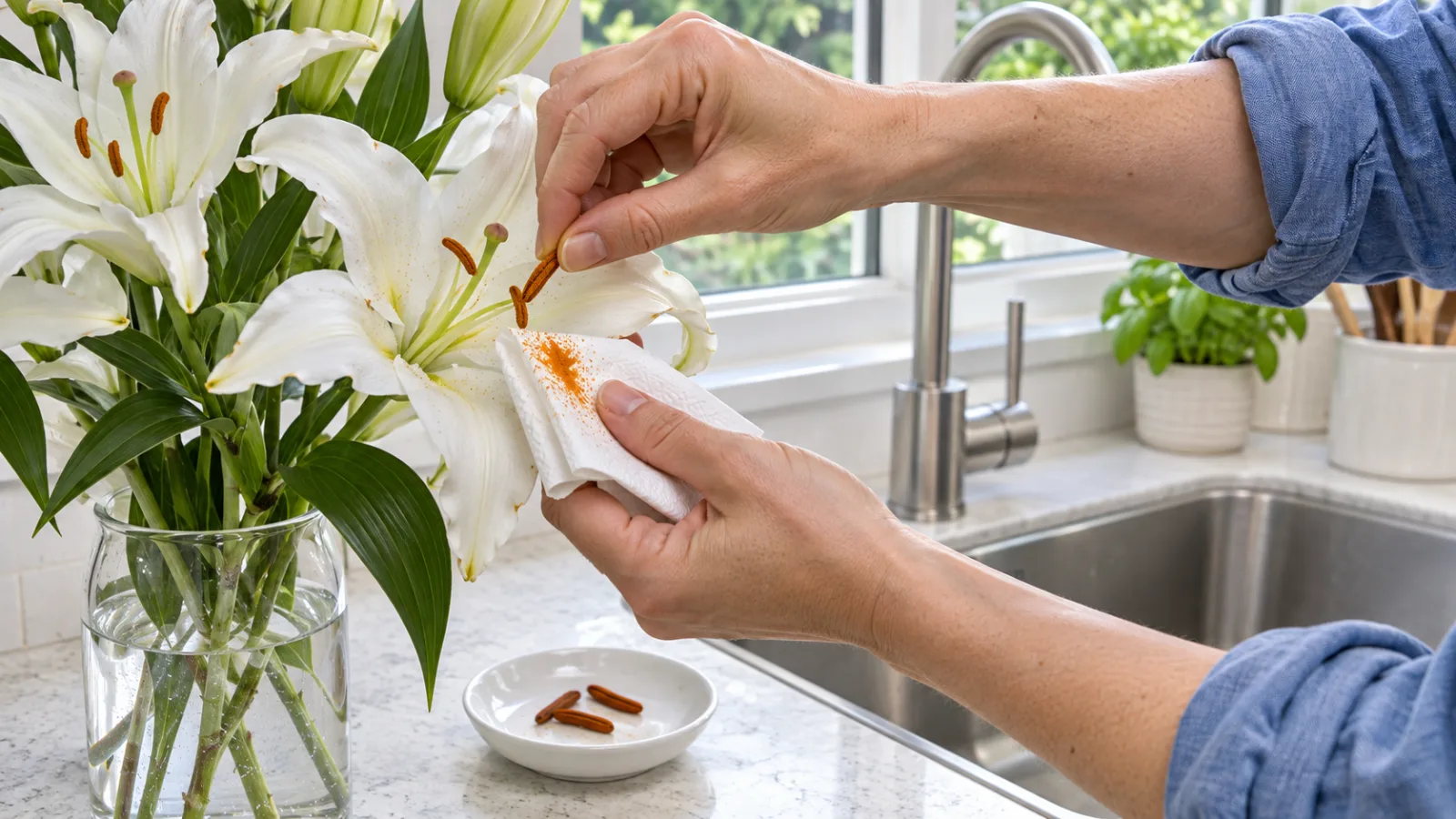
My cat touched a lily. What do I do right now?
Act on the contact, not on how the cat looks. The orange dust on a white chest or a pair of paws is lily pollen.
- Take the flowers and the water awayMove the vase and any fallen petals out of reach, and pour the water down the sink.
- Wipe off the pollenA damp cloth on the face, chest and paws stops the cat swallowing more of it while grooming.
- Call your vet or the nearest emergency clinicSay “possible lily exposure” right away.
- Note the timeTreatment is planned around the hours since contact.
- Bring the plantA stem or a photo of the bouquet lets the vet confirm what it is.
Do not try to make the cat sick and do not reach for home remedies; leave treatment to the vet. In the US, call ASPCA Animal Poison Control on (888) 426-4435 or the Pet Poison Helpline on (855) 764-7661; in the UK, the Animal PoisonLine is on 01202 509000. Anywhere else, call the nearest 24-hour veterinary clinic.
Why are lilies so dangerous for cats?
A “true lily” is any plant of the genus Lilium: Easter, Asiatic and Oriental lilies (Stargazer is an Oriental), tiger lilies. Daylilies (Hemerocallis) are a different genus but do the same damage: both attack a cat’s kidneys. The toxin has never been identified, and no safe amount is known. Small exposures have killed cats: a petal bite, a few laps of vase water, pollen licked off a paw.
The first signs are vomiting, lethargy and a cat that won’t eat, usually within 12 hours. Kidney signs follow at 12–24 hours, and failure can set in within three days. Vets treat any contact as an emergency because treatment begun 18 hours or more after exposure generally can’t reverse the damage. A cat that seems fine still needs to see a vet.
Dogs are a different story: a true lily gives a dog a mild stomach upset at most, and no kidney failure.
Cutting out the stamens doesn’t make a lily safe for a cat, and neither do pollen-free varieties: the leaves, petals and water stay toxic. The RSPCA calls removing the stamens “not enough,” because leftover pollen stays on the fur and the cat swallows it while grooming.
Most lilies that hurt cats arrive as kind gifts: in one study of 57 cats treated after lily exposure, almost half had come into contact with lilies received as a gift, and only about a quarter of owners knew beforehand that lilies were toxic. White lilies are a funeral-arrangement staple, so if you are sending flowers to a grieving family with a cat, our guide to sympathy flowers etiquette has quieter options.
Several flowers carry the name without being lilies. Calla lilies (Zantedeschia) and peace lilies (Spathiphyllum) contain calcium oxalate crystals that make the mouth sore: a cat paws at its face and drools, without kidney damage; more in our calla lily guide. The Peruvian lily, alstroemeria, is non-toxic. Lily of the valley is the one not to underestimate: it contains cardiac glycosides, which can cause dangerous heart rhythm problems in cats and dogs alike.
Which bouquet flowers are safe for cats and dogs?

When people call a flower “toxic” or “non-toxic” to pets, they usually mean the ASPCA’s database, which labels each plant per species: cats, dogs, horses.
That single label covers everything from a sore mouth to heart failure, so a chrysanthemum and a foxglove both read “toxic”. Grouped by what happens, they fall into three tiers below.
“Non-toxic” doesn’t mean edible, either. Any plant can upset a stomach if enough is eaten, and roses still have thorns.
- Cats: severe
Lilies and dayliliesKidney failure in cats from any part of the plant, pollen and vase water included. In dogs, a mild stomach upset.
- Dangerous
Lily of the valley, foxglove, delphinium, larkspurLily of the valley and foxglove contain cardiac glycosides that affect the heart; delphinium and larkspur carry alkaloids that act on muscles and heart. Risky for cats and dogs.
- Dangerous
Daffodils and tulipsDaffodil alkaloids are concentrated in the bulb; tulips cause significant stomach upset, and a swallowed bulb can block a dog’s intestine.
- Upset stomach
Chrysanthemum, carnation, hydrangea, peony, iris, ranunculus, anemone, eucalyptus, hyacinth, amaryllisMostly vomiting and diarrhea. Hydrangea contains a cyanogenic glycoside, but cyanide poisoning from it is uncommon. In iris, the rhizome is the worst part.
- Mild at most
GypsophilaThe database entry covers an annual garden species and calls it non-toxic; florists’ baby’s breath has no entry of its own, and the Pet Poison Helpline calls it mildly toxic.
- Non-toxic
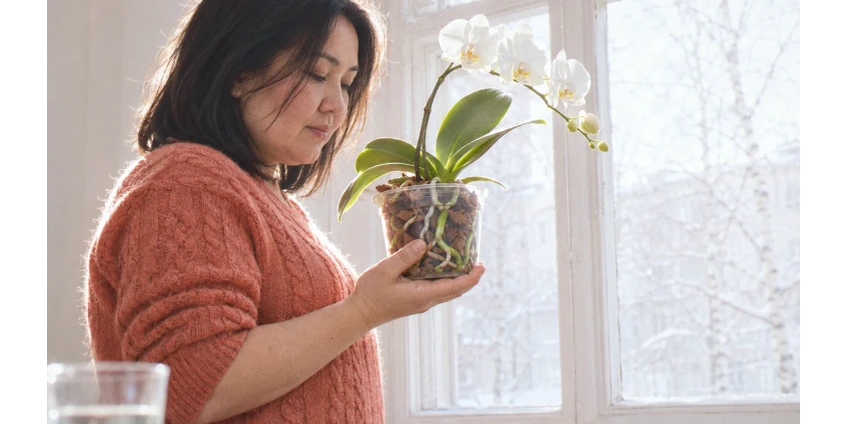
Rose, sunflower, gerbera, aster, statice, freesia, wax flower, snapdragon, alstroemeria, phalaenopsis orchid, camelliaListed as non-toxic to cats and dogs.
A few flowers don’t fit cleanly. Florist sweet pea is treated as poisonous, especially the seeds, and protea has no reliable data, so don’t count either as safe. Sources disagree on alstroemeria too: the ASPCA calls it non-toxic, the Pet Poison Helpline mildly toxic.
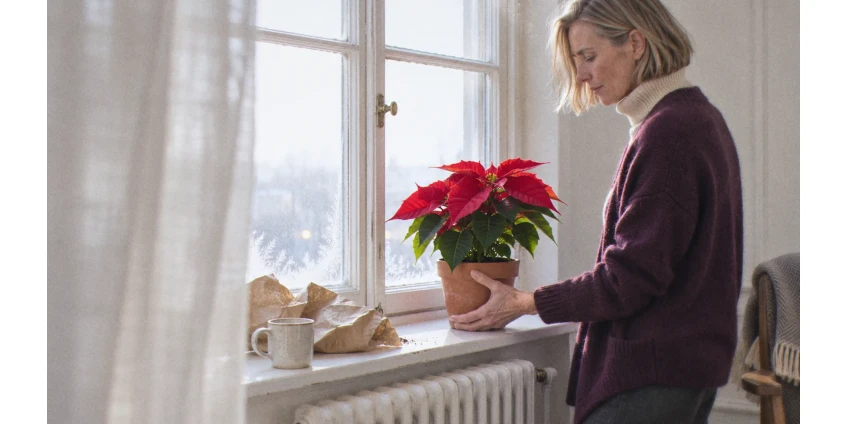
December adds its own plants. The poinsettia is famous for being deadly and isn’t: the ASPCA calls it “generally over-rated in toxicity”. Amaryllis deserves more care, especially the bulb; holly and mistletoe are on the FDA’s list of holiday plants dangerous to pets. More on keeping the first two alive: how to care for a poinsettia and an amaryllis.
Do cats and dogs get into trouble differently?
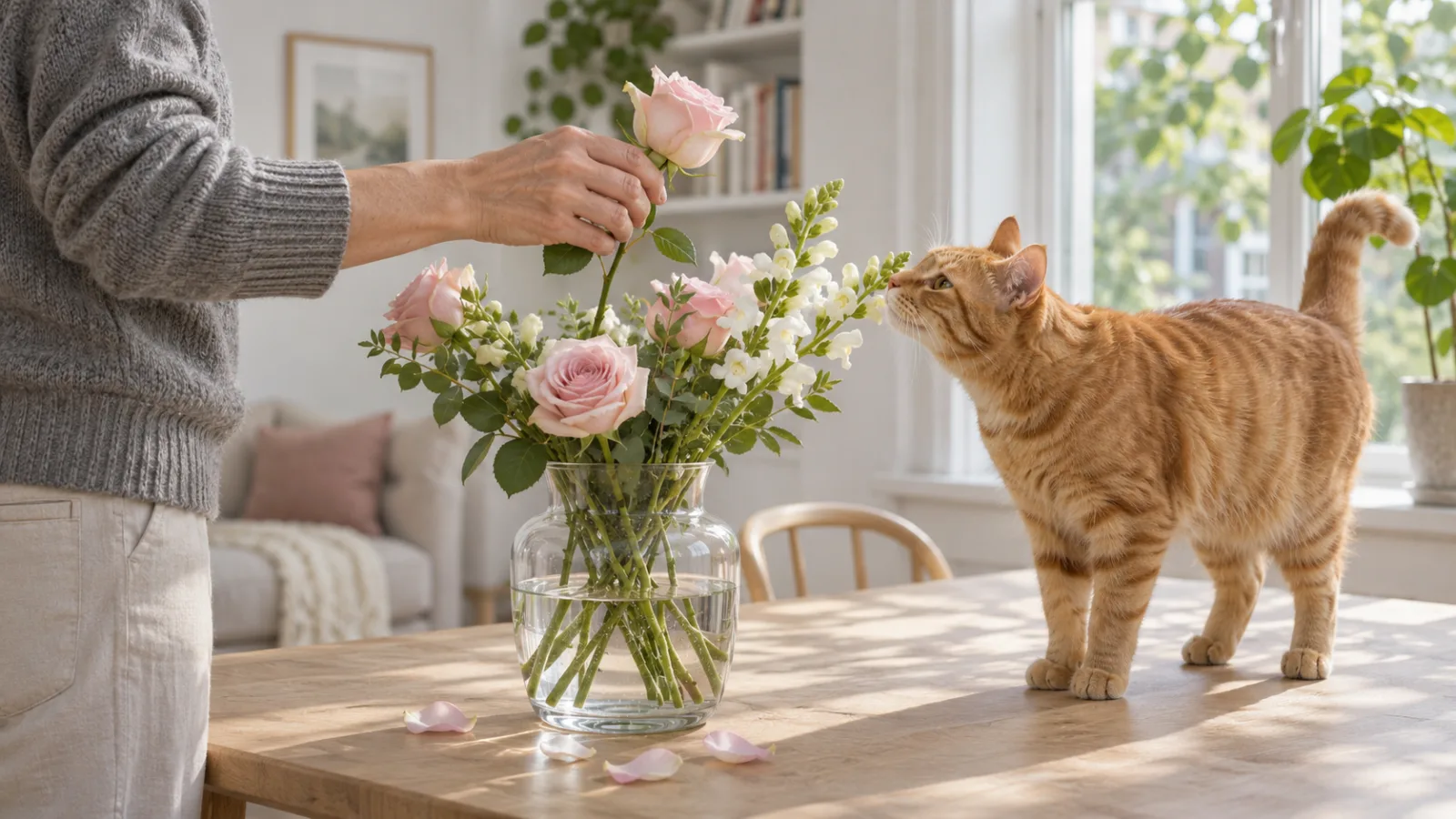
They do, and it changes where a bouquet can safely stand.
A cat
- Climbs, so a high shelf or the top of a cupboard is no barrier.
- Chews long, grassy leaves, which lilies and tulips have.
- Picks up pollen by brushing past and swallows it while grooming.
- Drinks from vases. A closed door works where height doesn’t.
A dog
- Eats what falls: petals, leaves, a dropped stem.
- Digs up and chews bulbs, the most toxic part of daffodils, tulips and amaryllis.
- Drinks from low vases and buckets left on the floor.
- Usually can’t reach a table or a windowsill, so height solves most of it.
What flowers are good for someone with allergies?
“Allergic to flowers” can mean three different problems. The first is pollen in the air, the hay fever kind: mostly from wind-pollinated trees, grasses and weeds. Showy bouquet flowers are pollinated by insects, so their pollen is heavy, sticky and rarely gets into anyone’s nose. The exception: ragweed and mugwort, the main causes of late-summer hay fever, belong to the daisy family (Asteraceae), along with sunflowers, chrysanthemums, gerberas, asters, zinnias and dahlias; some people sensitized to mugwort also react to sunflower pollen.
The second problem is the skin: florists’ rashes come from handling sap, not from pollen. Tulips and alstroemeria contain a compound that thickens the fingertips of people who handle them daily, and chrysanthemums are the commonest cause of daisy-family dermatitis among florists. This matters more for the arranger than the recipient.
The third is strong scent. It is generally treated as an irritant rather than a true allergy, but heavy perfume from lilies, hyacinths, tuberose or freesia can bother people with asthma or sensitive airways.
In practice, florists most often reach for roses, phalaenopsis orchids, hydrangea, snapdragons and lisianthus for an allergic recipient. If ragweed or mugwort is the trouble, leave out the daisy family, and leave out gypsophila too: florist’s asthma has been reported from handling dried baby’s breath. Our piece on gypsophila and what can fill its place covers the alternatives. Keep the scent low, and ask the person which flowers bother them if you can.
Are there really hypoallergenic flowers?
Not as a medical category. No medical body uses “hypoallergenic” for cut flowers; the lists online come from florists and shops, and some include tulips, whose sap causes skin reactions, and carnations, linked to asthma in growers.
The Ogren Plant Allergy Scale is more systematic: published by Thomas Ogren in Allergy-Free Gardening, it rates plants 1 to 10 by pollen, contact and odor. Useful, but not a clinical standard.
Pollenless sunflowers such as the ProCut series really do produce no pollen, through natural male sterility rather than genetic modification. Seed sellers recommend them for hay fever sufferers: a seller’s claim, not a clinical finding. More on the varieties in our sunflower guide.
Ordering flowers for a home with a pet or an allergy
When the recipient lives elsewhere, you can’t check the vase yourself, so put it in the order comment: “no lilies, the recipient has a cat”, or “low scent, no gypsophila, hay fever”. A local partner florist makes up the bouquet and can swap in a safe flower that’s in season. Before delivery you get a photo of the bouquet, as described on our guarantees page, so you can check for lilies first.
A line on the card helps too: ask the recipient to keep the vase where the cat can’t drink from it and to change the water every day or two.