


720x720_q85.jpg?v=1787130511)


720x720_q85.jpg?v=1787131951)


Spray roses in Bali: measure the surface before you order

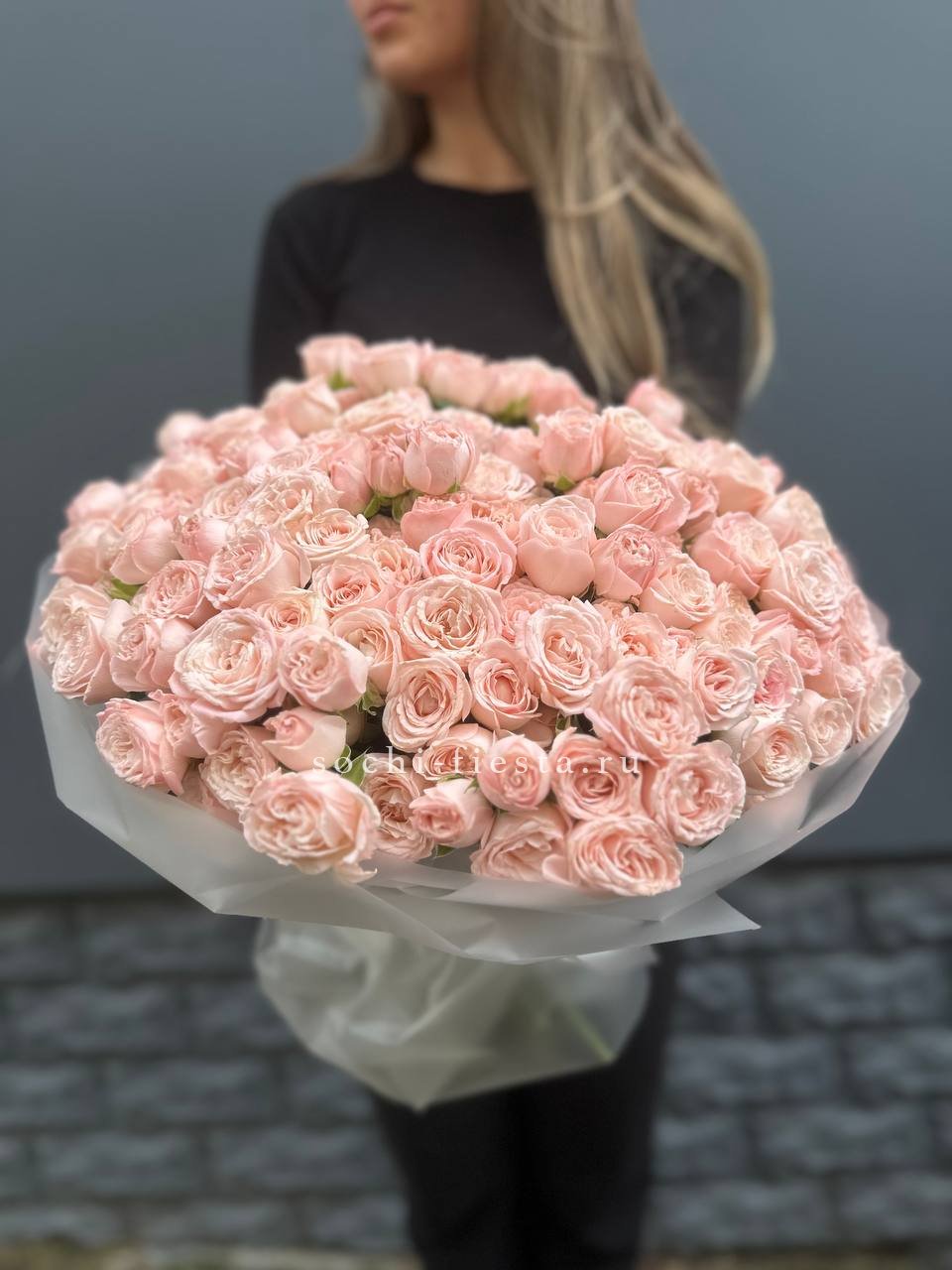
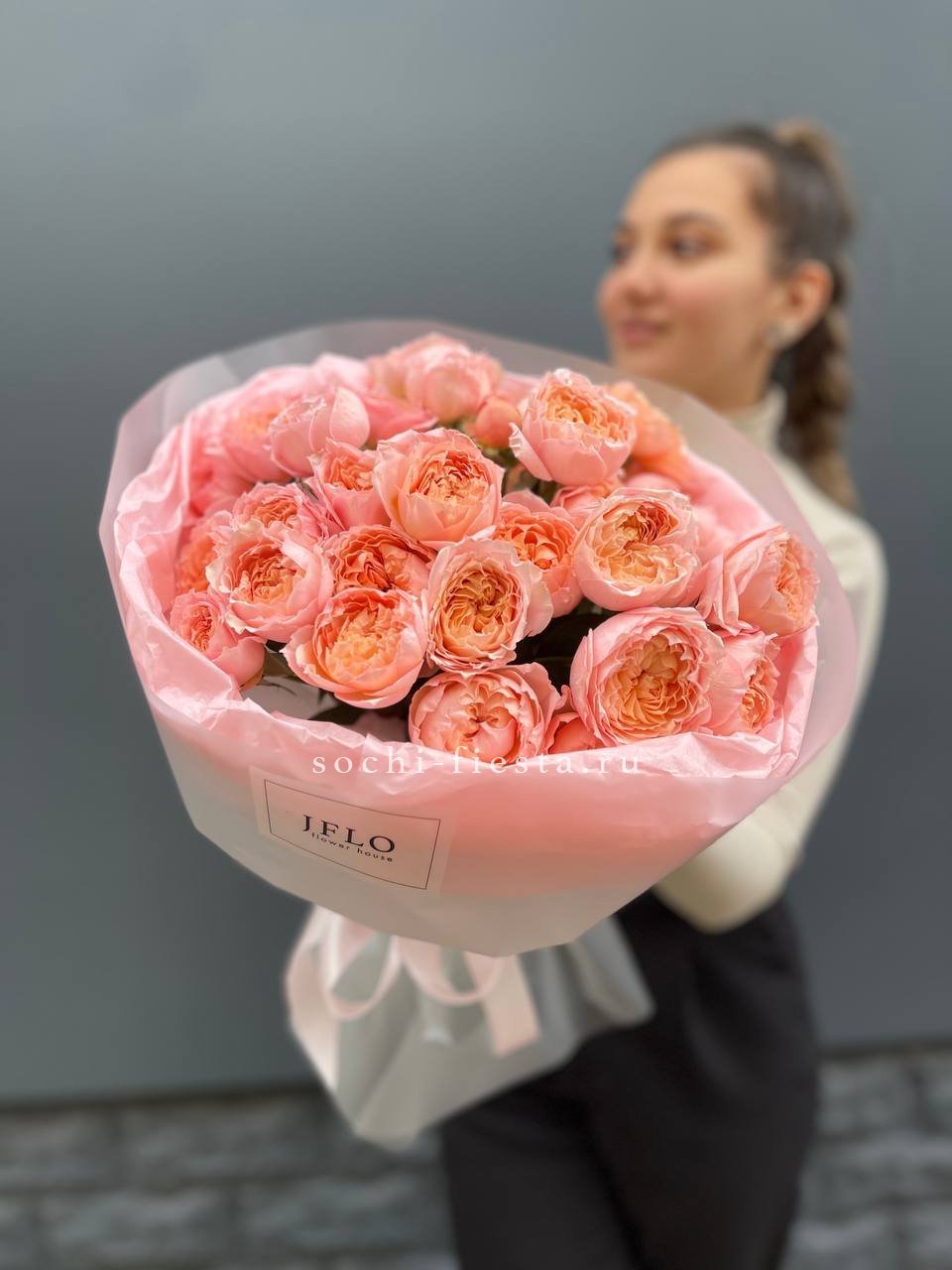
A single-stem rose is an object. You put it in a tall vase and the room arranges itself around it. A cluster stem does the opposite: it spreads, fills the space between things already on the table, and stops being the centrepiece. Where it goes decides how it should be built.
On a dining table a low wide bunch works, because nobody has to look over it and conversation carries across without a wall of stems in the way. On a hall console the same bunch disappears, since it is seen from one side only and the depth is wasted. Height matters here more than stem count.
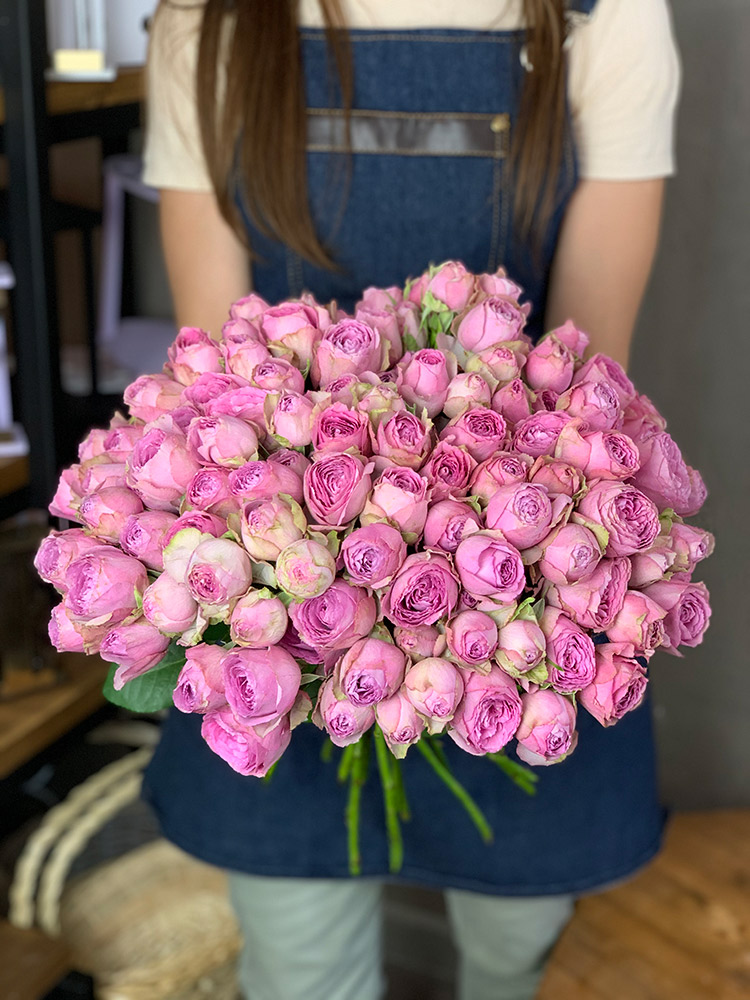
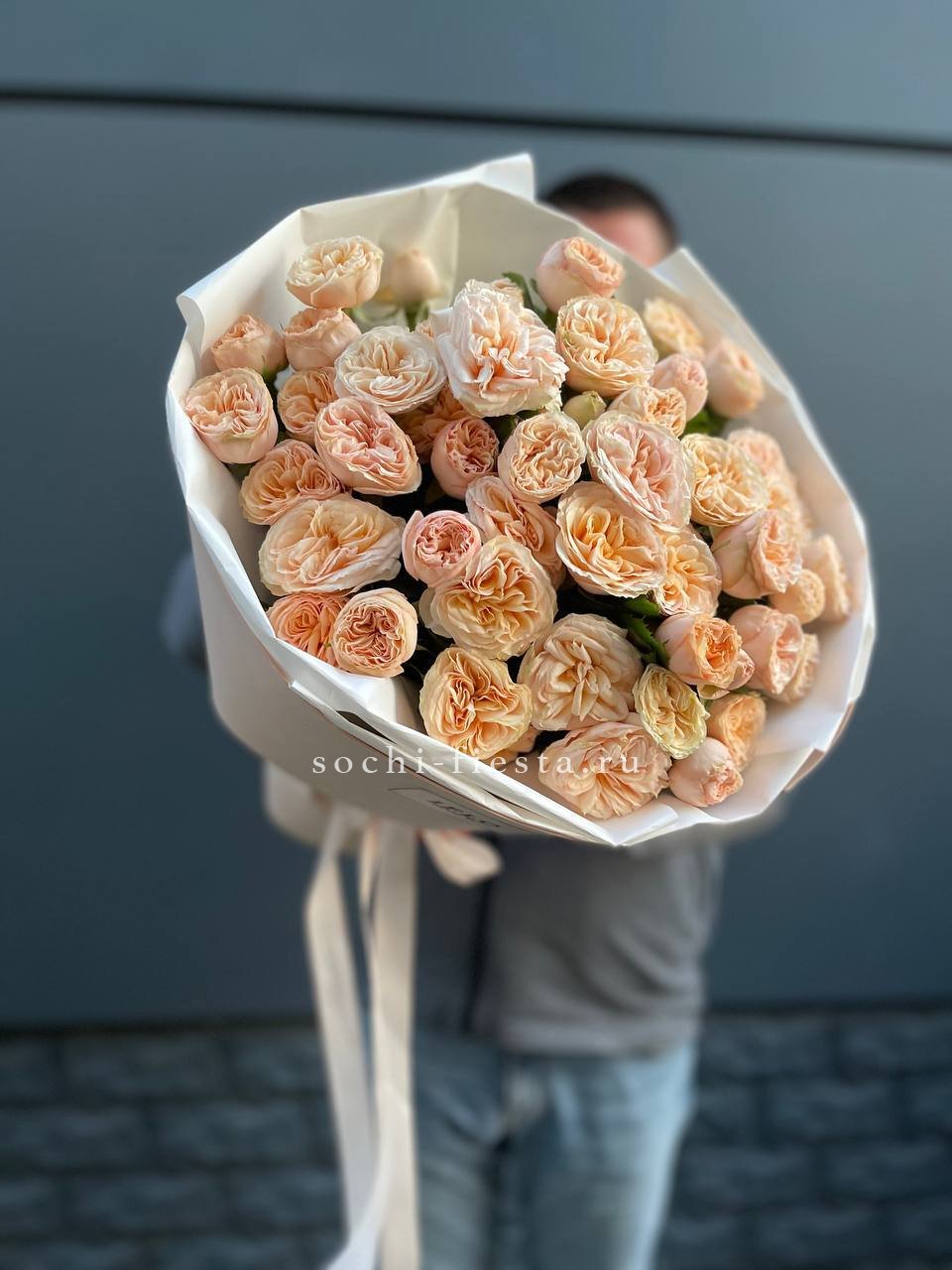
Cut the stems short and the cluster closes into a dense ball that reads well from above. Leave them long and the buds scatter at several levels, which suits a floor vase or a deep windowsill.
Villas complicate that question.
Most of what we deliver goes to an address with more than one surface worth using, and the person ordering has usually never seen the room. An ocean villa has a long outdoor table, a console by the entrance and a bedside, and each of those wants a different build from the same flowers. A resort suite in Seminyak or Canggu offers fewer options and a smaller footprint. Jimbaran wedding venues want something else again, because the flowers are seen standing and from a distance. We ask which of those it is before anything gets cut.
Four addresses, four different builds:
- Ocean villa: a low wide bunch for the outdoor table, since it is seen from every side and from above.
- Nusa Dua hotel: taller and denser, built to be read from the door of the room.
- Ubud dinner: small and close range.
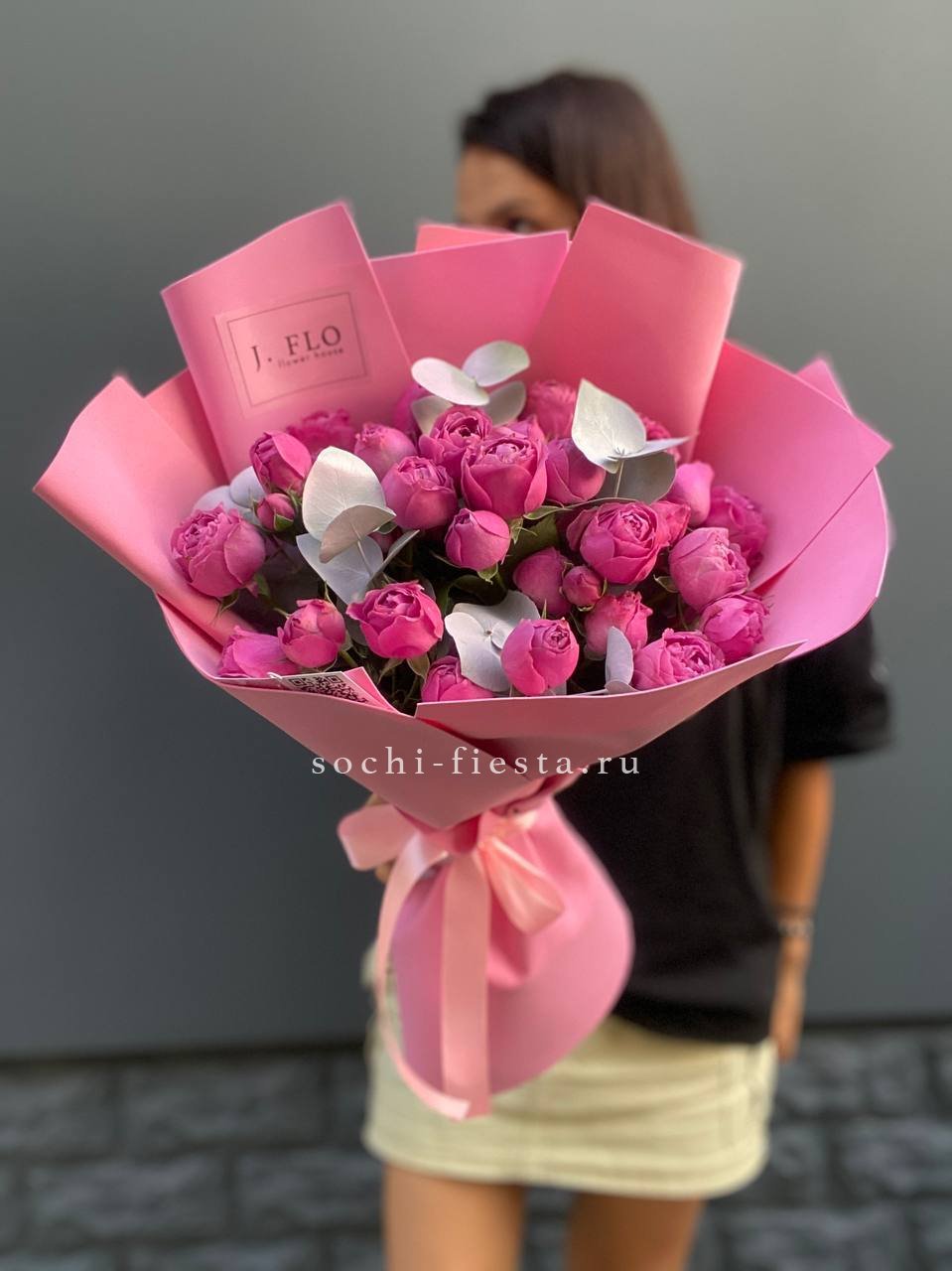
- Seminyak or Canggu resort address: a compact build that survives being pushed aside twice a day, which is what happens on a worktop or a narrow console.
Delivery to Seminyak, Canggu and Sanur takes 90 to 150 minutes, and Uluwatu, Tabanan and the outlying villas take up to 3 to 4 hours. We work 9 AM to 10 PM, orders start at 650 000 IDR, and payment goes through QRIS, GoPay, OVO, DANA or cash to the courier. Those longer routes are the reason we ask for the hour as well as the day.
Kitchen worktops are the honest test of this group. A cluster of small heads survives being moved twice a day, while one large open bloom on a long neck loses petals every time somebody nudges it.

Above 30 °C and in high humidity we use firm wrapping and a cooling element, and on the long routes that wrapping decides more than the variety does. A cluster tolerates the trip well. The heads are small, the weight on each stem is low, and the box does less damage than it would to a single heavy bloom. What the box cannot fix is a room the sender never saw.
From November to March the rain mostly adds road time rather than difficulty at the bench, and Tabanan and Uluwatu feel that first. We hold the slot by starting earlier, which for this group means cutting a shade tighter than we would in the drier months.
Colour is the shorter conversation. Cream and white hold their outline against pale walls and disappear against gloss white. Peach and apricot sit well on teak and rattan, while dusty lilac drifts towards grey under warm bulbs and comes back in daylight.
"The first question is never which rose. It is how big the table is, and who will be standing when they see it."
— JFLOO florist
So send a photograph of the surface if you have one. Spray roses in Bali travel to rooms we have often never entered, and one picture settles the height and the width faster than any description does.

