




New Year arrangements in Bali: measure the surface before you order

A bouquet asks the room for a vase. An arrangement asks it for a surface, and on this island that is by far the easier request to meet, because a good share of what we deliver goes to villas and hotel rooms where nobody knows what is in the cupboard.
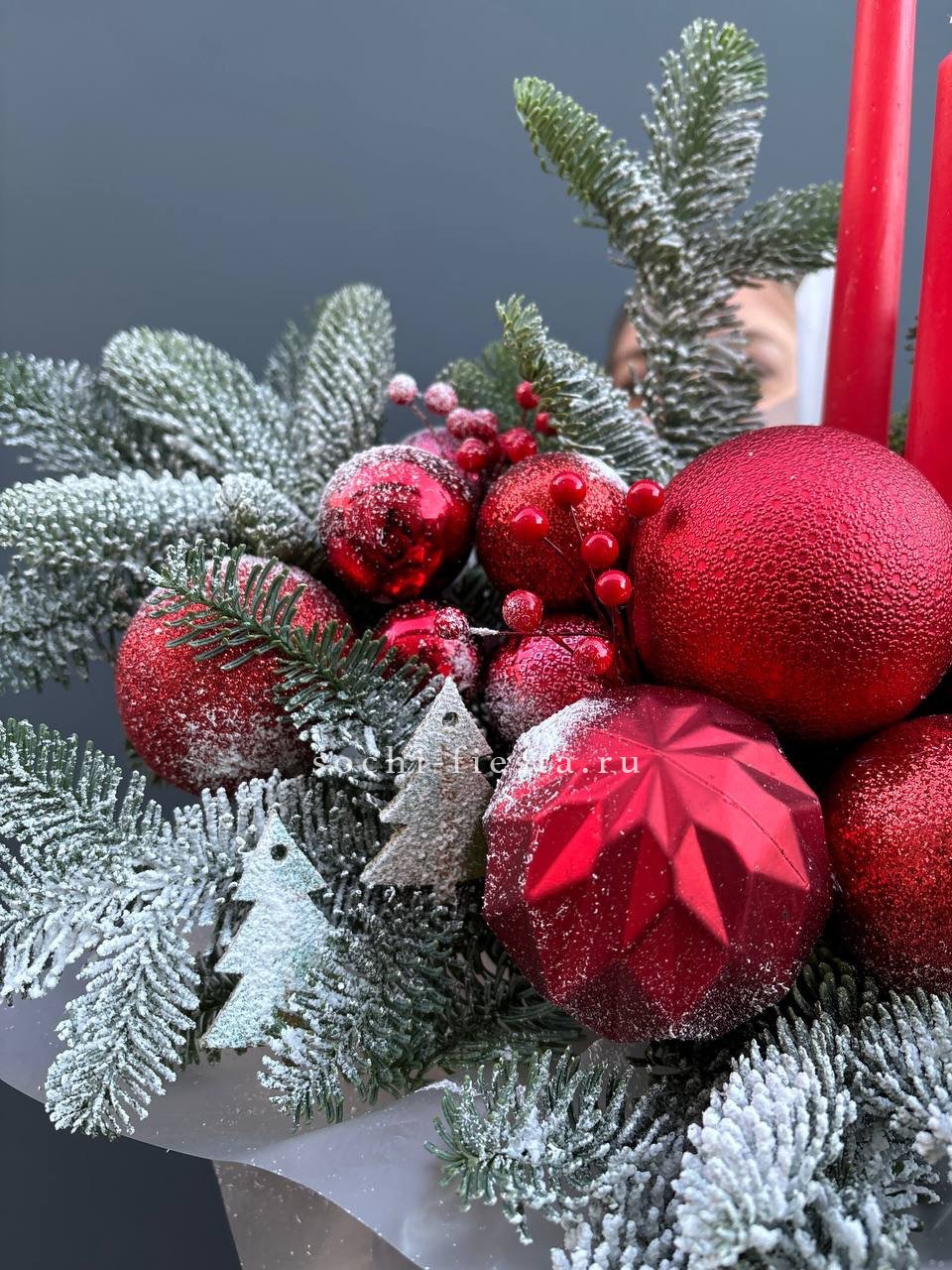
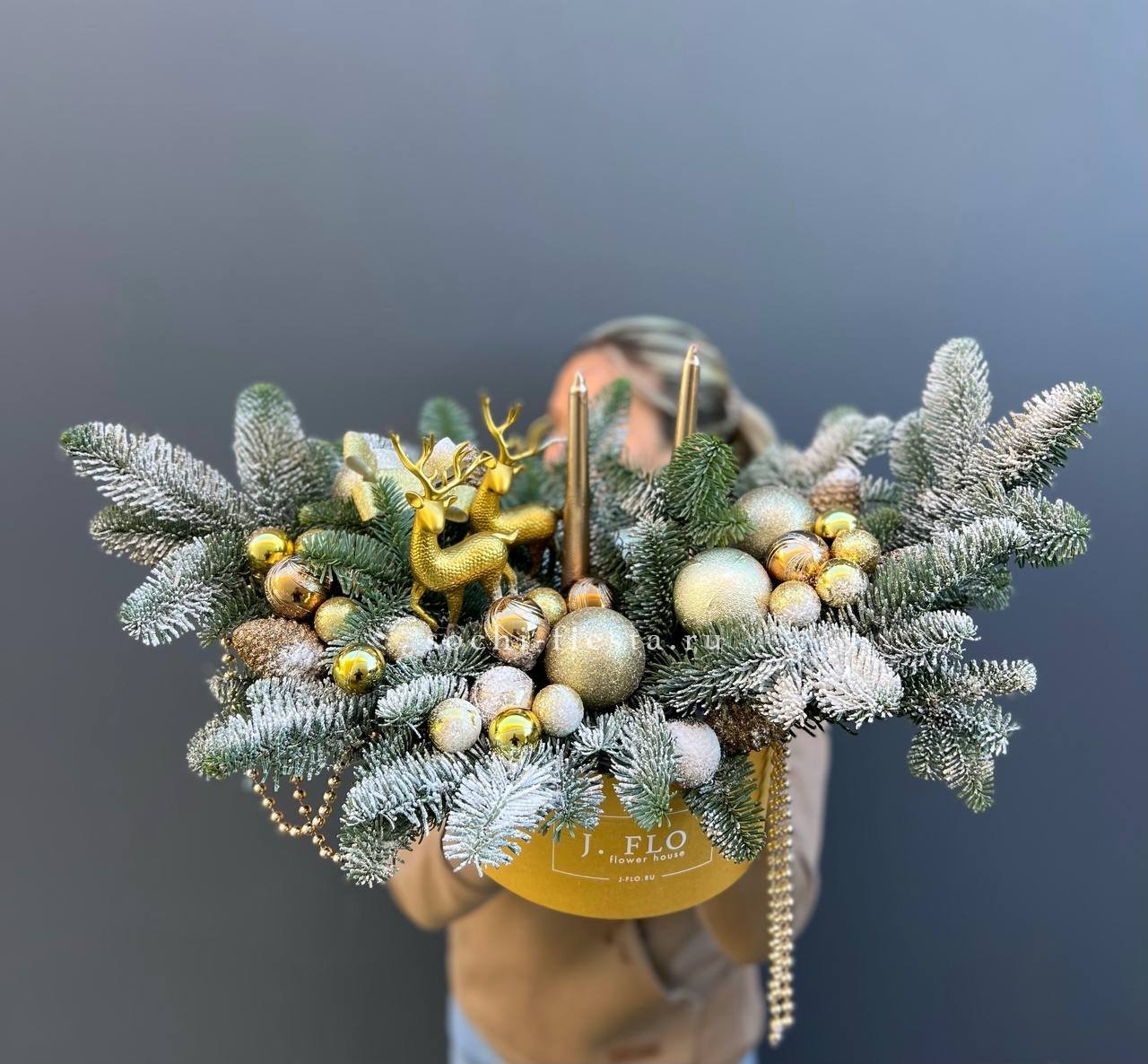
A hall console, a dining table and a villa counter want three different shapes. On a console the piece is seen from the front and from one side, so height is welcome and depth is wasted. On a dining table it sits between people and has to stay below their eye line. On a counter it is walked past on both sides, so the back cannot be a flat wall of foam and offcuts. A build meant for a wall position looks unfinished in the middle of a table within an hour of arriving.
So the measurement comes before the flowers.
Underneath everything there is a block of florist foam, cut to the pot and soaked. Firm tropical foliage goes in first and does the structural work, holding the outline and hiding the rim. Dried elements are mounted on wire legs and pushed into the same block, so they sit at an angle rather than flat against the surface. Nothing is balanced, everything is anchored, and the piece travels upright in one hand.
New Year arrangements in Bali mostly travel to addresses where nobody owns a vase. Delivery in Seminyak, Canggu and Sanur takes 90 to 150 minutes. Uluwatu, Tabanan and remote villas run to 3 or 4 hours, and on the long routes the foam goes out damp rather than wet so that nothing runs into the box on the bends. We work from 9 AM to 10 PM, orders start from 650000 IDR, and payment goes through QRIS, GoPay, OVO or DANA, or in cash to the courier.
Four lines in the order do most of the work:
- A map pin with a note on the gate, since the address alone rarely gets a courier through it.
- An hour when somebody is at the address.
- Who takes it if the recipient is out.
- The surface it will stand on. A dining table in Ubud, a console in a Seminyak villa and a counter at a Nusa Dua hotel are three different builds, and a finished pot cannot be re-proportioned at the door.
What the weather asks for

The wet season runs from November to March, the drier months from April to October. Above 30 °C, and in the humidity that comes with it, we use firm wrapping and a cooling element, which matters far more for the fresh layer than for anything else in the pot.
The fresh layer itself is built from what reaches the island. Imported roses at 60 to 90 cm and Ecuadorian roses up to 120 cm carry the height, macrophylla hydrangea fills volume with a single stem, ranunculus and lisianthus work the middle, and orchids hold in foam longer than any of them.
The dried part outlasts the fresh one, and the gaps left by spent heads close with a branch. A candle set into the same pot needs a clear hand's width around the wick once the dried elements start to feel brittle.
"Half the questions we get are about where to put it. The answer is a flat indoor surface out of the sun, and close enough to a tap that topping it up is not a chore."
— JFLOO florist
Top the foam up through the rim every day or two until it stops taking water, and pull spent stems as they go instead of waiting for the whole pot to look tired. Beyond that there is nothing to do with it, which is the reason this format is sent to a house that is empty half the week.

